
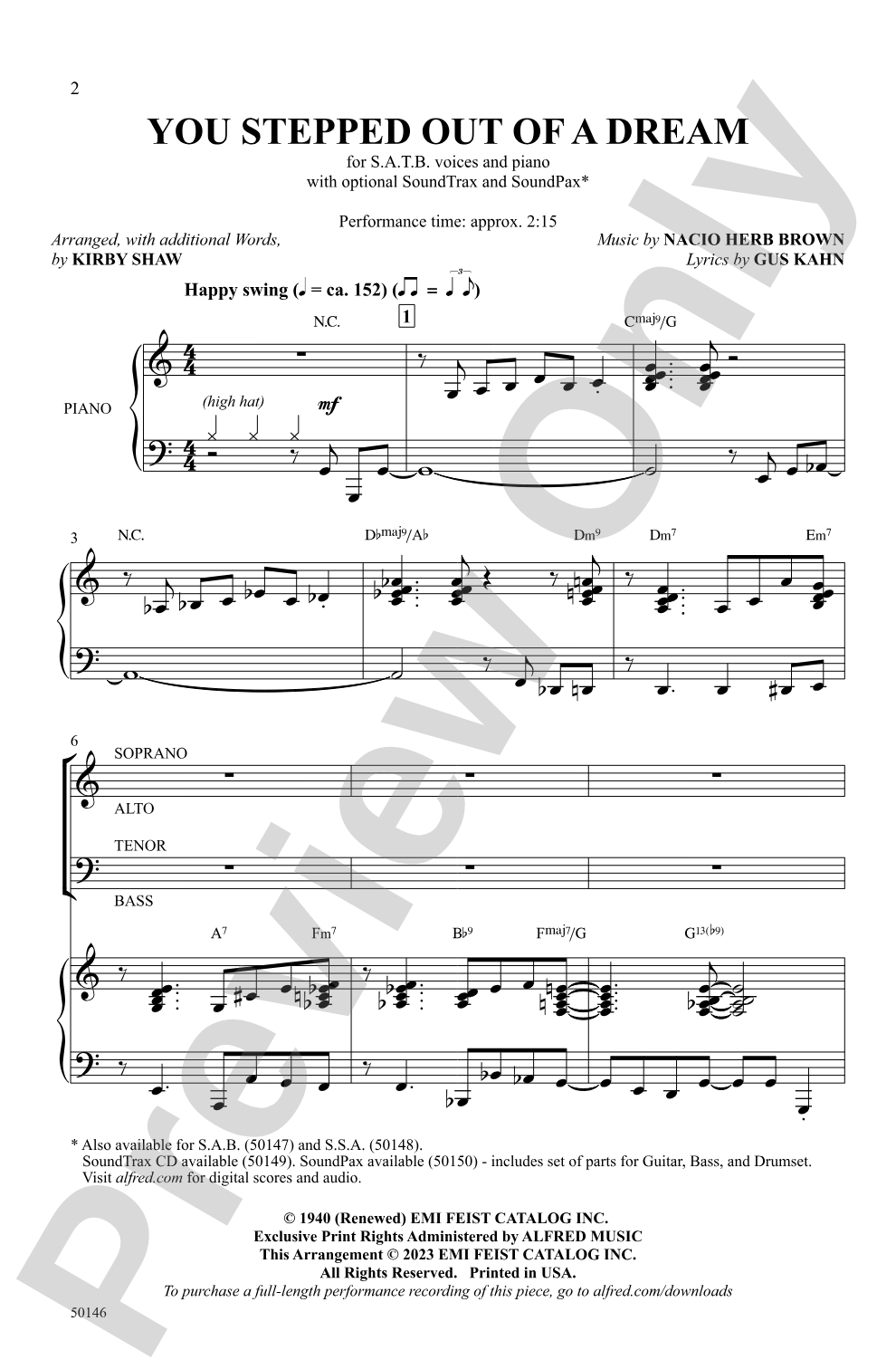

You Stepped Out of a Dream: SATB Choral Octavo
Music by Nacio Herb Brown, lyrics by Gus Kahn / arr. with additional words, by Kirby Shaw
Item: 00-PO-0007022
$2.10
Minimum order quantity: 20 copies
One moment…
Related Items
You Stepped Out of a Dream: SoundTrax Digital Audio Download |
$29.98
|
View | |
You Stepped Out of a Dream: SAB Choral Octavo |
$2.10
|
View | |
You Stepped Out of a Dream: SSA Choral Octavo |
$2.10
|
View | |
You Stepped Out of a Dream: Choral SoundPax |
$15.00
|
View | |
You Stepped Out of a Dream: SATB Choral Octavo |
$2.10
|
View | |
You Stepped Out of a Dream: SAB Choral Octavo |
$2.10
|
View | |
You Stepped Out of a Dream: SSA Choral Octavo |
$2.10
|
View | |
You Stepped Out of a Dream: Choral Octavo SoundTrax CD |
$29.99
|
View | |
You Stepped Out of a Dream: Choral SoundPax |
$15.00
|
View |
Description
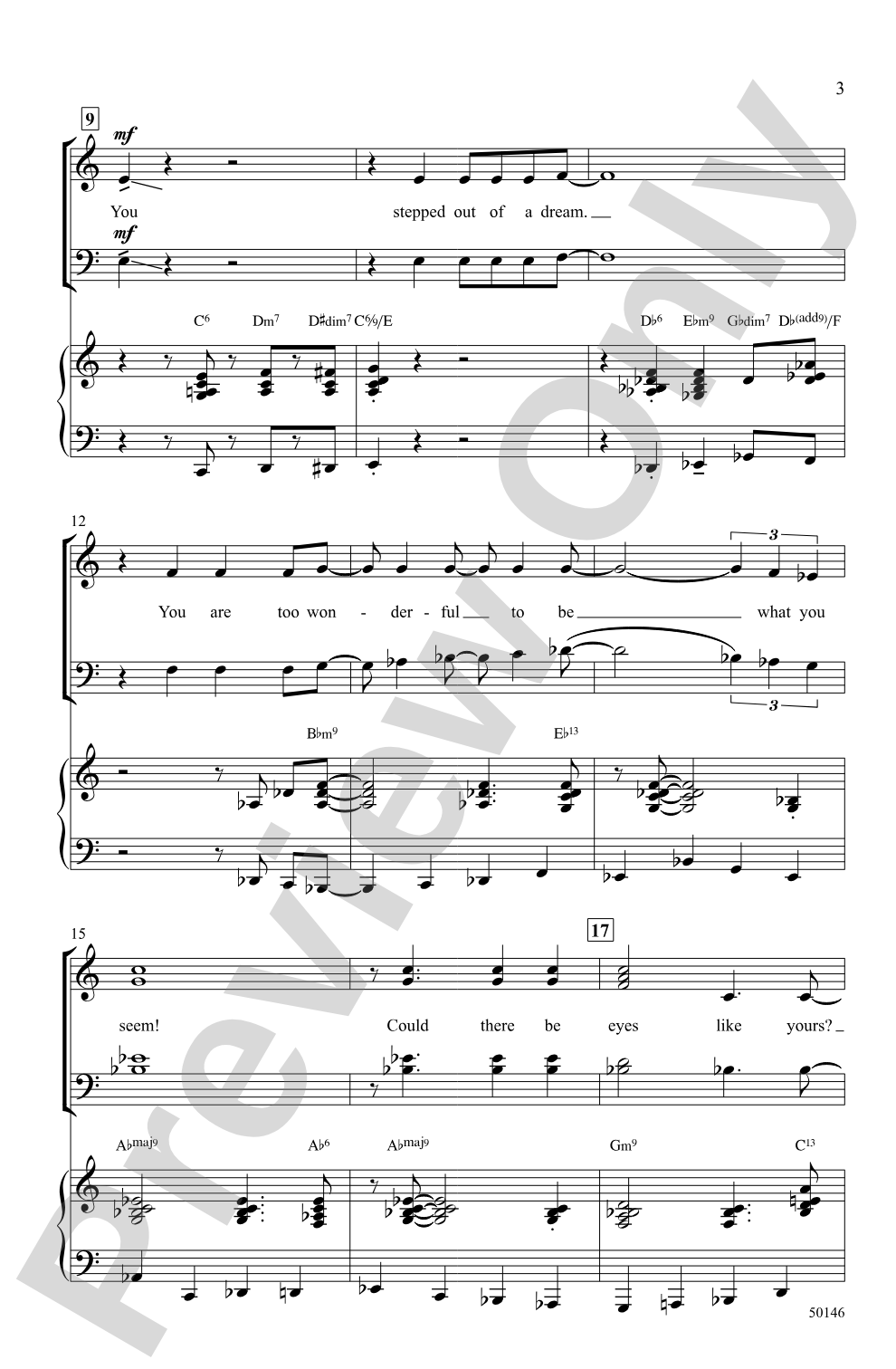
A Great American Songbook standard famously recorded by Nat King Cole. With tight stylistic sonorities, a lively swing feel, and Kirby's signature scat singing, this arrangement is a dream come true for vocal jazz groups. An optional SoundPax includes parts for guitar, bass, and drums.


You Stepped Out of a Dream: SATB Choral Octavo isn't in MakeMusic Cloud just yet...but it could be. Let us know you'd like to see it, and you'll help shape what comes next. In the meantime, start a free trial and dive into thousands of interactive titles your students can play along with today.
Request This Title
Tell us you want it.
Start Your Free Trial
Explore everything that's ready to play right now.
Sample Audio
1
Audio File
--:--
0:00
0:00
Sample Video
Additional Details
Series:
Alfred Pop Choral Series
Publisher:
Alfred Music
Page Count:
12
SKU:
00-PO-0007022
More about this title
About the Composer: Nacio Herb Brown
Nacio Herb Brown composed some of the most enduring standards of the Golden Age of Hollywood. Working primarily in the 1920s and 1930s, he crafted melodies for major film productions and Broadway shows, creating music that has remained in the popular repertoire for nearly a century. His gift was for writing songs with memorable, singable lines that bridge classical sensibility and popular appeal.
Brown's compositions have become essential reference points in jazz and vocal music education. Teachers and directors return to his work repeatedly because the melodies are intuitive, the harmonies are sophisticated enough to be interesting, and the songs have proven their staying power across generations of performers and listeners.
Why we love this
Kirby Shaw's arrangement captures the urbane swagger of this standard while making it entirely singable for SATB groups. The swing idiom feels authentic without requiring specialized jazz vocal training, and the optional scat singing passage gives soloists a chance to explore improvisation and rhythmic freedom within a structured ensemble context.
What to expect
Smooth, sophisticated, and swinging. The piece has the ease of a late-night lounge, with moments of playful scat that feel spontaneous even though they're carefully notated. There's a sense of stylish romance woven through the harmonies, punctuated by rhythmic energy.
Who it's for
Intermediate to advanced SATB choirs with some experience in popular and jazz styles. Directors looking to program a sophisticated yet accessible standard that appeals to audiences familiar with the Nat King Cole recording will find this arrangement delivers authenticity without excessive technical demands.
How to get the most out of it
- Establish a relaxed, behind-the-beat swing feel in early rehearsals rather than pushing for strict rhythmic precision. The groove lives in the pocket, not on top of the beat.
- Balance the harmonic density by letting inner voices settle slightly below the soprano and bass lines. This creates clarity in the jazz voicings without losing the richness.
- Work the scat singing passage with a small group of soloists first, encouraging them to respond to the rhythm section and each other rather than stick rigidly to printed rhythms.
- Use the recorded accompaniment to internalize the swing feel, but rehearse without it to build the choir's independence and confidence in holding the groove.
How to use it
This works beautifully in a Great American Songbook set or as a contrasting piece alongside more classical choral literature. It's particularly effective as a second-act opener because it resets the room's energy with a recognizable, beloved melody.
Skills your students will build
- Swing rhythm and behind-the-beat phrasing
- Jazz chord function and voice leading
- Scat singing and rhythmic improvisation
- Stylistic blend and intonation in close jazz voicings
- Call-and-response phrasing between sections