

You Stepped Out of a Dream: Choral SoundPax
Music by Nacio Herb Brown, lyrics by Gus Kahn / arr. with additional words, by Kirby Shaw
Item: 00-PK-0008801
$15.00
One moment…
Related Items
You Stepped Out of a Dream: SoundTrax Digital Audio Download |
$29.98
|
View | |
You Stepped Out of a Dream: SATB Choral Octavo |
$2.10
|
View | |
You Stepped Out of a Dream: SAB Choral Octavo |
$2.10
|
View | |
You Stepped Out of a Dream: SSA Choral Octavo |
$2.10
|
View | |
You Stepped Out of a Dream: SATB Choral Octavo |
$2.10
|
View | |
You Stepped Out of a Dream: SAB Choral Octavo |
$2.10
|
View | |
You Stepped Out of a Dream: SSA Choral Octavo |
$2.10
|
View | |
You Stepped Out of a Dream: Choral Octavo SoundTrax CD |
$29.99
|
View | |
You Stepped Out of a Dream: Choral SoundPax |
$15.00
|
View |
Description
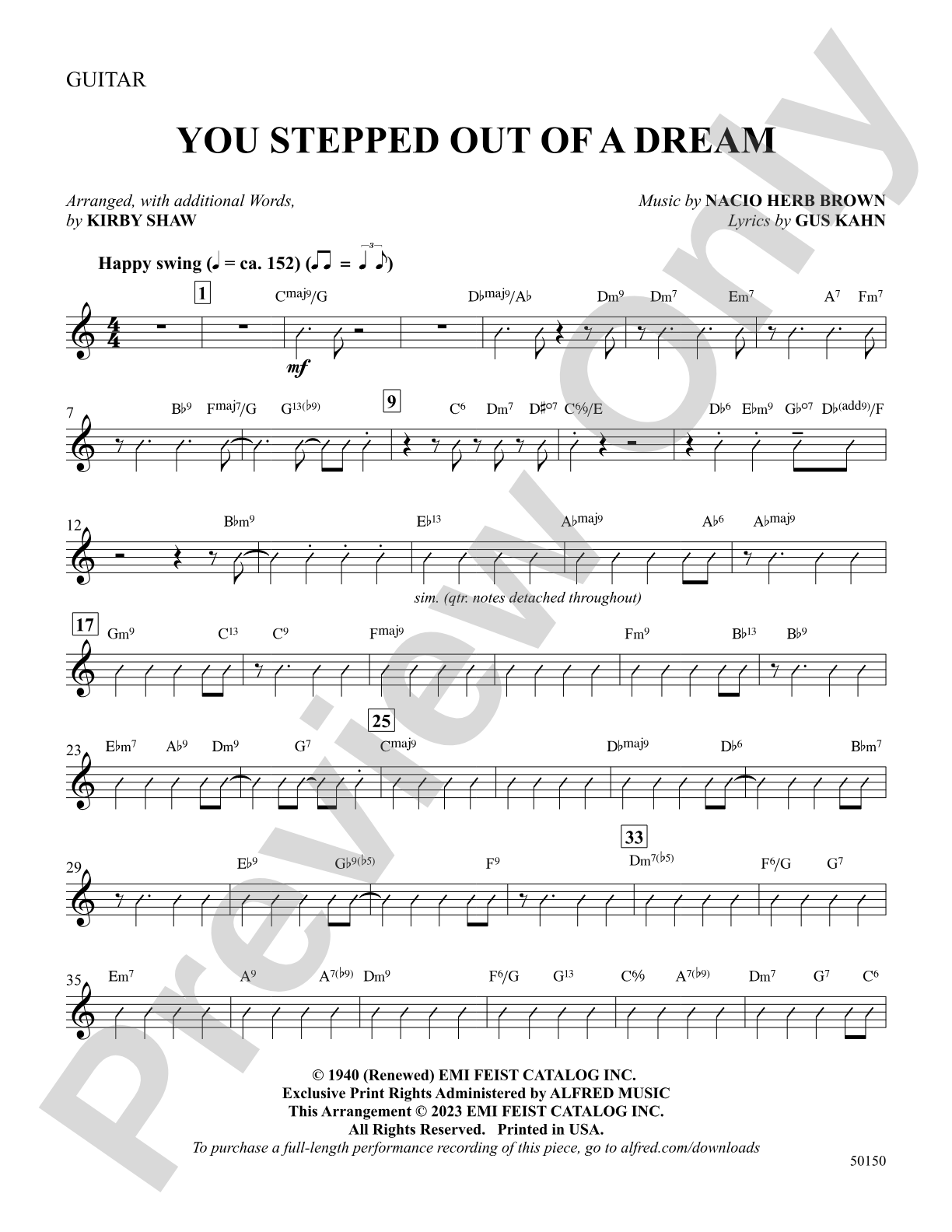
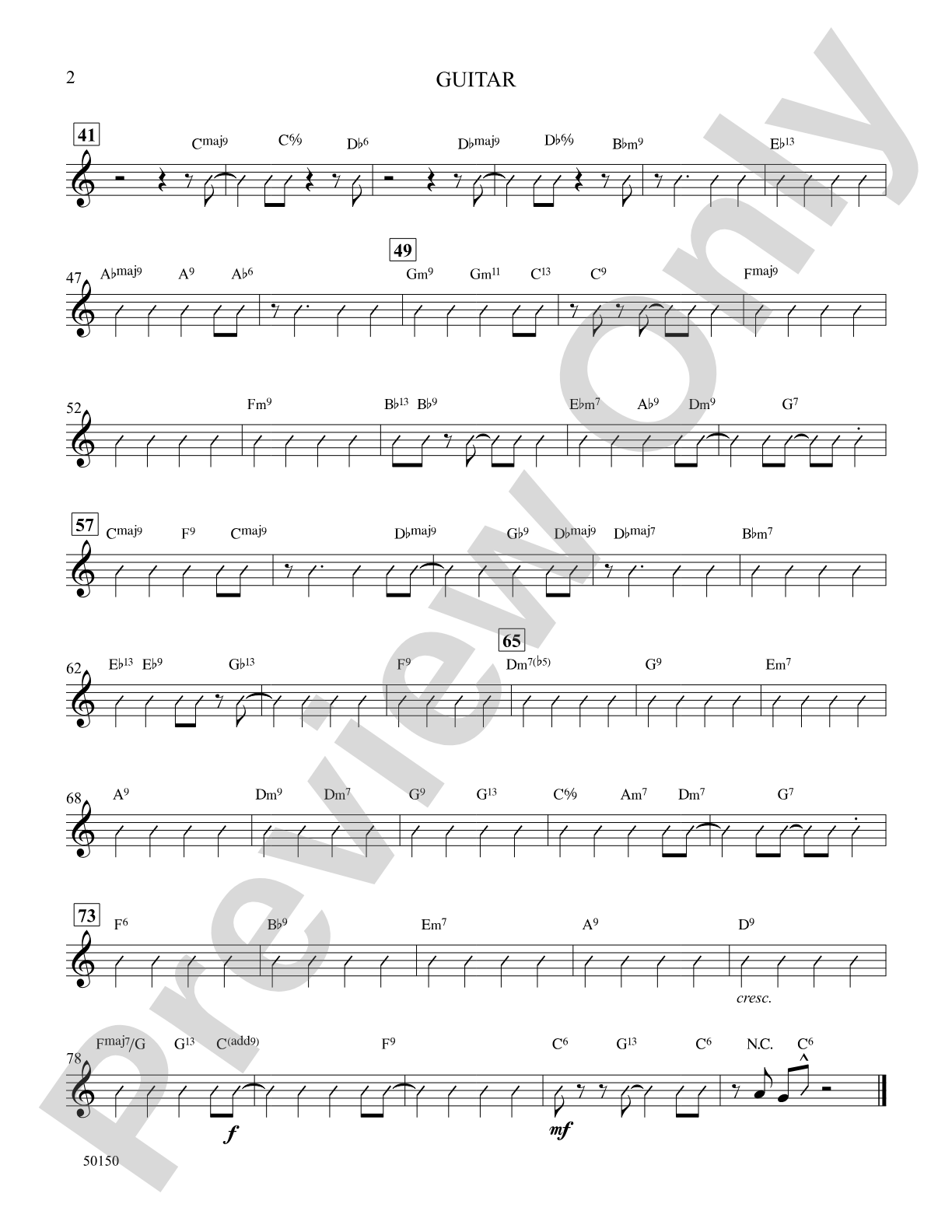
A Great American Songbook standard famously recorded by Nat King Cole. With tight stylistic sonorities, a lively swing feel, and Kirby's signature scat singing, this arrangement is a dream come true for vocal jazz groups. An optional SoundPax includes parts for guitar, bass, and drums.


You Stepped Out of a Dream: Choral SoundPax isn't in MakeMusic Cloud just yet...but it could be. Let us know you'd like to see it, and you'll help shape what comes next. In the meantime, start a free trial and dive into thousands of interactive titles your students can play along with today.
Request This Title
Tell us you want it.
Start Your Free Trial
Explore everything that's ready to play right now.
Sample Audio
1
Audio File
--:--
0:00
0:00
Sample Video
No sample videos found.
Additional Details
Series:
Alfred Pop Choral Series
Publisher:
Alfred Music
SKU:
00-PK-0008801
More about this title
About the Composer: Nacio Herb Brown
Nacio Herb Brown composed some of the most enduring standards of the 1920s and 1930s, often in collaboration with lyricist Arthur Freed. Working primarily in Hollywood, he wrote for films and stage productions, creating melodies that balanced sophistication with immediate appeal, making them favorites for both popular singers and jazz interpreters.
Brown's gift for craft shows clearly in "You Stepped Out of a Dream." The melody sits naturally in the voice, the harmonic progression invites reharmonization, and the lyric's romantic wit has aged remarkably well. For music educators, his work represents a bridge between classical song tradition and the jazz vernacular that dominates American music.
Why we love this
Kirby Shaw's arrangement captures the essence of the Cole recording while giving singers real work to do. The scat singing isn't window dressing; it's genuinely fun and sits at a level that vocal jazz ensembles actually want to tackle. You get a polished, radio-ready sound without sacrificing musicianship.
What to expect
Sophisticated and playful at once. The melody glides with romantic ease, but the arrangement keeps things light and swinging. There's genuine joy in the scat sections, paired with the kind of tight harmonic blend that makes singers sound like they're reading each other's minds.
Who it's for
Vocal jazz groups with some swing experience and strong intonation habits. The scat sections require both confidence and rhythmic precision, so this works best with singers who've spent time in the idiom.
How to get the most out of it
- Shape the opening melody with conversational phrasing. This isn't operatic; let the lyric breathe like someone actually telling a story.
- Lock the scat section into the rhythm section's pocket early and often. The swing feel lives or dies here, and rehearsal time spent on unison rhythmic clarity pays dividends.
- Balance the close harmonies so inner voices sing through without drowning the lead. The tight sonorities Shaw writes only work if every chord member is heard.
- Work with your accompaniment tracks to find the right tempo for your group's scat articulation. Faster isn't always better when precision matters.
How to use it
Program this alongside other Great American Songbook standards when you want to showcase your jazz ensemble's stylistic range. It works beautifully on a pop concert or as a contrast to contemporary vocal jazz arrangements, and the optional instrumental parts make it flexible for different performance spaces.
Skills your students will build
- Swing articulation and phrasing in a popular music context
- Scat singing accuracy and rhythmic precision
- Close harmony intonation in tight chord voicings
- Leading and accompanying roles within the same arrangement
- Stylistic listening and interpretation informed by the Cole recording