
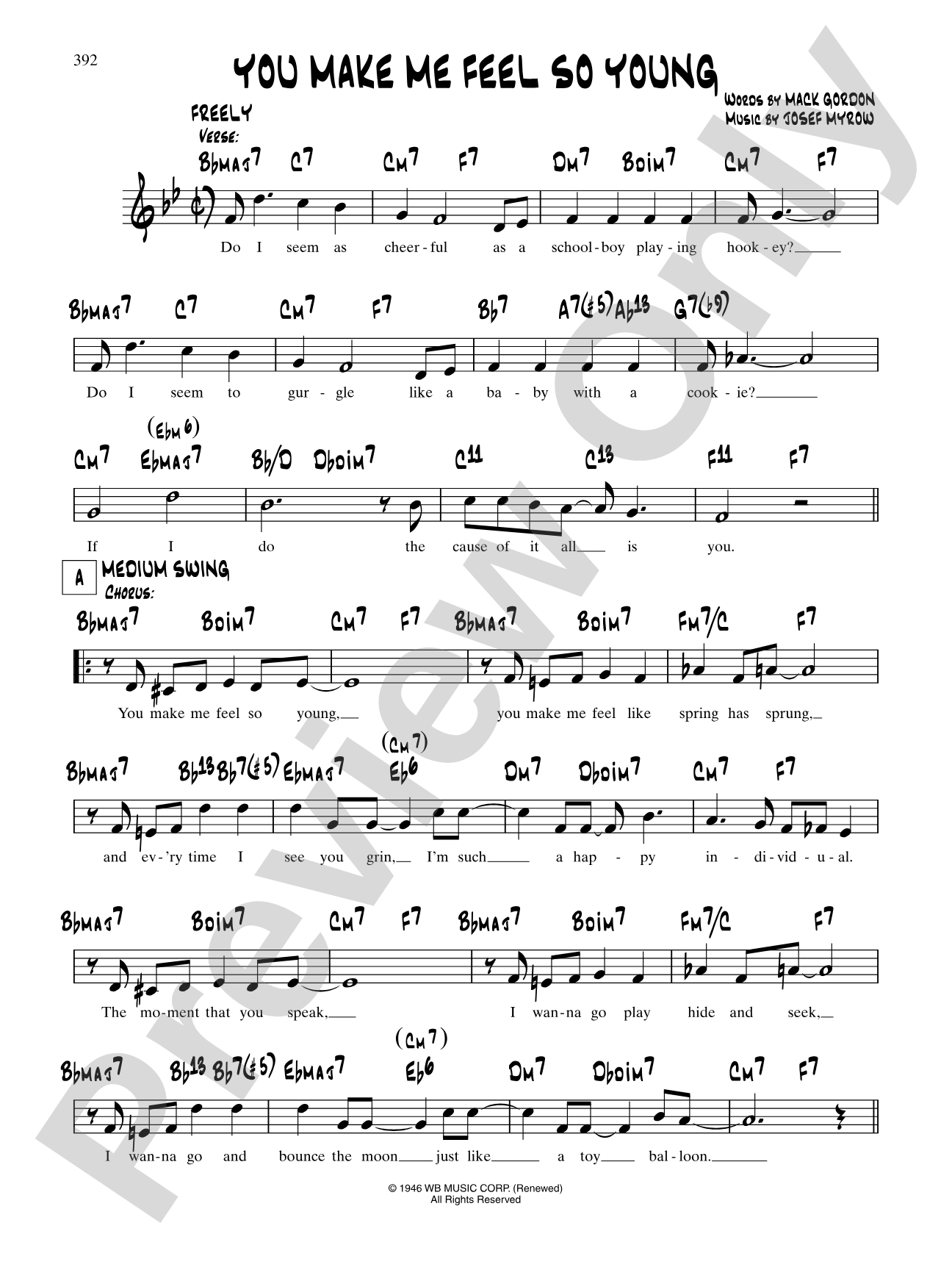

You Make Me Feel So Young: Lead Sheet
Mel Tormé
Item: 00-PSL-000137
$4.99
One moment…
Description
This folio contains 26 classics from "The Velvet Fog" plus a bio and many photos from his personal archives. Titles include: Blue Moon * The Carioca * Fascinating Rhythm * A Foggy Day * I Got Rhythm * Isn't It a Pity * More Than You Know * Oh, Lady Be Good * 'Round Midnight * September Song * You Make Me Feel So Young.


You Make Me Feel So Young: Lead Sheet isn't in MakeMusic Cloud just yet...but it could be. Let us know you'd like to see it, and you'll help shape what comes next. In the meantime, start a free trial and dive into thousands of interactive titles your students can play along with today.
Request This Title
Tell us you want it.
Start Your Free Trial
Explore everything that's ready to play right now.
Sample Audio
No sample audio found.
Sample Video
No sample videos found.
Additional Details
Series:
Legendary Performers Series
Publisher:
Alfred Music
Page Count:
112
SKU:
00-PSL-000137
More about this title
About the Artist: Mel Tormé
Mel Tormé (1946-1999) was a vocalist, composer, and arranger whose technical mastery and interpretive sophistication earned him the nickname "The Velvet Fog." He performed across jazz, pop, and standards repertoire with remarkable musicality, and his understanding of harmony and phrasing influenced generations of singers and musicians.
Tormé's career spanned five decades of recording and performing. He composed over 250 songs, arranged extensively for his own recordings and others, and appeared frequently on television and in concert halls. His ability to navigate complex harmonic progressions and syncopated rhythms while maintaining vocal elegance made him a model for singers interested in both technical command and artistic interpretation.
Why we love this
This collection gathers 26 standards that showcase the harmonic vocabulary and melodic sophistication that defined mid-century jazz and pop. Pianists and vocalists will find material that rewards close attention to reharmonization, substitution, and interpretive phrasing while remaining grounded in memorable melodies and clear structures.
What to expect
These songs breathe with the elegance of a mid-century jazz club. The chord progressions invite thoughtful reharmonization, the melodies float over swing rhythms, and the overall collection captures the refined, conversational intimacy that made Tormé's singing so compelling. Each title feels like an invitation to both technical exploration and emotional clarity.
Who it's for
This folio serves pianists and singers who want to explore classic jazz standards with the harmonic depth and sophistication that defined the American Songbook. It's equally valuable for music students building repertoire in jazz, pop, and standards styles, and for accompanists developing their sight-reading skills with lead sheet notation.
How to get the most out of it
- Pay attention to the chord voicings and substitutions in the lead sheet. These changes reflect how Tormé approached these standards, often with chromatic voice leading and seventh extensions that color the sound.
- Balance lyrical phrasing with rhythmic precision in the piano accompaniment. The interplay between swing feel and melodic shape is essential to these arrangements.
- Use the included photographs and biographical context to inform your interpretation. Understanding Tormé's era and performance style can deepen your approach to phrasing and dynamics.
How to use it
Feature these standards in a jazz or pop vocal recital, pairing selections that showcase different moods and harmonic colors. For piano students, use individual titles as technical and interpretive studies in jazz accompaniment and lead sheet playing. For ensemble rehearsals, consider programming one or two as chamber or small group material that deepens musicians' familiarity with this essential repertoire.
Skills your students will build
- Reading and interpreting lead sheet notation with chord symbols and extensions
- Comping in jazz idiom with attention to harmonic substitution and voice leading
- Interpreting swing rhythm and phrasing in standards from the Great American Songbook
- Building sight-reading fluency across varied harmonic progressions
- Understanding reharmonization and chord color as interpretive tools