
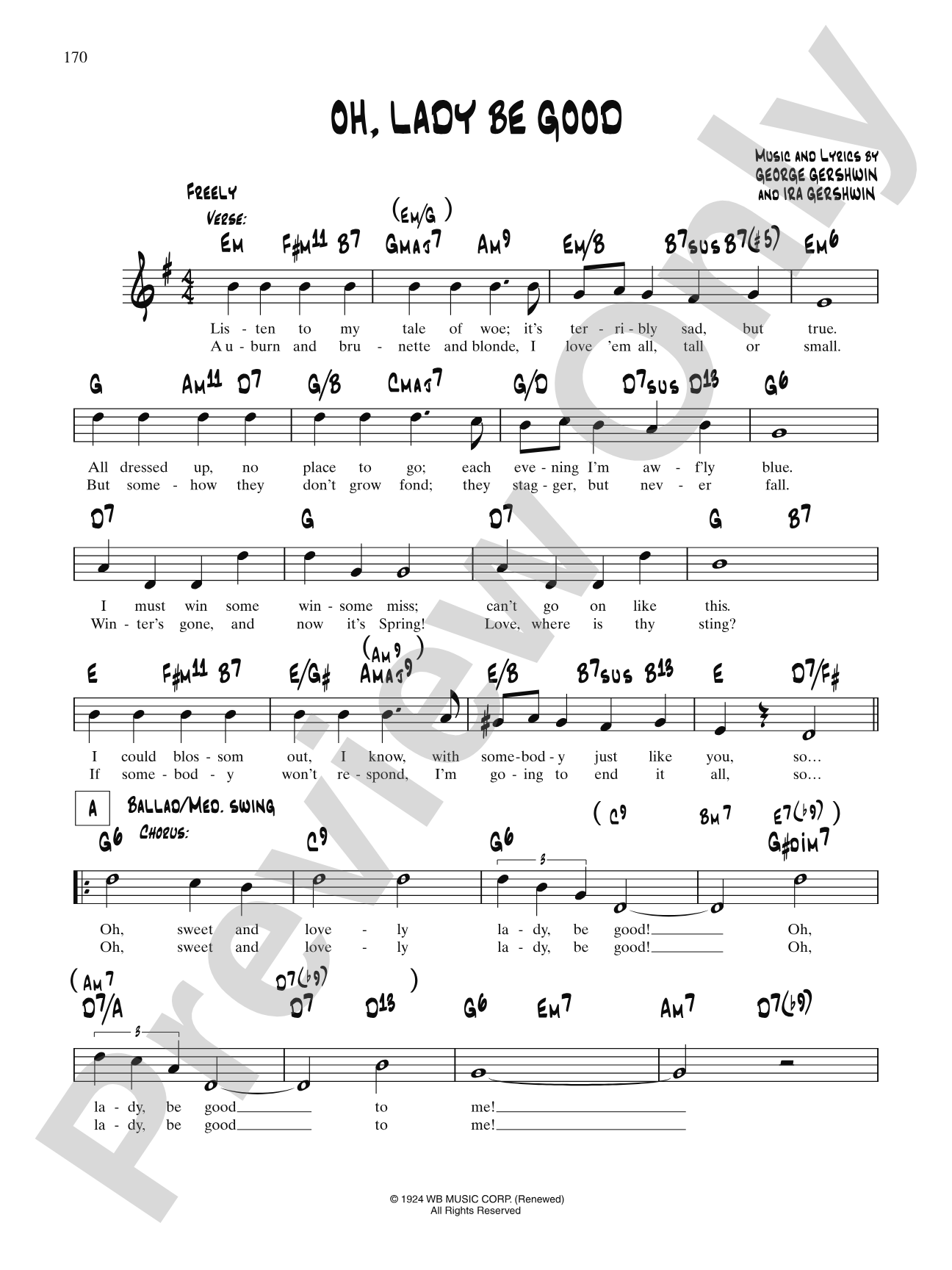

Oh, Lady, Be Good!: Lead Sheet
Mel Tormé
Item: 00-PSL-000818
$4.99
One moment…
Description
This folio contains 26 classics from "The Velvet Fog" plus a bio and many photos from his personal archives. Titles include: Blue Moon * The Carioca * Fascinating Rhythm * A Foggy Day * I Got Rhythm * Isn't It a Pity * More Than You Know * Oh, Lady Be Good * 'Round Midnight * September Song * You Make Me Feel So Young.


Oh, Lady, Be Good!: Lead Sheet isn't in MakeMusic Cloud just yet...but it could be. Let us know you'd like to see it, and you'll help shape what comes next. In the meantime, start a free trial and dive into thousands of interactive titles your students can play along with today.
Request This Title
Tell us you want it.
Start Your Free Trial
Explore everything that's ready to play right now.
Sample Audio
No sample audio found.
Sample Video
No sample videos found.
Additional Details
Series:
Legendary Performers Series
Publisher:
Alfred Music
Page Count:
112
SKU:
00-PSL-000818
More about this title
About the Artist: George Gershwin
George Gershwin (1898-1937) was an American composer and pianist who bridged the worlds of classical music and popular song with remarkable fluency. His gift for melody, harmonic sophistication, and rhythmic innovation shaped American music profoundly; works like Rhapsody in Blue remain cornerstones of the concert repertoire, while his songwriting for stage and screen defined an era of American musical theater.
Gershwin's collaboration with his lyricist brother Ira produced some of the most enduring standards in jazz and popular music. His ability to write music that worked equally well in a concert hall, on Broadway, or as a jazz standard reflects a composer uninterested in rigid boundaries between "classical" and "popular." For musicians exploring the Great American Songbook, Gershwin's melodies and harmonies offer both accessibility and depth.
Why we love this
This folio gathers Gershwin's most celebrated standards in lead sheet format, giving pianists, singers, and accompanists immediate access to the harmonic and melodic architecture that made these songs unforgettable. The inclusion of photographs and biographical context transforms what could be a simple fake book into a window onto Gershwin's creative world and the golden age of American songwriting.
What to expect
These songs capture the energy and sophistication of 1920s and 1930s New York: witty, urbane, romantic, and rhythmically alive. Whether you are playing a wistful ballad like "A Foggy Day" or the kinetic joy of "Fascinating Rhythm," Gershwin's music swings between playfulness and genuine emotional depth, always rooted in a melodic gift that feels almost effortless.
Who it's for
This resource serves pianists and vocalists preparing Gershwin standards for recitals, auditions, or informal performance; it is equally valuable for accompanists building fluency with the harmonic language of American popular song. Jazz students and music theater performers will find the lead sheets essential for understanding how melody and harmony interact in these foundational works.
How to get the most out of it
- Study the original recordings to internalize Gershwin's harmonic expectations; his chord changes often contain chromatic inflections and unexpected resolutions that aren't always obvious on the page alone.
- Balance the written melody with space for spontaneous interpretation, especially when accompanying a vocalist; these standards invite rubato and embellishment without losing their fundamental shape.
- Let the rhythm section breathe in the swing grooves; Gershwin's melodies sit best when the accompaniment has room to settle into a relaxed pulse rather than playing rigidly to the beat.
- Use the photographs and biographical notes to frame your interpretation; knowing the theatrical or historical context of each song deepens how you approach phrasing and emotional weight.
How to use it
Weave individual Gershwin standards into jazz combos, piano recitals, or vocal recitals; the lead sheet format makes it easy to extract single songs for concert use. A Gershwin-themed concert or teaching unit on American songwriting naturally showcases these pieces alongside other standards, offering students a focused entry point into how melody, harmony, and form work in popular song.
Skills your students will build
- Reading and interpreting lead sheets with chord symbols
- Understanding chromatic harmony and unexpected harmonic resolutions typical of 1920s-1930s songwriting
- Balancing written melody with improvisational freedom and interpretation
- Accompanying singers while maintaining harmonic accuracy and musical flexibility
- Recognizing recurring melodic and harmonic devices across multiple Gershwin compositions