
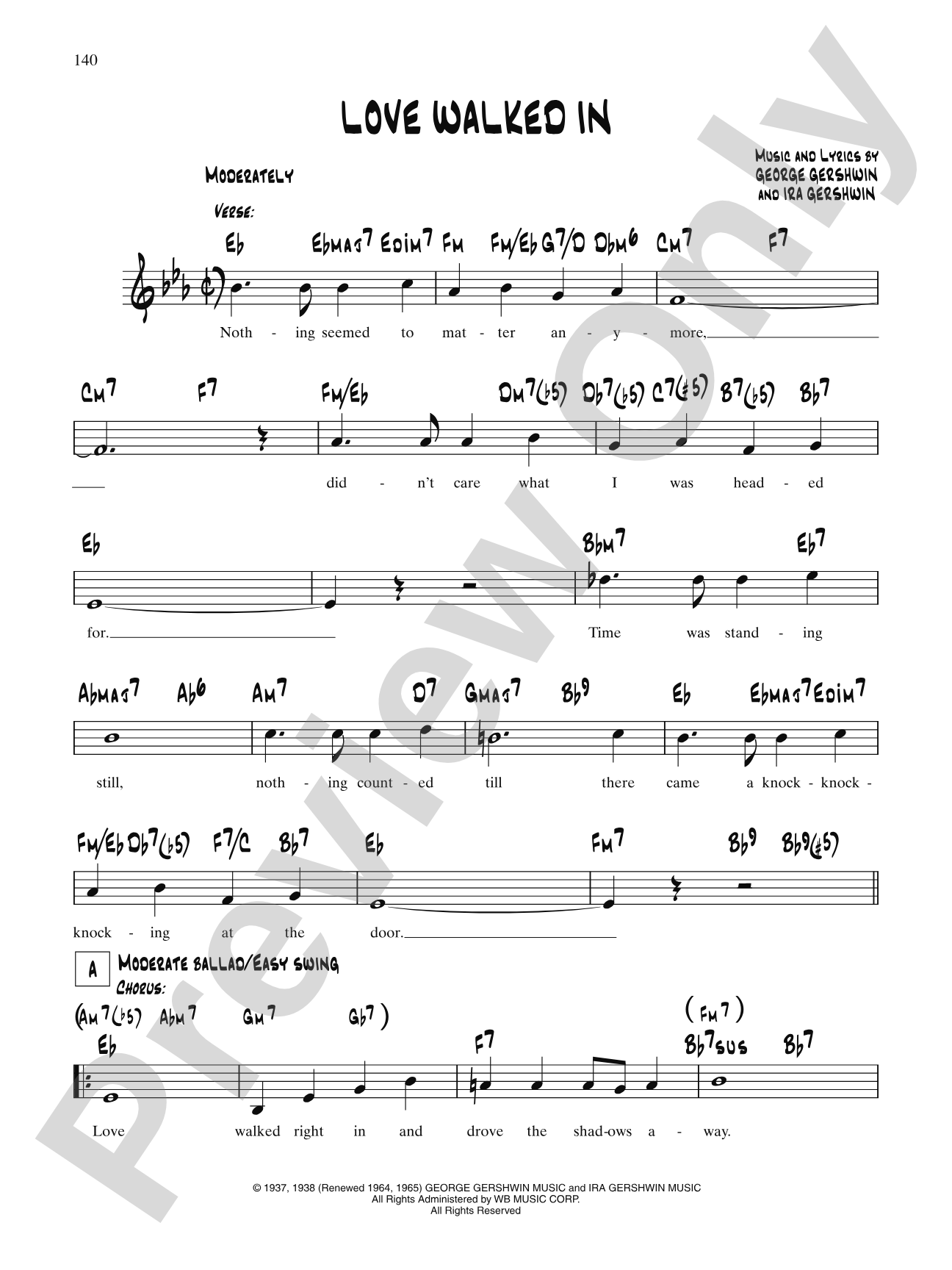

Love Walked In: Lead Sheet
Mel Tormé
Item: 00-PSL-000743
$4.99
One moment…
Description
This folio contains 26 classics from "The Velvet Fog" plus a bio and many photos from his personal archives. Titles include: Blue Moon * The Carioca * Fascinating Rhythm * A Foggy Day * I Got Rhythm * Isn't It a Pity * More Than You Know * Oh, Lady Be Good * 'Round Midnight * September Song * You Make Me Feel So Young.


Love Walked In: Lead Sheet isn't in MakeMusic Cloud just yet...but it could be. Let us know you'd like to see it, and you'll help shape what comes next. In the meantime, start a free trial and dive into thousands of interactive titles your students can play along with today.
Request This Title
Tell us you want it.
Start Your Free Trial
Explore everything that's ready to play right now.
Sample Audio
No sample audio found.
Sample Video
No sample videos found.
Additional Details
Series:
Legendary Performers Series
Publisher:
Alfred Music
Page Count:
112
SKU:
00-PSL-000743
More about this title
About the Artist: George Gershwin
George Gershwin (1898-1937) bridged classical and popular music with a compositional voice that felt entirely his own. His rhythmic vitality, sophisticated harmonies, and gift for melody made him one of the most influential American composers of the twentieth century. Gershwin's works for piano, orchestra, and musical theater became foundational to jazz pedagogy and remain central to understanding how concert music and vernacular song enriched each other during the jazz age.
Beyond his major concert works like Rhapsody in Blue, Gershwin's songs for stage and film revealed his mastery of songwriting craft. He collaborated with his brother Ira on lyrics and worked with leading lyricists of the day, creating standards that have outlasted their original contexts. His early death cut short a career of extraordinary momentum, yet his influence on melody, harmony, and the integration of jazz idioms into composed music continues to shape how musicians approach style, improvisation, and arrangement.
Why we love this
This collection pairs Gershwin's most enduring melodies with full harmonic notation, making it an essential resource for singers and pianists who want to understand how these standards are constructed. The inclusion of photographs and biographical material from Gershwin's archives contextualizes the music within his life and creative process, enriching every performance with historical depth.
What to expect
These songs pulse with rhythmic sophistication and melodic generosity. Whether you're navigating the sophisticated changes of a standard ballad or the infectious syncopation of an up-tempo number, Gershwin's voice remains unmistakable: urbane, witty, deeply emotional, and rooted in the language of jazz and the Broadway stage.
Who it's for
Pianists and singers working through the jazz standard repertoire, jazz students building fluency with common changes and classic melodies, and musicians preparing for auditions or recitals centered on American musical theater and popular song. This folio serves anyone deepening their connection to Gershwin's idiom and the broader tradition of American songwriting.
How to get the most out of it
- Study the chord changes before focusing on melody alone. Gershwin's harmonic language is sophisticated; understanding the progression beneath the tune opens interpretive possibilities and helps you find your own phrasing.
- Vary your approach to rubato based on the song's character. Ballads like 'A Foggy Day' and 'More Than You Know' invite expressive freedom, while rhythmic pieces like 'I Got Rhythm' need a steadier pulse with syncopation in the right places.
- Use the lyrical content and biographical notes to inform your interpretive choices. Knowing the context of a song and its original lyrical meaning shapes how you handle dynamics, articulation, and emotional color.
- Listen to multiple versions and singers on this material. Gershwin's songs have been recorded countless ways; exposure to different approaches will deepen your sense of what's essential to the tune and what's personal interpretation.
How to use it
Program selections from this collection alongside other American standards to build a concert that traces the evolution of popular song. Individual songs work well in recital settings, particularly when paired with art song or arranged alongside folk material. For teaching, use these lead sheets to develop students' ability to read chord notation, improvise over changes, and interpret a lyric-driven melody with sophistication.
Skills your students will build
- Reading lead sheet notation with chord symbols and melody
- Interpreting jazz harmonies and understanding voice leading in standards
- Balancing lyrical phrasing with rhythmic precision in syncopated melodies
- Developing interpretive choices based on harmonic content and historical context
- Sight-reading and performing familiar standards in a new arrangement or notation style