
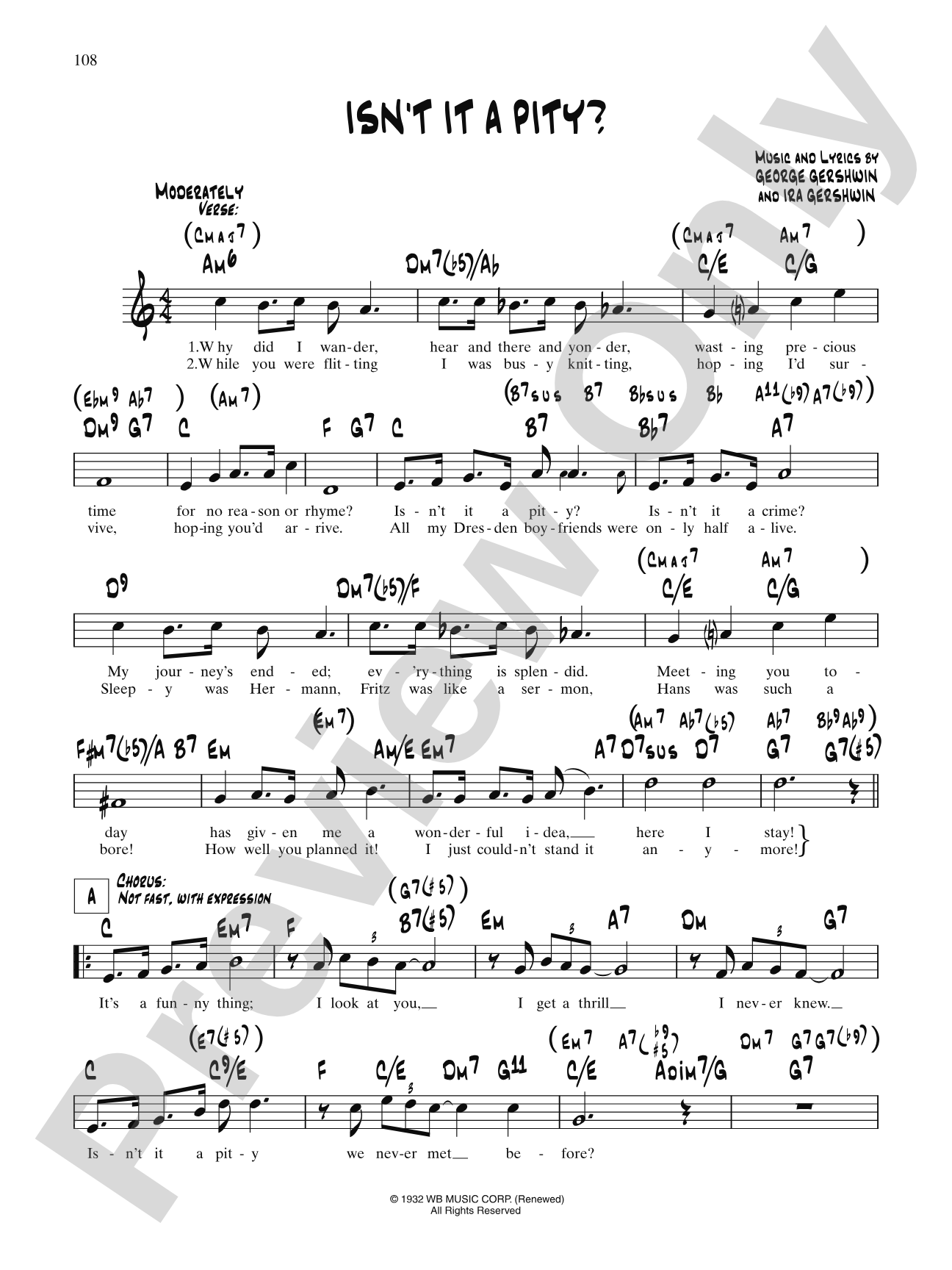

Isn't It A Pity? (From "Pardon My English"): Lead Sheet
Mel Tormé
Item: 00-PSL-000791
$4.99
One moment…
Description
This folio contains 26 classics from "The Velvet Fog" plus a bio and many photos from his personal archives. Titles include: Blue Moon * The Carioca * Fascinating Rhythm * A Foggy Day * I Got Rhythm * Isn't It a Pity * More Than You Know * Oh, Lady Be Good * 'Round Midnight * September Song * You Make Me Feel So Young.


Isn't It A Pity? (From "Pardon My English"): Lead Sheet isn't in MakeMusic Cloud just yet...but it could be. Let us know you'd like to see it, and you'll help shape what comes next. In the meantime, start a free trial and dive into thousands of interactive titles your students can play along with today.
Request This Title
Tell us you want it.
Start Your Free Trial
Explore everything that's ready to play right now.
Sample Audio
No sample audio found.
Sample Video
No sample videos found.
Additional Details
Series:
Legendary Performers Series
Publisher:
Alfred Music
Page Count:
112
SKU:
00-PSL-000791
More about this title
About the Artist: George Gershwin
George Gershwin (1898-1937) bridged classical and popular music in ways that still shape how we understand American composition. His gift for melody and harmonic sophistication made jazz and song standards respectable in concert halls, and his orchestrations influenced generations of arrangers and film composers. Gershwin's early death cut short a career that was already reshaping what American music could be.
Why we love this
This lead sheet gives pianists and vocalists immediate access to one of Gershwin's most poignant ballads in its original form. The chord symbols support improvisation and comping while the melody sits naturally for both instrumentalists and singers, making it equally at home in a jazz combo setting or a piano studio.
What to expect
A tender reflection wrapped in sophisticated harmony. The melody carries a wistful resignation, while the chord changes underneath suggest emotional complexity. This is introspective jazz phrasing at its most elegant.
Who it's for
Pianists developing jazz comping skills, vocalists building a standards repertoire, and music students studying Gershwin's harmonic language. Lead sheet arrangements invite both solo performance and collaborative playing, making this accessible to intermediate players through advanced musicians.
How to get the most out of it
- Pay attention to the harmonic movement underneath the melody; Gershwin's sophistication lies in how chords support the phrasing, not just decorate it.
- If you're accompanying a vocalist, leave space for expressive phrasing rather than filling every beat with comping figures.
- Explore the rubato inherent in the song's lyrical character; this ballad benefits from breathing room and dynamic shaping.
How to use it
Pair this with other Gershwin standards from the same era to create a set exploring his songwriting evolution. It works as a solo feature in a jazz concert or as part of a vocalist's program exploring American song standards from the early 20th century.
Skills your students will build
- Reading chord symbols and interpreting jazz harmony
- Accompanying vocalists with taste and sensitivity
- Recognizing and performing Gershwin's harmonic vocabulary
- Shaping phrasing over extended melodic lines
- Building improvisation from a lead sheet foundation