
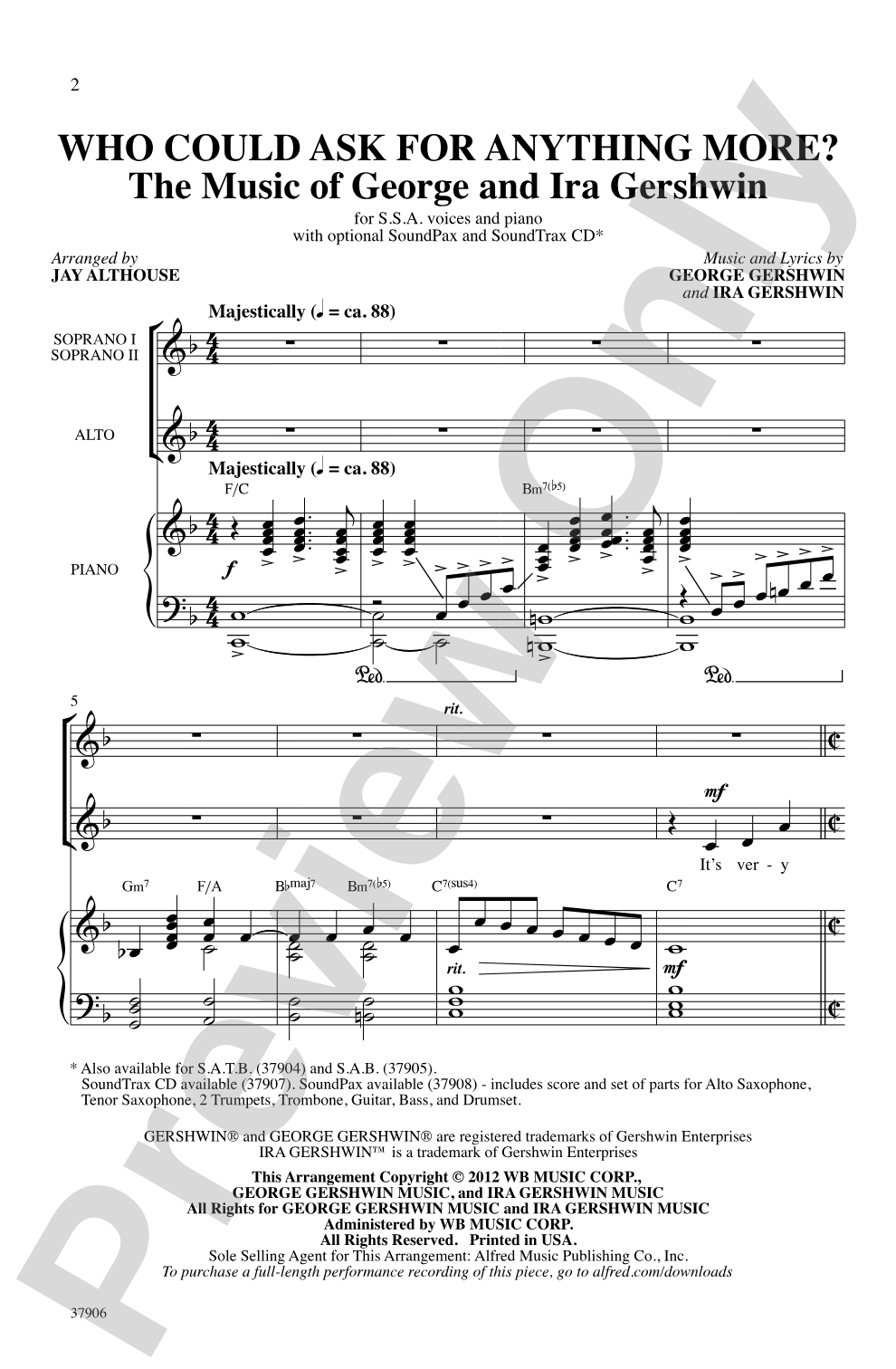
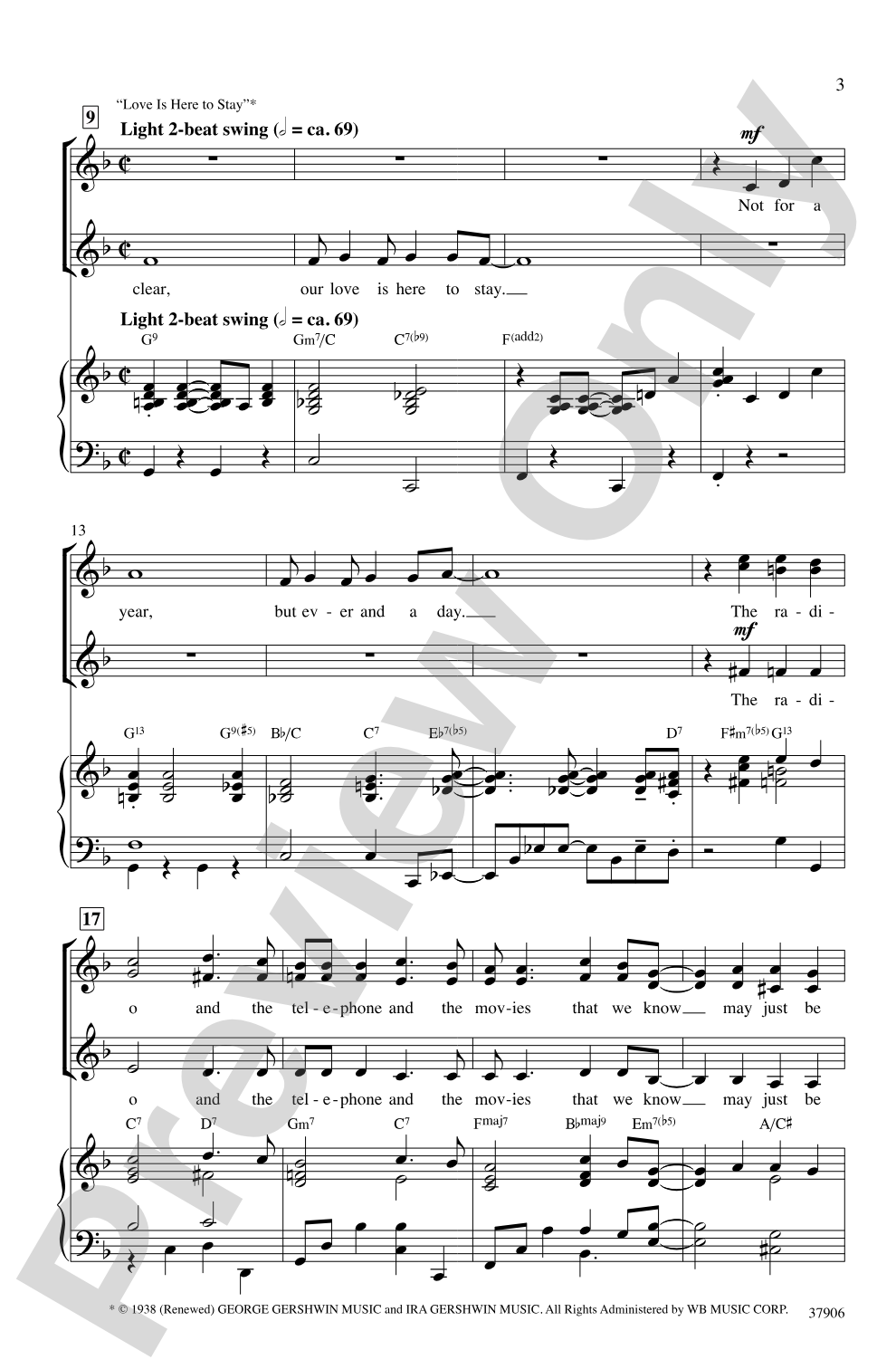
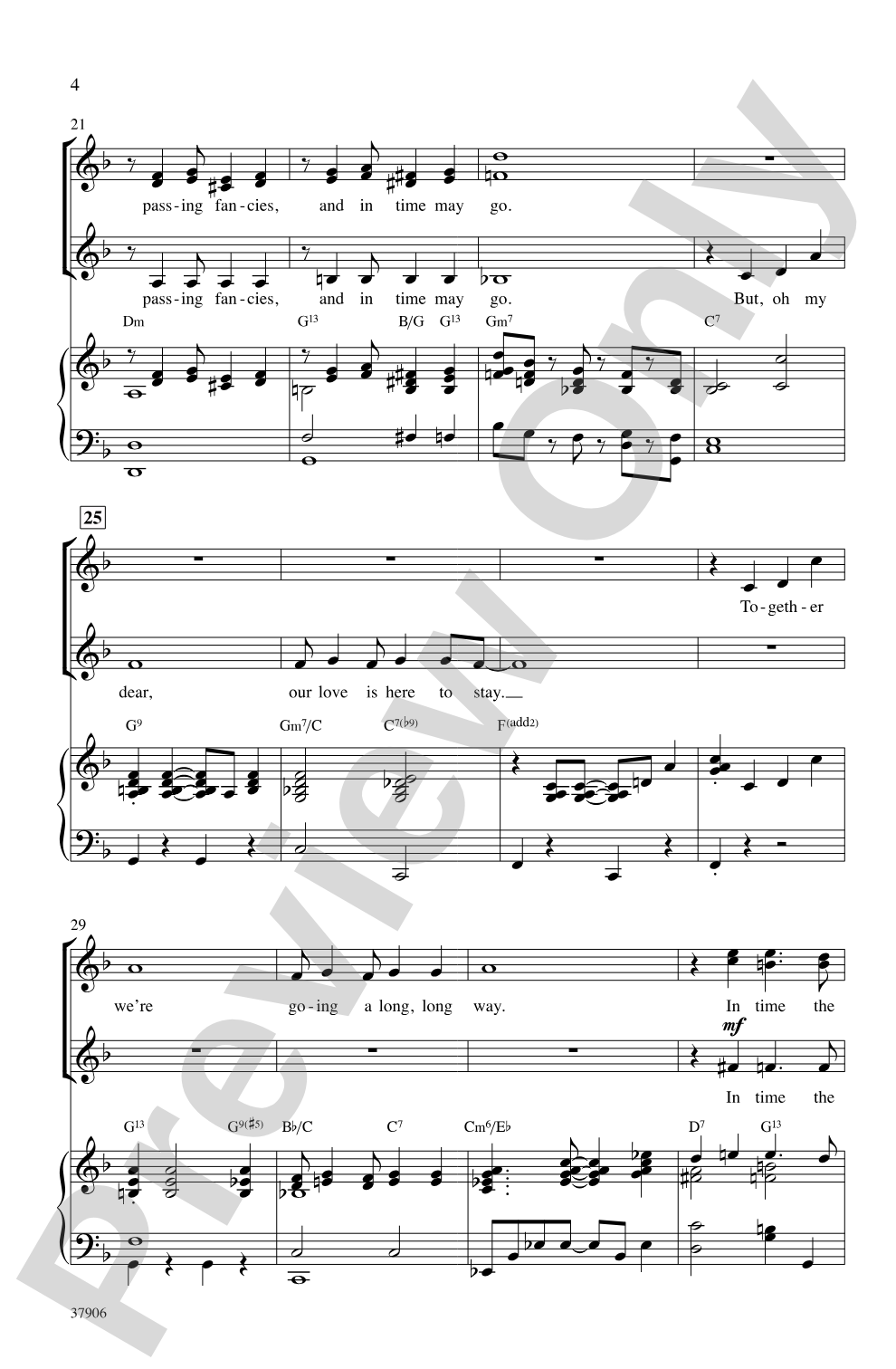
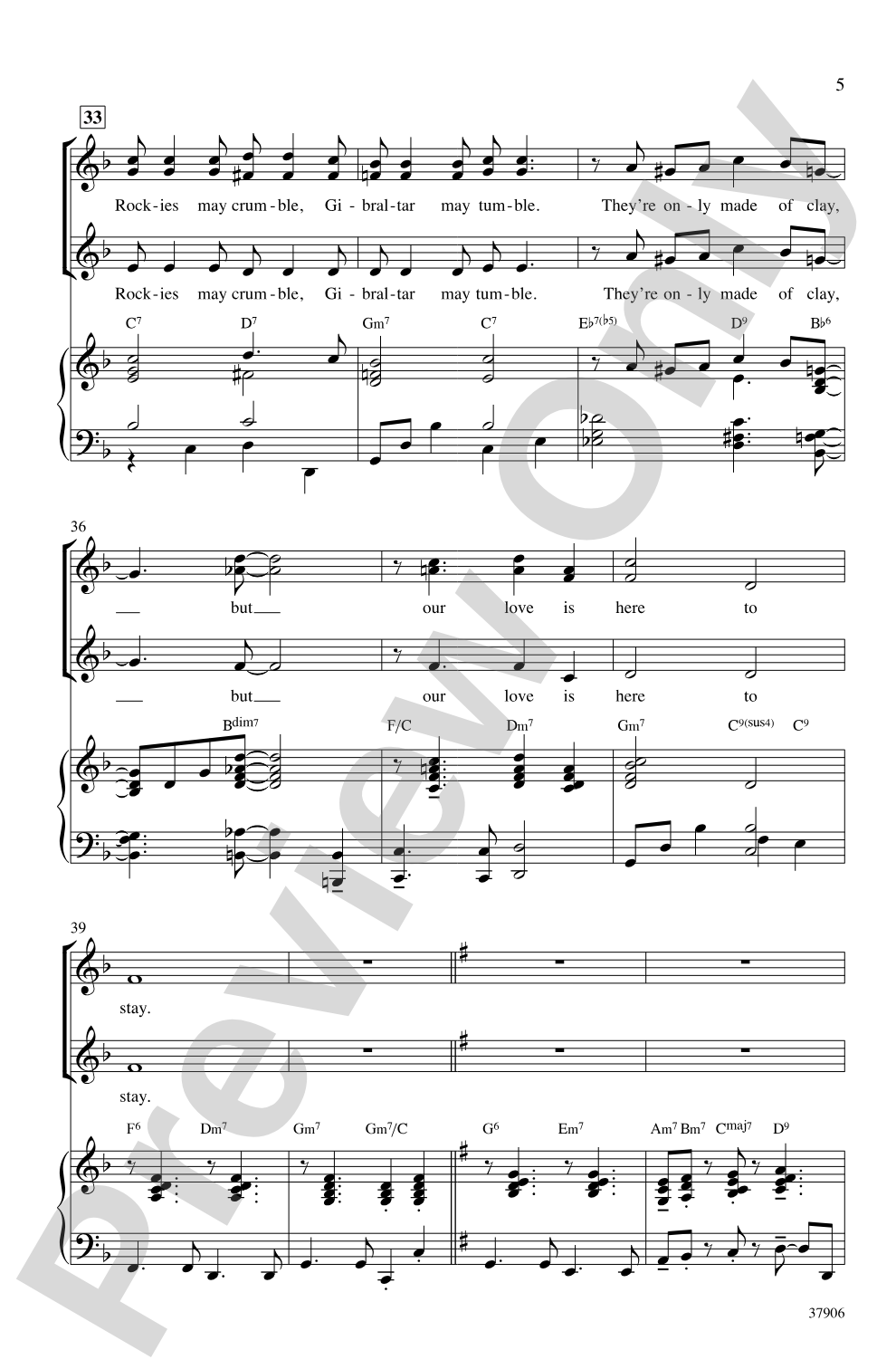
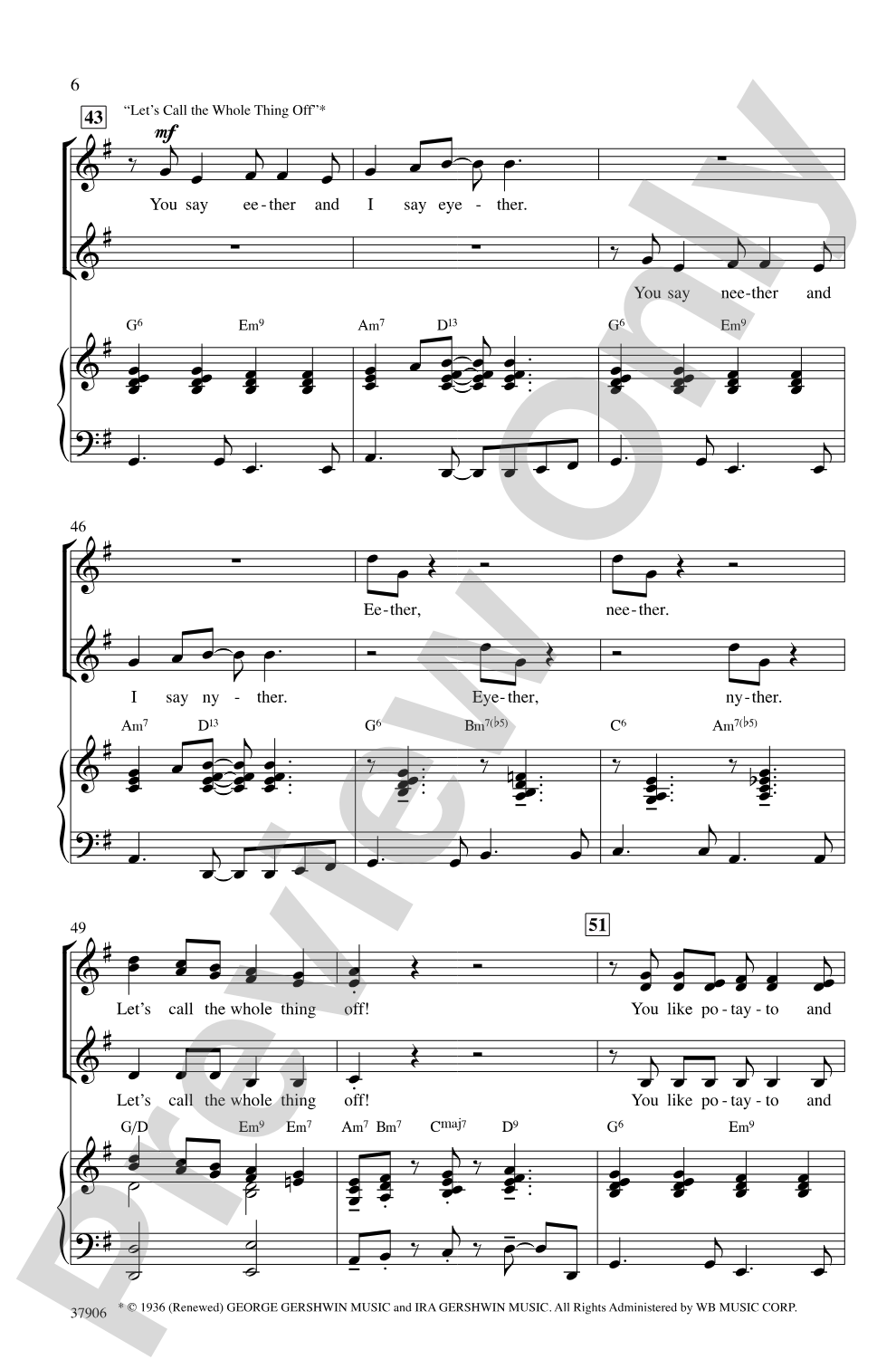
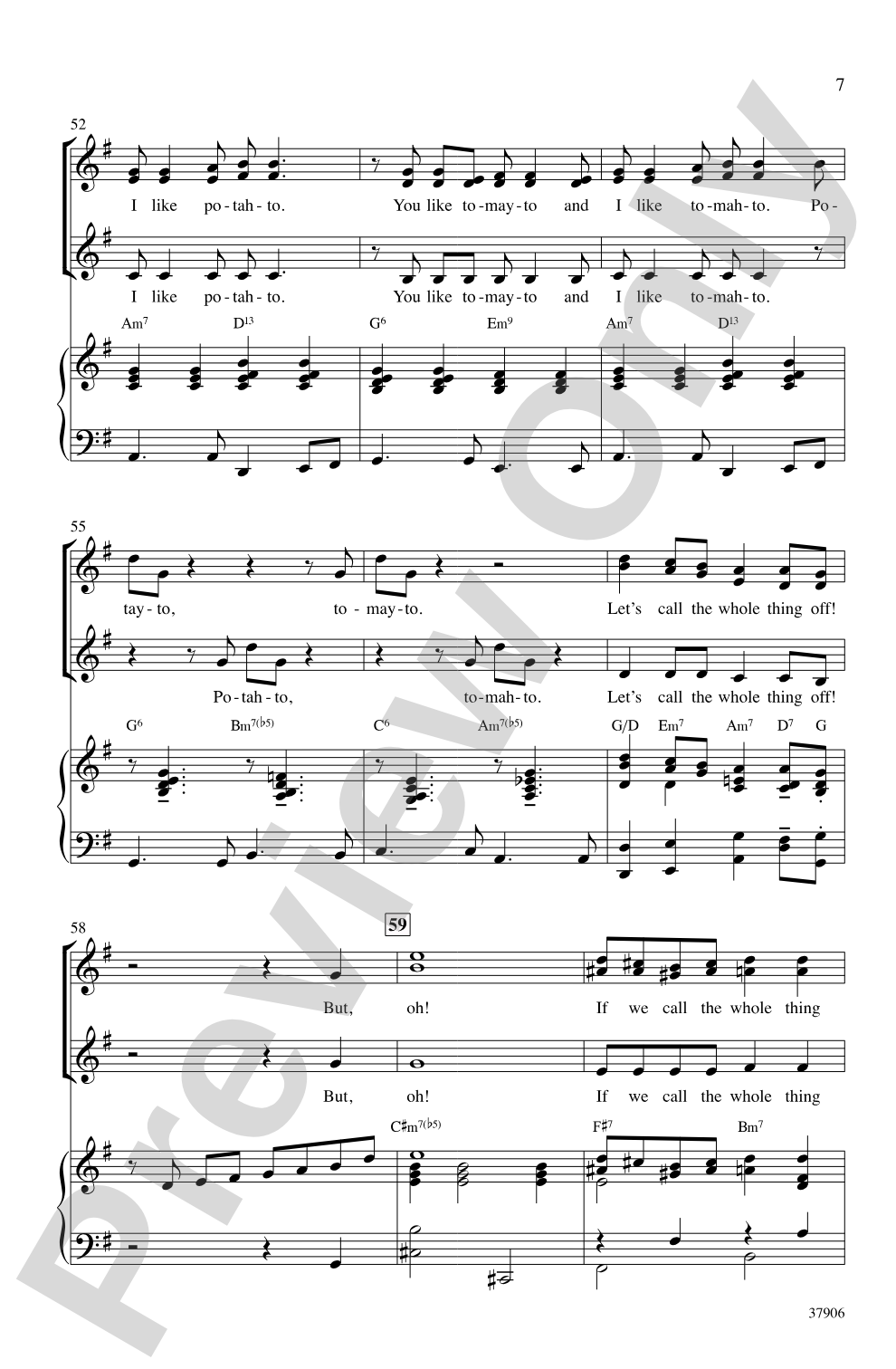

Who Could Ask for Anything More?: SSA Choral Octavo
Featuring: Love Is Here to Stay / Let's Call the Whole Thing Off / Someone to Watch Over Me / 'S Wonderful / Nice Work If You Can Get It / Embraceable You / I Got Rhythm
Music by George and Ira Gershwin / arr. Jay Althouse
Item: 00-PO-0001263
$3.50
Minimum order quantity: 20 copies
One moment…
Related Items
Who Could Ask for Anything More?: SoundTrax Digital Audio Download |
$45.99
|
View | |
Who Could Ask for Anything More?: SATB Choral Octavo |
$3.50
|
View | |
Who Could Ask for Anything More?: SAB Choral Octavo |
$3.50
|
View | |
Who Could Ask for Anything More?: Choral SoundPax |
$55.00
|
View | |
Who Could Ask for Anything More?: SATB Choral Octavo |
$3.50
|
View | |
Who Could Ask for Anything More?: SAB Choral Octavo |
$3.50
|
View | |
Who Could Ask for Anything More?: SSA Choral Octavo |
$3.50
|
View | |
Who Could Ask for Anything More?: Choral Octavo SoundTrax CD |
$45.99
|
View | |
Who Could Ask for Anything More?: Choral SoundPax |
$55.00
|
View |
Description
Pay tribute to one of America's all-time greatest songwriting teams! These seven memorable compositions of George and Ira Gershwin celebrate life, love, and music. Enjoy this 8 1/2-minute medley of some of their best-known songs, arranged with flair and style.


Who Could Ask for Anything More?: SSA Choral Octavo isn't in MakeMusic Cloud just yet...but it could be. Let us know you'd like to see it, and you'll help shape what comes next. In the meantime, start a free trial and dive into thousands of interactive titles your students can play along with today.
Request This Title
Tell us you want it.
Start Your Free Trial
Explore everything that's ready to play right now.
Sample Audio
1
Audio File
--:--
0:00
0:00
Sample Video
No sample videos found.
Additional Details
Series:
Alfred Pop Choral Series
Publisher:
Alfred Music
Page Count:
28
SKU:
00-PO-0001263
More about this title
About the Composer: George Gershwin
George Gershwin (1898–1937) bridged the worlds of classical concert music and American popular song with unmatched fluency. His melodies became the soundtrack to American optimism and style, from Broadway to the concert hall, and his harmonic language drew from both jazz and European modernism. Working alongside his lyricist brother Ira, Gershwin created some of the 20th century's most enduring standards, compositions that remain central to vocal and instrumental repertoires in schools and concert halls alike.
Why we love this
Jay Althouse's arrangement captures the wit and rhythmic vitality of these Gershwin classics without overwhelming your singers. The medley format lets you program an entire musical era in eight minutes, and the SSA voicing keeps parts accessible while maintaining the sophistication audiences expect from this material.
What to expect
The piece sparkles with the glamour and optimism of 1920s and '30s New York, moving between romantic ballads and up-tempo swing numbers with style and charm. Each song feels complete yet connected, creating a journey through some of the most beloved melodies in American song.
Who it's for
This arrangement works well for treble choirs at the high school level and beyond, including community and collegiate choirs seeking accessible yet sophisticated popular material. Directors programming a Gershwin-themed concert, a jazz or American music unit, or a pops show will find this medley both crowd-pleasing and musically substantial.
How to get the most out of it
- Shape the melodic line with attention to the syncopated rhythms characteristic of Gershwin's style; let the natural swing of the phrases emerge without forcing.
- Balance ensemble sound by checking that inner voice lines are audible, particularly in the faster sections where harmonic movement creates texture.
- Use the recorded accompaniment to establish both tempo and the jazz-influenced feel, then rehearse without it to build vocal independence.
- Pay attention to lyrical clarity in the transitions between songs; these moments define the medley's pacing and give the listener time to recognize each new tune.
How to use it
Open a spring or fall concert with this medley to set an upbeat, sophisticated tone, or pair it with other American popular classics for a themed evening. The eight-minute length makes it ideal for filling a concert segment while the familiar melodies ensure strong audience recognition.
Skills your students will build
- Singing syncopated rhythms and swing feel characteristic of jazz-influenced popular music
- Balancing inner voice independence with ensemble blend in four-part SSA/SSAA writing
- Executing smooth transitions between contrasting tempos and moods within a medley format
- Achieving lyrical clarity and diction in rapid-fire text setting