
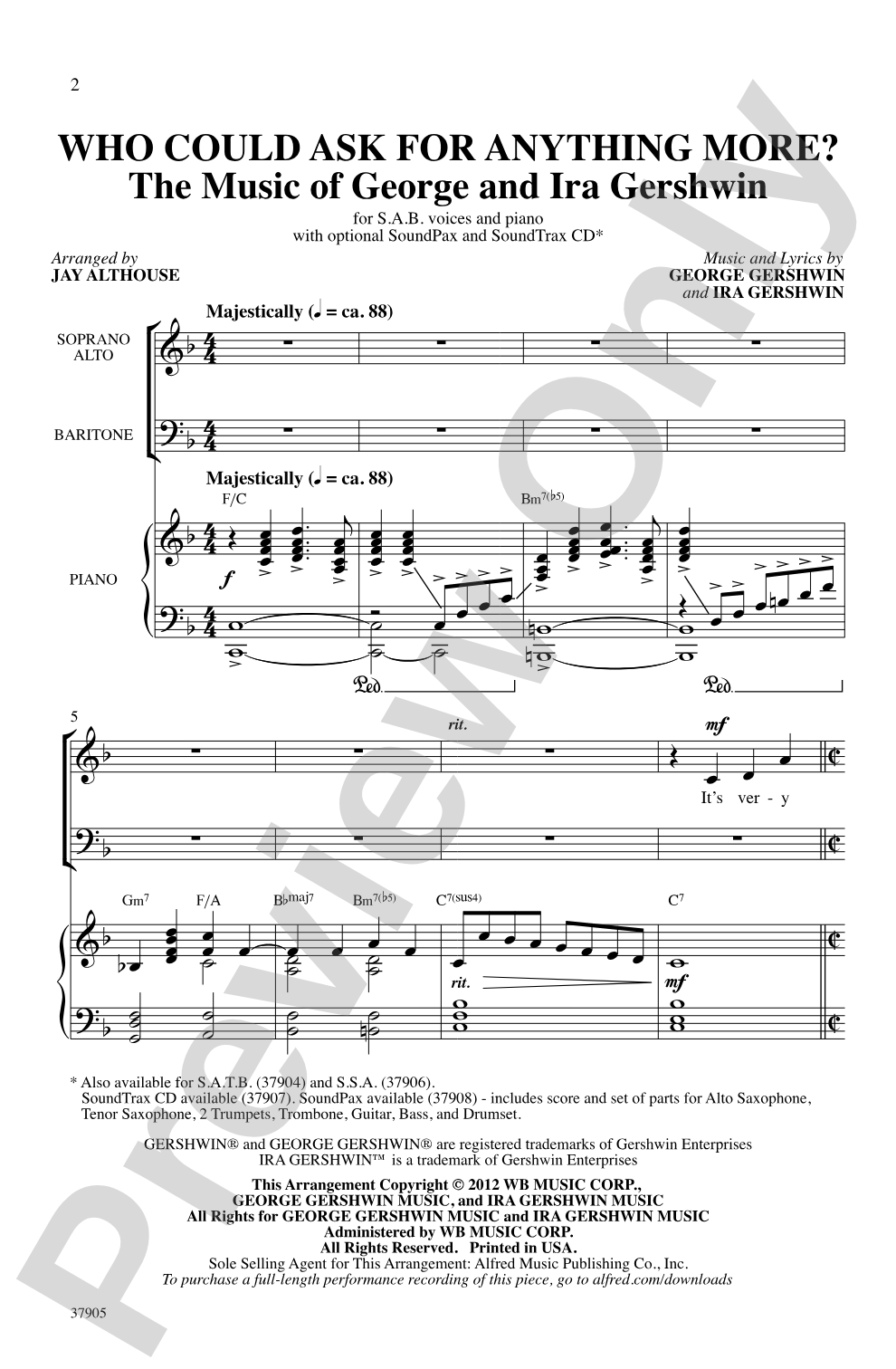
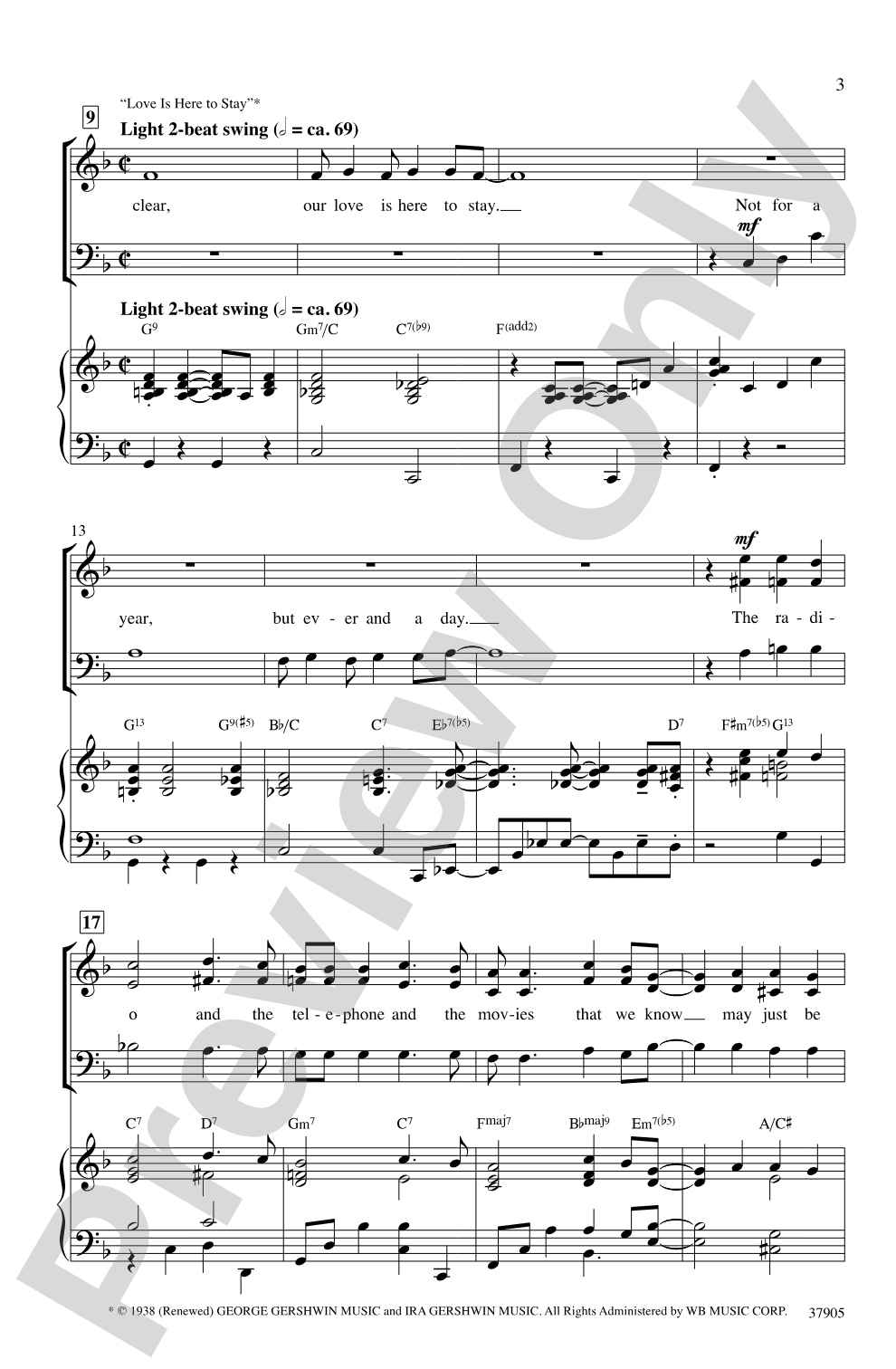
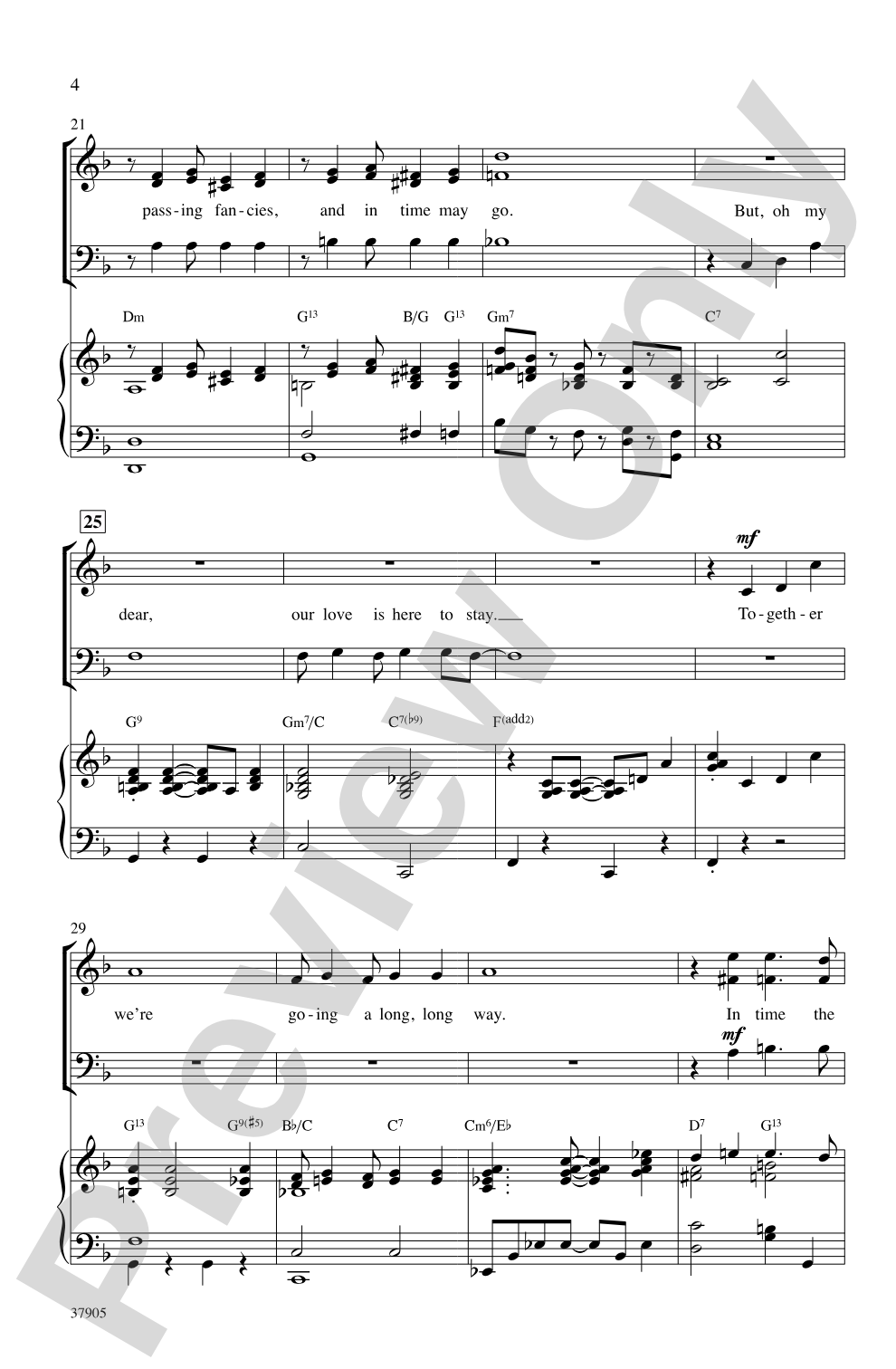
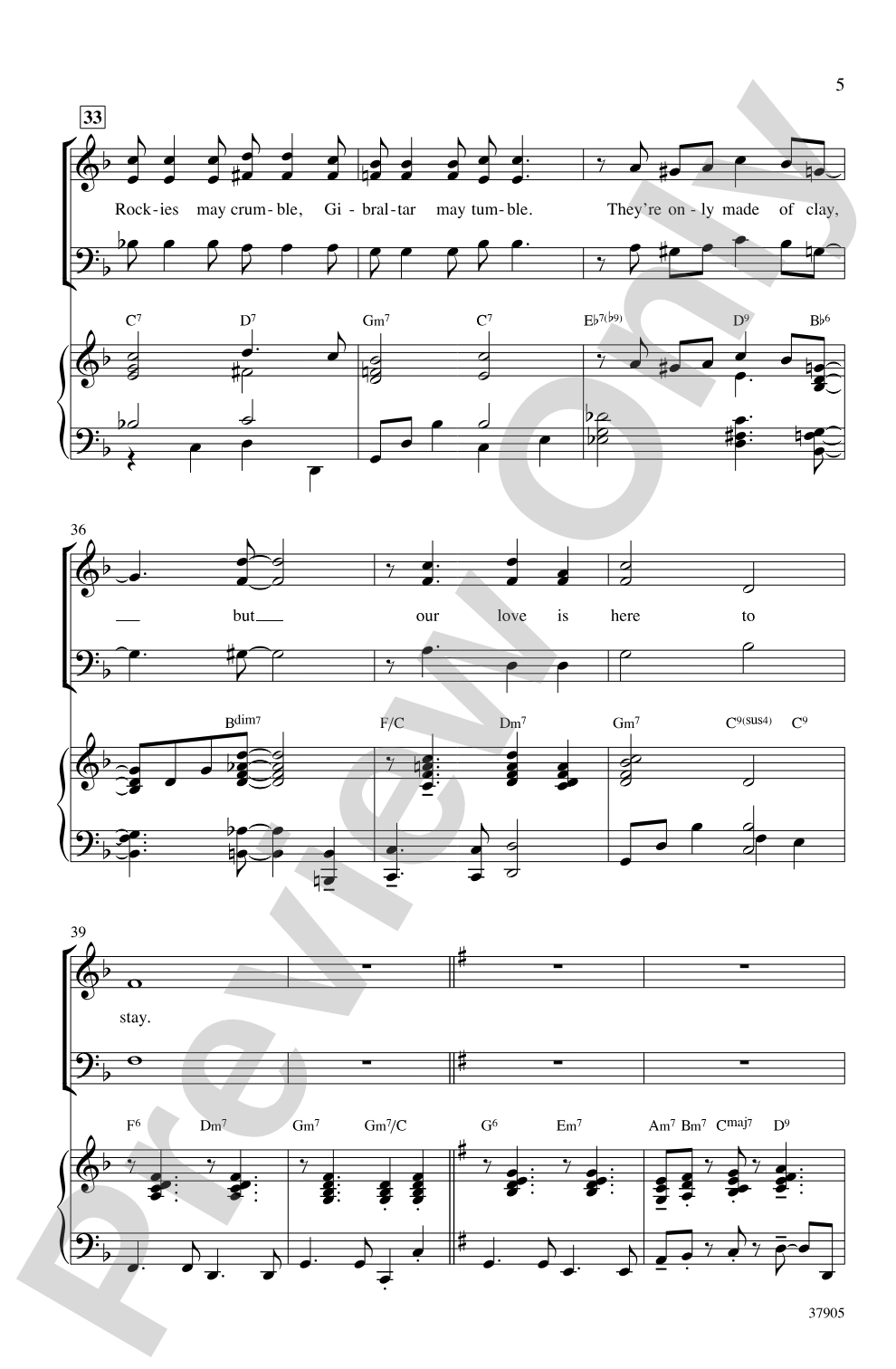
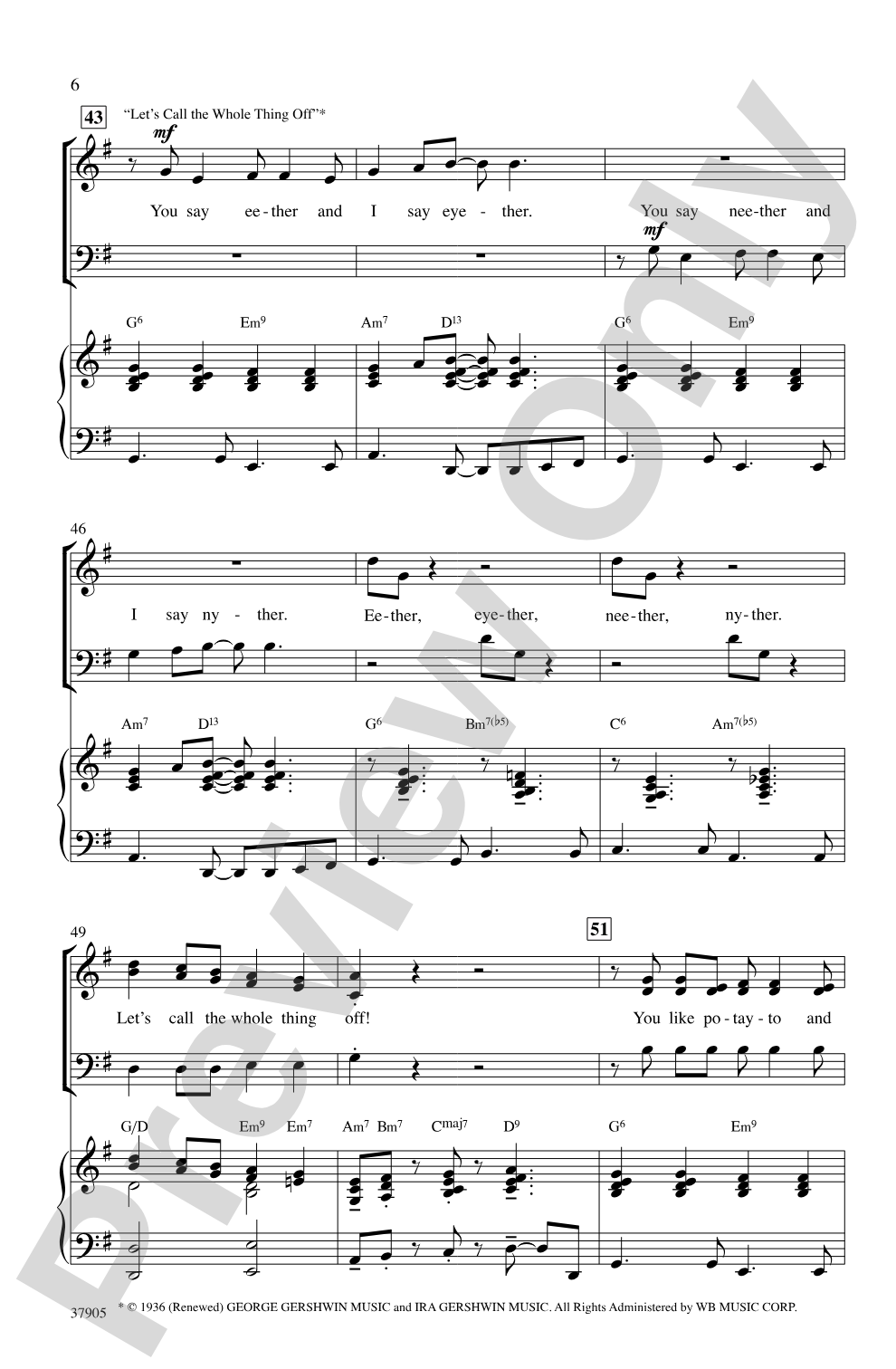
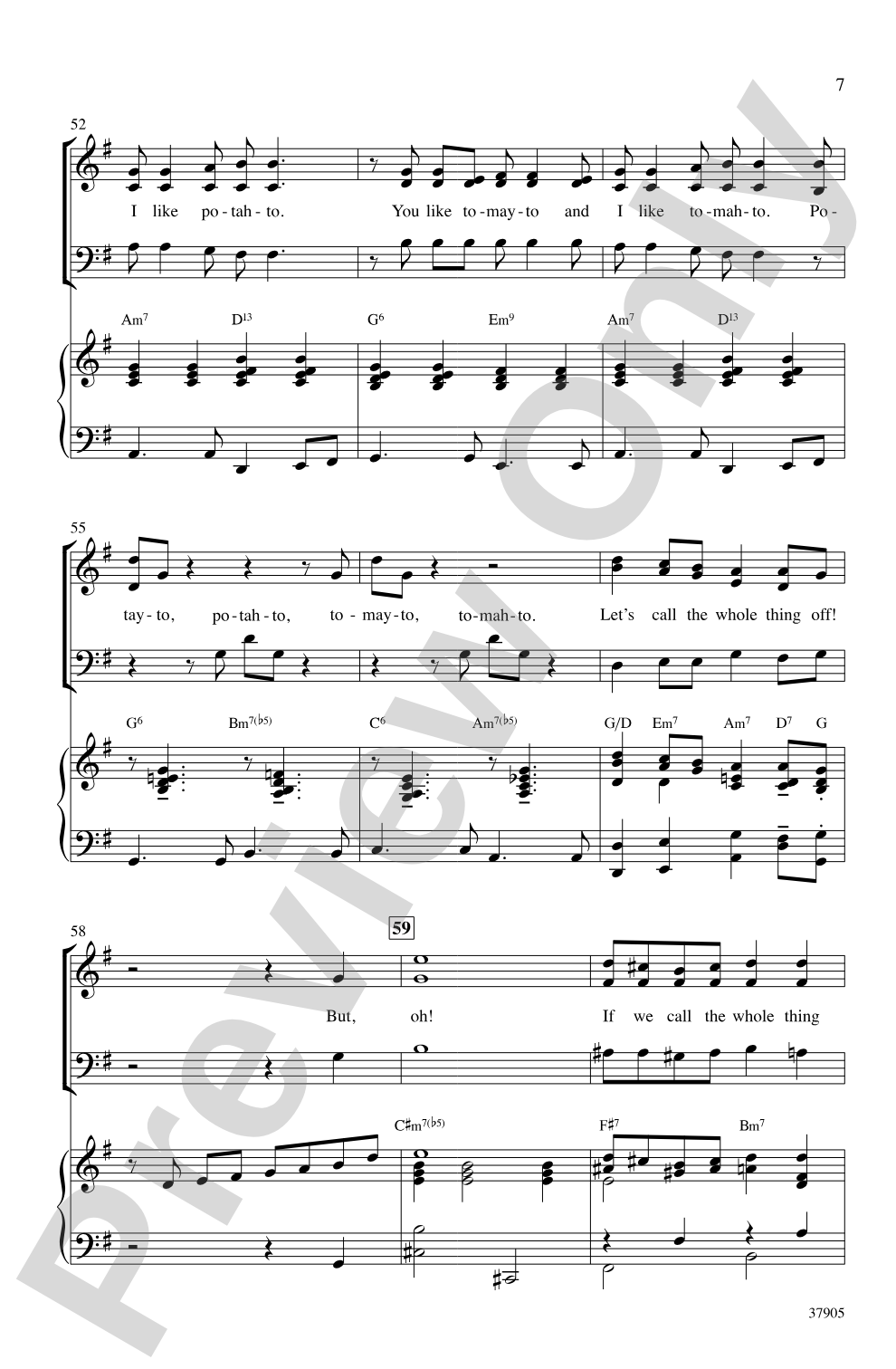

Who Could Ask for Anything More?: SAB Choral Octavo
Featuring: Love Is Here to Stay / Let's Call the Whole Thing Off / Someone to Watch Over Me / 'S Wonderful / Nice Work If You Can Get It / Embraceable You / I Got Rhythm
Music by George and Ira Gershwin / arr. Jay Althouse
Item: 00-PO-0001262
$3.50
Minimum order quantity: 20 copies
One moment…
Related Items
Who Could Ask for Anything More?: SoundTrax Digital Audio Download |
$45.99
|
View | |
Who Could Ask for Anything More?: SATB Choral Octavo |
$3.50
|
View | |
Who Could Ask for Anything More?: SSA Choral Octavo |
$3.50
|
View | |
Who Could Ask for Anything More?: Choral SoundPax |
$55.00
|
View | |
Who Could Ask for Anything More?: SATB Choral Octavo |
$3.50
|
View | |
Who Could Ask for Anything More?: SAB Choral Octavo |
$3.50
|
View | |
Who Could Ask for Anything More?: SSA Choral Octavo |
$3.50
|
View | |
Who Could Ask for Anything More?: Choral Octavo SoundTrax CD |
$45.99
|
View | |
Who Could Ask for Anything More?: Choral SoundPax |
$55.00
|
View |
Description
Pay tribute to one of America's all-time greatest songwriting teams! These seven memorable compositions of George and Ira Gershwin celebrate life, love, and music. Enjoy this 8 1/2-minute medley of some of their best-known songs, arranged with flair and style.


Who Could Ask for Anything More?: SAB Choral Octavo isn't in MakeMusic Cloud just yet...but it could be. Let us know you'd like to see it, and you'll help shape what comes next. In the meantime, start a free trial and dive into thousands of interactive titles your students can play along with today.
Request This Title
Tell us you want it.
Start Your Free Trial
Explore everything that's ready to play right now.
Sample Audio
1
Audio File
--:--
0:00
0:00
Sample Video
No sample videos found.
Additional Details
Series:
Alfred Pop Choral Series
Publisher:
Alfred Music
Page Count:
28
SKU:
00-PO-0001262
More about this title
About the Composer: George Gershwin
George Gershwin (1898-1937) bridged the worlds of classical composition and American popular song with a fluency that few composers have matched. His gift for melody and harmonic sophistication transformed Tin Pan Alley conventions into art songs that endure across concert halls and classrooms alike.
Ira Gershwin (1896-1983) was George's lyricist and creative partner, crafting witty, singable words that captured the spirit of early 20th-century America. His collaboration with George produced some of the most performed songs in the American songbook, and his lyrics remain models of craft for musicians studying song composition and arrangement.
Why we love this
Jay Althouse's arrangement captures the swagger and sophistication of Gershwin's originals without overwhelming a three-part choir. The medley structure lets you program substantial musical substance in eight minutes, and the recorded accompaniment gives singers the security to focus on style, phrasing, and the jazz-inflected harmonies that define these songs.
What to expect
This medley sparkles with the optimism and elegance of 1920s-30s New York. The Gershwin sensibility runs throughout: sophisticated yet accessible, witty yet warm, and always deeply rooted in melody. There's a buoyancy here, a sense that life and music are things to celebrate.
Who it's for
Choirs with solid three-part mixed voicing and singers who can handle the rhythmic precision and lyrical nuance that Gershwin demands. This works beautifully for groups seeking concert material that connects with audiences across age ranges while still offering genuine musical challenge.
How to get the most out of it
- Shape the phrasing around the lyric, not the bar line. Gershwin songs breathe like speech, so practice singing through musical phrases rather than mechanically respecting rests.
- Balance the part writing carefully; upper voices carry most melodic material, but lower voices anchor the harmonies that give these arrangements their character. Blend rather than blend away.
- Work with the recorded accompaniment early so singers internalize the rhythmic pocket and style of each song. The jazz inflections and syncopations need to feel natural, not academic.
- Highlight the personality shifts between songs. Each tune has its own temperament, from the romantic warmth of one song to the upbeat celebration of another. Directors should coach singers to reset emotionally between sections.
How to use it
Program this as your show-stopper on a pops or standards concert, or pair it with other American songbook material for a themed set. At eight minutes, it anchors a concert segment without monopolizing time, and the arrangement's polish and recognizability make it a reliable audience favorite.
Skills your students will build
- Singing jazz-inflected rhythms and syncopation
- Phrasing lyrical lines with conversational naturalness
- Balancing inner harmony voices while supporting the melodic line
- Executing style-appropriate articulation and dynamics across multiple song styles within a single piece
- Following recorded accompaniment with precision