
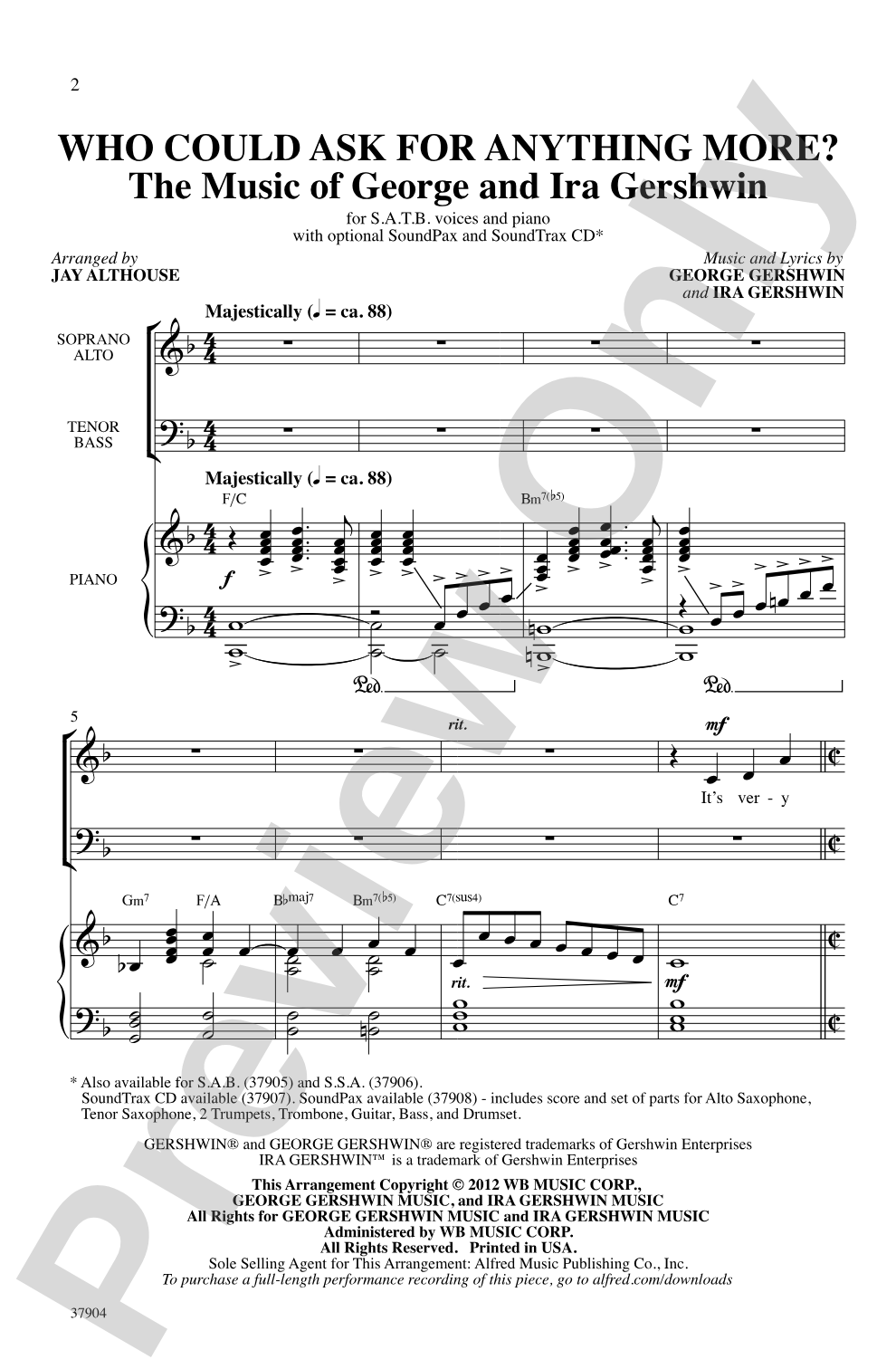
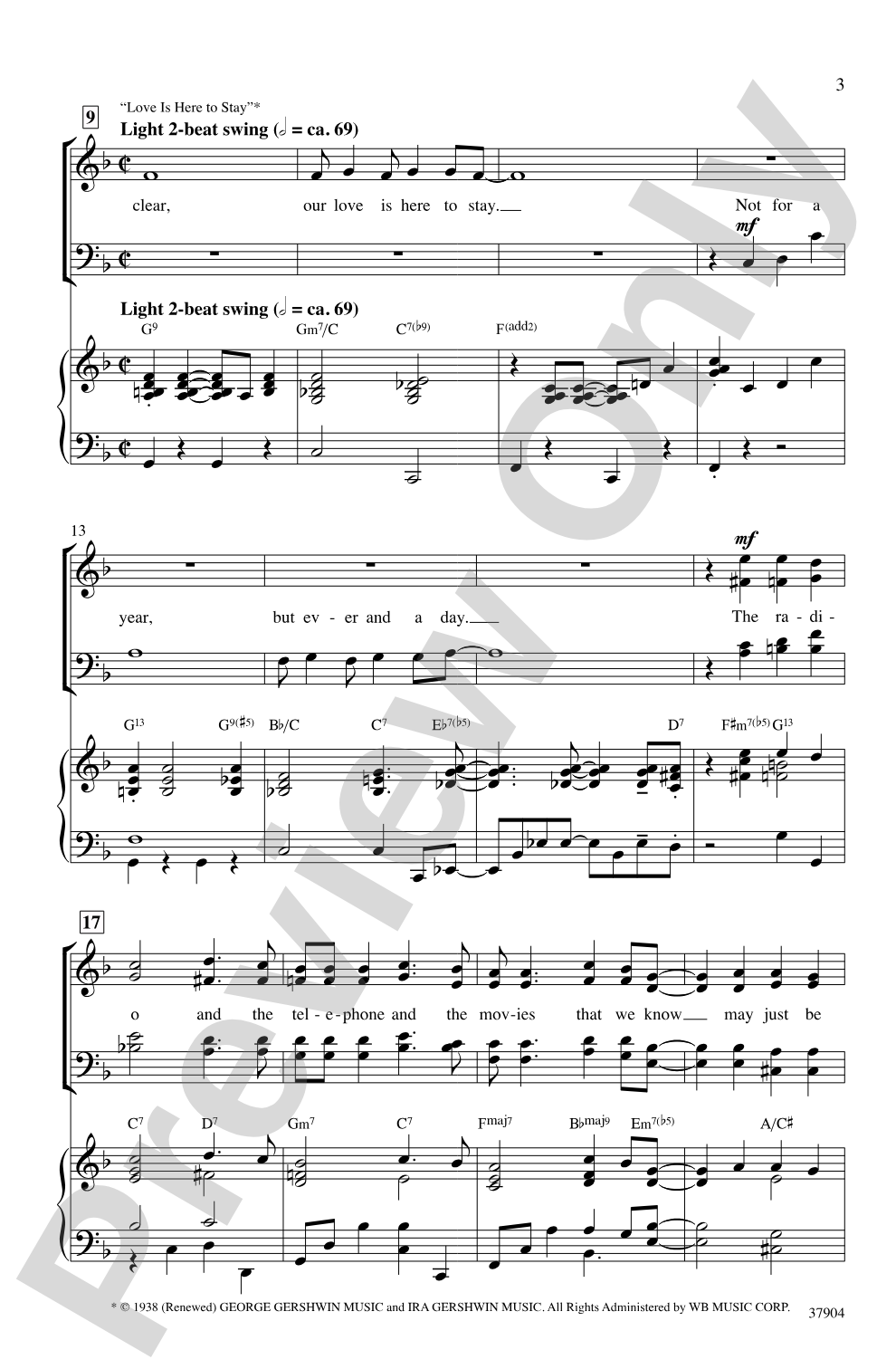
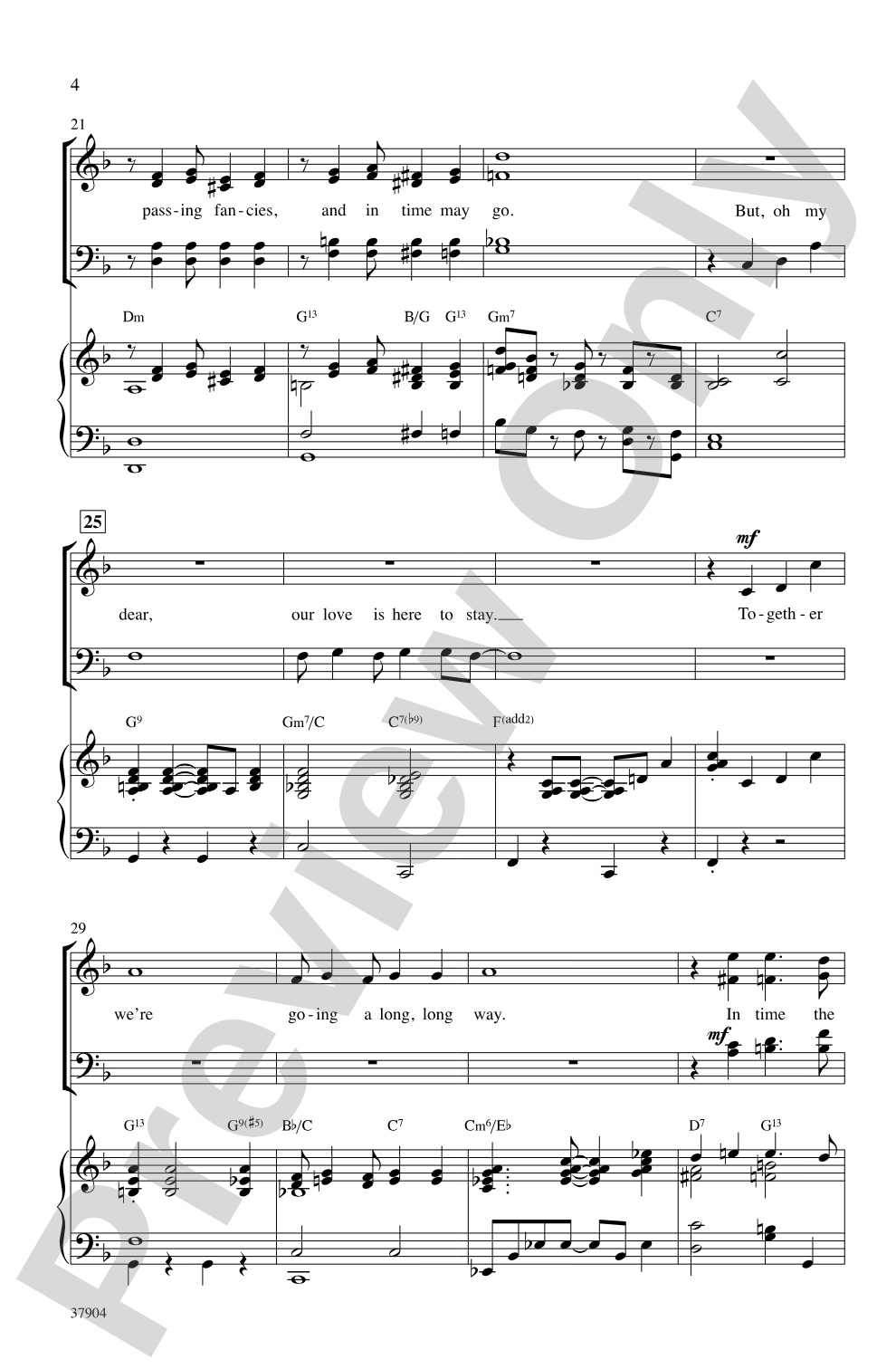
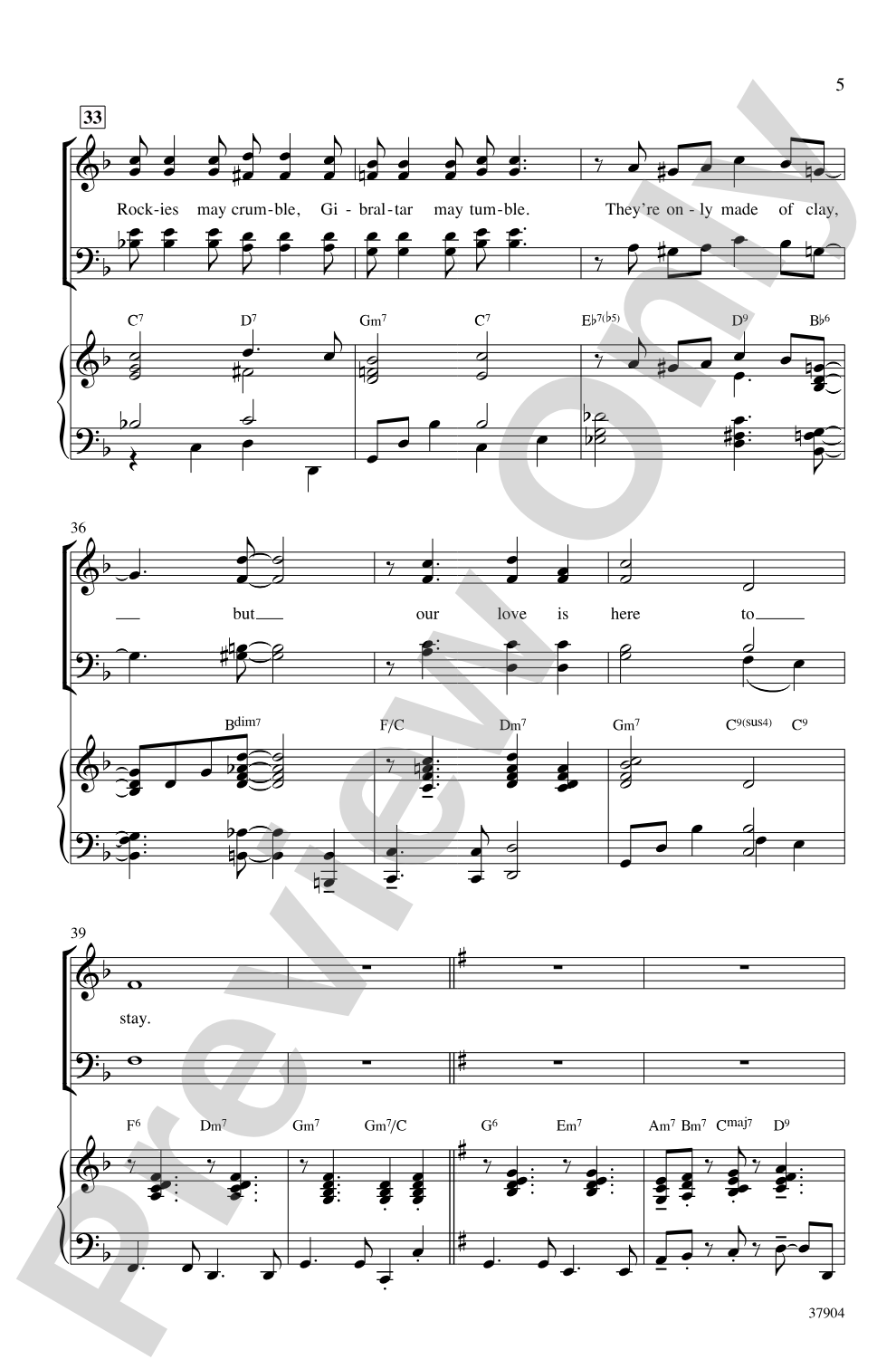

Who Could Ask for Anything More?: SATB Choral Octavo
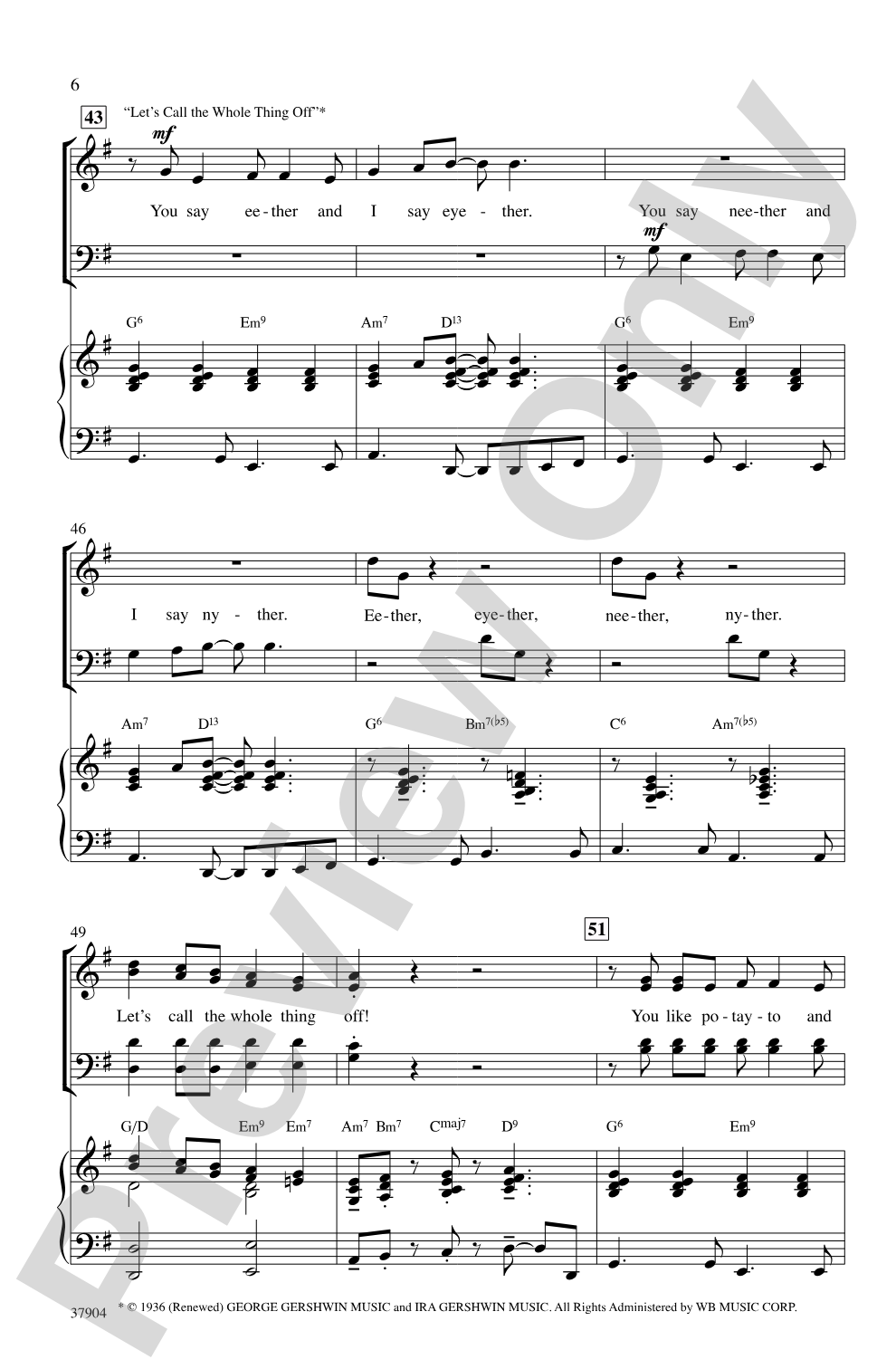
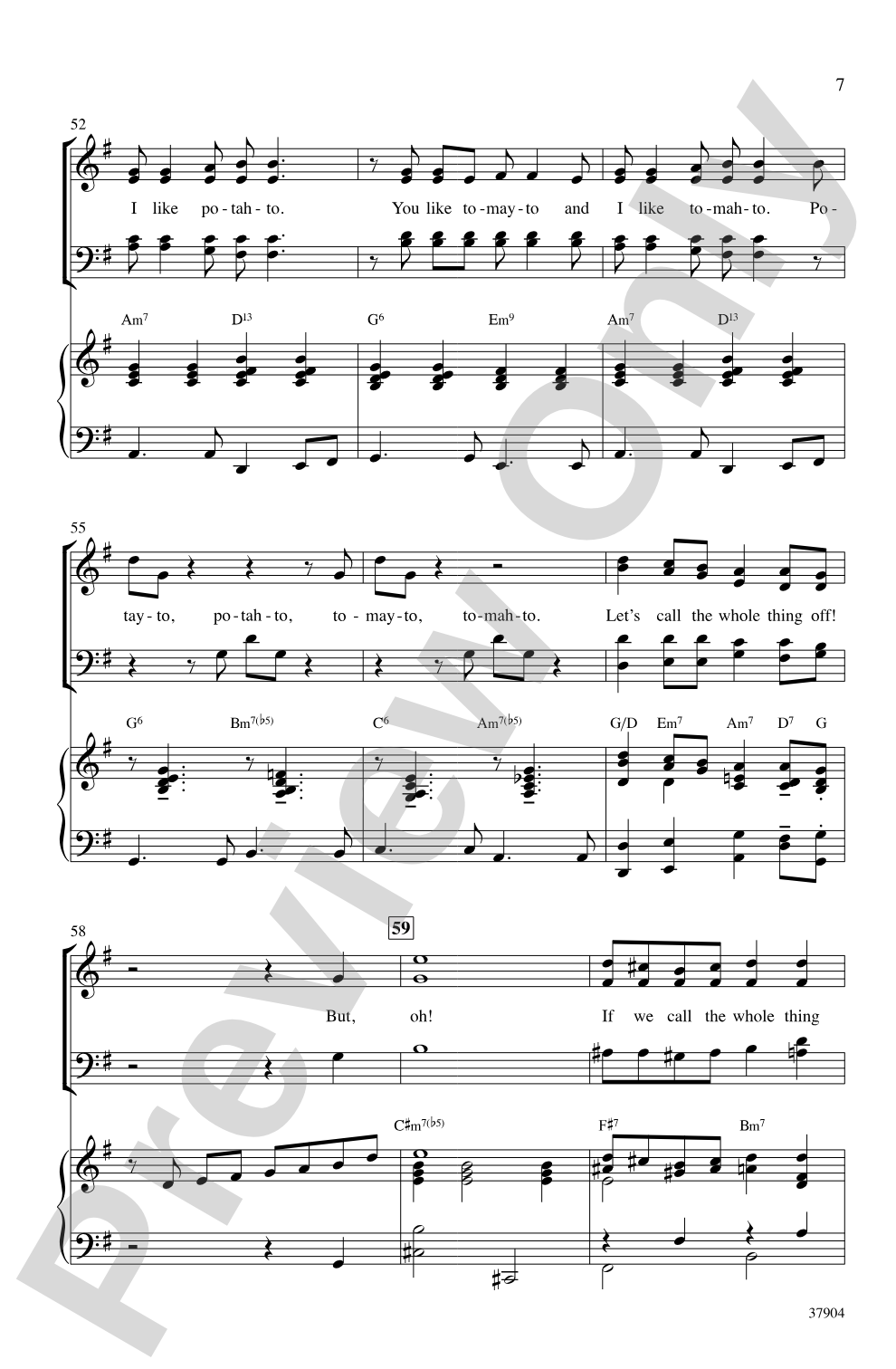
Featuring: Love Is Here to Stay / Let's Call the Whole Thing Off / Someone to Watch Over Me / 'S Wonderful / Nice Work If You Can Get It / Embraceable You / I Got Rhythm
Music by George and Ira Gershwin / arr. Jay Althouse
Item: 00-PO-0001261
$3.50
Minimum order quantity: 20 copies
One moment…
Related Items
Who Could Ask for Anything More?: SoundTrax Digital Audio Download |
$45.99
|
View | |
Who Could Ask for Anything More?: SAB Choral Octavo |
$3.50
|
View | |
Who Could Ask for Anything More?: SSA Choral Octavo |
$3.50
|
View | |
Who Could Ask for Anything More?: Choral SoundPax |
$55.00
|
View | |
Who Could Ask for Anything More?: SATB Choral Octavo |
$3.50
|
View | |
Who Could Ask for Anything More?: SAB Choral Octavo |
$3.50
|
View | |
Who Could Ask for Anything More?: SSA Choral Octavo |
$3.50
|
View | |
Who Could Ask for Anything More?: Choral Octavo SoundTrax CD |
$45.99
|
View | |
Who Could Ask for Anything More?: Choral SoundPax |
$55.00
|
View |
Description
Pay tribute to one of America's all-time greatest songwriting teams! These seven memorable compositions of George and Ira Gershwin celebrate life, love, and music. Enjoy this 8 1/2-minute medley of some of their best-known songs, arranged with flair and style.


Who Could Ask for Anything More?: SATB Choral Octavo isn't in MakeMusic Cloud just yet...but it could be. Let us know you'd like to see it, and you'll help shape what comes next. In the meantime, start a free trial and dive into thousands of interactive titles your students can play along with today.
Request This Title
Tell us you want it.
Start Your Free Trial
Explore everything that's ready to play right now.
Sample Audio
1
Audio File
--:--
0:00
0:00
Sample Video
No sample videos found.
Additional Details
Series:
Alfred Archive Edition: Alfred Pop Choral Series
Publisher:
Alfred Music
Page Count:
28
SKU:
00-PO-0001261
More about this title
About the Composer: George Gershwin
George Gershwin (1898-1937) revolutionized American popular music by merging jazz idioms, blues inflections, and sophisticated harmonic language with Broadway theater and concert hall ambitions. His partnership with lyricist brother Ira produced some of the twentieth century's most enduring songs, works that have become standard repertoire for singers and instrumentalists alike. Gershwin's influence on music education extends far beyond his lifetime; his compositions bridge the gap between vernacular and concert music, making them invaluable for choirs seeking to engage students with repertoire that feels contemporary and relevant despite its 1920s-1930s origins.
Why we love this
Jay Althouse's arrangement captures the effervescence and harmonic sophistication of Gershwin's originals while tailoring them for mixed voices. The medley format keeps energy high across eight minutes, preventing any single number from overstaying its welcome, and the orchestration choices (with optional instrumental parts) make this accessible whether you're singing a cappella or adding small ensemble support. Programming seven Gershwin standards in one rehearsal package gives you immediate credibility with your singers and audiences.
What to expect
Witty, urbane, and buoyant. These songs radiate the optimism and infectious charm of 1920s-30s Manhattan; they swing with subtle jazz inflection, pivot between major and minor with sophisticated ease, and never take themselves too seriously. Singing them feels like participating in a celebration of American songcraft at its peak.
Who it's for
This octavo works for high school and college choirs with solid intonation and some rhythmic independence, as well as adult community choirs seeking repertoire with broad appeal. The Gershwin names and instantly recognizable melodies draw both singers and audiences in, making it ideal for groups wanting to showcase American musical theater heritage without requiring soloists or specialized skills.
How to get the most out of it
- Balance the soloists carefully in songs that feature solo lines; these moments deserve clarity without drowning the four-part texture beneath them.
- Use rubato and rhythmic flexibility in the slower passages to capture the jazz-inflected phrasing Gershwin intended, but snap back to strict tempo once the full choir enters.
- Shape each song as a miniature arc rather than treating the medley as one continuous piece; brief breath points between songs prevent listener fatigue.
- The recorded accompaniment can anchor rhythmically complex syncopated passages; consider running sections with the track in early rehearsals before removing it.
How to use it
This medley works beautifully as a concert closer or a joyful opener, especially on programs pairing classical, sacred, and contemporary music; its theatrical energy and familiar melodies provide welcome relief and accessibility. Consider it for pops concerts, alumni events, or fundraising galas where the audience includes non-musicians who will recognize every tune.
Skills your students will build
- Jazz phrasing and swing rhythms in a choral setting
- Navigating syncopation and syncopated entrances within four-part texture
- Stylistic awareness of early twentieth-century American popular song
- Balancing solo lines with harmonic support
- Shaping medley-style programming with clear sectional divisions