
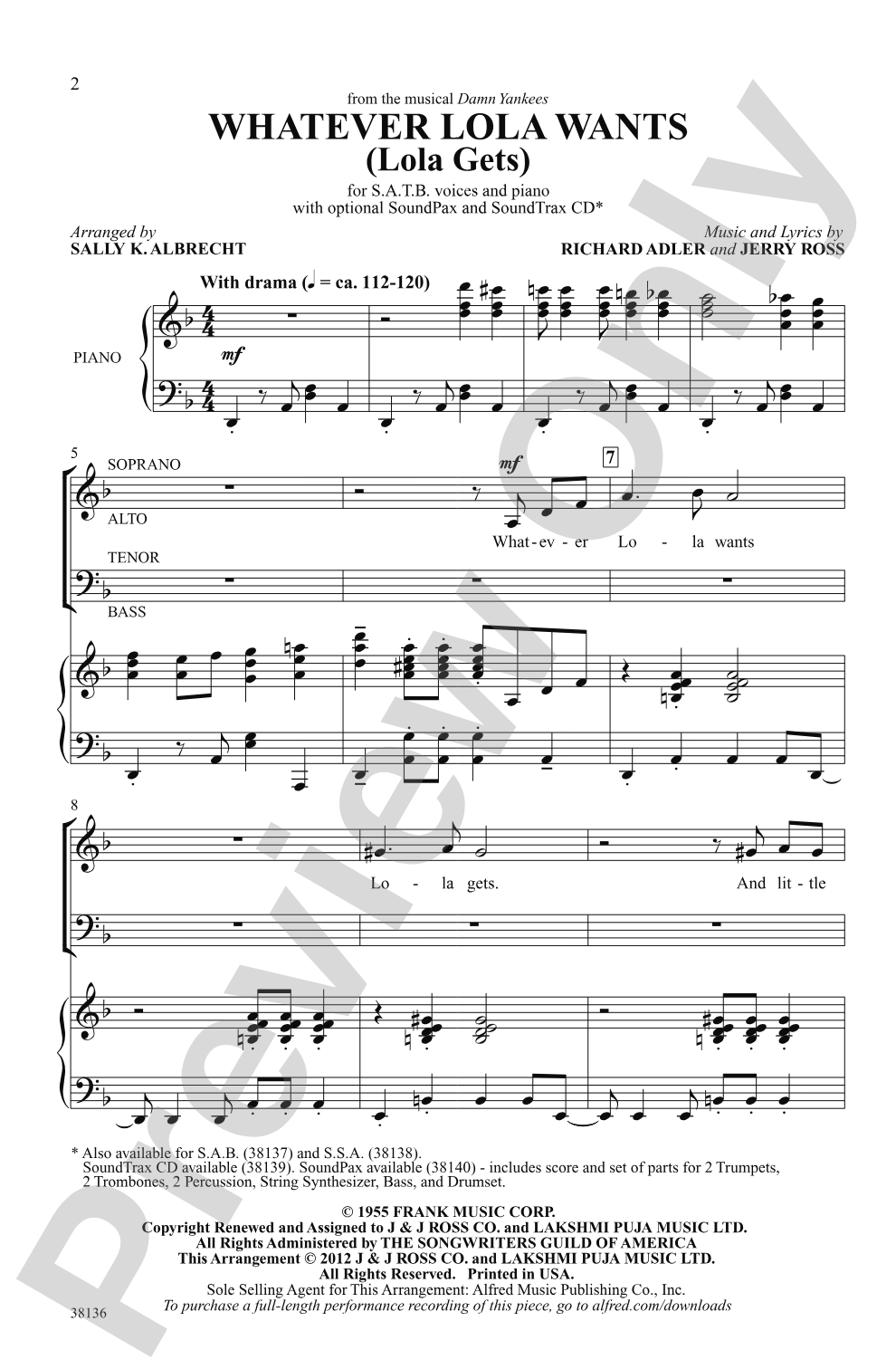
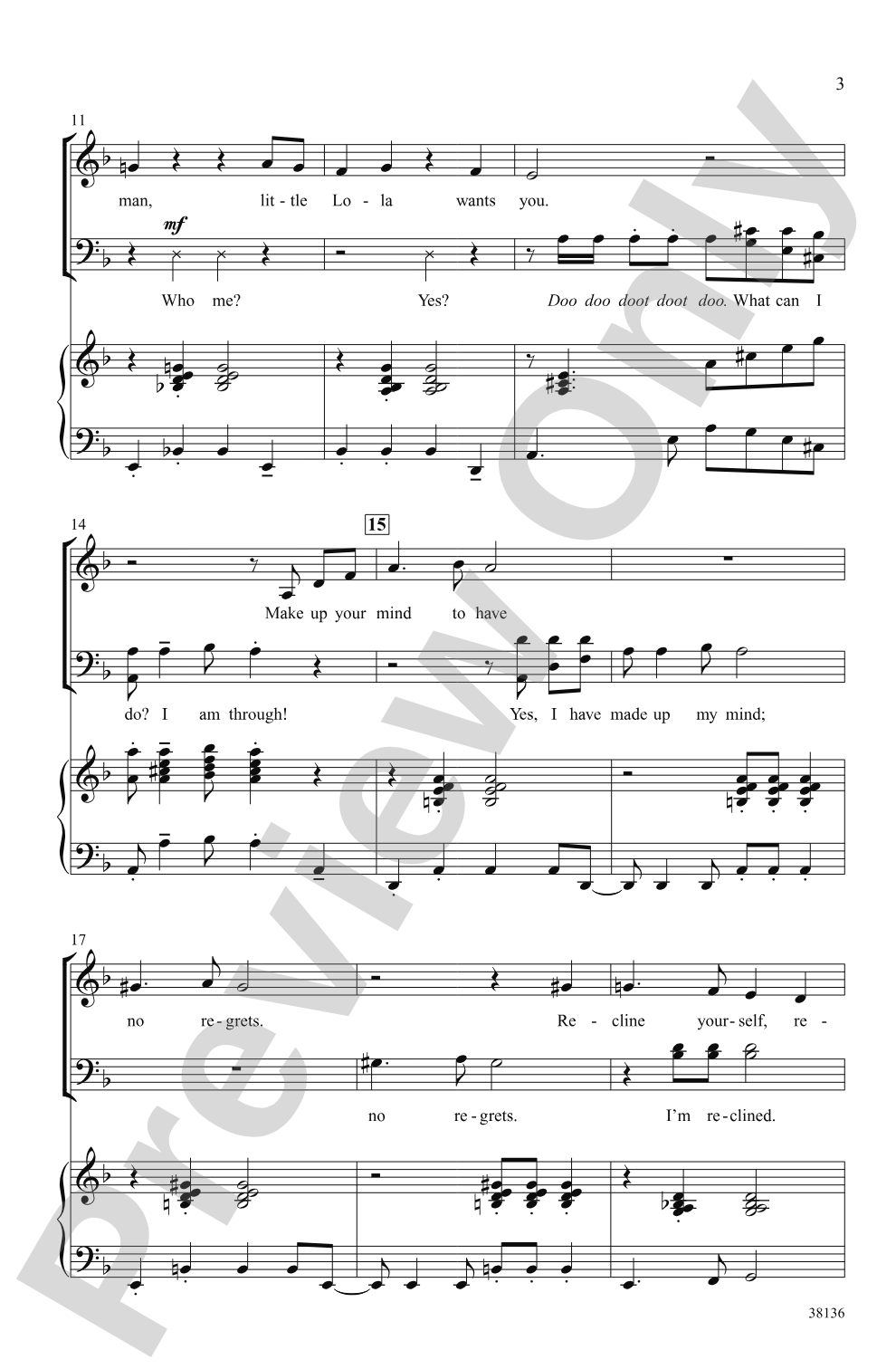

Whatever Lola Wants (Lola Gets) (from the musical Damn Yankees): SATB Choral Octavo
From the Musical Damn Yankees
Music and lyrics by Richard Adler and Jerry Ross / arr. Sally K. Albrecht
Item: 00-PO-0001411
$1.90
Minimum order quantity: 20 copies
One moment…
Related Items
Whatever Lola Wants (Lola Gets): SoundTrax Digital Audio Download |
$26.99
|
View | |
Whatever Lola Wants (Lola Gets) (from the musical Damn Yankees): SAB Choral Octavo |
$1.90
|
View | |
Whatever Lola Wants (Lola Gets) (from the musical Damn Yankees): SSA Choral Octavo |
$1.90
|
View | |
Whatever Lola Wants (Lola Gets): SATB Choral Octavo |
$1.90
|
View | |
Whatever Lola Wants (Lola Gets): SAB Choral Octavo |
$1.90
|
View | |
Whatever Lola Wants (Lola Gets): SSA Choral Octavo |
$1.90
|
View | |
Whatever Lola Wants (Lola Gets): Choral Octavo SoundTrax CD |
$26.99
|
View |
Description
Gwen Verdon made this sassy, saucy number a hit when Damn Yankees played on Broadway in 1955. Enjoy the "girls vs. guys" mixed arrangement, or let your ladies steal the show with the SSA version. Featured on Lift Me Up! choral movement DVD (00-38171).


Whatever Lola Wants (Lola Gets) (from the musical Damn Yankees): SATB Choral Octavo isn't in MakeMusic Cloud just yet...but it could be. Let us know you'd like to see it, and you'll help shape what comes next. In the meantime, start a free trial and dive into thousands of interactive titles your students can play along with today.
Request This Title
Tell us you want it.
Start Your Free Trial
Explore everything that's ready to play right now.
Sample Audio
1
Audio File
--:--
0:00
0:00
Sample Video
No sample videos found.
Additional Details
Series:
Alfred Pop Choral Series
Publisher:
Alfred Music
Page Count:
12
SKU:
00-PO-0001411
More about this title
About the Composer: Richard Adler
Richard Adler composed the scores for some of Broadway's most enduring musicals during the 1950s, including Damn Yankees and The Pajama Game. His gift for writing memorable melodies and rhythmically infectious numbers made him a central figure in the golden age of musical theater, and his work continues to anchor choral and educational repertoire decades later.
Adler's Broadway compositions are prized in music education because they balance sophistication with accessibility. His melodies sit well for singers at all levels, and his orchestrations translate effectively to small ensembles and piano accompaniment, making his work ideal for high school and community choirs.
Why we love this
Sally K. Albrecht's arrangement captures the playful swagger of the original while giving you real flexibility. The SATB version sustains the "girls vs. guys" dynamic from the Broadway staging, so singers stay engaged in the drama, not just the notes. If your female section is particularly strong, the SSA edition lets them command the room entirely, and both versions sit comfortably in the tessitura without requiring belters.
What to expect
Confident, flirtatious, and fun. The melody has a slinky elegance, and the harmonies shimmer with sophistication even at a straightforward tempo. You're in a nightclub, not a concert hall, and the singers know it.
Who it's for
High school and community choirs seeking a showstopper with theatrical flair and genuine musical substance. This arrangement works especially well for groups comfortable with stylized singing and movement; the staging cues built into the octavo reward smart blocking and character choices.
How to get the most out of it
- Anchor the groove in the rhythm section. The accompaniment sits in a tight pocket; lock the bass line and steady the harmonic rhythm so the soloists and ensemble parts shine.
- Lean into the attitude. This number works because singers commit to the character work. Give your singers permission to be sassy, flirtatious, and a little bit wicked.
- Shape the call-and-response sections crisply. The back-and-forth between SAT and B (or between SSA singers) needs clean cutoffs and clear sound balance so the joke lands.
- Use the recorded accompaniment to establish tempo and groove, then consider releasing singers from it once they own the part. This piece is built on familiarity and confidence.
How to use it
Program this as a palate cleanser between heavier choral works, or use it to open a show that celebrates American musical theater. It's also powerful as a closer when you want the audience to leave smiling and humming. The built-in movement and staging potential make it ideal for concert programming that includes dramatic or choreographed elements.
Skills your students will build
- Stylistic singing (Broadway legit style)
- Character-driven interpretation and stage presence
- Call-and-response singing with precise ensemble balance
- Syncopated rhythm patterns and swing feel
- Gender-specific or voice-part specific blocking and movement