
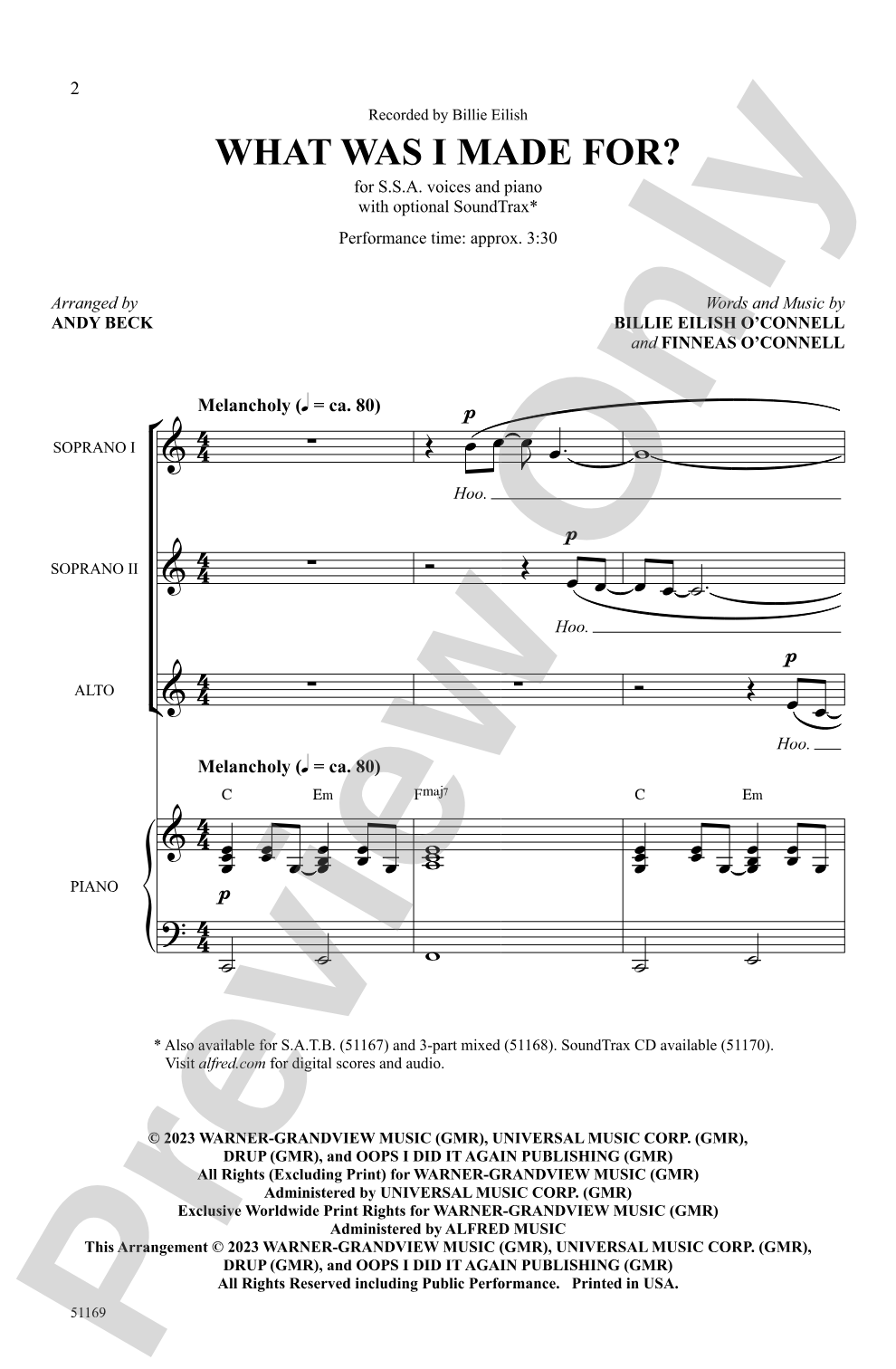

What Was I Made For?: SSA Choral Octavo
Recorded by Billie Eilish for Barbie
Words and music by Billie Eilish O'Connell and Finneas O'Connell / arr. Andy Beck
Item: 00-PO-0007156
$2.35
Minimum order quantity: 20 copies
One moment…
Related Items
What Was I Made For?: SATB Choral Octavo |
$2.35
|
View | |
What Was I Made For?: 3-Part Mixed Choral Octavo |
$2.35
|
View | |
What Was I Made For?: SoundTrax Digital Audio Download |
$29.99
|
View | |
What Was I Made For?: SATB Choral Octavo |
$2.35
|
View | |
What Was I Made For?: 3-Part Mixed Choral Octavo |
$2.35
|
View | |
What Was I Made For?: SSA Choral Octavo |
$2.35
|
View | |
What Was I Made For?: Choral Octavo SoundTrax CD |
$29.99
|
View |
Description
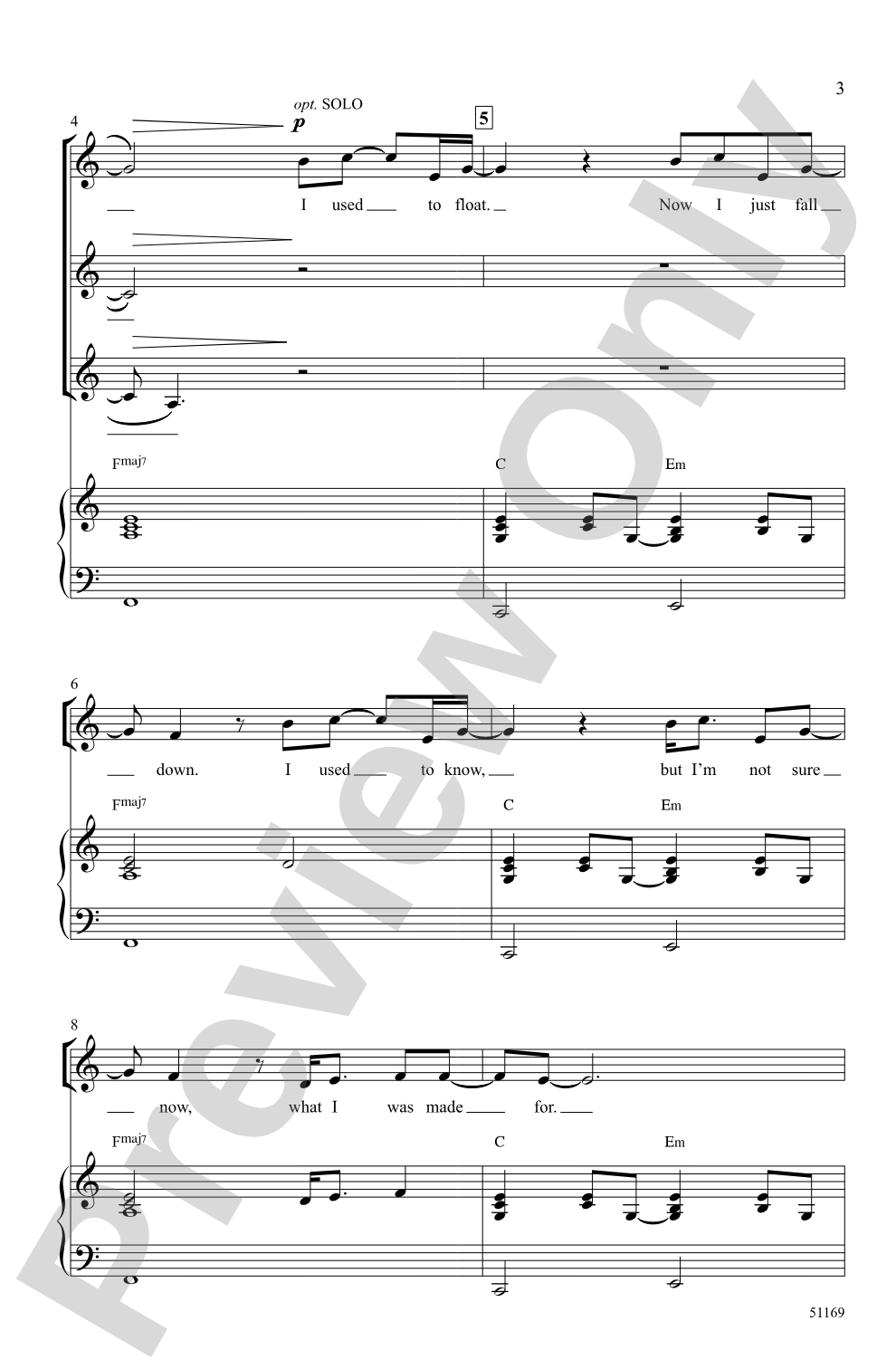
Here's the Oscar-winning Billie Eilish ballad from Barbie. Introspective lyrics reflect on finding your place in the world. A poignant opening solo, expressive choral parts, and an ethereal piano accompaniment make this heartfelt arrangement equally appropriate for concert and show choirs. In the end, singers convey the assurance that happiness is "something I'm made for."


What Was I Made For?: SSA Choral Octavo isn't in MakeMusic Cloud just yet...but it could be. Let us know you'd like to see it, and you'll help shape what comes next. In the meantime, start a free trial and dive into thousands of interactive titles your students can play along with today.
Request This Title
Tell us you want it.
Start Your Free Trial
Explore everything that's ready to play right now.
Sample Audio
1
Audio File
--:--
0:00
0:00
Sample Video
Additional Details
Series:
Alfred Pop Choral Series
Publisher:
Alfred Music
Page Count:
12
SKU:
00-PO-0007156
More about this title
About the Composer: Billie Eilish O'Connell
Billie Eilish O'Connell emerged as one of the defining artists of her generation, known for introspective songwriting and distinctive vocal delivery that resonates across genres and age groups. Working closely with her brother Finneas, she has crafted music that explores vulnerability and self-discovery, earning Grammy Awards and an Academy Award for Best Original Song. Her work in "What Was I Made For?" demonstrates the emotional depth that makes her compositions valuable additions to choral repertoires seeking contemporary, meaningful material.
Finneas O'Connell, her primary collaborator and producer, co-writes much of her catalog and brings sophisticated production sensibilities to their shared creative vision. His understanding of arrangement and vocal texture makes the original compositions particularly well-suited for choral adaptation.
Why we love this
Andy Beck's arrangement honors the quiet intensity of the original while expanding it for ensemble voices. The opening solo creates an intimate moment that draws audiences in immediately, and the layered SSA writing allows singers to experience how contemporary pop songwriting functions as genuine emotional storytelling rather than novelty material.
What to expect
The piece unfolds like a private conversation that gradually opens outward. The ethereal piano accompaniment creates space for vulnerability, while the SSA voices layer in with warmth and affirmation, building toward a quiet certainty about one's place in the world.
Who it's for
This arrangement serves choral directors seeking repertoire that speaks authentically to singers of all ages. Whether you lead a concert choir, show choir, or mixed ensemble, SSA voicing makes this accessible for youth and adult groups while maintaining artistic credibility.
How to get the most out of it
- Shape the opening solo with conversational phrasing rather than theatrical delivery; the power comes from honest introspection, not vocal display.
- Balance the piano accompaniment so it remains ethereal and supportive throughout. Pianists should avoid pushing the texture in measure-to-measure intensity shifts.
- Layer the entrance of harmonic voices carefully so each new part feels additive rather than suddenly full. This builds the "assurance" the text describes.
- Keep consonants clear in the closer ranges where SSA voicing can blur; "made for" needs distinct articulation to land emotionally.
How to use it
This works powerfully as a closing number on a concert exploring identity or contemporary songwriting. It pairs well with other reflective modern pieces or as a bridge between classical and pop repertoire, demonstrating to audiences that today's meaningful songs deserve the same interpretive care as established standards.
Skills your students will build
- Sustaining open, resonant vowels in middle and lower registers across longer phrases
- Blending three-part harmony without sacrificing individual vocal line independence
- Responding to harmonic movement that emphasizes stasis and subtle shifts over traditional functional harmony
- Shaping contemporary songwriting with classical choral discipline and emotional specificity