
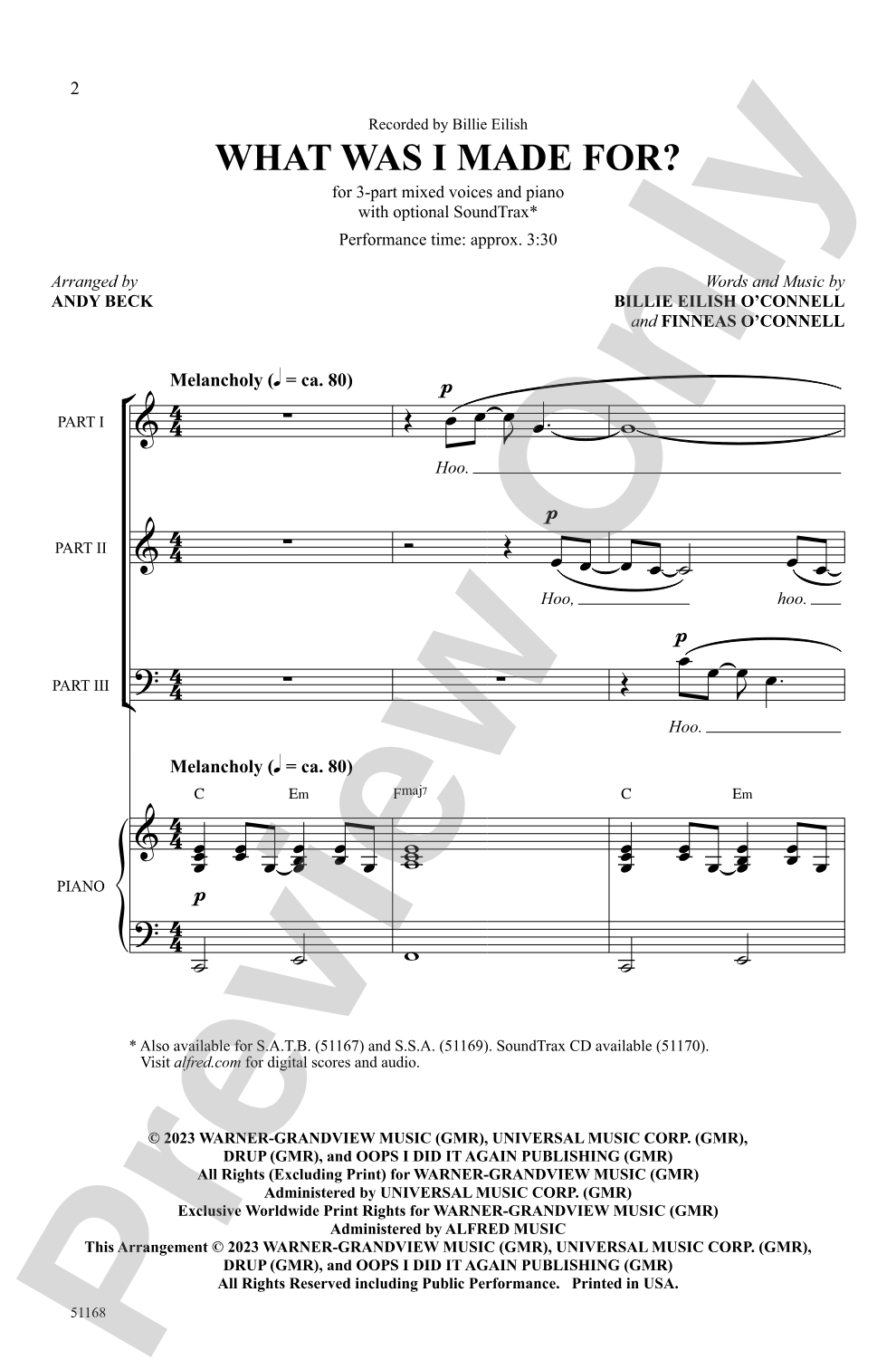

What Was I Made For?: 3-Part Mixed Choral Octavo
Recorded by Billie Eilish for Barbie
Words and music by Billie Eilish O'Connell and Finneas O'Connell / arr. Andy Beck
Item: 00-PO-0007155
$2.35
Minimum order quantity: 20 copies
One moment…
Related Items
What Was I Made For?: SATB Choral Octavo |
$2.35
|
View | |
What Was I Made For?: SSA Choral Octavo |
$2.35
|
View | |
What Was I Made For?: SoundTrax Digital Audio Download |
$29.99
|
View | |
What Was I Made For?: SATB Choral Octavo |
$2.35
|
View | |
What Was I Made For?: 3-Part Mixed Choral Octavo |
$2.35
|
View | |
What Was I Made For?: SSA Choral Octavo |
$2.35
|
View | |
What Was I Made For?: Choral Octavo SoundTrax CD |
$29.99
|
View |
Description
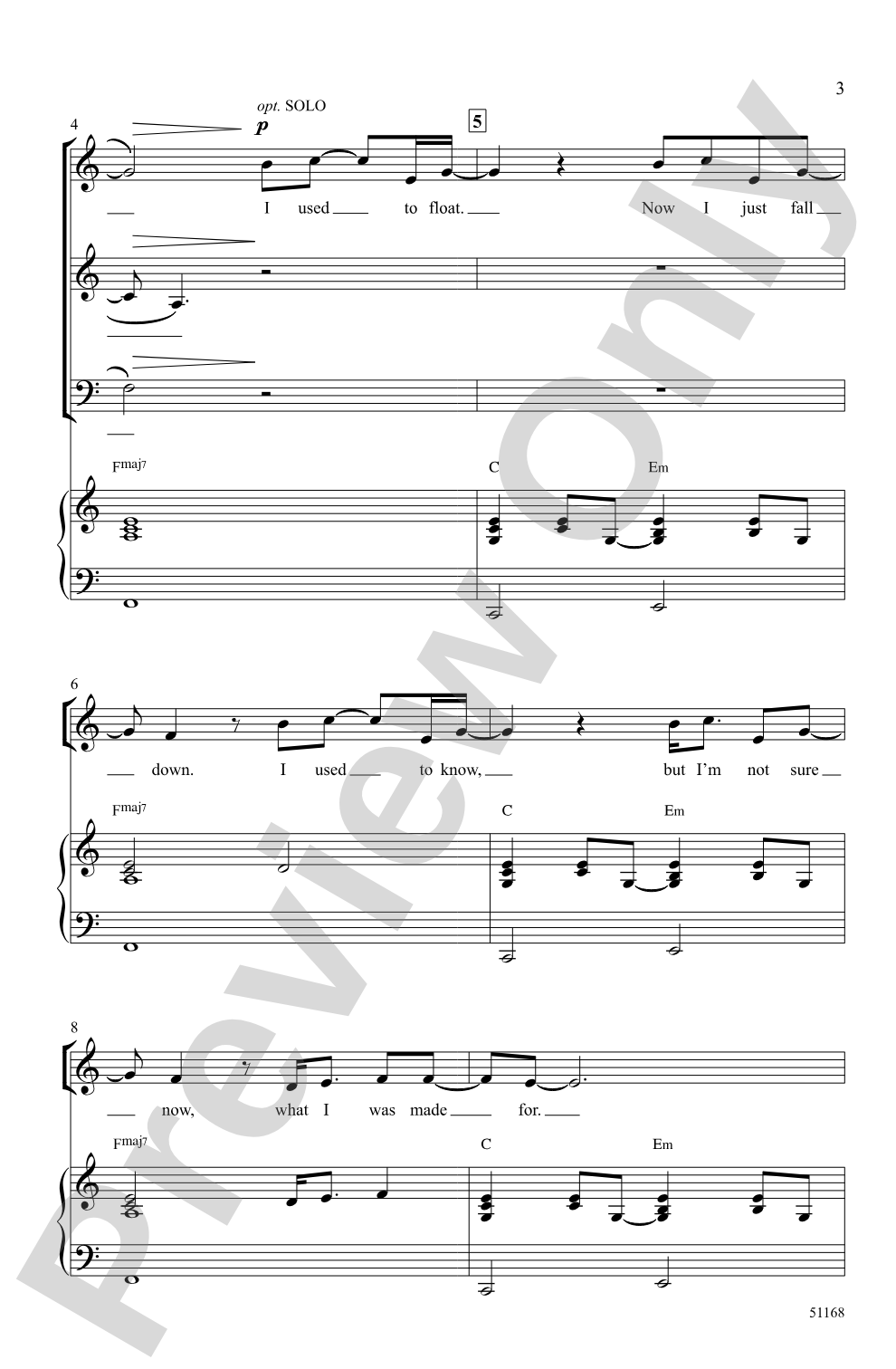
Here's the Oscar-winning Billie Eilish ballad from Barbie. Introspective lyrics reflect on finding your place in the world. A poignant opening solo, expressive choral parts, and an ethereal piano accompaniment make this heartfelt arrangement equally appropriate for concert and show choirs. In the end, singers convey the assurance that happiness is "something I'm made for."


What Was I Made For?: 3-Part Mixed Choral Octavo isn't in MakeMusic Cloud just yet...but it could be. Let us know you'd like to see it, and you'll help shape what comes next. In the meantime, start a free trial and dive into thousands of interactive titles your students can play along with today.
Request This Title
Tell us you want it.
Start Your Free Trial
Explore everything that's ready to play right now.
Sample Audio
1
Audio File
--:--
0:00
0:00
Sample Video
Additional Details
Series:
Alfred Pop Choral Series
Publisher:
Alfred Music
Page Count:
12
SKU:
00-PO-0007155
More about this title
About the Composer: Billie Eilish O'Connell
Billie Eilish O'Connell emerged as a major voice in contemporary music while still in her teens, collaborating closely with her brother Finneas on production and songwriting. Her work spans genre boundaries, blending introspective lyrics with innovative production choices that have earned her Grammy Awards, Academy Awards, and a devoted global audience. In educational settings, her music offers relevant repertoire that speaks directly to young singers' lived experience and contemporary sensibilities.
Why we love this
Andy Beck's arrangement captures the intimate vulnerability of the original while giving your singers a genuinely moving piece to perform. The solo opening draws listeners in immediately, and the layered vocal writing builds emotional depth without overwhelming a 3-part ensemble. Directors find this piece particularly valuable for showing students that contemporary pop songwriting can carry real artistic weight and that authenticity in performance matters more than technical difficulty.
What to expect
Introspective and searching, with moments of quiet beauty that gradually build toward quiet certainty. The arrangement honors the song's reflective nature, creating an intimate soundscape where three-part voicing feels spacious rather than thin. There's an ache in the opening that resolves into gentle affirmation by the final measures.
Who it's for
Mixed choirs at the middle school, high school, and adult level will connect with this contemporary ballad. It works equally well for concert choirs seeking repertoire that feels current and emotionally accessible, and for show choirs looking to program meaningful pop songs alongside more traditional material.
How to get the most out of it
- Lead with the lyrics. This arrangement succeeds when singers understand and inhabit the introspective quality of the text; encourage genuine emotional connection rather than technical perfection.
- Balance the opening solo carefully with the ensemble. The soloist sets the emotional tone, so choose a singer who can sustain a vulnerable vocal quality through the verse.
- Shape the dynamic arch across all three parts. The arrangement builds gradually, and each voice part should contribute to the crescendo without forcing or oversinging.
- Let the piano accompaniment breathe. The ethereal quality mentioned in the arrangement depends on space and restraint; avoid rushing the tempo or over-articulating rhythmic figures.
How to use it
Program this as a concert centerpiece that appeals to younger audiences and demonstrates your choir's range beyond traditional literature. It pairs well with other contemporary pieces in a set focused on identity and belonging, or stands alone as a powerful moment in a mixed-repertoire concert. The 12-page length keeps rehearsal time manageable while delivering significant emotional impact.
Skills your students will build
- Sustaining legit tone in contemporary idiom without belting or oversinging
- Balancing three-part harmony in an arrangement with uneven voice distribution
- Interpreting lyrics for emotional authenticity and meaningful communication
- Responding to piano accompaniment that carries harmonic and textural weight
- Controlling dynamic shaping across extended phrases and building sections