
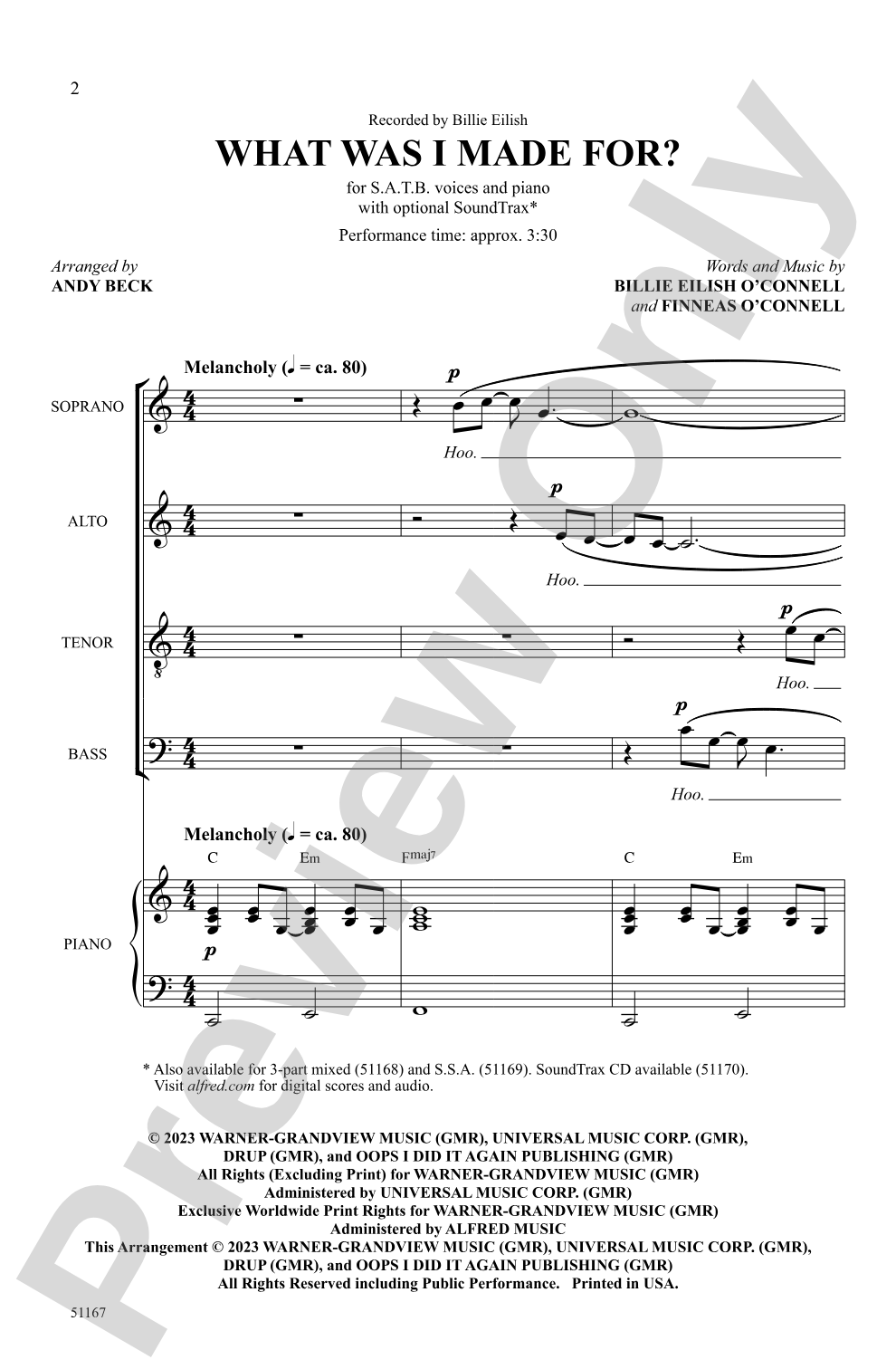

What Was I Made For?: SATB Choral Octavo
Recorded by Billie Eilish for Barbie
Words and music by Billie Eilish O'Connell and Finneas O'Connell / arr. Andy Beck
Item: 00-PO-0007154
$2.35
Minimum order quantity: 20 copies
One moment…
Related Items
What Was I Made For?: 3-Part Mixed Choral Octavo |
$2.35
|
View | |
What Was I Made For?: SSA Choral Octavo |
$2.35
|
View | |
What Was I Made For?: SoundTrax Digital Audio Download |
$29.99
|
View | |
What Was I Made For?: SATB Choral Octavo |
$2.35
|
View | |
What Was I Made For?: 3-Part Mixed Choral Octavo |
$2.35
|
View | |
What Was I Made For?: SSA Choral Octavo |
$2.35
|
View | |
What Was I Made For?: Choral Octavo SoundTrax CD |
$29.99
|
View |
Description
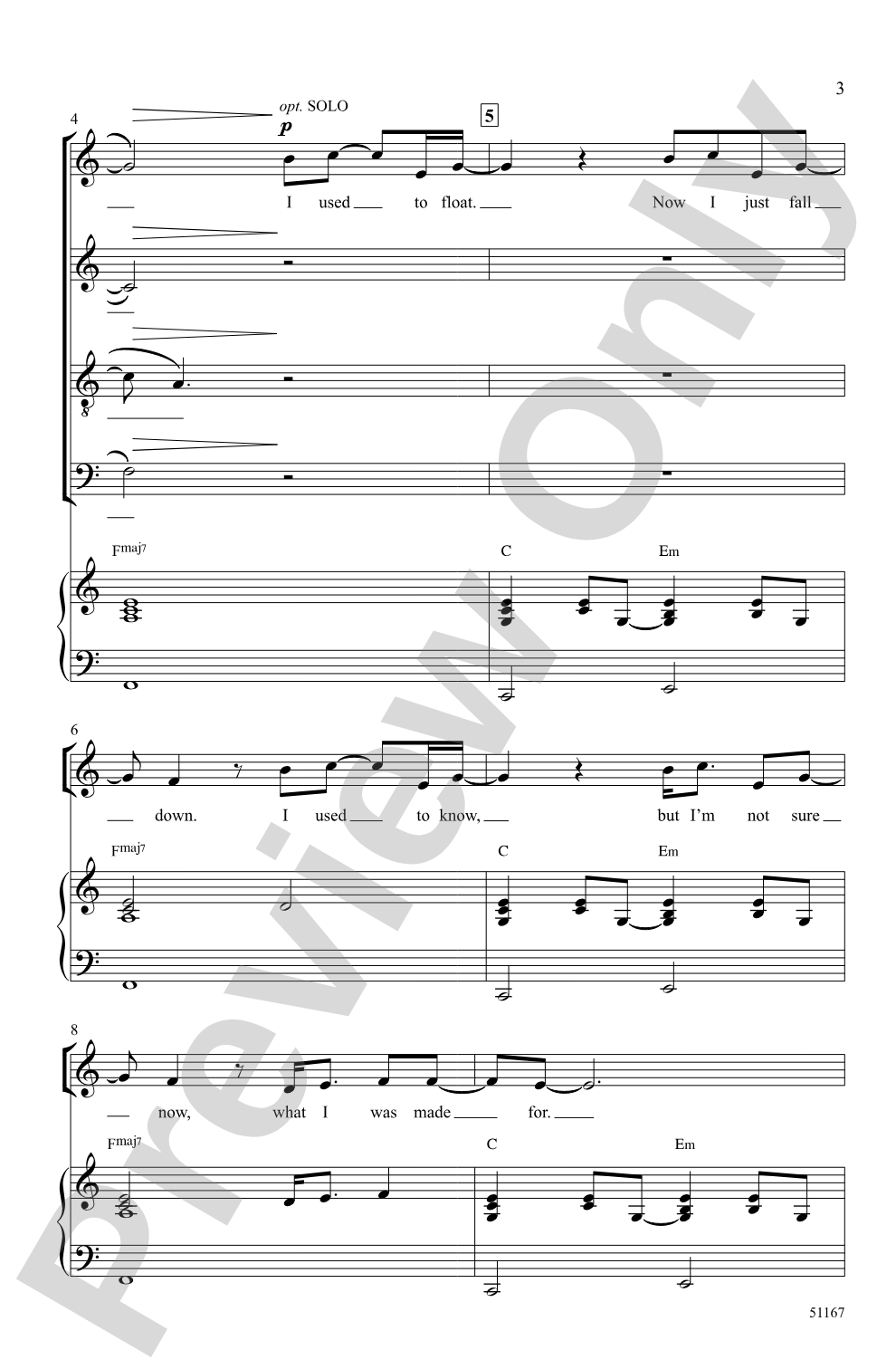
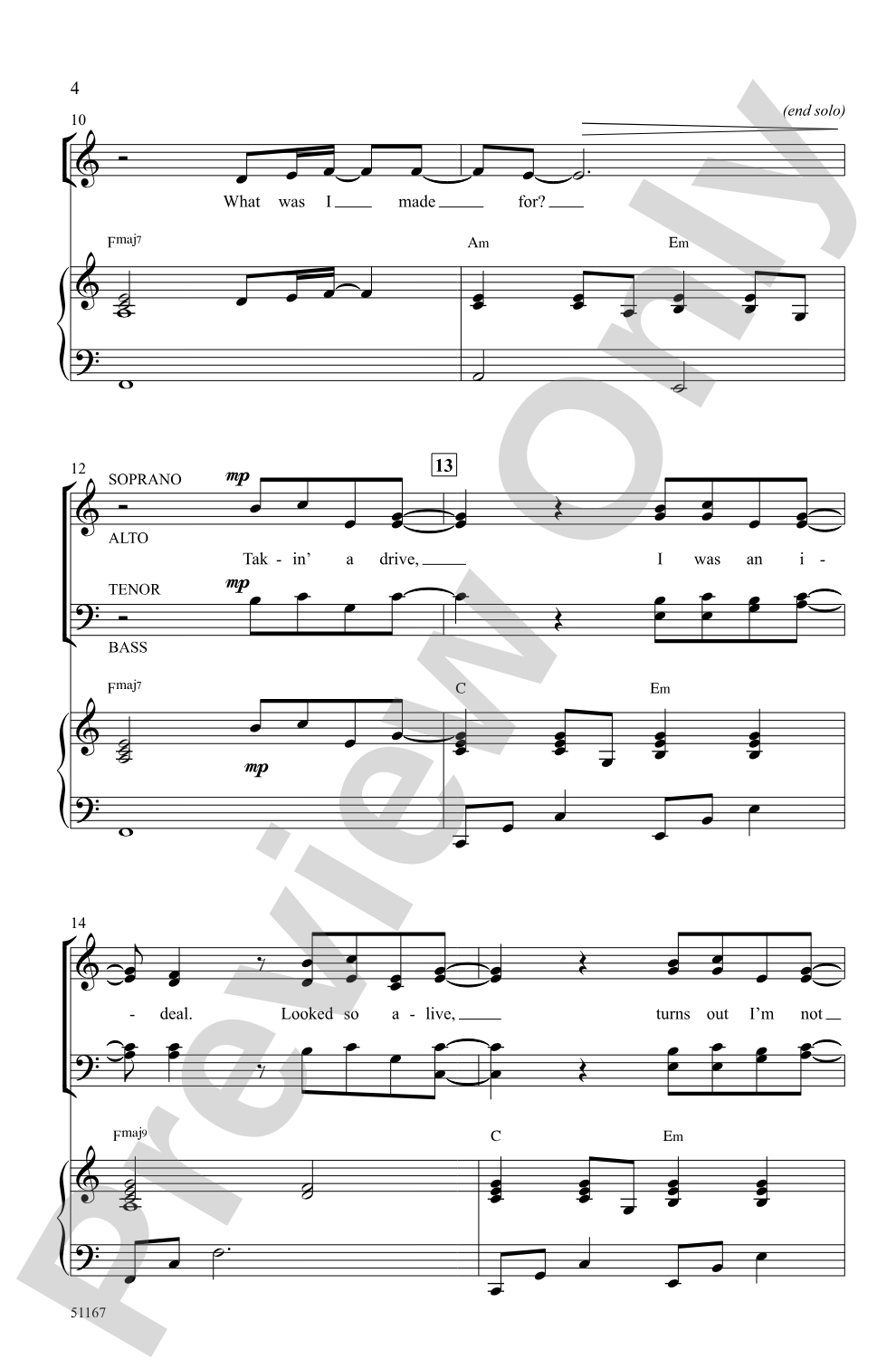
Here's the Oscar-winning Billie Eilish ballad from Barbie. Introspective lyrics reflect on finding your place in the world. A poignant opening solo, expressive choral parts, and an ethereal piano accompaniment make this heartfelt arrangement equally appropriate for concert and show choirs. In the end, singers convey the assurance that happiness is "something I'm made for."


Discover MakeMusic Cloud: thousands of interactive titles your students can play along with today.
Sample Audio
1
Audio File
--:--
0:00
0:00
Sample Video
Additional Details
Series:
Alfred Pop Choral Series
Publisher:
Alfred Music
Page Count:
12
SKU:
00-PO-0007154
More about this title
About the Composer: Billie Eilish O'Connell
Billie Eilish O'Connell emerged as one of the most distinctive voices in contemporary music, known for her introspective songwriting and genre-defying sound. Working closely with her brother and primary collaborator Finneas O'Connell, she has won multiple Grammy Awards and an Academy Award, bringing her intimate, emotionally direct style to both popular and film contexts.
For choral educators, Eilish's work offers an entry point into arranging modern pop music with emotional authenticity. Her songs prioritize lyrical honesty and space within arrangements, qualities that translate well to choral settings and resonate deeply with student singers.
Why we love this
Andy Beck's arrangement captures the song's essential intimacy without losing its contemporary edge. The opening solo sets a vulnerable tone that the full choir builds on gradually, creating a progression that feels earned rather than immediate—exactly what you need when programming music that asks singers to engage emotionally with every phrase.
What to expect
The piece opens with quiet introspection and gradually unfolds into moments of fuller, more confident expression. An ethereal quality permeates the arrangement, with singers invited into a conversation about identity and purpose rather than asked to deliver a performance.
Who it's for
This octavo works for concert choirs seeking contemporary pop repertoire with substance and choirs preparing for show choir contexts where emotional authenticity matters. The accessible vocal ranges and clear harmonic writing make it suitable for intermediate and advanced ensembles.
How to get the most out of it
- Treat the opening solo section as a moment of genuine solitude. The piano should establish the emotional foundation before the soloist enters; resist the temptation to rush into full sound.
- Shape the dynamics in the choral sections carefully, following the natural rise and fall of the lyrics rather than making each entrance equally prominent.
- Balance the parts so the piano remains audible throughout. This arrangement relies on the accompaniment to create atmosphere, not just provide harmonic support.
- Communicate the message of the final phrase as assurance rather than resignation. The ending should feel like clarity, not compromise.
How to use it
This works beautifully on a concert that pairs art-song traditions with film music and contemporary pop. Program it in the second half when audiences are settled and ready to listen deeply; its power comes from stillness, not spectacle.
Skills your students will build
- Dynamic shaping and breath control in ballad singing
- Ensemble blend when supporting a solo voice
- Interpretation of contemporary pop lyrics with emotional specificity
- Listening to and balancing with piano accompaniment
- Sustaining focus and emotional commitment over longer phrases