

What If I Could Tell You: TTBB Choral Octavo
Words and music by Heather Sorenson
Item: 00-PO-0006863
$2.05
Minimum order quantity: 20 copies
Pickup currently not available
Related Items
What If I Could Tell You: PianoTrax Digital Audio Download |
$9.99
|
View | |
What If I Could Tell You: SATB Choral Octavo |
$2.05
|
View | |
What If I Could Tell You: SSAA Choral Octavo |
$2.05
|
View | |
What If I Could Tell You: SATB Choral Octavo |
$2.05
|
View | |
What If I Could Tell You: SSAA Choral Octavo |
$2.05
|
View | |
What If I Could Tell You: TTBB Choral Octavo |
$2.05
|
View |
Description
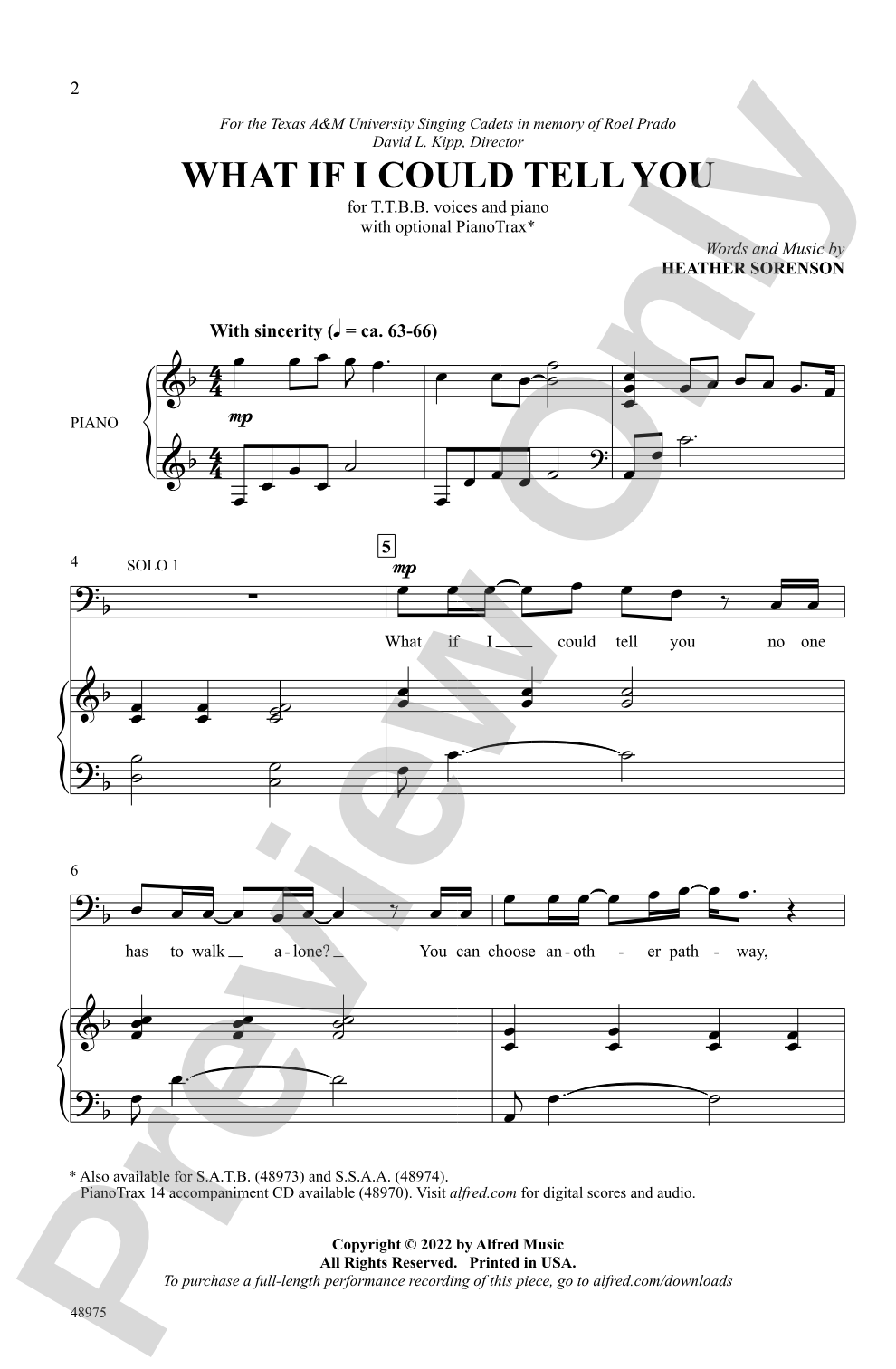
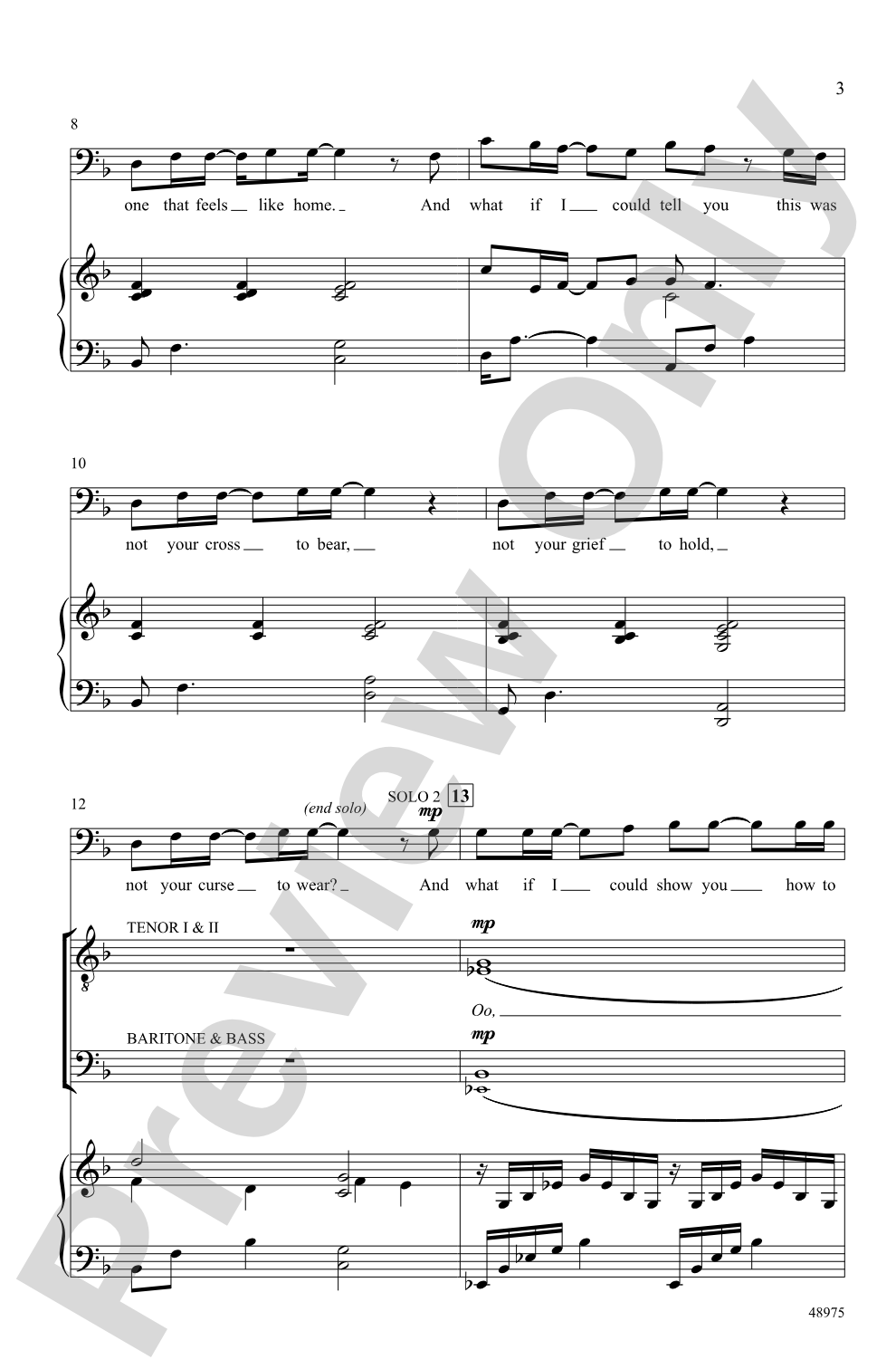
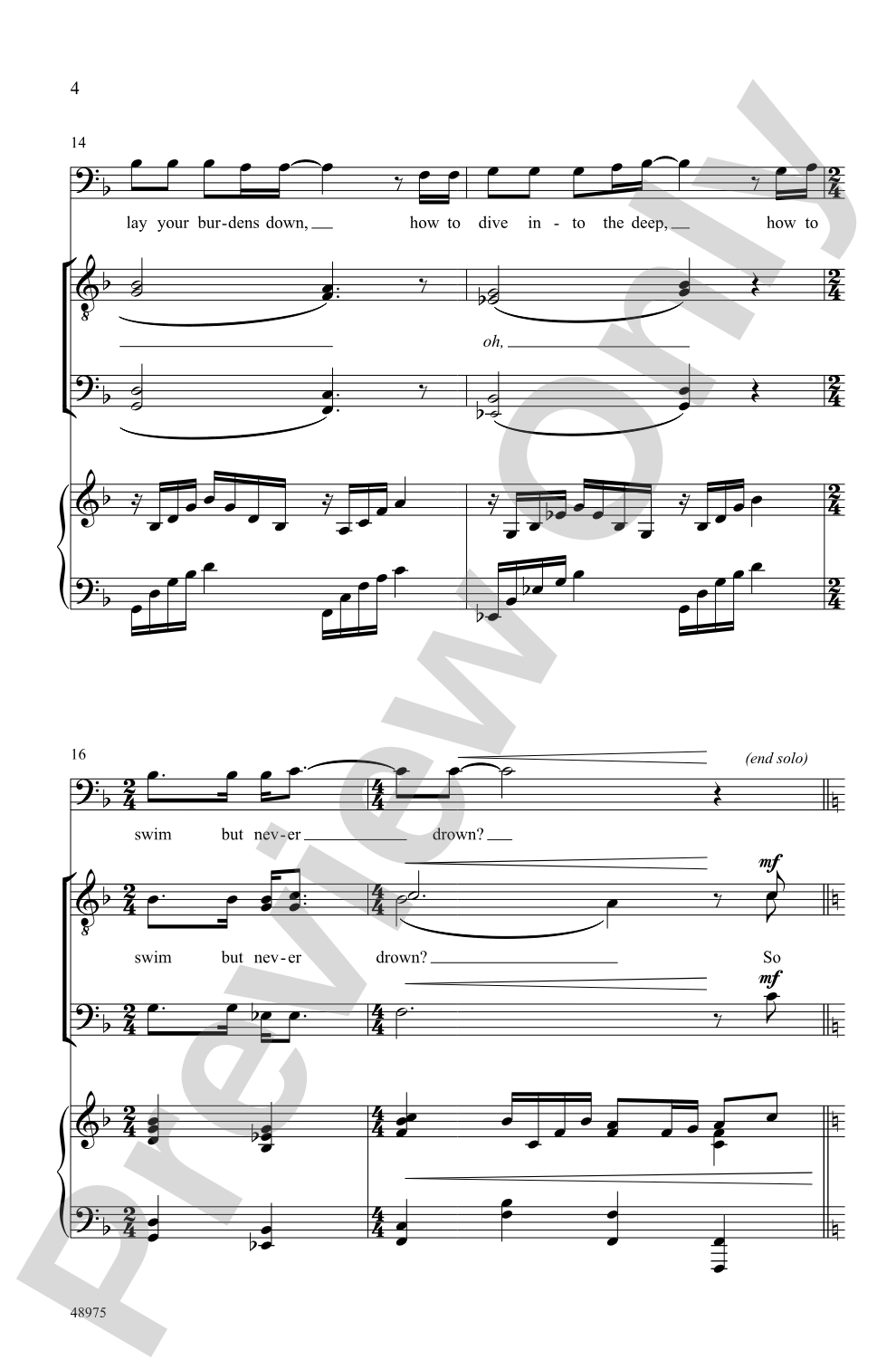
Commissioned by Texas A&M University in remembrance of a lost friend and fellow Cadet, this thought-provoking piece is designed to be a conversation starter about mental illness, depression, grief, and suicide. Harmonically rich, musically expressive, and emotionally stirring, singers will be changed and encouraged. "What if I could tell you no one has to walk alone?" This title is available in MakeMusic Cloud.


What If I Could Tell You: TTBB Choral Octavo isn't in MakeMusic Cloud just yet...but it could be. Let us know you'd like to see it, and you'll help shape what comes next. In the meantime, start a free trial and dive into thousands of interactive titles your students can play along with today.
Request This Title
Tell us you want it.
Start Your Free Trial
Explore everything that's ready to play right now.
Sample Audio
1
Audio File
--:--
0:00
0:00
Sample Video
1 / 2
Additional Details
Series:
Alfred Choral Designs
Publisher:
Alfred Music
Page Count:
12
SKU:
00-PO-0006863
More about this title
About the Composer: Heather Sorenson

Heather Sorenson has built a reputation as a composer and arranger whose work spans Christian and secular genres with equal facility. Based in Dallas, her commissions have reached major venues including Carnegie Hall and institutions like Texas A&M University, while her pieces are regularly performed in worship settings, schools, and concert halls worldwide.
Sorenson's background as a pianist informs her compositional voice, and her teaching experience across elementary music, university adjunct positions, and master class leadership has shaped her understanding of what singers and musicians need. She remains active as a guest conductor, speaker, and advocate for music education, frequently lending her platform to benefit concerts and nonprofit initiatives.
Why we love this
Sorenson's directness about mental health and grief, combined with her harmonic sophistication, creates a piece that honors the seriousness of its subject without resorting to sentimentality. Singers will find the writing singable and expressive, while audiences will recognize a composition that trusts them to engage with difficult emotions and emerge with hope intact.
What to expect
The piece unfolds with harmonic depth and lyrical introspection, creating space for reflection rather than rushing toward resolution. Singers experience the tension between vulnerability and support, much like the message the text conveys; the music holds both grief and solidarity.
Who it's for
This octavo serves choirs ready to tackle meaningful contemporary repertoire with substantive emotional and musical content. It works for high school, college, and adult choirs with solid vocal technique and the maturity to engage respectfully with its subject matter.
How to get the most out of it
- Establish the emotional arc early: the opening moments set a contemplative tone that carries through the piece. Singers need to understand this isn't a performance about them but a message they're delivering to listeners.
- Balance transparency with blend in the harmonic writing. The richness comes from clarity, not thickness. Encourage singers to listen across parts and shape each phrase with intention.
- Let the text drive the dynamics and phrasing. Sorenson's harmonic language supports the lyrical content, so marking key words and allowing them to breathe will strengthen the piece's impact.
- Consider using the recorded accompaniment in rehearsals to help singers understand the harmonic underpinnings, then work toward independence so singers can lead the emotional journey.
How to use it
This composition anchors a concert focused on social awareness, mental health advocacy, or brotherhood and peace themes. It also serves as a powerful closer that sends audiences out thoughtfully, or as a centerpiece between lighter fare to provide necessary emotional weight and substance.
Skills your students will build
- Singing in multiple TTBB voicings and managing voice part flexibility
- Harmonic independence in contemporary choral writing
- Expressive phrasing and textual interpretation in emotional, slow-moving material
- Ensemble cohesion in four-part writing with chromatic or non-functional harmonic movement