

What If I Could Tell You: SSAA Choral Octavo
Words and music by Heather Sorenson
Item: 00-PO-0006862
$2.05
Minimum order quantity: 20 copies
Pickup currently not available
Related Items
What If I Could Tell You: PianoTrax Digital Audio Download |
$9.99
|
View | |
What If I Could Tell You: SATB Choral Octavo |
$2.05
|
View | |
What If I Could Tell You: TTBB Choral Octavo |
$2.05
|
View | |
What If I Could Tell You: SATB Choral Octavo |
$2.05
|
View | |
What If I Could Tell You: SSAA Choral Octavo |
$2.05
|
View | |
What If I Could Tell You: TTBB Choral Octavo |
$2.05
|
View |
Description
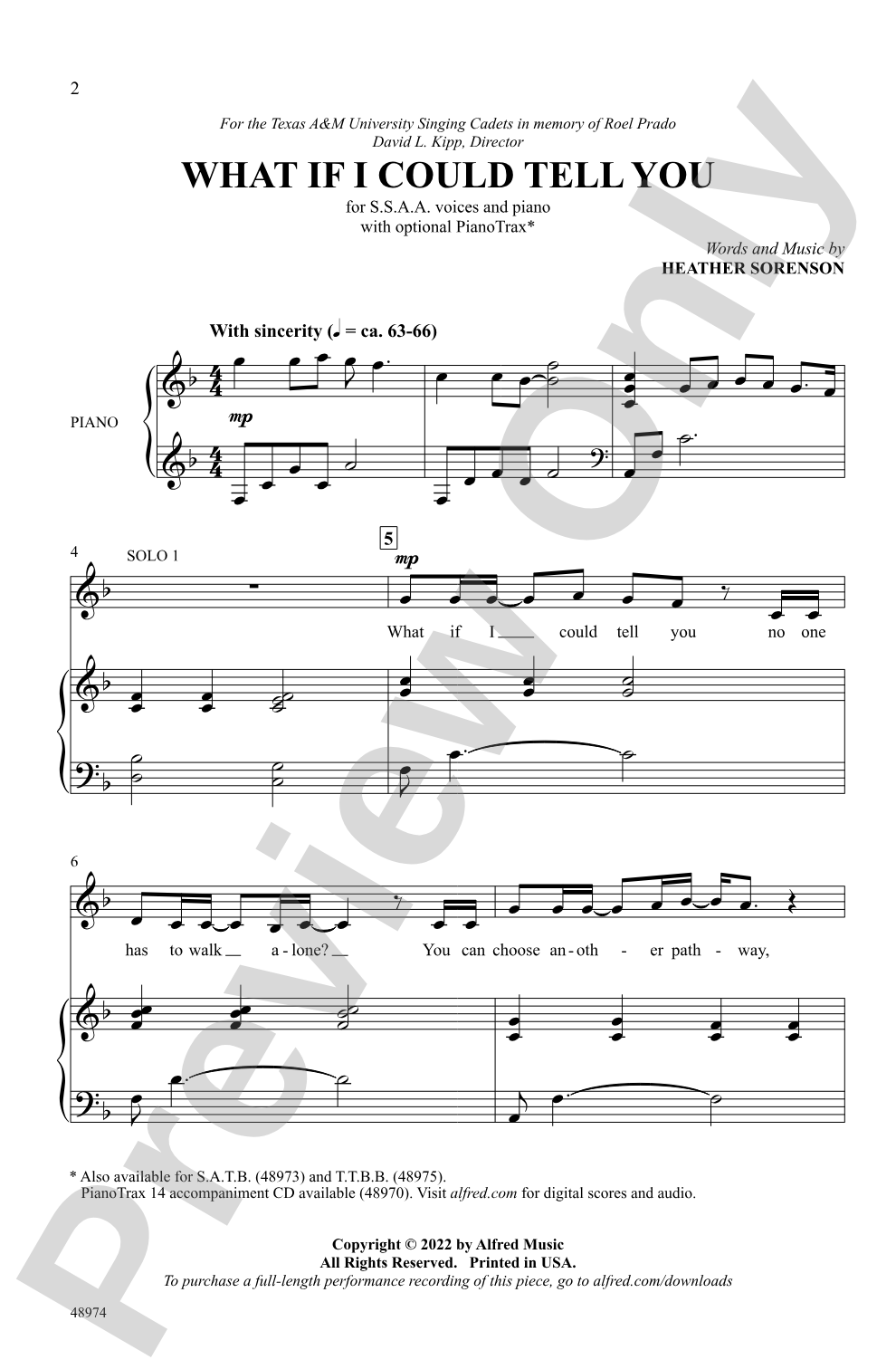
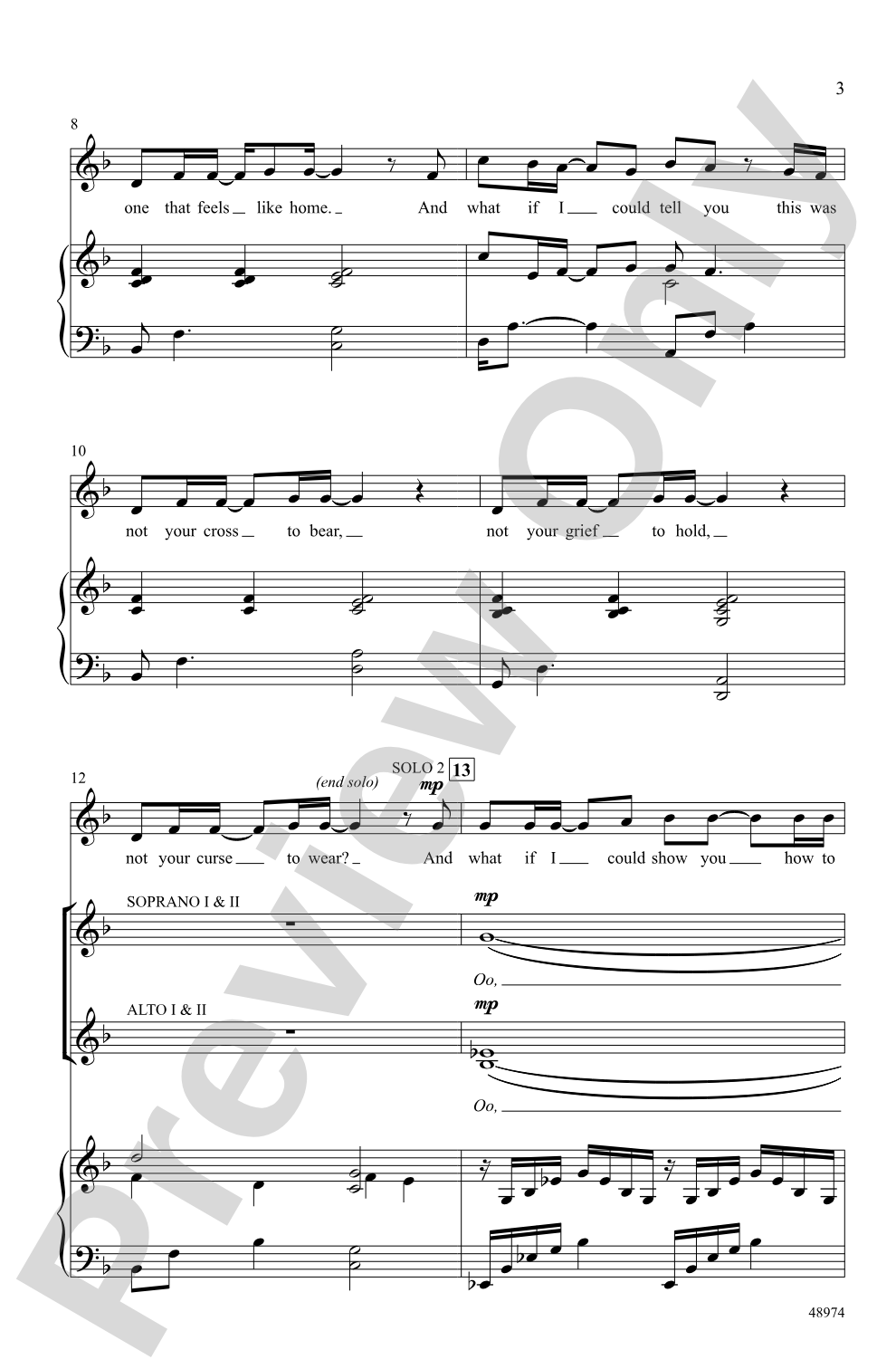
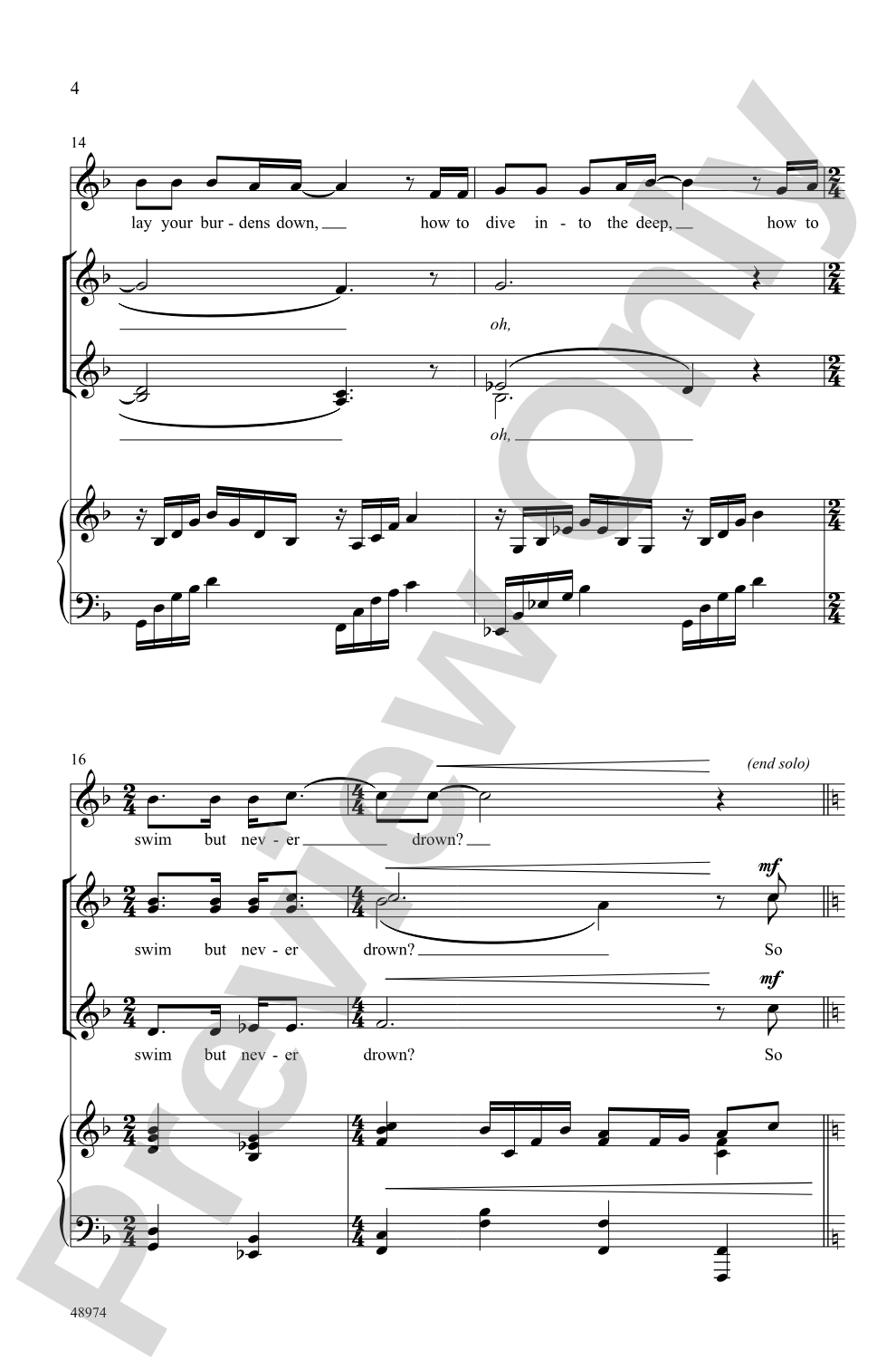
Commissioned by Texas A&M University in remembrance of a lost friend and fellow Cadet, this thought-provoking piece is designed to be a conversation starter about mental illness, depression, grief, and suicide. Harmonically rich, musically expressive, and emotionally stirring, singers will be changed and encouraged. "What if I could tell you no one has to walk alone?"


What If I Could Tell You: SSAA Choral Octavo isn't in MakeMusic Cloud just yet...but it could be. Let us know you'd like to see it, and you'll help shape what comes next. In the meantime, start a free trial and dive into thousands of interactive titles your students can play along with today.
Request This Title
Tell us you want it.
Start Your Free Trial
Explore everything that's ready to play right now.
Sample Audio
1
Audio File
--:--
0:00
0:00
Sample Video
1 / 2
Additional Details
Series:
Alfred Choral Designs
Publisher:
Alfred Music
Page Count:
12
SKU:
00-PO-0006862
More about this title
About the Composer: Heather Sorenson

Heather Sorenson combines classical training with contemporary sensibility to create choral, piano, and orchestral works performed across churches, universities, concert halls, and competitions worldwide. Based in Dallas, Texas, she has built a career on moving fluidly between traditional and modern styles, often blending genres to create a distinctive artistic voice. Her commissions span significant institutions: Texas A&M University, the John F. Kennedy Memorial Foundation, and Carnegie Hall's premiere of her oratorio EXODUS.
Beyond composition, Sorenson has shaped music education through teaching at Grace Academy of Dallas, adjunct faculty work at Baylor University, and master class leadership in piano and songwriting. She regularly guests as a conductor and speaker at churches, universities, and worship conferences nationwide. Her commitment to community extends to benefit concerts for nonprofit organizations, reflecting a practice of using music as a tool for connection and change.
Why we love this
Sorenson brings unflinching emotional honesty to a subject choirs rarely address directly. The piece doesn't shy away from grief and isolation; instead, it transforms those feelings into a message of solidarity and hope. The harmonic language is sophisticated enough to engage experienced choirs while remaining accessible to singers who need the emotional weight of the text to carry them through.
What to expect
The piece unfolds with harmonic richness that mirrors the complexity of the emotions it explores. Sorenson's writing creates moments of tender vulnerability alongside passages of quiet strength, building toward a resolution that feels earned rather than imposed. Singers emerge from performing this work changed, having inhabited a space where loneliness transforms into connection.
Who it's for
This octavo belongs in choirs with singers mature enough to engage with its subject matter thoughtfully. High school choirs, college ensembles, and adult singing groups will find the SSAA voicing accessible and the message deeply relevant. It's equally powerful in concert settings and sacred spaces where conversations about mental health, grief, and community healing matter.
How to get the most out of it
- Allow space and silence where the text invites reflection; resist the urge to fill every moment with sound. The questions posed in this piece deserve to breathe.
- Balance vulnerability with vocal clarity. Singers must be heard despite the emotional weight they're carrying, so emphasize diction and line projection without losing intimacy.
- Use the recorded accompaniment to support rehearsal and performance stability; this allows singers to focus fully on the text and emotional delivery rather than battling intonation challenges.
- Consider a moment of silence before the final phrase to reset the room's emotional energy and prepare the audience for the closing message.
How to use it
This work serves as a powerful centerpiece for a concert addressing social awareness, community healing, or mental health advocacy. Program it alongside other contemporary choral works that explore human connection and resilience, or let it stand alone as a concert's focal point. Consider pairing it with a community discussion, art installation, or written reflection opportunity to extend the conversation beyond the performance itself.
Skills your students will build
- Sustained emotional expression through text and melody
- Blend and balance in chromatic and contemporary harmonic contexts
- Sensitive phrasing in a non-narrative structure
- Collaborative interpretation of difficult subject matter