

What If I Could Tell You: SATB Choral Octavo
Words and music by Heather Sorenson
Item: 00-PO-0006861
$2.05
Minimum order quantity: 20 copies
Pickup currently not available
Related Items
What If I Could Tell You: PianoTrax Digital Audio Download |
$9.99
|
View | |
What If I Could Tell You: SSAA Choral Octavo |
$2.05
|
View | |
What If I Could Tell You: TTBB Choral Octavo |
$2.05
|
View | |
What If I Could Tell You: SATB Choral Octavo |
$2.05
|
View | |
What If I Could Tell You: SSAA Choral Octavo |
$2.05
|
View | |
What If I Could Tell You: TTBB Choral Octavo |
$2.05
|
View |
Description
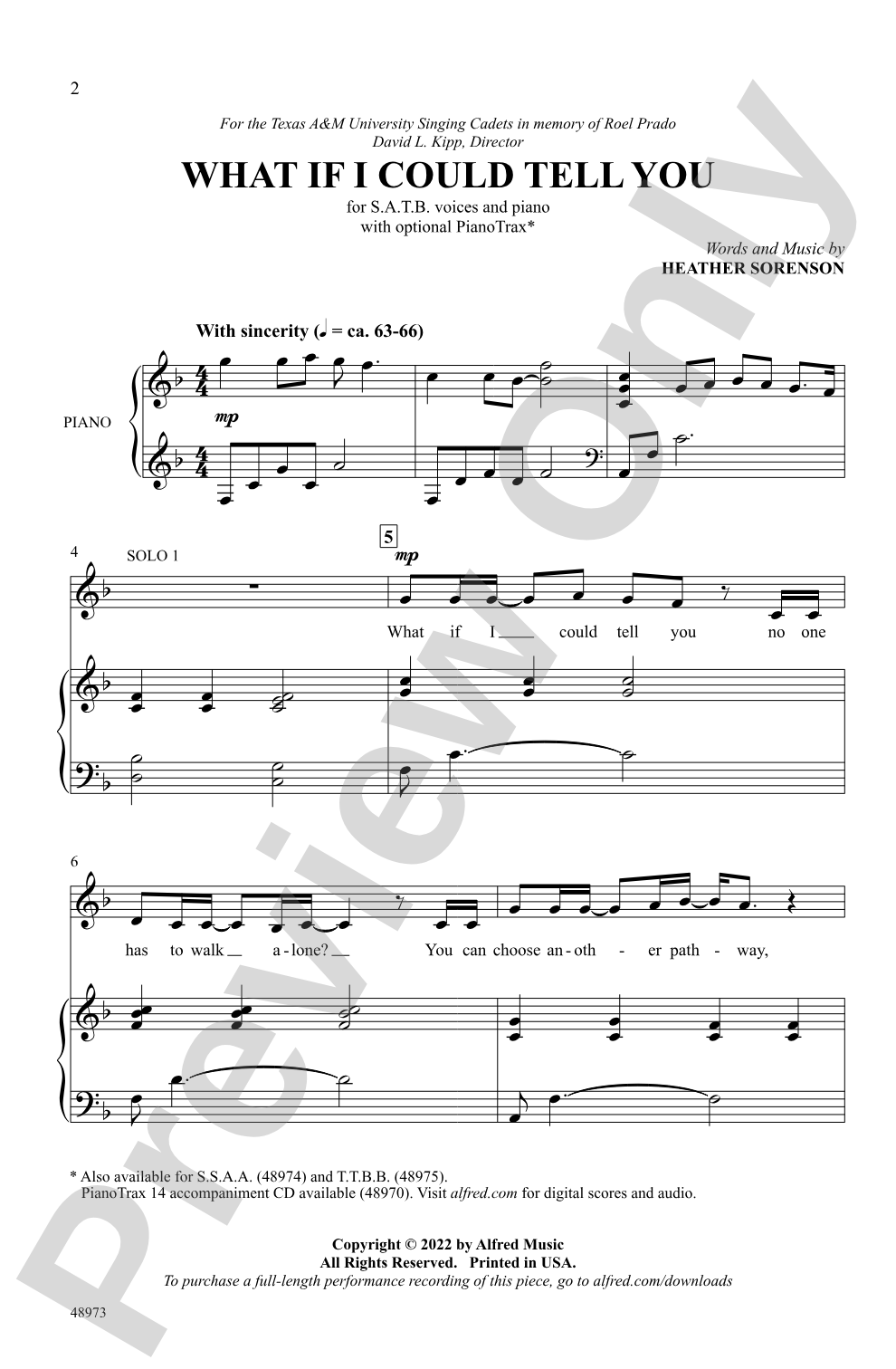
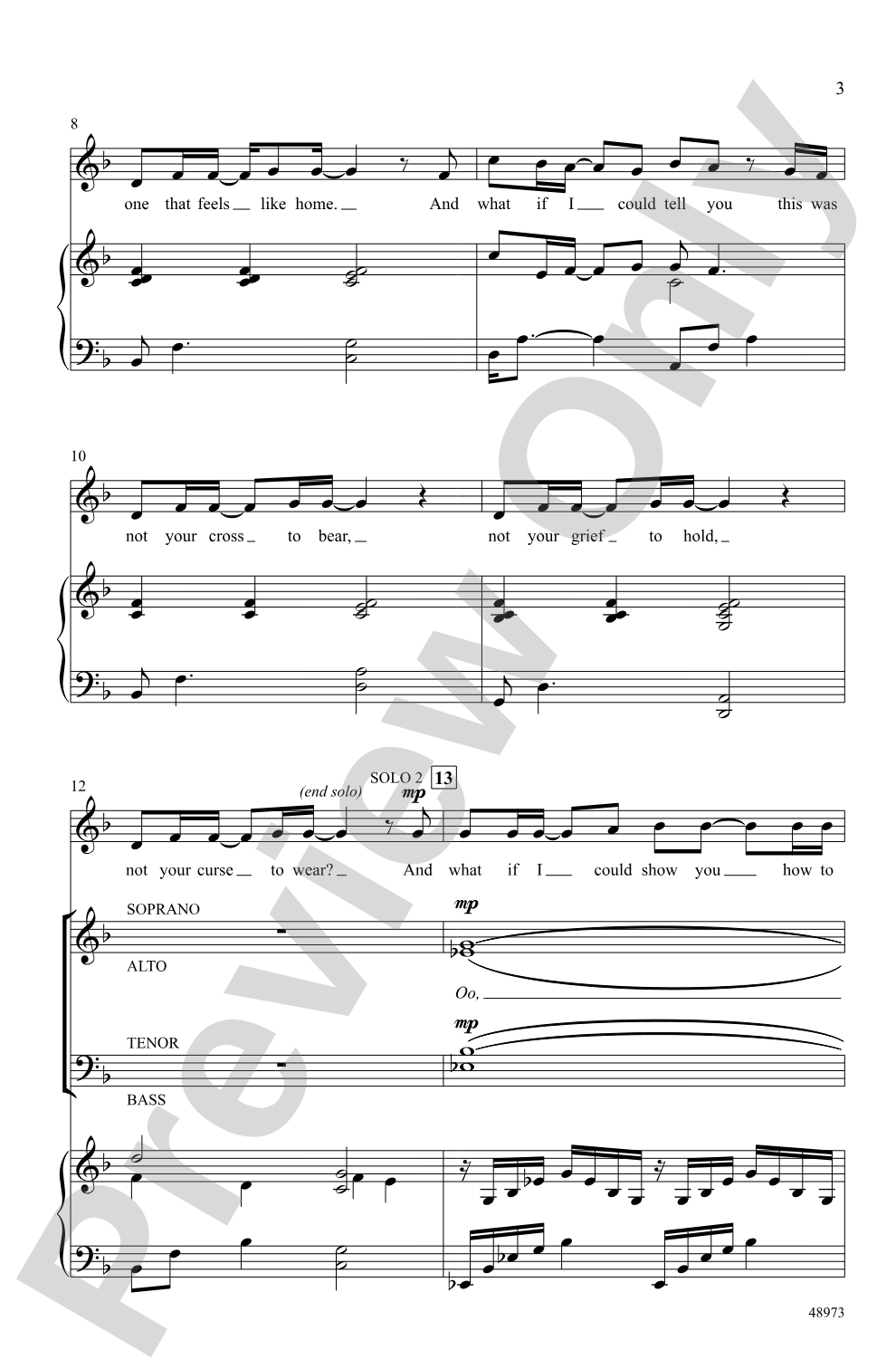
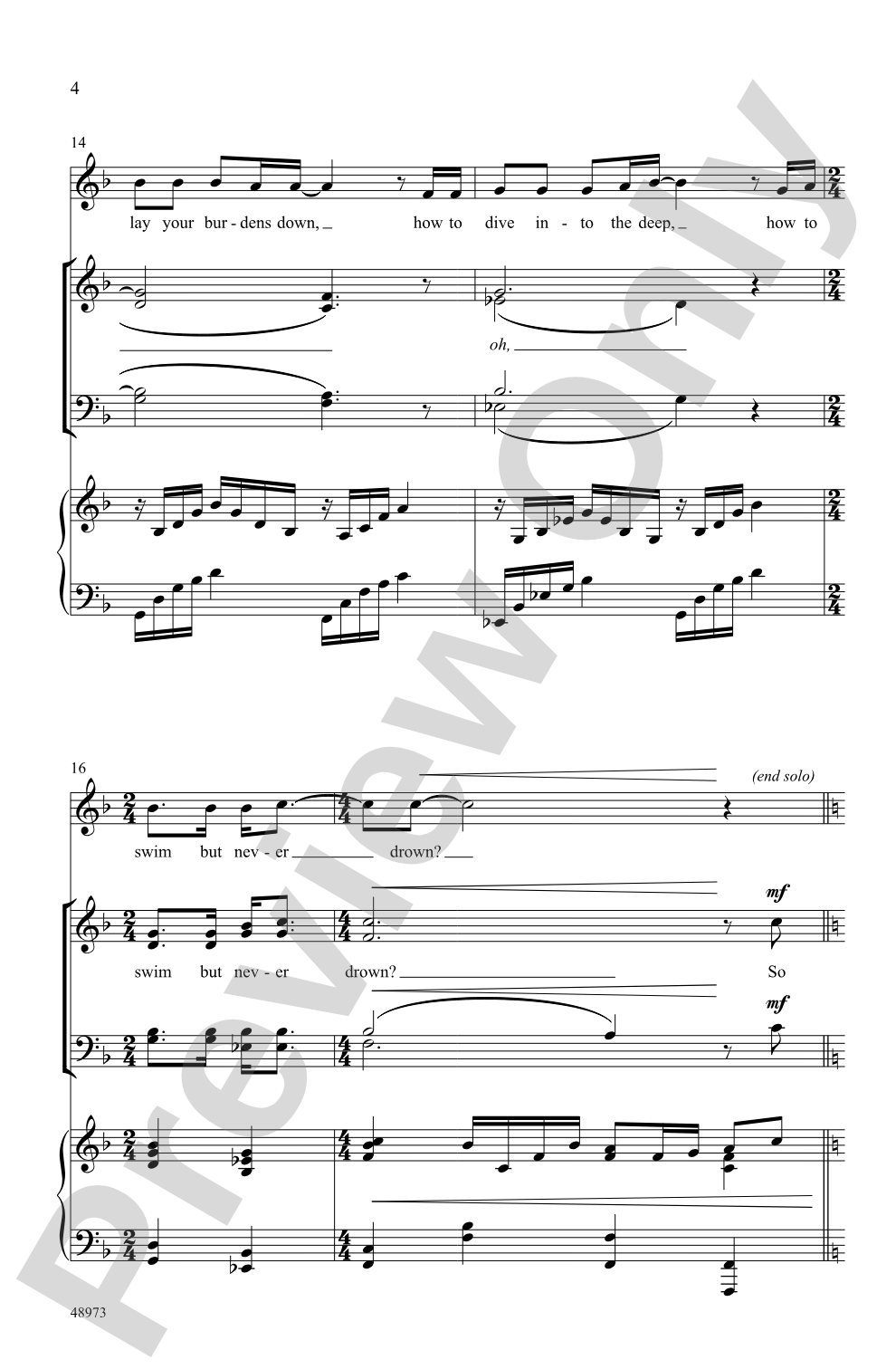
Commissioned by Texas A&M University in remembrance of a lost friend and fellow Cadet, this thought-provoking piece is designed to be a conversation starter about mental illness, depression, grief, and suicide. Harmonically rich, musically expressive, and emotionally stirring, singers will be changed and encouraged. "What if I could tell you no one has to walk alone?" This title is available in MakeMusic Cloud.


What If I Could Tell You: SATB Choral Octavo isn't in MakeMusic Cloud just yet...but it could be. Let us know you'd like to see it, and you'll help shape what comes next. In the meantime, start a free trial and dive into thousands of interactive titles your students can play along with today.
Request This Title
Tell us you want it.
Start Your Free Trial
Explore everything that's ready to play right now.
Sample Audio
1
Audio File
--:--
0:00
0:00
Sample Video
1 / 2
Additional Details
Series:
Alfred Choral Designs
Publisher:
Alfred Music
Page Count:
12
SKU:
00-PO-0006861
More about this title
About the Composer: Heather Sorenson

Heather Sorenson is a Dallas-based composer and arranger whose works appear regularly in churches, concert halls, universities, and festivals across the globe. Originally trained as a pianist, she has built a distinctive voice by moving fluidly between traditional and contemporary choral idioms, often blending both approaches into a cohesive artistic statement.
Sorenson has taught music at all elementary levels, served as an adjunct professor at Baylor University, and conducted master classes in piano and songwriting. She has received commissions from Texas A&M University, the John F. Kennedy Memorial Foundation, and Carnegie Hall, among others. Beyond composing, she appears frequently as a guest conductor and speaker at worship conferences, universities, and schools throughout the United States.
Why we love this
This piece tackles a conversation that matters. Rather than shying away from mental health, grief, and isolation, Sorenson creates space for singers and listeners to sit with these realities and find hope in community. The harmonic language is sophisticated enough to honor the weight of the subject while remaining accessible to singers at the SATB level.
What to expect
The music unfolds with warmth and vulnerability. Harmonic richness creates moments of genuine beauty alongside passages that feel tender and exposed, mirroring the emotional journey of reaching out, being heard, and discovering you are not alone.
Who it's for
This work suits choirs ready to engage repertoire with emotional and social depth. Whether you direct a high school ensemble, a community choir, or a university singers program, this piece invites your singers to connect with meaningful subject matter while developing interpretive maturity.
How to get the most out of it
- Attend to the text phrasing as your primary interpretive guide; allow the lyrics to shape breath placement and dynamic contours rather than imposing a predetermined emotional arc.
- Encourage singers to make eye contact with one another throughout, especially during passages about connection and companionship, reinforcing the piece's core message about shared experience.
- Explore the recorded accompaniment early in rehearsal to establish the harmonic context and overall emotional pacing before drilling voice parts independently.
How to use it
Program this as a concert centerpiece or closing number for concerts addressing themes of mental health awareness, grief support, or community resilience. Its emotional weight and thoughtful construction make it equally fitting for a chapel service, benefit concert, or festival dedicated to social consciousness in music.
Skills your students will build
- Interpreting text-driven phrasing in passages of varying harmonic density
- Sustaining emotional expression across longer forms without losing ensemble cohesion
- Blending four-part harmony in richly chromatic contexts
- Responding to meaningful subject matter as singers and as advocates