
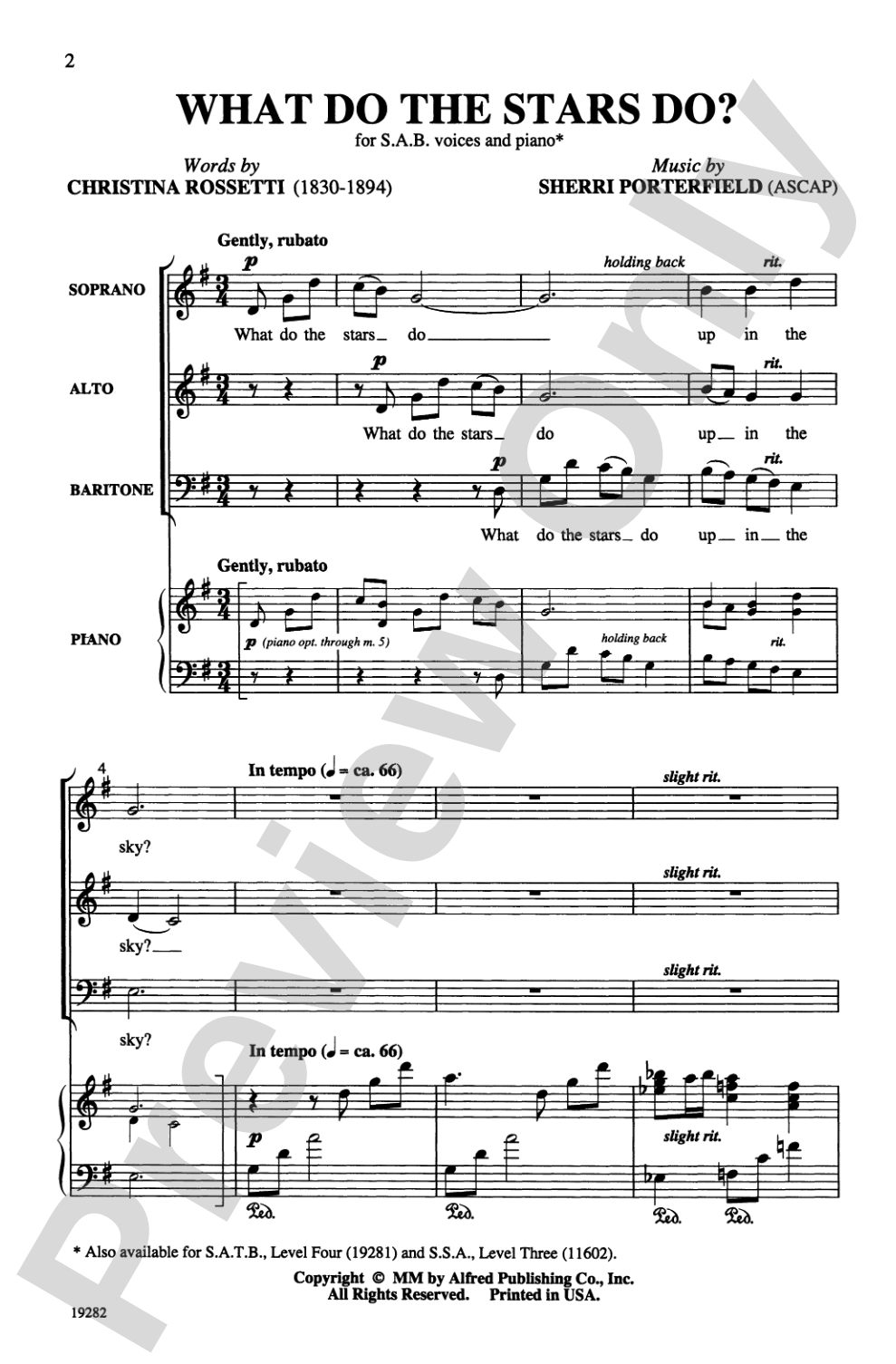
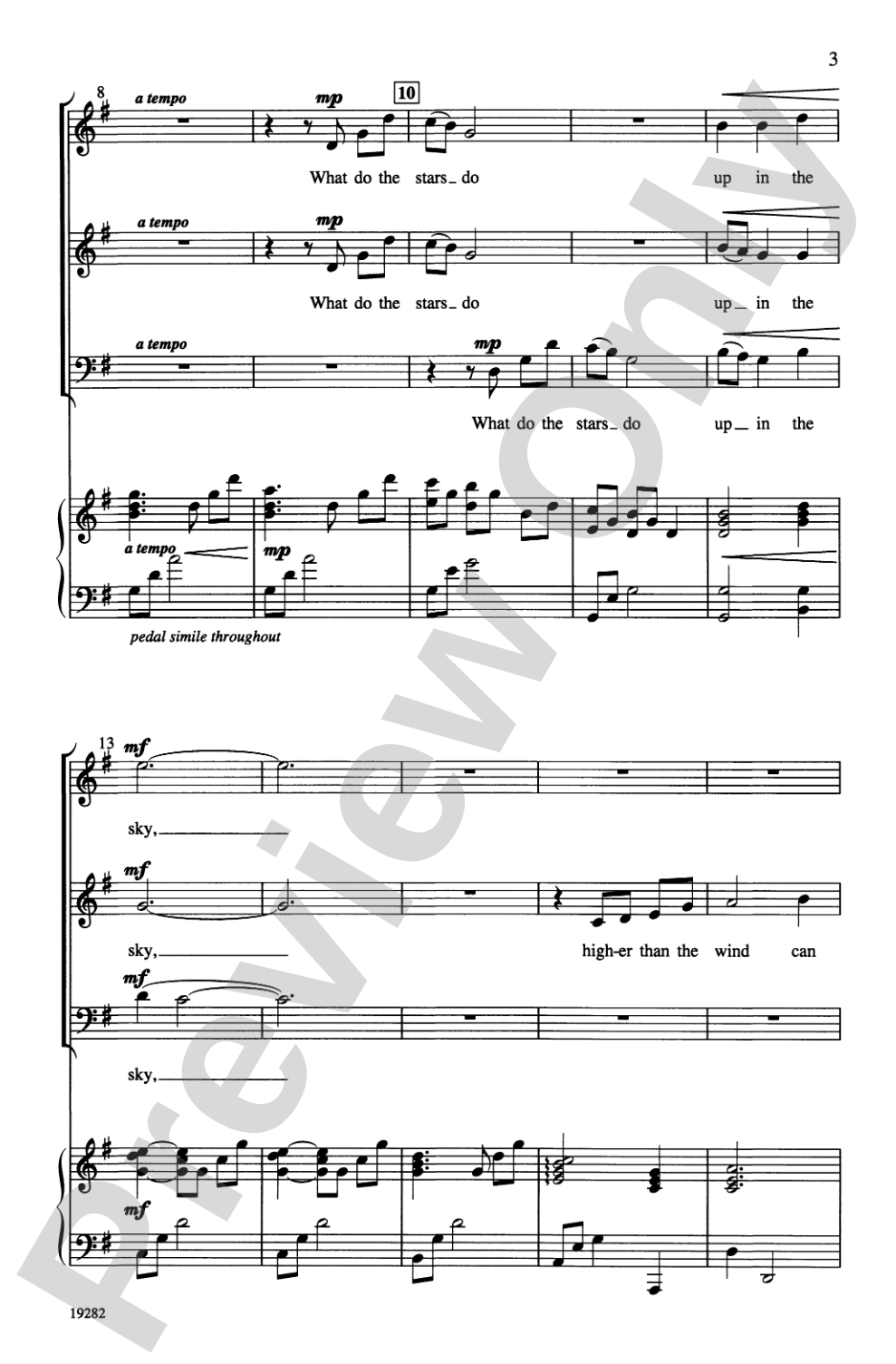

What Do the Stars Do?: SAB Choral Octavo
Words by Christina Rossetti, music by Sherri Porterfield
Item: 00-PO-0002162
$2.25
Minimum order quantity: 20 copies
Pickup currently not available
Description
New for SATB and SAB! Sherri Porterfield originally composed this touching setting of a Christina Rossetti poem for SSA voices. Now she's adapted it in two editions for mixed groups of all ages. It features classic choral writing exemplified by lovely harmonies and flowing melodies. Ideal for festivals and adjudications, it's also suitable for December concerts.


What Do the Stars Do?: SAB Choral Octavo isn't in MakeMusic Cloud just yet...but it could be. Let us know you'd like to see it, and you'll help shape what comes next. In the meantime, start a free trial and dive into thousands of interactive titles your students can play along with today.
Request This Title
Tell us you want it.
Start Your Free Trial
Explore everything that's ready to play right now.
Sample Audio
1
Audio File
--:--
0:00
0:00
Sample Video
No sample videos found.
Additional Details
Series:
Alfred Archive Edition: Alfred Choral Designs
Publisher:
Alfred Music
Page Count:
8
SKU:
00-PO-0002162
More about this title
About the Composer: Sherri Porterfield
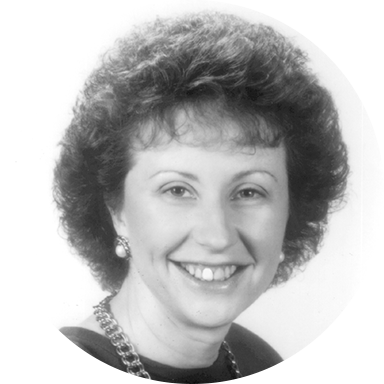
Sherri Porterfield directs choirs at Cedar Park Middle School in Cedar Park, Texas, and has previously taught in Missouri and Kansas, where her ensembles consistently earned first place and sweepstakes honors at competitions and state conventions. She has served as an adjunct assistant professor of music education at the University of Missouri-Kansas City Conservatory of Music and has worked as a clinician and guest conductor with honor choirs across the country.
With over 175 published choral compositions to her name, Porterfield has maintained an active presence in music publishing through Alfred Music and other major publishers. Since 1997, she has received annual ASCAP awards for her compositions. She holds a B.S.E. in music education from the University of Memphis and a Master of Music in choral conducting from the University of Missouri-Kansas City, and has been recognized four times by Who's Who Among America's Teachers.
Why we love this
Porterfield's adaptation preserves the lyrical elegance of her original SSA setting while making the piece accessible to mixed ensembles of all ages. The flowing melodies and warm harmonies create a contemplative mood that serves equally well in festive December programming or adjudicated contests. The three-part writing keeps rehearsal demands manageable without sacrificing musical substance.
What to expect
Contemplative and gentle, this setting unfolds like a quiet meditation. The melody rises and falls with natural ease, supported by harmonies that feel inevitable rather than ornamental, creating an intimate sound that fills concert spaces with warmth rather than volume.
Who it's for
This piece works beautifully with developing mixed choirs, middle school ensembles, and any community or church choir seeking repertoire that balances accessibility with genuine musical depth. The straightforward three-part writing welcomes singers of varying experience levels while the Christina Rossetti text offers interpretive substance for more mature performers.
How to get the most out of it
- Balance the harmonic movement by bringing out inner voices during sustained passages; SAB voicing benefits from clear alto lines that anchor the progression.
- Let the text shape your phrasing rather than adhering to strict metrical patterns. Rossetti's poetic language invites natural breath points and subtle tempo flexibility.
- Pay attention to the interplay between soprano and alto in moments where they diverge; these moments often carry the emotional weight of the setting.
How to use it
Program this as an anchor piece in a December concert or sacred music festival, where its reflective character provides contrast to more energetic selections. Its eight-page length and modest technical demands make it ideal for festivals and adjudications, where it can showcase choir maturity without requiring extensive preparation time.
Skills your students will build
- Reading SAB voicing and part independence in three-part mixed textures
- Interpreting poetic text through phrase shaping and subtle dynamic control
- Balancing harmonic voices, particularly maintaining audible alto lines in mixed writing
- Building musicality in contemplative repertoire with restrained emotional expression