

What Child Is This?: SSA Choral Octavo
Traditional Carol, words by William Chatterton Dix / arr., with additional words, by Russell Robinson
Item: 00-PO-0001614
$1.85
Minimum order quantity: 20 copies
Pickup currently not available
Related Items
What Child Is This?: SoundTrax Digital Audio Download |
$27.99
|
View | |
What Child Is This?: SATB Choral Octavo |
$1.85
|
View | |
What Child Is This?: SAB Choral Octavo |
$2.05
|
View | |
What Child Is This?: SATB Choral Octavo |
$1.85
|
View | |
What Child Is This?: SAB Choral Octavo |
$2.05
|
View | |
What Child Is This?: SSA Choral Octavo |
$1.85
|
View | |
What Child Is This?: Choral Octavo SoundTrax CD |
$27.99
|
View |
Description
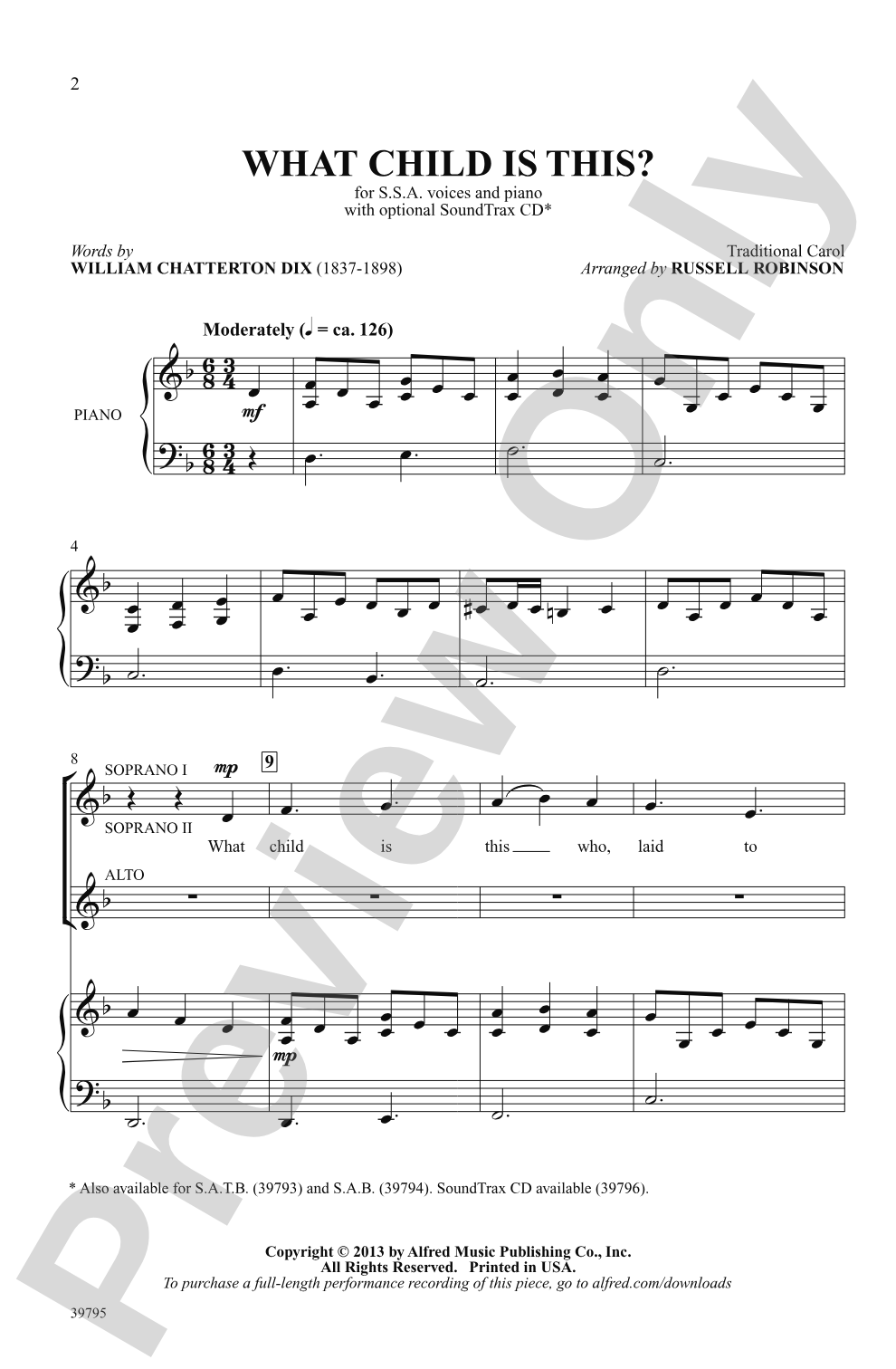
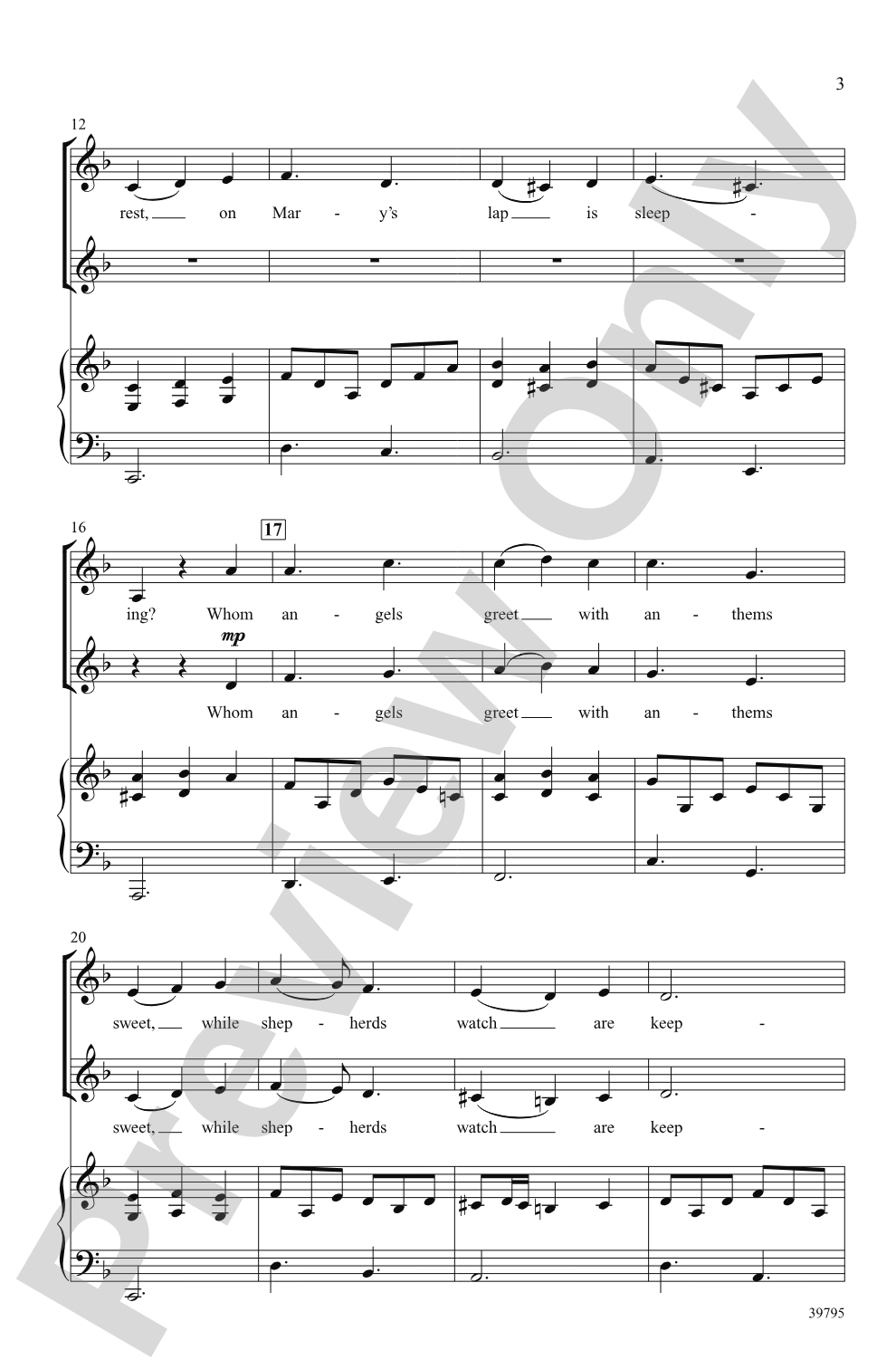
The traditional "Greensleeves" tune seasoned with a dash of the Renaissance and a generous sprinkling of rhythmic whimsy. This intriguing arrangement is set lightly in compound meter, alternating between 3/4 and 6/8 time. A new treatment of a Christmas classic.


What Child Is This?: SSA Choral Octavo isn't in MakeMusic Cloud just yet...but it could be. Let us know you'd like to see it, and you'll help shape what comes next. In the meantime, start a free trial and dive into thousands of interactive titles your students can play along with today.
Request This Title
Tell us you want it.
Start Your Free Trial
Explore everything that's ready to play right now.
Sample Audio
1
Audio File
--:--
0:00
0:00
Sample Video
No sample videos found.
Additional Details
Series:
Alfred Choral Designs
Publisher:
Alfred Music
Page Count:
12
SKU:
00-PO-0001614
More about this title
About the Arranger: Russell Robinson

Russell Robinson is an emeritus professor of music education at the University of Florida who has spent decades shaping choral programs across six continents. His work as a conductor, clinician, and consultant has taken him to some of the world's most prestigious concert halls, from Carnegie Hall to the Kennedy Center, and he was inducted into the Florida Music Educators Association Hall of Fame in 2016.
Robinson's compositional and arranging output spans over 500 published works, encompassing choral pieces, instrumental arrangements, instructional materials, and scholarly articles. His career has included leadership roles within the National Association for Music Education and the University of Florida's College of the Arts, positioning him as a significant voice in contemporary music education.
Why we love this
Robinson's signature approach to familiar melodies transforms them without losing their essential character. The alternation between 3/4 and 6/8 adds genuine musical intrigue rather than novelty for its own sake, and the compound meter feel gives the well-known tune room to breathe in unexpected ways that will engage both singers and audiences.
What to expect
Familiar warmth meets unexpected musical turns as the Greensleeves melody dances through shifting time signatures. The Renaissance touches ground the piece in harmonic depth while the rhythmic surprises keep both singers and listeners curious about what comes next, creating a carol that feels both timeless and contemporary.
Who it's for
Directors seeking a fresh take on a holiday standard that challenges singers without overwhelming them work well with this arrangement. It works particularly well for SSA choirs at the intermediate level and above who are ready to explore metric complexity and want something beyond the typical Christmas repertoire.
How to get the most out of it
- Emphasize the rhythmic flexibility that comes from shifting between simple and compound meters; the ensemble should feel the pulse shift naturally rather than mechanically re-counting from one time signature to the next.
- Balance the "Renaissance" coloring with clarity in the SSA texture; avoid letting the harmonies become muddy when exploring the richer harmonic language.
- Consider the recorded accompaniment as a framework for phrasing rather than a strict click track, allowing room for the singers' interpretive choices within the compound meter.
- Highlight the rhythmic whimsy through articulation and dynamics; let that playfulness come through without sacrificing the carol's inherent dignity.
How to use it
This works beautifully as a concert opener or closer that bridges traditional and contemporary choral aesthetics. Include it on a program with other arrangements that take harmonic risks, or use it as the anchor piece for a "Seasonal Traditions Reimagined" concert set.
Skills your students will build
- Reading and singing across alternating simple and compound meters (3/4 and 6/8)
- Maintaining pulse stability when metric patterns shift
- Balancing harmonic color within a three-part texture
- Navigating Renaissance-influenced voice leading