

What Child Is This?: SATB Choral Octavo
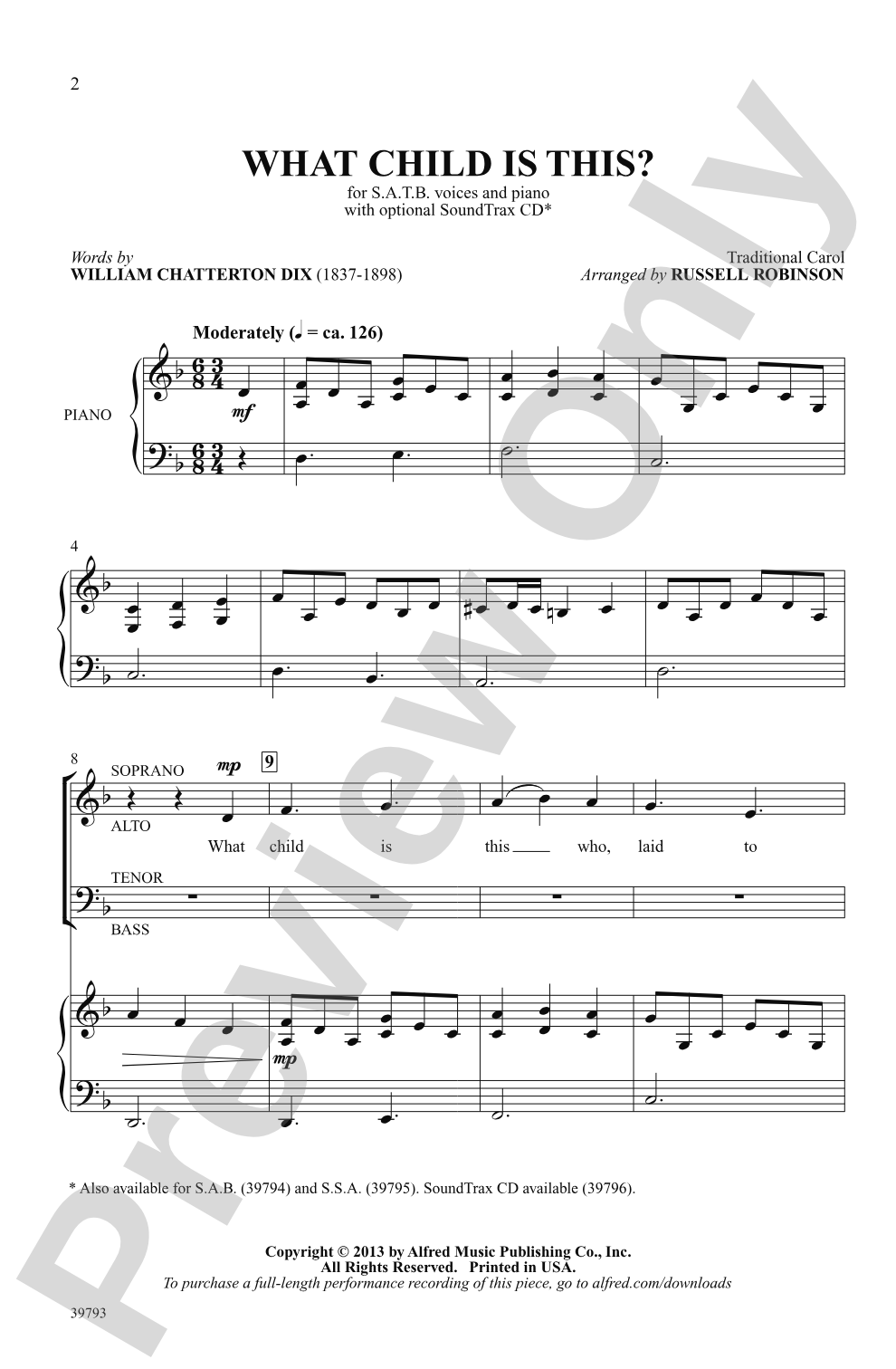
Traditional Carol, words by William Chatterton Dix / arr., with additional words, by Russell Robinson
Item: 00-PO-0001612
$1.85
Minimum order quantity: 20 copies
Pickup currently not available
Related Items
What Child Is This?: SoundTrax Digital Audio Download |
$27.99
|
View | |
What Child Is This?: SAB Choral Octavo |
$2.05
|
View | |
What Child Is This?: SSA Choral Octavo |
$1.85
|
View | |
What Child Is This?: SATB Choral Octavo |
$1.85
|
View | |
What Child Is This?: SAB Choral Octavo |
$2.05
|
View | |
What Child Is This?: SSA Choral Octavo |
$1.85
|
View | |
What Child Is This?: Choral Octavo SoundTrax CD |
$27.99
|
View |
Description
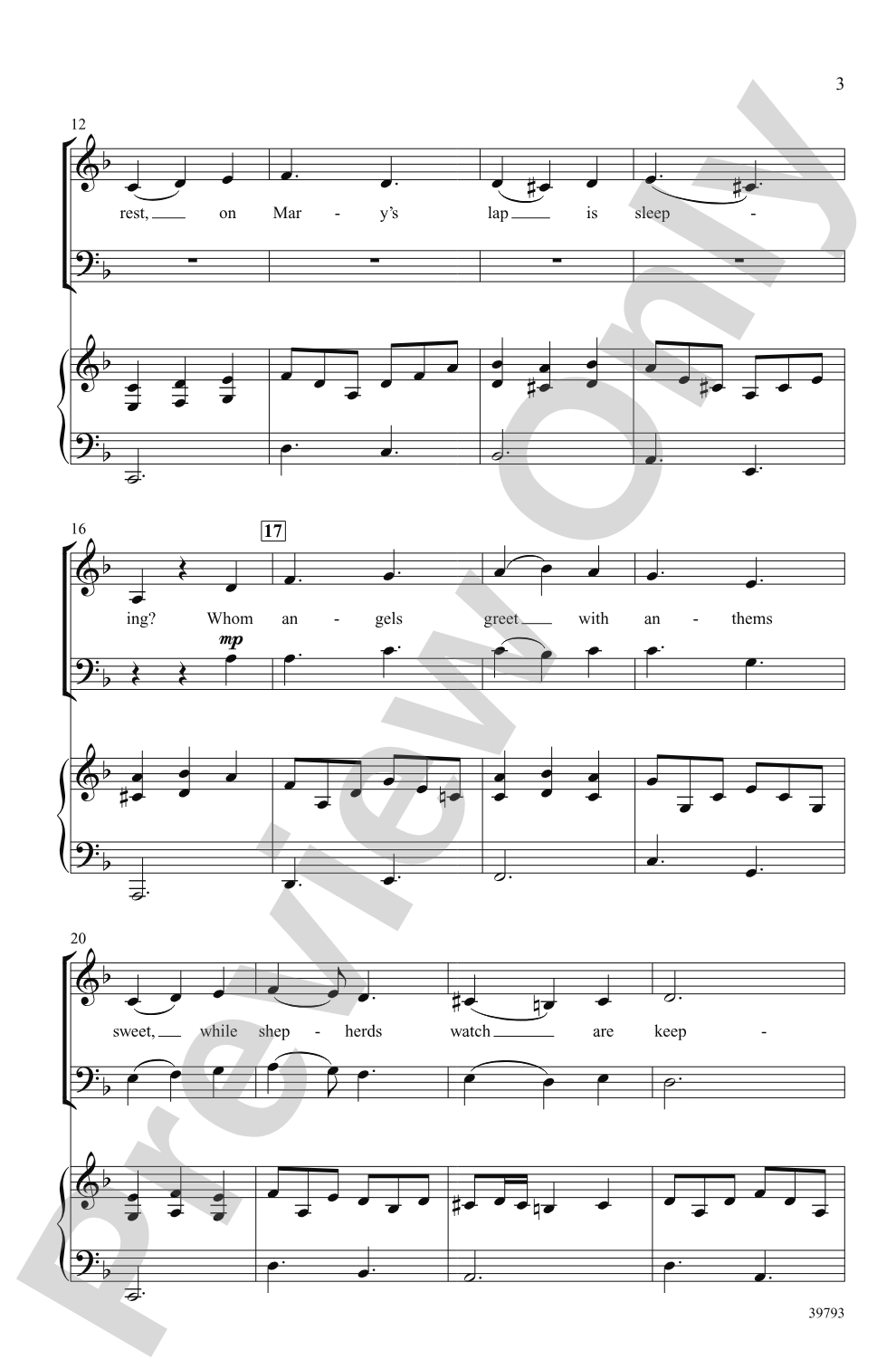
The traditional "Greensleeves" tune seasoned with a dash of the Renaissance and a generous sprinkling of rhythmic whimsy. This intriguing arrangement is set lightly in compound meter, alternating between 3/4 and 6/8 time. A new treatment of a Christmas classic.


What Child Is This?: SATB Choral Octavo isn't in MakeMusic Cloud just yet...but it could be. Let us know you'd like to see it, and you'll help shape what comes next. In the meantime, start a free trial and dive into thousands of interactive titles your students can play along with today.
Request This Title
Tell us you want it.
Start Your Free Trial
Explore everything that's ready to play right now.
Sample Audio
1
Audio File
--:--
0:00
0:00
Sample Video
No sample videos found.
Additional Details
Series:
Alfred Choral Designs
Publisher:
Alfred Music
Page Count:
12
SKU:
00-PO-0001612
More about this title
About the Arranger: Russell Robinson

Russell Robinson is an Emeritus Professor of Music Education at the University of Florida with an extensive career conducting choirs across six continents. His work has taken him to prestigious venues including Carnegie Hall, Lincoln Center, the Kennedy Center, and the White House, and he has led honor choirs, all-state ensembles, and festival choirs at state, regional, national, and international levels.
Robinson's contributions to music education extend beyond the podium. A 2016 inductee into the Florida Music Educators Association Hall of Fame and former FMEA President, he has served as Associate Dean of the UF College of the Arts and held national leadership roles with the National Association for Music Education. His catalog includes more than 500 published works spanning choral compositions, arrangements, articles, instructional resources, and books.
Why we love this
Robinson transforms the familiar Greensleeves melody into something genuinely fresh by anchoring it in compound meter and playfully alternating between 3/4 and 6/8. The rhythmic unpredictability keeps singers engaged and prevents this perennial holiday choice from feeling routine, while the Renaissance-tinged orchestration grounds it in a specific historical context that elevates the arrangement beyond a straightforward reharmonization.
What to expect
The arrangement feels both grounded in tradition and gently unsettled, as if you are hearing Greensleeves through a Renaissance lens that slightly tilts the familiar melody off kilter. The alternating meters create a subtle forward momentum and rhythmic buoyancy, like a carol that cannot quite settle into a single pulse.
Who it's for
This octavo suits church and school choirs seeking a distinctive take on a beloved Christmas standard. It works equally well for ensembles that thrive on rhythmic complexity and those ready to expand their comfort with metric modulation, provided you have secure music readers and rehearsal time to explore the meter changes.
How to get the most out of it
- Emphasize the metric shifts as expressive devices rather than obstacles. The switch between 3/4 and 6/8 should feel natural and unhurried; use slight breath points and conductor cueing to help the choir settle into each meter before moving forward.
- Layer the parts gradually during rehearsal rather than sectionalizing them throughout. Introduce all four voices together from the start so singers can hear how Robinson's voicing creates the Renaissance character, then isolate parts only where entries or rhythmic independence demand clarification.
- Balance the "rhythmic whimsy" without letting it undermine the carol's meditative quality. The compound meter should feel lilting, not jumpy; encourage sustained vowels and legit phrasing even through the syncopated rhythmic passages.
How to use it
Program this as a centerpiece in a Christmas concert that pairs traditional and contemporary carols, positioning it between more conventional arrangements to showcase your choir's rhythmic sophistication. It also serves well as the opening or closing number in a holiday service where the musical intrigue invites reflection rather than pure nostalgia.
Skills your students will build
- Reading and performing alternating meters (3/4 and 6/8)
- Understanding compound meter and its effect on phrasing and pulse
- Executing independent rhythmic lines within a SATB texture
- Interpreting historical musical styles (Renaissance) in contemporary choral writing
- Sustaining legit vowels and line through syncopated rhythmic figures