
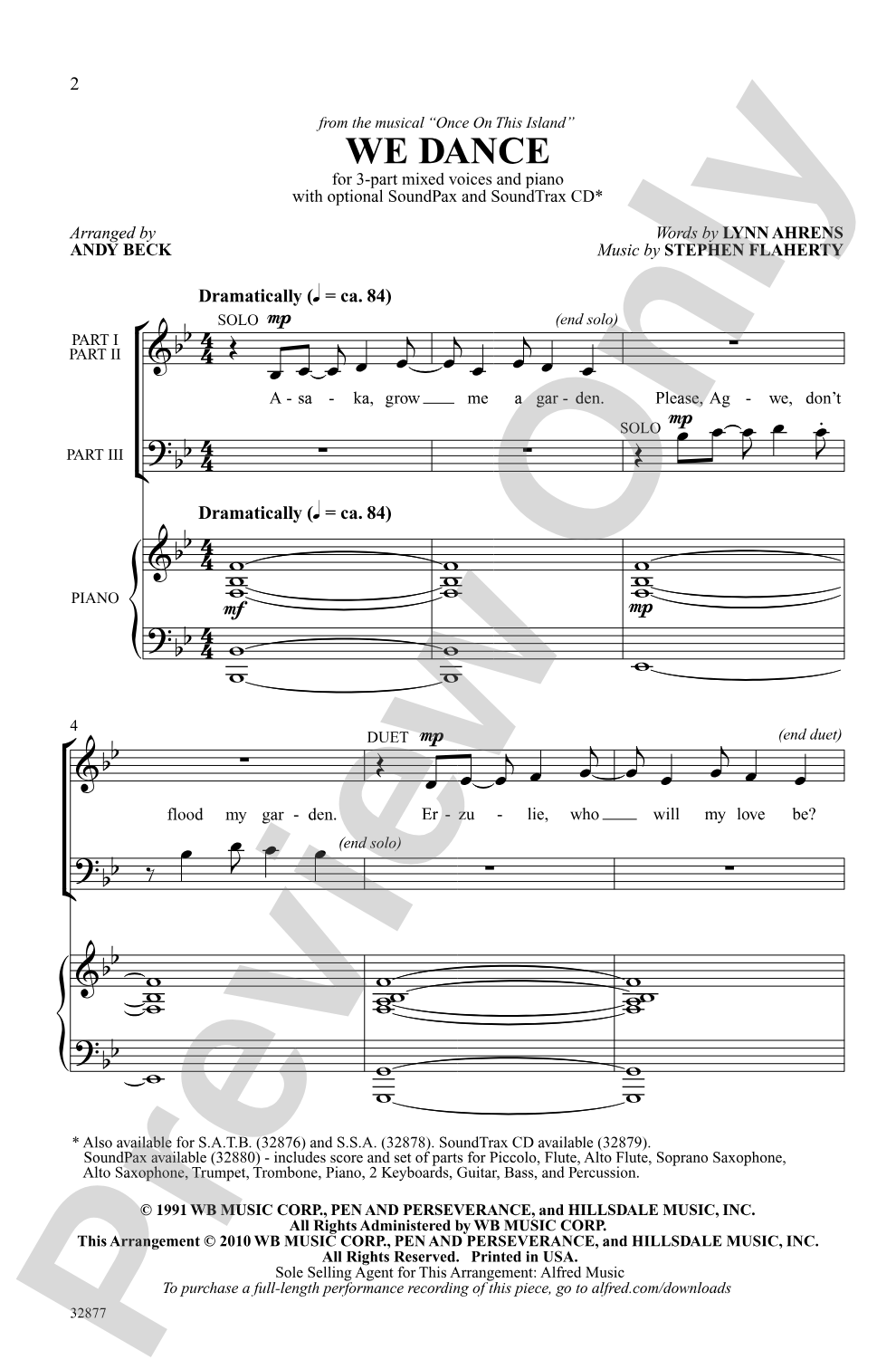

We Dance: 3-Part Mixed Choral Octavo
from the musical Once on This Island
Words by Lynn Ahrens, music by Stephen Flaherty / arr. Andy Beck
Item: 00-PO-0006600
$2.25
Minimum order quantity: 20 copies
One moment…
Related Items
We Dance: SoundTrax Digital Audio Download |
$27.99
|
View | |
We Dance: SATB Choral Octavo |
$1.85
|
View | |
We Dance: SSA Choral Octavo |
$1.85
|
View | |
We Dance: 2-Part Choral Octavo |
$2.10
|
View | |
We Dance (from the musical Once on This Island): Choral SoundPax |
$40.00
|
View | |
We Dance: SATB Choral Octavo |
$1.85
|
View | |
We Dance: 3-Part Mixed Choral Octavo |
$2.25
|
View | |
We Dance: SSA Choral Octavo |
$1.85
|
View | |
We Dance: 2-Part Choral Octavo |
$2.10
|
View | |
We Dance: Choral Octavo SoundTrax CD |
$27.99
|
View | |
We Dance: Choral SoundPax |
$40.00
|
View |
Description
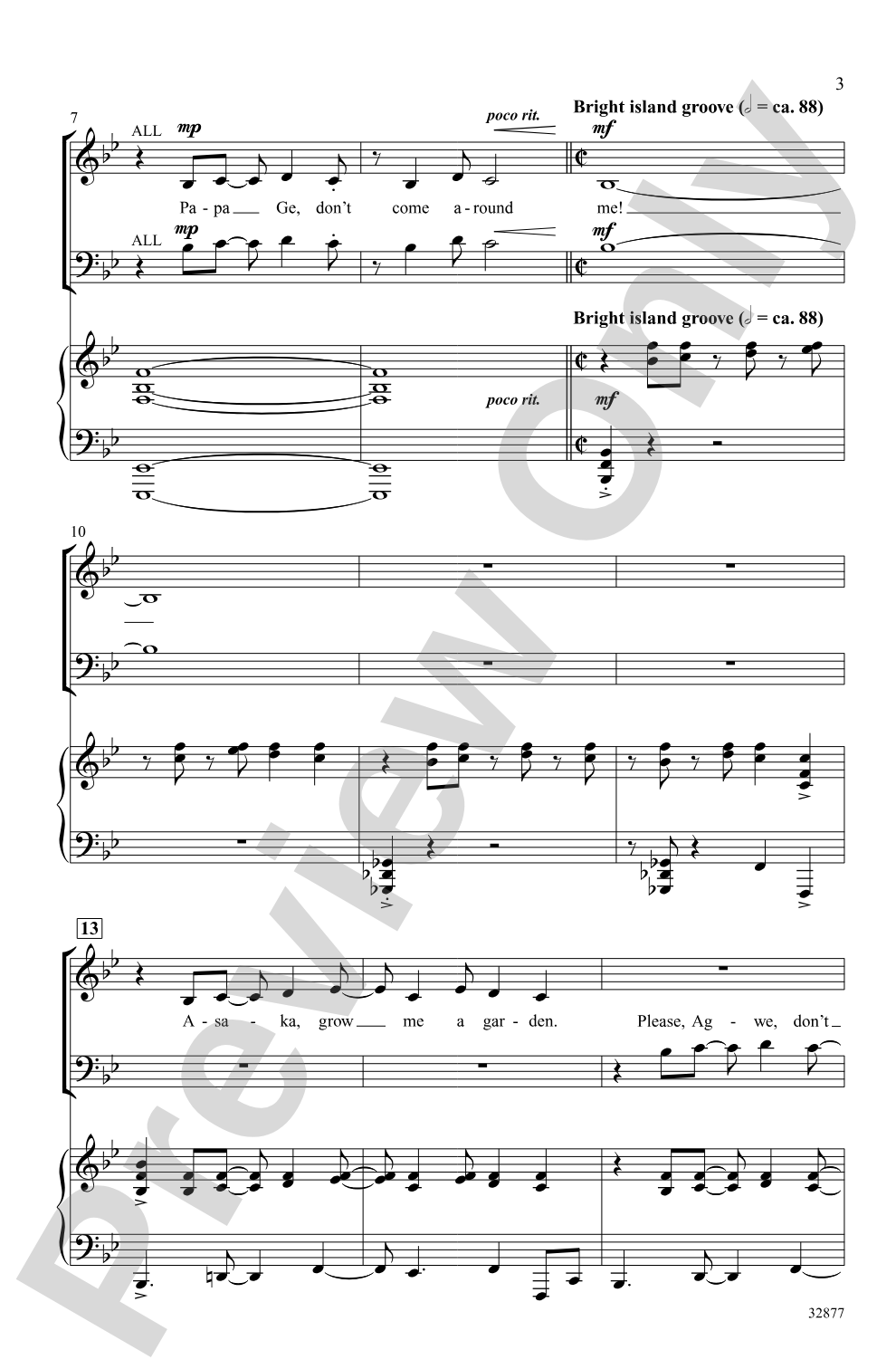
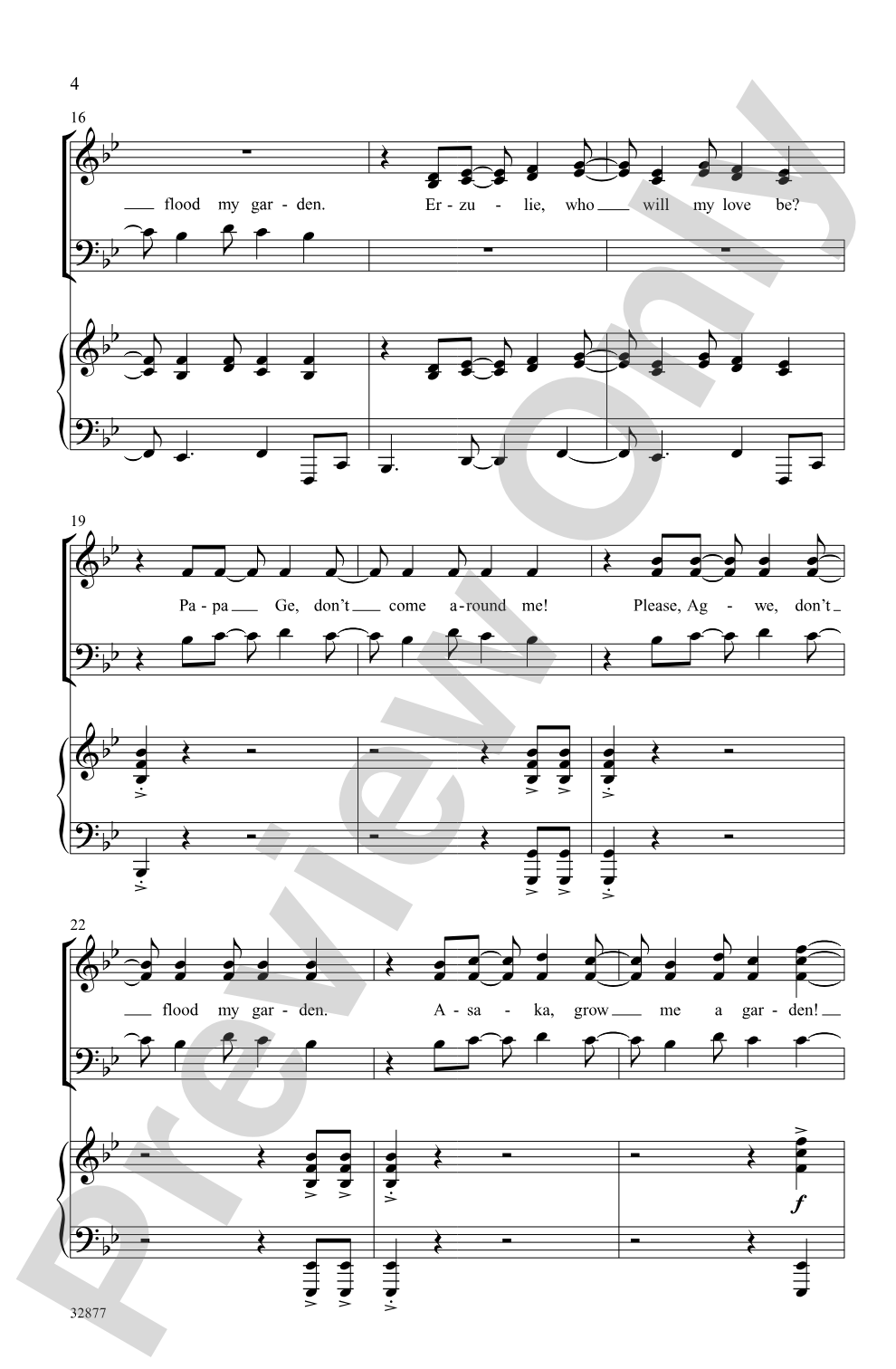
This rhythmic opening number from Broadway's Once on This Island is a syncopated standout with a bright island groove and accented choral singing. With the recent revival, national tours, and a Best Revival Tony Award®, the spotlight returns to this Ahrens and Flaherty favorite. Now available for 2-part treble voices!


We Dance: 3-Part Mixed Choral Octavo isn't in MakeMusic Cloud just yet...but it could be. Let us know you'd like to see it, and you'll help shape what comes next. In the meantime, start a free trial and dive into thousands of interactive titles your students can play along with today.
Request This Title
Tell us you want it.
Start Your Free Trial
Explore everything that's ready to play right now.
Sample Audio
1
Audio File
--:--
0:00
0:00
Sample Video
No sample videos found.
Additional Details
Series:
Alfred Pop Choral Series
Publisher:
Alfred Music
Page Count:
12
SKU:
00-PO-0006600
More about this title
About the Composer: Stephen Flaherty
Stephen Flaherty has become one of the most performed contemporary musical theater composers in America. His collaborative partnerships with lyricist Lynn Ahrens have produced some of Broadway's most inventive scores, spanning genres from fantasy (Anastasia, Ragtime) to Caribbean storytelling (Once on This Island) to historical drama (Hadestown). His gift for crafting memorable melodies alongside sophisticated harmonic language makes his work especially rewarding for student musicians.
Flaherty's music consistently demonstrates his ear for rhythmic vitality and cultural specificity. Whether writing for Broadway or educational ensembles, he balances accessibility with genuine compositional substance, giving young singers material that sounds contemporary while remaining vocally secure.
Why we love this
This number captures everything that makes Once on This Island such a vibrant piece of theater. The syncopated grooves and island percussion language give your singers something immediate and kinetic to latch onto, while Andy Beck's 3-part arrangement sits perfectly for developing singers who don't need the full SATB complexity. Programming this at the top of a concert immediately signals energy and joy.
What to expect
Bright Caribbean sunlight and movement. The piece bounces with infectious energy while staying grounded in genuine musicality. Your singers will feel the difference between reciting rhythm and actually inhabiting a groove.
Who it's for
Treble and mixed choirs looking for an opener with real theatrical flair. This works for middle school through early high school groups, especially ensembles with developing rhythmic confidence who need repertoire that makes syncopation feel natural rather than technical.
How to get the most out of it
- Lock the syncopated rhythms first before worrying about the melody; the groove is what makes this arrangement sing. Have your singers speak the rhythm on consonants to internalize the pocket.
- Layer in the recorded accompaniment once your choir is secure on voice parts. The steel drums and percussion will pull the groove into focus and show singers exactly where they sit in the texture.
- Keep the accented choral singing crisp and unified. This isn't sustained legit singing; the attacks define the character, so mark exactly which syllables get weight in rehearsal.
- Use the staging suggestions to add visual momentum. Island grooves benefit from body awareness and ensemble cohesion, not just vocal accuracy.
How to use it
Lead with this at a concert when you want to immediately establish energy and lift the audience into the room. Its theatrical pedigree also makes it perfect as a segue into other Broadway or contemporary pop arrangements, or as a standalone celebration of musical theater on concert programs.
Skills your students will build
- Singing syncopated rhythms with accuracy and swing feel
- Balancing part independence in 3-part voicing while maintaining ensemble cohesion
- Responding to rhythmic and dynamic accents as expressive tools
- Interpreting contemporary pop/musical theater style distinct from classical choral singing
- Coordinating vocal parts with recorded accompaniment and instrumental texture