

Warning: Strum and Sing
Green Day
Item: 00-PS-0000115
$4.99
One moment…
Related Items
Nice Guys Finish Last: Strum and Sing |
$4.99
|
View | |
Hitchin' a Ride: Strum and Sing |
$4.99
|
View | |
Redundant: Strum and Sing |
$4.99
|
View | |
Good Riddance (Time of Your Life): Strum and Sing |
$4.99
|
View | |
Waiting: Strum and Sing |
$4.99
|
View | |
Minority: Strum and Sing |
$4.99
|
View | |
Macy's Day Parade: Strum and Sing |
$4.99
|
View | |
Maria: Strum and Sing |
$4.99
|
View | |
Poprocks and Coke: Strum and Sing |
$4.99
|
View | |
Longview: Strum and Sing |
$4.99
|
View | |
Welcome to Paradise: Strum and Sing |
$4.99
|
View | |
Basket Case: Strum and Sing |
$4.99
|
View | |
She: Strum and Sing |
$4.99
|
View | |
When I Come Around: Strum and Sing |
$4.99
|
View | |
Stuck With Me: Strum and Sing |
$4.99
|
View | |
Geek Stink Breath: Strum and Sing |
$4.99
|
View | |
Brain Stew: Strum and Sing |
$4.99
|
View | |
Jaded: Strum and Sing |
$4.99
|
View | |
Walking Contradiction: Strum and Sing |
$4.99
|
View | |
J.A.R. (Jason Andrew Relva): Strum and Sing |
$4.99
|
View | |
American Idiot: Strum and Sing |
$4.99
|
View | |
Holiday: Strum and Sing |
$4.99
|
View | |
Wake Me Up When September Ends: Strum and Sing |
$4.99
|
View | |
Boulevard of Broken Dreams: Strum and Sing |
$4.99
|
View |
Description
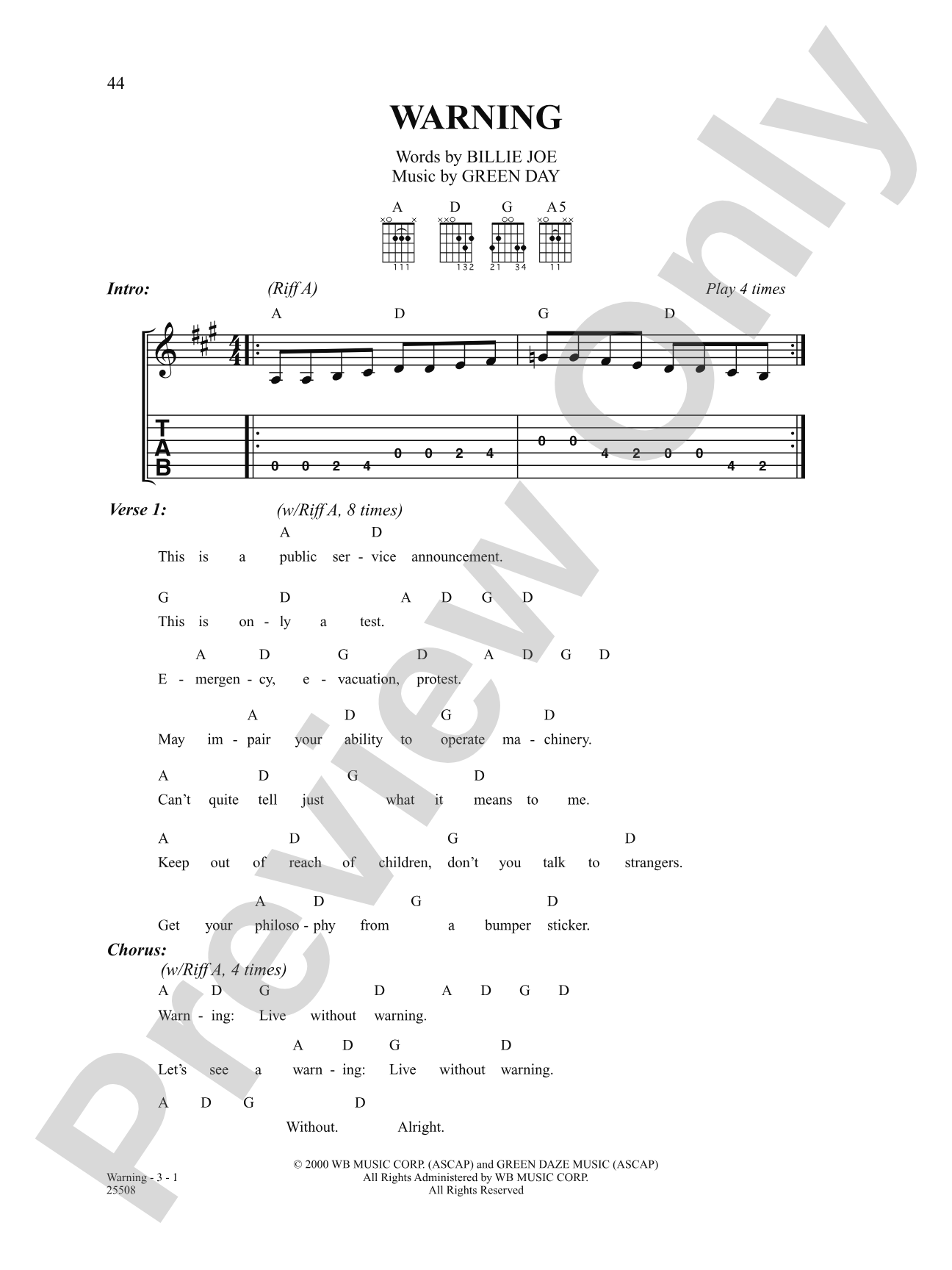
Twenty-five of Green Day's greatest hits, arranged in an easy-to-use lyric and chord songbook format. All lyrics with the correct guitar chords placed above throughout. Plus, important riffs are included in tablature as well. Titles include: American Idiot * Basket Case * Boulevard of Broken Dreams * Brain Stew * Geek Stink Breath * Good Riddance (Time of Your Life) * Hitchin' a Ride * Holiday * Jaded * J.A.R. (Jason Andrew Relva) * Longview * Macy's Day Parade * Maria * Minority * Nice Guys Finish Last * Poprocks & Coke * Redundant * She * Stuck with Me * Waiting * Wake Me Up When September Ends * Walking Contradiction * Warning * Welcome to Paradise * When I Come Around.


Warning: Strum and Sing isn't in MakeMusic Cloud just yet...but it could be. Let us know you'd like to see it, and you'll help shape what comes next. In the meantime, start a free trial and dive into thousands of interactive titles your students can play along with today.
Request This Title
Tell us you want it.
Start Your Free Trial
Explore everything that's ready to play right now.
Sample Audio
No sample audio found.
Sample Video
No sample videos found.
Additional Details
Publisher:
Alfred Music
Page Count:
64
SKU:
00-PS-0000115
More about this title
About the Composer: Green Day
Green Day emerged from the East Bay punk scene in the early 1990s and became one of the defining rock bands of their generation. Their 1994 major-label debut Dookie introduced accessible, hook-driven punk rock to mainstream audiences, while 2004's American Idiot established them as a major artistic force with concept-album ambitions. Across three decades, they have shaped how millions of listeners engage with rock music.
Why we love this
This collection gives guitarists immediate access to some of the most recognizable modern rock songs. The combination of full lyrics, clearly placed chords, and tabbed riffs means students can actually play and sing these songs from day one, which builds engagement faster than abstract exercises. For teachers working with reluctant musicians or those who connect to rock over classical tradition, this songbook opens real doors.
What to expect
These songs pulse with youthful energy, wry humor, and genuine emotional weight. Whether you're playing the infectious bounce of 'When I Come Around,' the driving anger of 'American Idiot,' or the quiet reflection of 'Wake Me Up When September Ends,' the music carries the attitude and vulnerability that made Green Day resonate across multiple generations.
Who it's for
This songbook is built for guitarists at the intermediate level who want to play songs they actually know and love. It works equally well for solo practice, small ensemble settings, or singers who need chord and lyric support while performing.
How to get the most out of it
- Nail the power chord voicings first. These songs sit on relatively simple shapes, but the rhythm and muting are what give them punch. Practice the mute-and-release technique on the main riffs before worrying about tempo.
- Use the tab as your guide to important melodic lines and signature riffs, but don't ignore the chord progression. Understanding both builds faster recall and helps you recover if you lose your place during a song.
- Lock the picking pattern to the beat. Green Day's rhythm guitar work is percussive and deliberate. Even on slower songs like 'Good Riddance,' maintain that controlled attack rather than letting notes blur together.
- Sing or hum the melody while playing chords. This strengthens the connection between your ear and your hands and makes the chord choices feel less abstract.
How to use it
Use this collection to bridge the gap between students who resist traditional repertoire and those ready to engage seriously with their instruments. A recital or informal performance night built around these songs creates immediate audience connection and validates the music your students care about. The variety of tempos and moods also makes this useful for lesson planning across the entire year.
Skills your students will build
- Reading chord charts and understanding chord-to-fretboard mapping
- Coordinating rhythm guitar with singing or melody performance
- Interpreting tablature for riffs and connecting tab notation to standard notation
- Developing dynamic control and muting techniques in power chord voicings
- Building songs from chord progressions rather than single melodic lines