

Wade in the Water: SATB Choral Octavo
Traditional Spiritual / arr. Mark Hayes
Item: 00-PO-0003479
$2.05
Minimum order quantity: 20 copies
Pickup currently not available
Related Items
Wade in the Water: SAB Choral Octavo |
$2.05
|
View | |
Wade in the Water: SSAA Choral Octavo |
$2.25
|
View | |
Wade in the Water: TTBB Choral Octavo |
$2.25
|
View | |
Wade in the Water: Choral SoundPax |
$20.00
|
View | |
Wade in the Water: SATB Choral Octavo |
$2.05
|
View | |
Wade in the Water: SAB Choral Octavo |
$2.05
|
View | |
Wade in the Water: SSAA Choral Octavo |
$2.25
|
View | |
Wade in the Water: Choral Octavo SoundTrax CD |
$27.99
|
View | |
Wade in the Water: Choral SoundPax |
$20.00
|
View |
Description
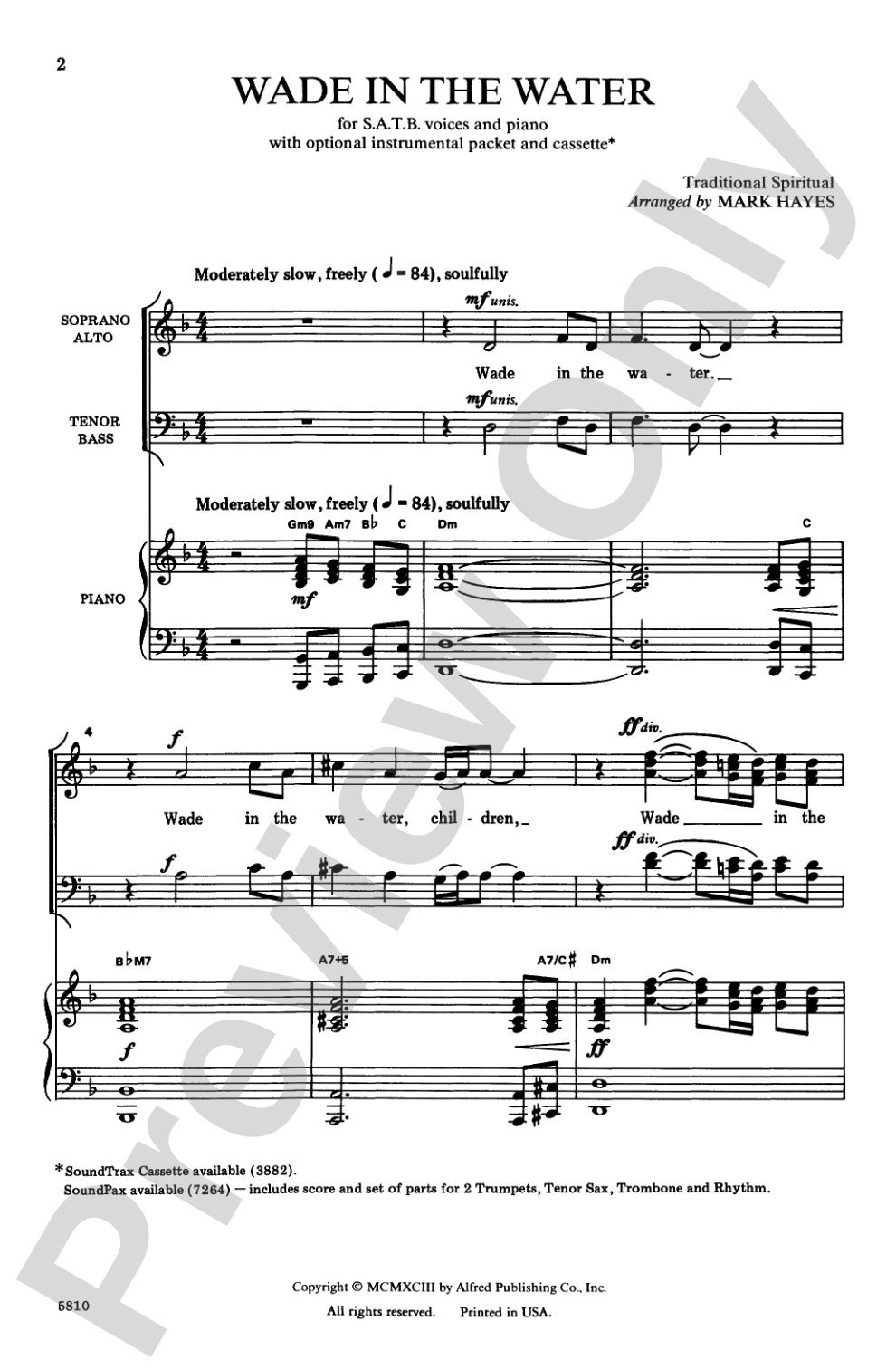
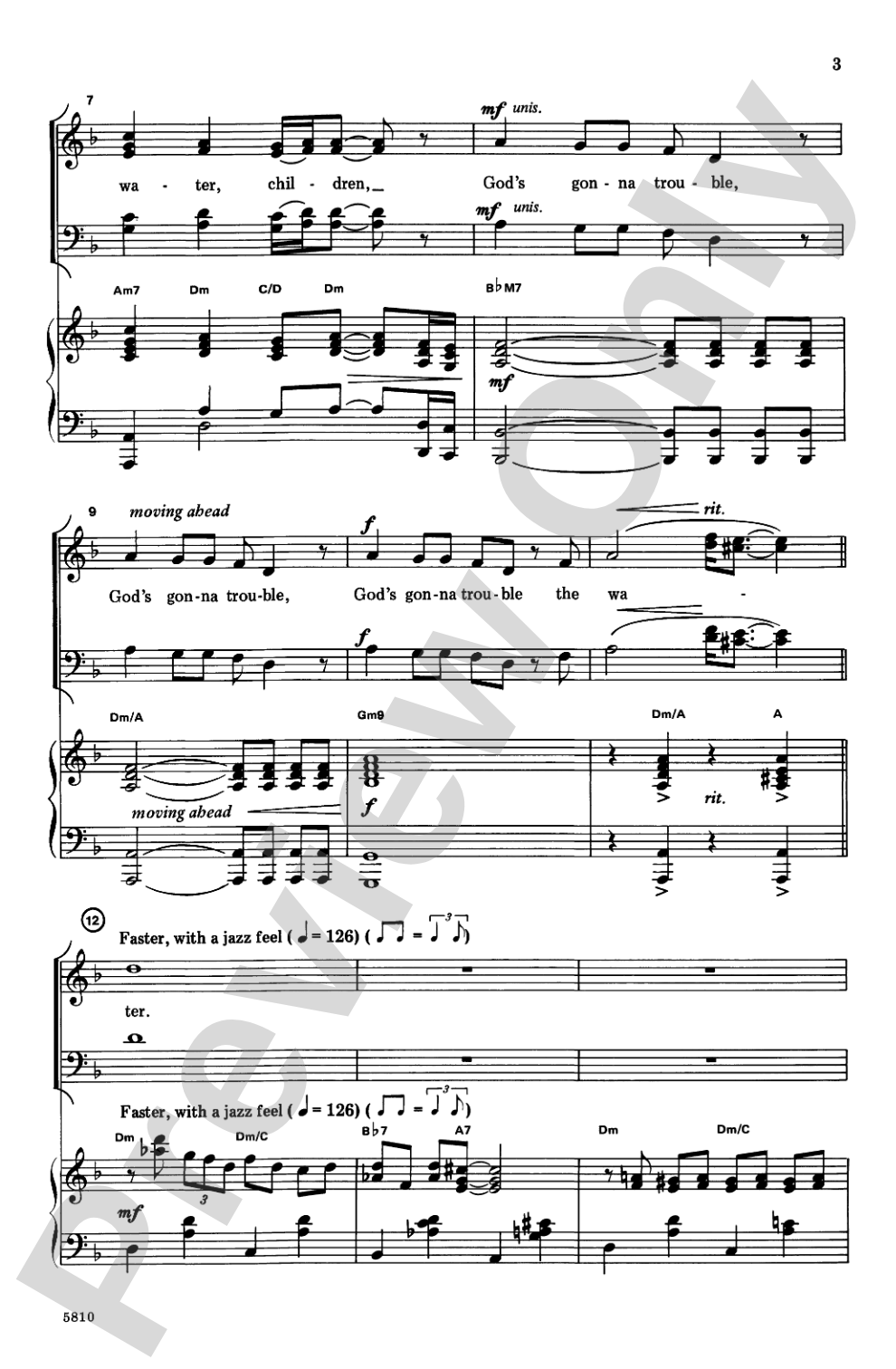
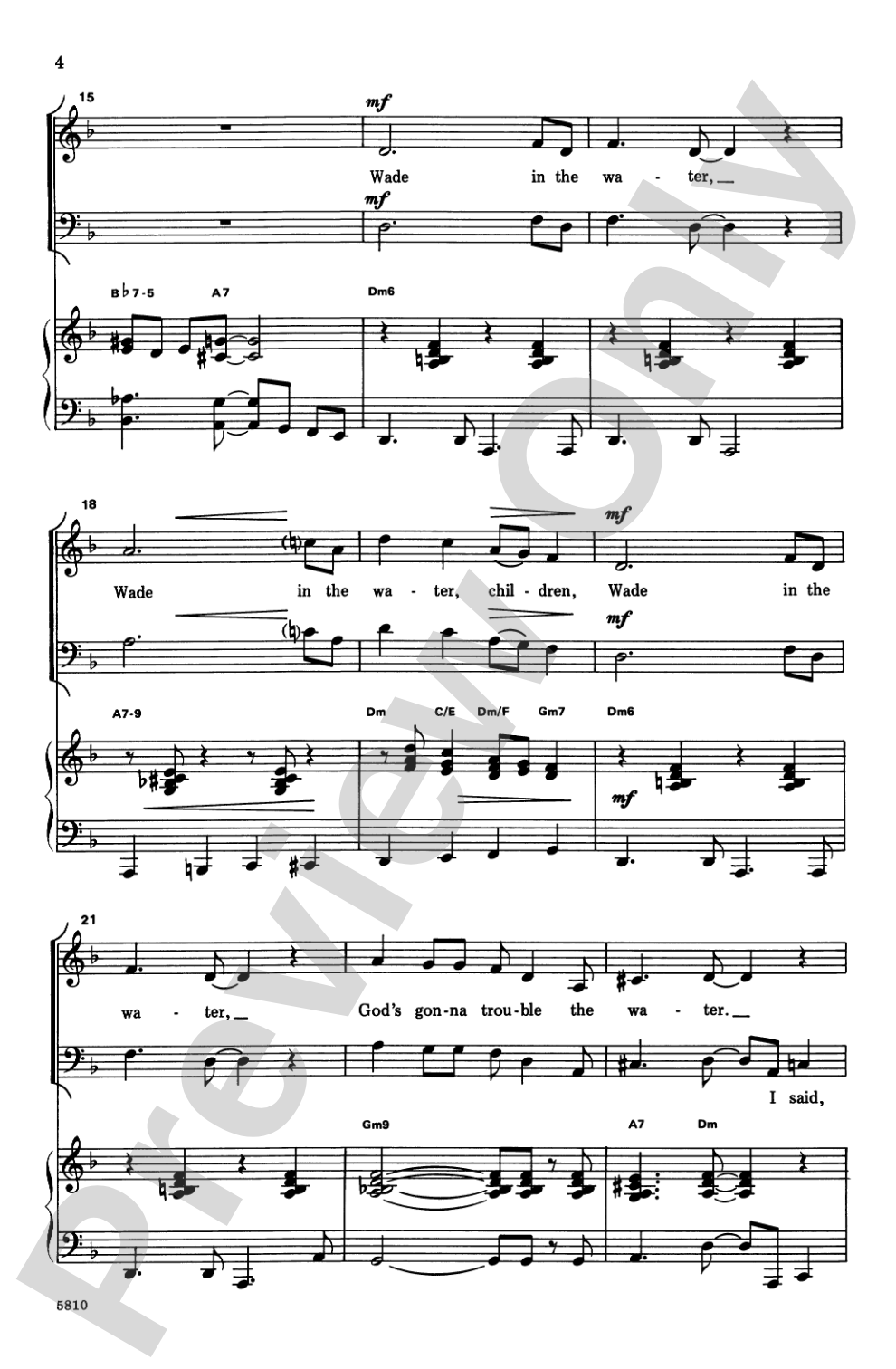
The classic arrangement returns in a new SAB voicing! This work opens with a choral fanfare-like section and progresses through several swinging sections to a climactic finish. This is Mark Hayes at his very best. Many opportunities for brief solos. And the optional instrumental accompaniment (or SoundTrax CD) is outstanding.


Wade in the Water: SATB Choral Octavo isn't in MakeMusic Cloud just yet...but it could be. Let us know you'd like to see it, and you'll help shape what comes next. In the meantime, start a free trial and dive into thousands of interactive titles your students can play along with today.
Request This Title
Tell us you want it.
Start Your Free Trial
Explore everything that's ready to play right now.
Sample Audio
1
Audio File
--:--
0:00
0:00
Sample Video
No sample videos found.
Additional Details
Series:
Alfred Choral Designs
Publisher:
Alfred Music
Page Count:
12
SKU:
00-PO-0003479
More about this title
About the Arranger: Mark Hayes
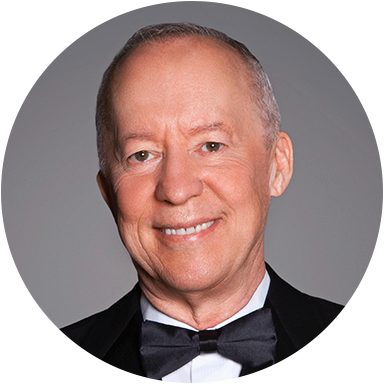
Mark Hayes has established himself as a prolific composer, arranger, and conductor whose output exceeds 1,750 published works across multiple genres. A summa cum laude graduate in Piano Performance from Baylor University (1975), Hayes has guest conducted at Lincoln Center, the National Cathedral, and Carnegie Hall, premiering major works including his Requiem at Lincoln Center in 2013 and conducting it again at St. Ignatius Basilica in Rome as part of the Vatican-sponsored Festival Pro Musica E Arte Sacra. In 2010, Baylor University's Center for Christian Music Studies recognized him with the Award for Exemplary Leadership in Christian Music.
Beyond his choral contributions, Hayes brings orchestration and compositional expertise to musical theater, having orchestrated Madame Buttermilk and arranged music for We'll Meet Again. His catalog includes over 100 piano publications spanning gospel, classical, jazz, and Broadway styles. From his base in Kansas City, Missouri, Hayes continues to pursue his mission of creating music that serves musicians and audiences worldwide.
Why we love this
Hayes captures the spiritual power of this traditional song while giving it sophisticated harmonic and rhythmic momentum that keeps singers engaged and audiences energized. The fanfare opening immediately establishes presence, and the swinging sections that follow showcase the kind of musical architecture that makes this arrangement feel both fresh and respectful of the source material. Solo opportunities throughout mean every singer gets a moment to shine, making it rewarding to cast and rehearse.
What to expect
Wade in the Water opens with architectural confidence, voices rising in unison like a call to worship, then unfolds into sections that swing with joy and momentum. The harmonic language honors the spiritual tradition while the rhythmic variety keeps the energy alive, building toward a climax that feels earned and authentic.
Who it's for
This arrangement serves choirs with solid vocal control and rhythmic awareness who are ready to handle both lyrical and energetic material. Directors programming spirituals, festival entries, or worship services will find a piece that commands attention and builds community pride among singers.
How to get the most out of it
- Shape the opening fanfare section with clear articulation and unified attack; this is your establishment of energy and sets the tone for everything that follows.
- Balance solo passages carefully so they project over the harmonic background without losing the spiritual intimacy the piece demands.
- Let the swing sections breathe; resist rushing the syncopation, which should feel grounded and confident rather than frantic.
- If using the optional instrumental accompaniment, run multiple rehearsals with it to lock the rhythmic feel; the accompaniment anchors the swinging sections and shapes the overall interpretation.
How to use it
This works as a concert opener or closer because it establishes strong presence immediately and sustains energy throughout. Festival competition rounds benefit from its combination of technical writing and accessibility. It also fits naturally into worship settings or programs celebrating American musical traditions alongside other spirituals or art songs.
Skills your students will build
- Reading SATB voicing with independent rhythm parts (particularly the swing feel in supporting voices)
- Executing syncopated rhythms with precision and style
- Performing solo passages with confidence and projection within an ensemble context
- Blending harmonic colors that support spiritual and contemporary idioms simultaneously
- Managing energy and phrasing across dynamic range shifts from intimate to climactic