
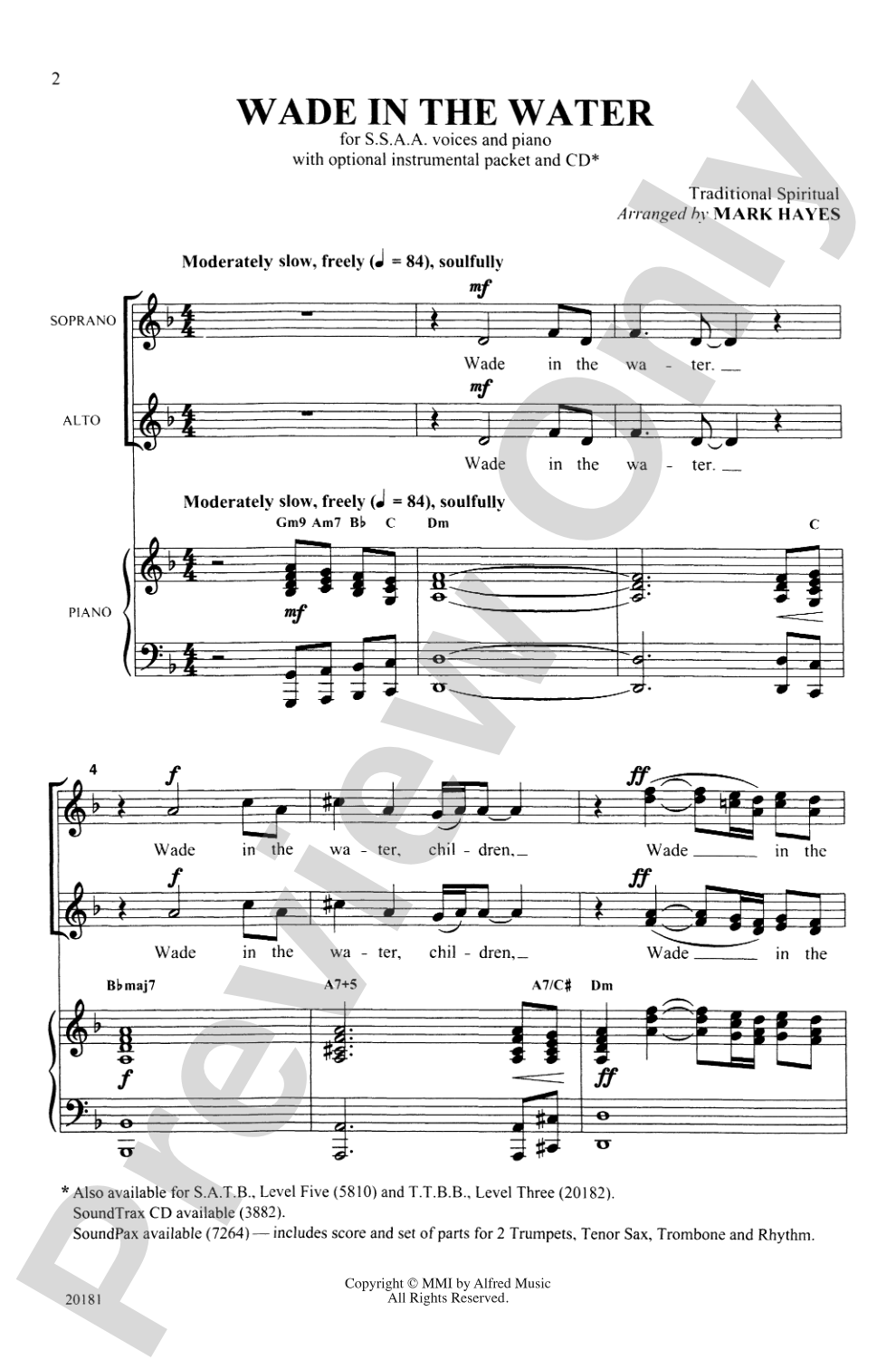
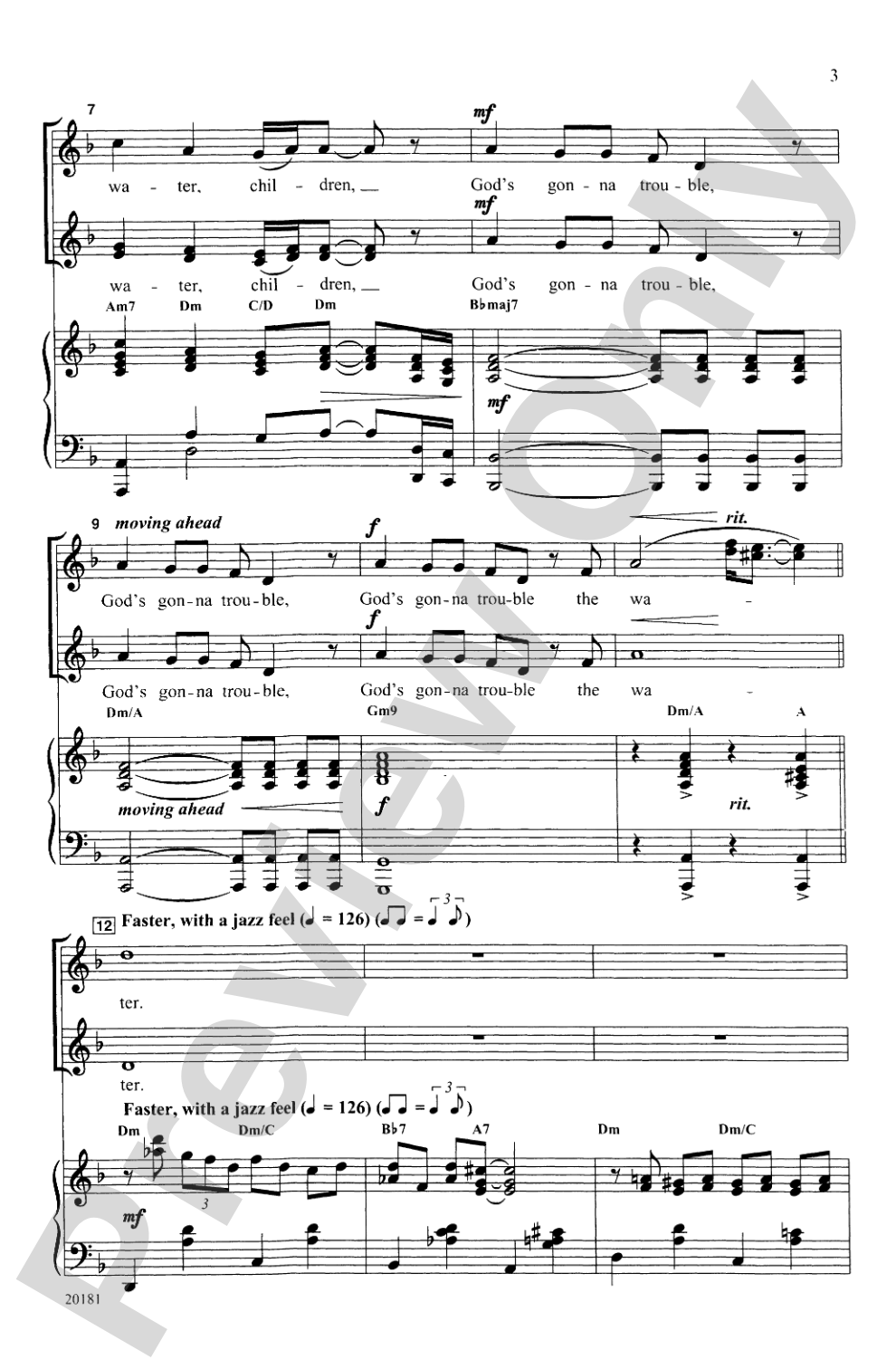
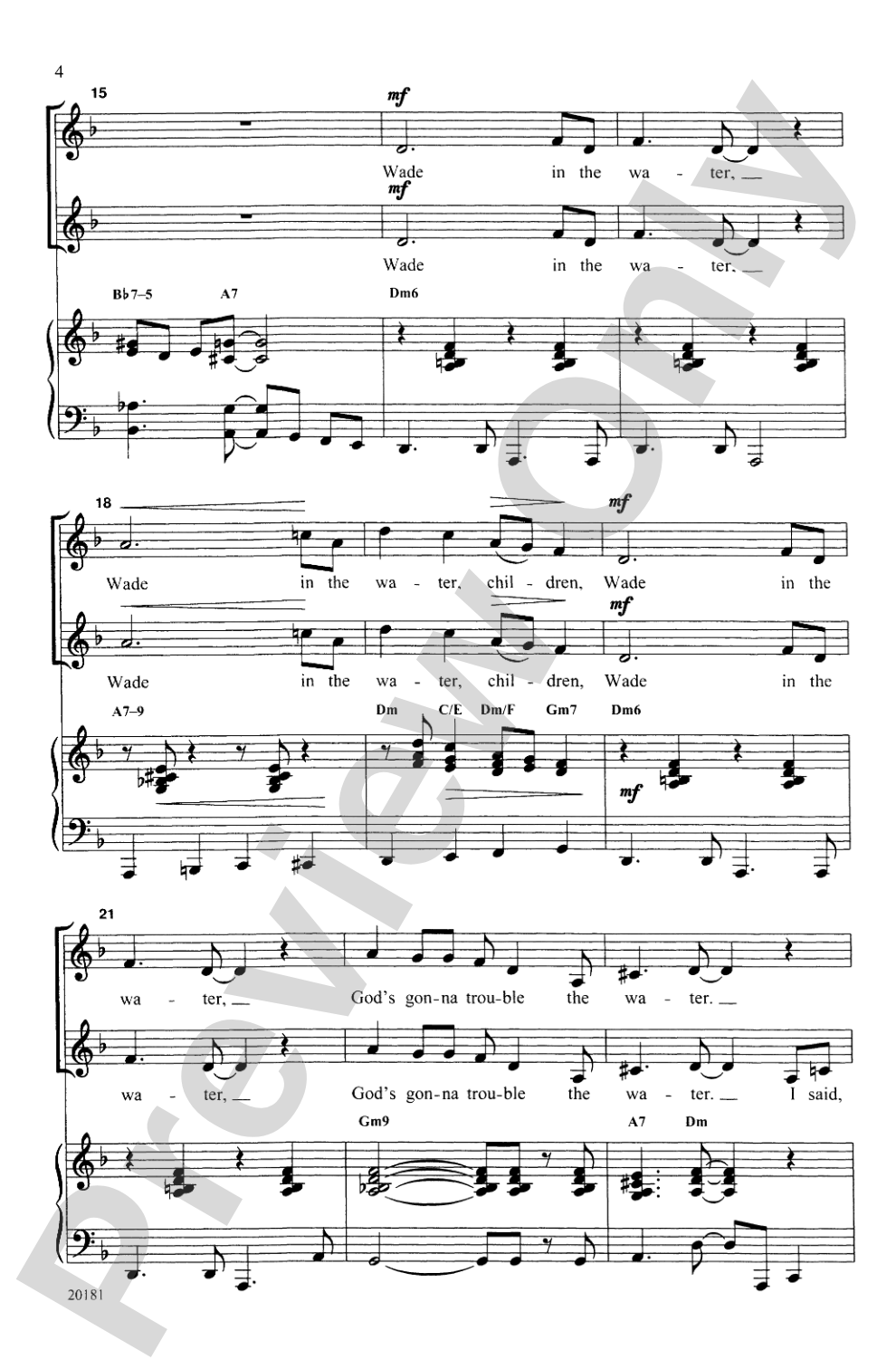

Wade in the Water: SSAA Choral Octavo
Traditional Spiritual / arr. Mark Hayes
Item: 00-PO-0002884
$2.25
Minimum order quantity: 20 copies
Pickup currently not available
Related Items
Wade in the Water: SATB Choral Octavo |
$2.05
|
View | |
Wade in the Water: SAB Choral Octavo |
$2.05
|
View | |
Wade in the Water: TTBB Choral Octavo |
$2.25
|
View | |
Wade in the Water: Choral SoundPax |
$20.00
|
View | |
Wade in the Water: SATB Choral Octavo |
$2.05
|
View | |
Wade in the Water: SAB Choral Octavo |
$2.05
|
View | |
Wade in the Water: SSAA Choral Octavo |
$2.25
|
View | |
Wade in the Water: Choral Octavo SoundTrax CD |
$27.99
|
View | |
Wade in the Water: Choral SoundPax |
$20.00
|
View |
Description
The classic arrangement returns in a new SAB voicing! This work opens with a choral fanfare-like section and progresses through several swinging sections to a climactic finish. This is Mark Hayes at his very best. Many opportunities for brief solos. And the optional instrumental accompaniment (or SoundTrax CD) is outstanding.


Wade in the Water: SSAA Choral Octavo isn't in MakeMusic Cloud just yet...but it could be. Let us know you'd like to see it, and you'll help shape what comes next. In the meantime, start a free trial and dive into thousands of interactive titles your students can play along with today.
Request This Title
Tell us you want it.
Start Your Free Trial
Explore everything that's ready to play right now.
Sample Audio
1
Audio File
--:--
0:00
0:00
Sample Video
No sample videos found.
Additional Details
Series:
Alfred Archive Edition: Alfred Choral Designs
Publisher:
Alfred Music
Page Count:
12
SKU:
00-PO-0002884
More about this title
About the Arranger: Mark Hayes
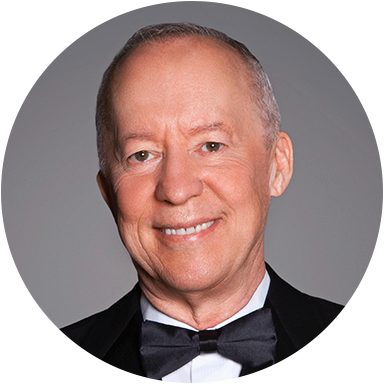
Mark Hayes has composed and arranged over 1,750 published works across concert, choral, sacred, and theatrical genres. A summa cum laude piano graduate from Baylor University, he has guest conducted at Lincoln Center, the National Cathedral, and Carnegie Hall, and premiered his Requiem at both Lincoln Center (2013) and St. Ignatius Basilica in Rome as part of a Vatican-sponsored festival (2014). His contributions to Christian music education earned him the Award for Exemplary Leadership in Christian Music from Baylor University in 2010.
Beyond the concert hall, Hayes has orchestrated musical theater, produced records, and maintained an extensive catalog of piano works spanning gospel, jazz, classical, and popular styles. His arrangements for choral ensembles consistently balance accessibility with artistic ambition, making sophisticated musicmaking available to singers at multiple levels. Based in Kansas City, Missouri, he continues to compose and arrange music grounded in his stated mission to create beautiful work for the world.
Why we love this
Hayes transforms this spiritual into a showcase arrangement that respects the song's power while giving it theatrical scope. The mix of choral writing, built-in solo opportunities, and the optional instrumental support means your singers get a fully realized performance vehicle, not just a basic setting of the tune.
What to expect
The piece carries the gravity of its spiritual roots while embracing swing rhythms and modern harmonic color. You move from a soaring, fanfare-like opening through sections that feel both grounded and buoyant, landing in a climax that feels earned rather than manufactured.
Who it's for
This arrangement serves choirs with access to at least some vocal soloists and interest in programming repertoire that connects spiritual tradition to contemporary performance energy. It works for high school, college, and adult community choirs seeking a crowd-pleasing piece with genuine musical substance.
How to get the most out of it
- Balance the opening fanfare section carefully between parts so the gesture lands as one unified sound rather than layered chunks.
- Shape the swinging sections with rhythmic precision and stylistic consistency; these passages demand confidence from your section leaders.
- Use the instrumental accompaniment (or SoundTrax recording) in rehearsal to establish groove and pulse before removing it for a cappella runs.
- Feature soloists strategically across rehearsals so they build security in their material before performance; brief solos work best when the singer owns the moment.
How to use it
This works beautifully as a concert centerpiece or festival selection where you want to showcase both your ensemble's vocal blend and individual singers' artistry. It pairs well with other spirituals or sacred choral works in a set, or stands confidently on its own as a closer.
Skills your students will build
- Singing homophonic and contrapuntal passages within the same arrangement
- Balancing solo visibility with ensemble cohesion
- Maintaining rhythmic precision in swing-inflected phrasing
- Tuning sustained harmonies across multiple parts
- Responding to text with both dignity and rhythmic freedom