
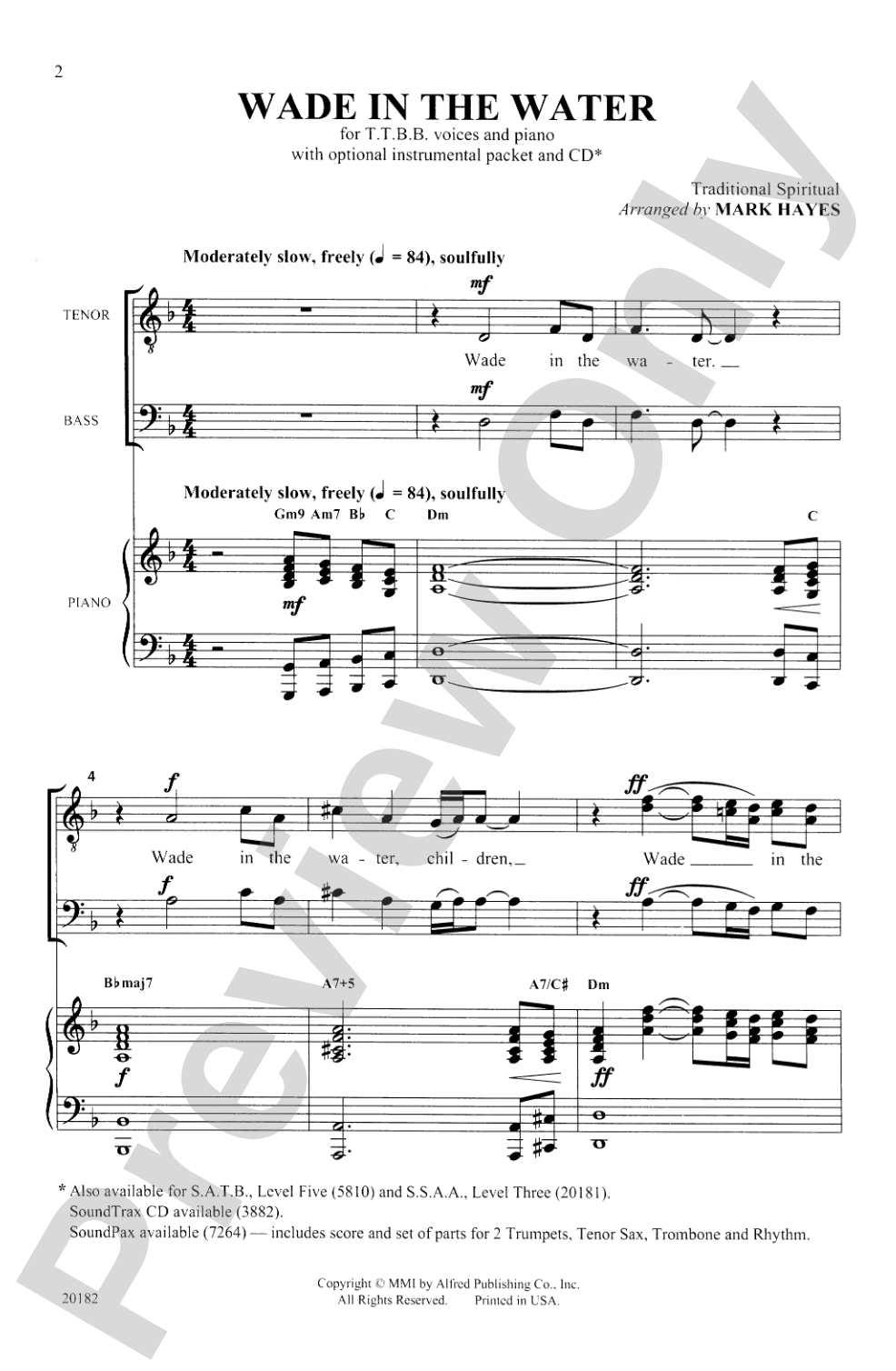
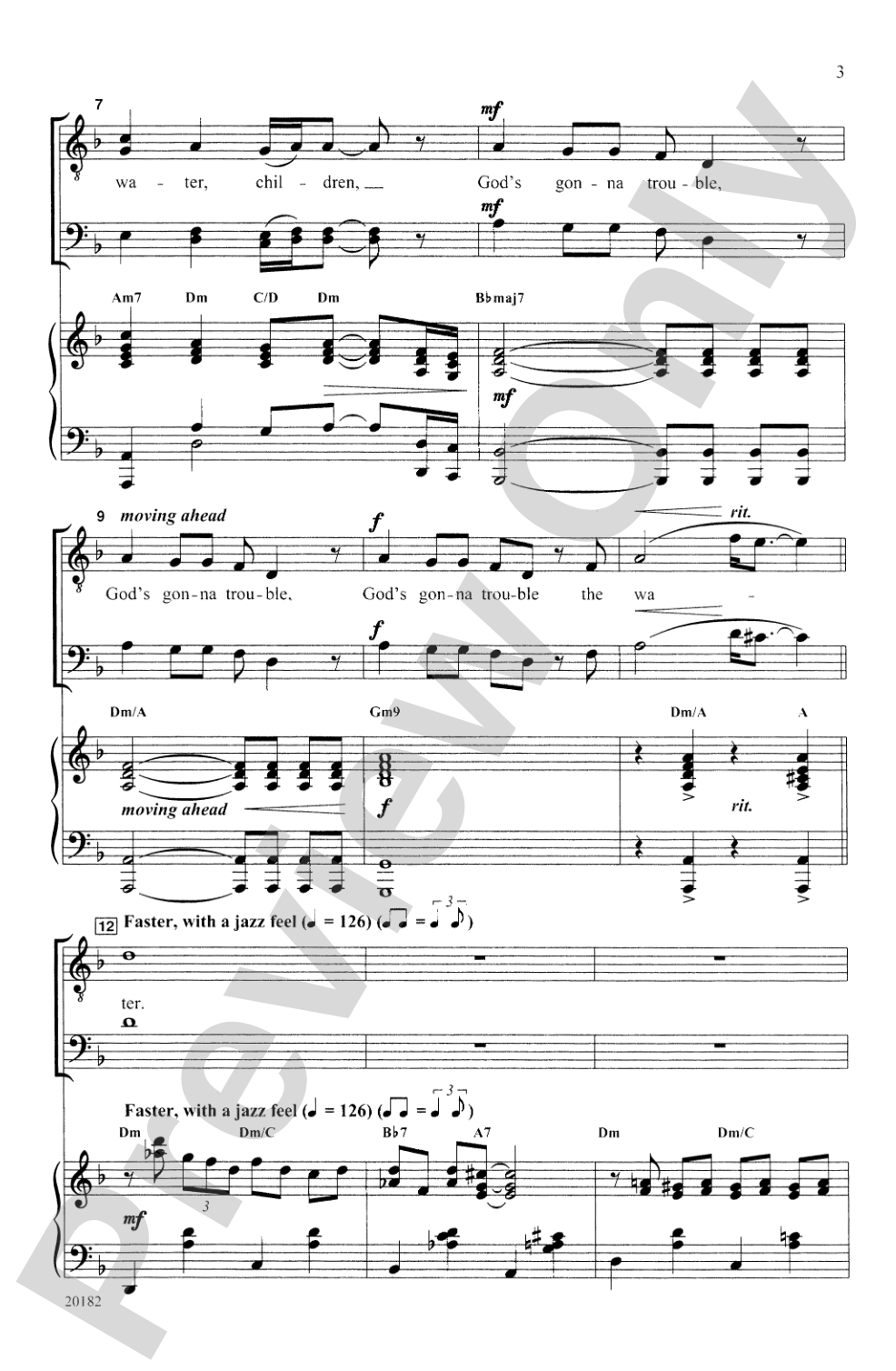
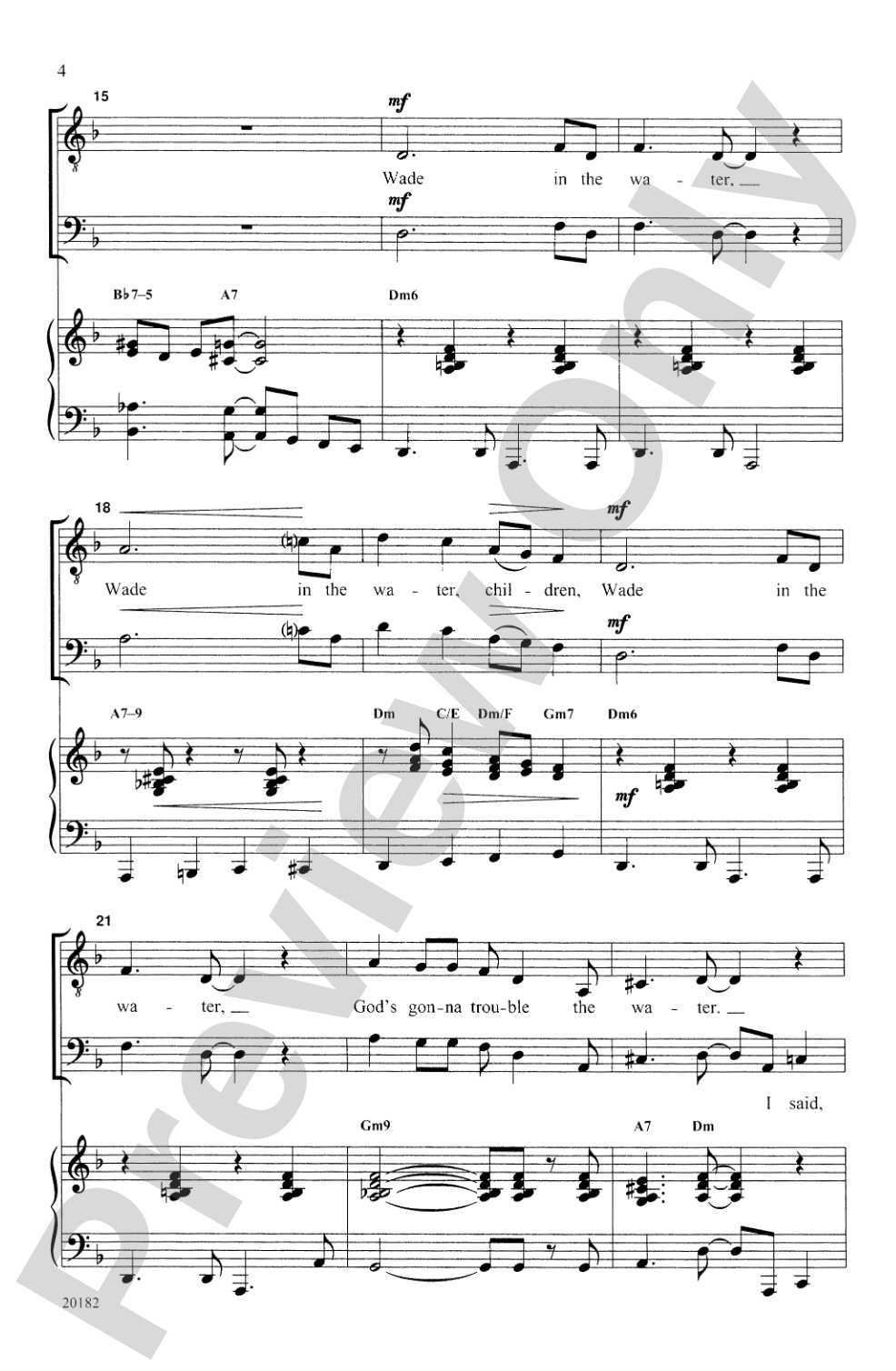

Wade in the Water: TTBB Choral Octavo
Traditional Spiritual / arr. Mark Hayes
Item: 00-PO-0002885
$2.25
Minimum order quantity: 20 copies
Pickup currently not available
Related Items
Wade in the Water: SATB Choral Octavo |
$2.05
|
View | |
Wade in the Water: SAB Choral Octavo |
$2.05
|
View | |
Wade in the Water: SSAA Choral Octavo |
$2.25
|
View | |
Wade in the Water: Choral SoundPax |
$20.00
|
View | |
Wade in the Water: SATB Choral Octavo |
$2.05
|
View | |
Wade in the Water: SAB Choral Octavo |
$2.05
|
View | |
Wade in the Water: SSAA Choral Octavo |
$2.25
|
View | |
Wade in the Water: Choral Octavo SoundTrax CD |
$27.99
|
View | |
Wade in the Water: Choral SoundPax |
$20.00
|
View |
Description
The classic arrangement returns in a new SAB voicing! This work opens with a choral fanfare-like section and progresses through several swinging sections to a climactic finish. This is Mark Hayes at his very best. Many opportunities for brief solos. And the optional instrumental accompaniment (or SoundTrax CD) is outstanding.


Wade in the Water: TTBB Choral Octavo isn't in MakeMusic Cloud just yet...but it could be. Let us know you'd like to see it, and you'll help shape what comes next. In the meantime, start a free trial and dive into thousands of interactive titles your students can play along with today.
Request This Title
Tell us you want it.
Start Your Free Trial
Explore everything that's ready to play right now.
Sample Audio
1
Audio File
--:--
0:00
0:00
Sample Video
No sample videos found.
Additional Details
Series:
Alfred Archive Edition: Alfred Choral Designs
Publisher:
Alfred Music
Page Count:
12
SKU:
00-PO-0002885
More about this title
About the Arranger: Mark Hayes
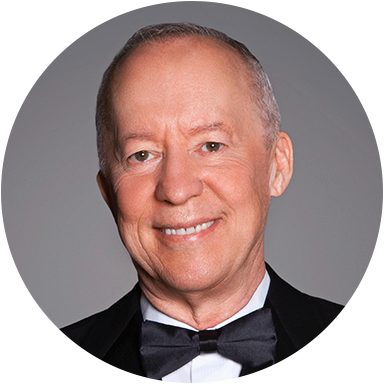
Mark Hayes is a prolific composer and arranger whose output exceeds 1,750 published works across classical, sacred, and popular idioms. A summa cum laude graduate of Baylor University's piano performance program, Hayes has conducted at major venues including Lincoln Center, the National Cathedral, and Carnegie Hall, where his sacred works such as Te Deum, Magnificat, and Gloria have received repeated performances. In 2010, Baylor University honored him with the Award for Exemplary Leadership in Christian Music.
Beyond the choral repertoire, Hayes has established himself as a versatile orchestrator and theatrical composer. He orchestrated the musical Madame Buttermilk and scored Civil War Voices, which earned six awards at the Midtown International Theatre Festival. His work as a record producer and pianist has made him equally comfortable arranging Bach chorales and Broadway standards. Hayes currently resides in Kansas City, Missouri, where he continues to compose, arrange, and advocate for accessible, beautifully crafted music across all genres.
Why we love this
This arrangement showcases Hayes' instinct for how to honor a spiritual's power while giving singers room to shine. The fanfare opening immediately establishes authority, the swinging sections invite rhythmic precision and character, and the multiple solo opportunities mean every voice part gets a moment to lead. Programming this piece signals serious musical craftsmanship without sacrificing the joy and accessibility that made the spiritual endure.
What to expect
The piece moves with purposeful dignity, beginning with fanfare-like declaration before loosening into swinging, conversational sections that feel both contemporary and deeply rooted in spiritual tradition. The journey toward the climax builds naturally, giving performers and listeners a sense of building momentum and celebration.
Who it's for
Men's choirs seeking repertoire with both architectural weight and accessibility will find this a rewarding choice. The TTBB voicing suits college, community, and church choirs with solid sightreading skills and voices ready for the moderate tessitura demands of the arrangement.
How to get the most out of it
- Anchor the fanfare section with rhythmic precision; the ensemble impact depends on locked articulation and unified releases, especially in the opening chords.
- Differentiate the swinging sections by varying vowel production and dynamic shaping; Hayes writes momentum into these passages, so let the natural swing feel come through without overdoing rhythmic stress.
- Feature your soloists generously. Brief solo moments work best when the singer owns the lyrical line with confidence; this arrangement assumes strong, secure singing.
- If using the optional instrumental accompaniment, rehearse the ensemble's entries in relation to the accompaniment early; the climactic finish requires tight coordination.
How to use it
This works beautifully as a second-half opener that shifts the energy of a concert, especially if paired with slower sacred works or in a program exploring American musical traditions. Its moderate length and technical demands suit spring festivals or competitions where you want the piece to land with impact without requiring extensive staging or choreography.
Skills your students will build
- Swing rhythm execution (triplet feel vs. straight eighths)
- Blend and balance in fanfare-style homophonic writing
- Solo confidence and secure intonation in featured moments
- Stylistic navigation between reverent and rhythmically energized passages
- Ensemble responsiveness to accompaniment (if used)