
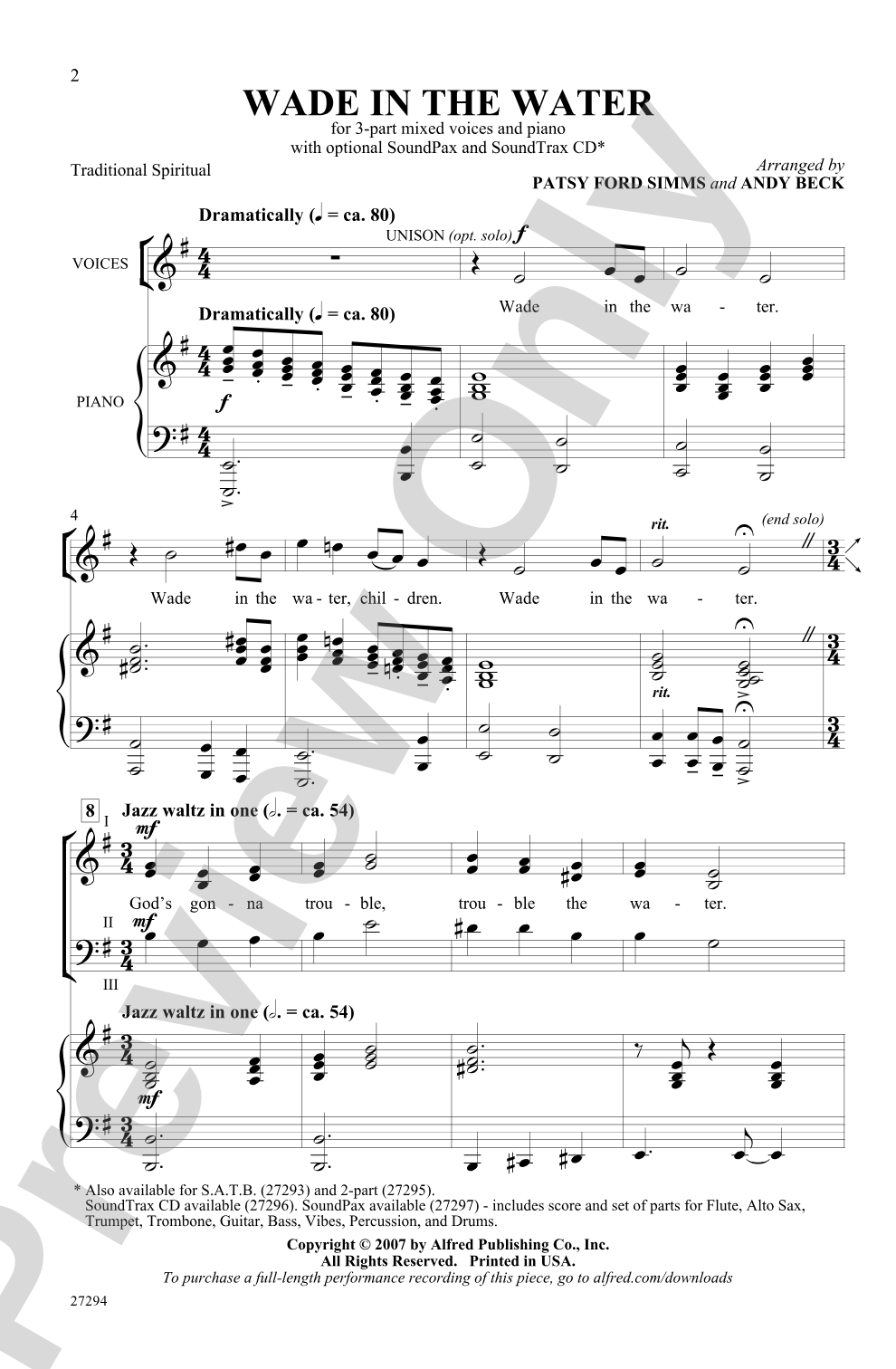
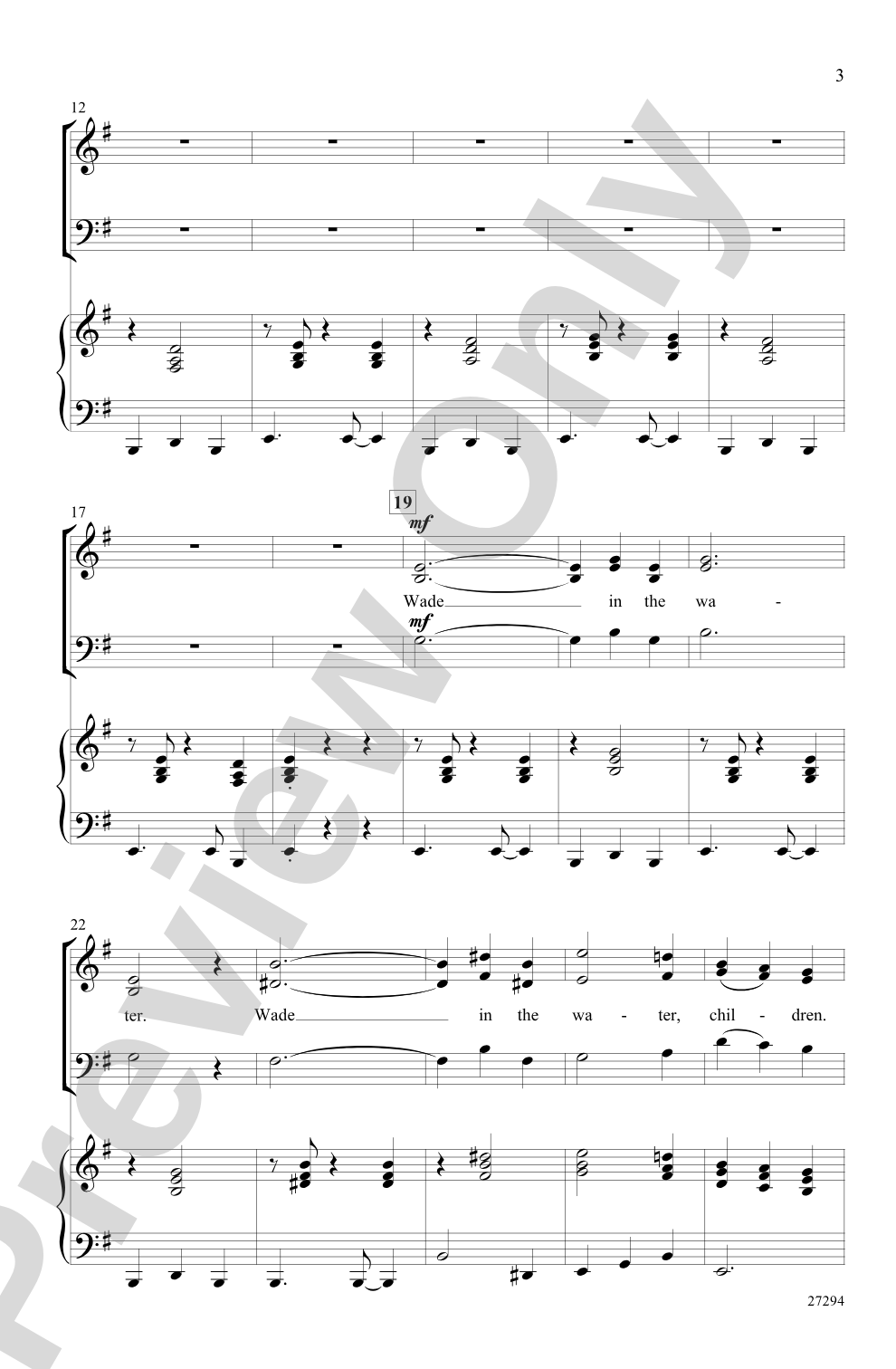

Wade in the Water: 3-Part Mixed Choral Octavo
Traditional Spiritual / arr. Patsy Ford Simms and Andy Beck
Item: 00-PO-0000366
$1.85
Minimum order quantity: 20 copies
Pickup currently not available
Related Items
Wade in the Water: SoundTrax Digital Audio Download |
$22.95
|
View | |
Wade in the Water: SATB Choral Octavo |
$1.75
|
View | |
Wade in the Water: 2-Part Choral Octavo |
$1.75
|
View | |
Wade in the Water: Choral SoundPax |
$35.00
|
View | |
Wade in the Water: SATB Choral Octavo |
$1.75
|
View | |
Wade in the Water: 3-Part Mixed Choral Octavo |
$1.85
|
View | |
Wade in the Water: 2-Part Choral Octavo |
$1.75
|
View | |
Wade in the Water: Choral Octavo SoundTrax CD |
$22.95
|
View | |
Wade in the Water: Choral SoundPax |
$35.00
|
View |
Description
You've never heard it like this before! A dramatic solo provides the powerful introduction before this hip spiritual arrangement kicks into a groovy jazz waltz. A call and response verse highlights individual sections of the choir (or soloists), and an ultra-cool transition builds and modulates into the final choral refrain. Great to perform with a jazz combo.


Wade in the Water: 3-Part Mixed Choral Octavo isn't in MakeMusic Cloud just yet...but it could be. Let us know you'd like to see it, and you'll help shape what comes next. In the meantime, start a free trial and dive into thousands of interactive titles your students can play along with today.
Request This Title
Tell us you want it.
Start Your Free Trial
Explore everything that's ready to play right now.
Sample Audio
1
Audio File
--:--
0:00
0:00
Sample Video
No sample videos found.
Additional Details
Series:
Alfred Choral Designs
Publisher:
Alfred Music
Page Count:
12
SKU:
00-PO-0000366
More about this title
About the Arranger: Patsy Ford Simms
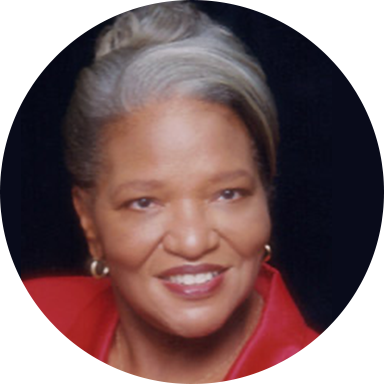
Patsy Ford Simms has been publishing choral music since 1981, with a catalog exceeding 300 compositions and arrangements across educational and church markets. Her work emerged from a direct pedagogical need: during her early years teaching middle school, she found a shortage of appropriate choral octavos for junior high voices, so she began writing them herself. She holds degrees from Knoxville College (Bachelor of Science in Music Education), the University of Louisville (Master of Education), and Columbia Pacific University (Doctorate in Music Education).
After three decades of classroom teaching across grades K-12 and at the Youth Performing Arts School, Simms has become recognized internationally as an arranger, composer, and clinician. She has presented workshops in Italy and Africa, composed commissioned works and musicals centered on African American history, and received multiple ASCAP Special Music Awards. Two of her compositions were selected for MENC World's Largest Concerts.
Why we love this
Simms and Beck have reimagined a spiritual through a distinctly contemporary lens, trading reverence for groove without sacrificing the form's power. The dramatic solo opening arrests attention immediately, and the jazz waltz framework gives your singers permission to swing, syncopate, and feel rhythmic independence in ways that standard spiritual arrangements rarely invite. This arrangement proves that spiritual traditions thrive when arranged with genuine musical risk.
What to expect
The piece opens with stark, dramatic intensity before pivoting into a hip, swinging waltz that makes the spiritual feel urgently alive. The call and response passages create moments of individual voices cutting through the ensemble texture, building anticipation as the arrangement modulates and crescendos toward a final, full-throated refrain that lands with both joy and spiritual weight.
Who it's for
This arrangement fits middle school and high school choirs seeking repertoire that balances tradition with contemporary energy. It works particularly well for programs that pair vocal music with instrumental jazz ensembles or combos, and for directors who want to showcase their singers' rhythmic flexibility and solo capabilities within a structured ensemble setting.
How to get the most out of it
- Let the opening solo sit with dynamic space around it. The power comes from restraint before the arrangement explodes into the waltz feel.
- The call and response sections demand clear section leadership; assign singers who can phrase as soloists even when supporting the ensemble line.
- Lock the jazz waltz pulse early in rehearsal. The 3/4 meter with contemporary rhythms can feel unstable until your singers internalize the groove as natural.
- Use the recorded accompaniment during rehearsal to establish the intended swing feel and harmonic colors, then consider live instrumental accompaniment for performance if available.
How to use it
Place this as a centerpiece in a concert celebrating spiritual traditions and jazz influences, pairing it with other contemporary sacred arrangements or instrumental jazz numbers. Its relatively accessible SAB voicing and dramatic arc make it ideal for spring concerts or festivals featuring both classical and modern repertoire, especially when you can include live instrumental collaboration.
Skills your students will build
- Singing in swing/jazz waltz style with rhythmic independence
- Call and response phrasing and sectional listening
- Modulation and harmonic movement across phrase boundaries
- Balancing solo voice identity within ensemble texture
- Collaborative performance with jazz accompaniment