
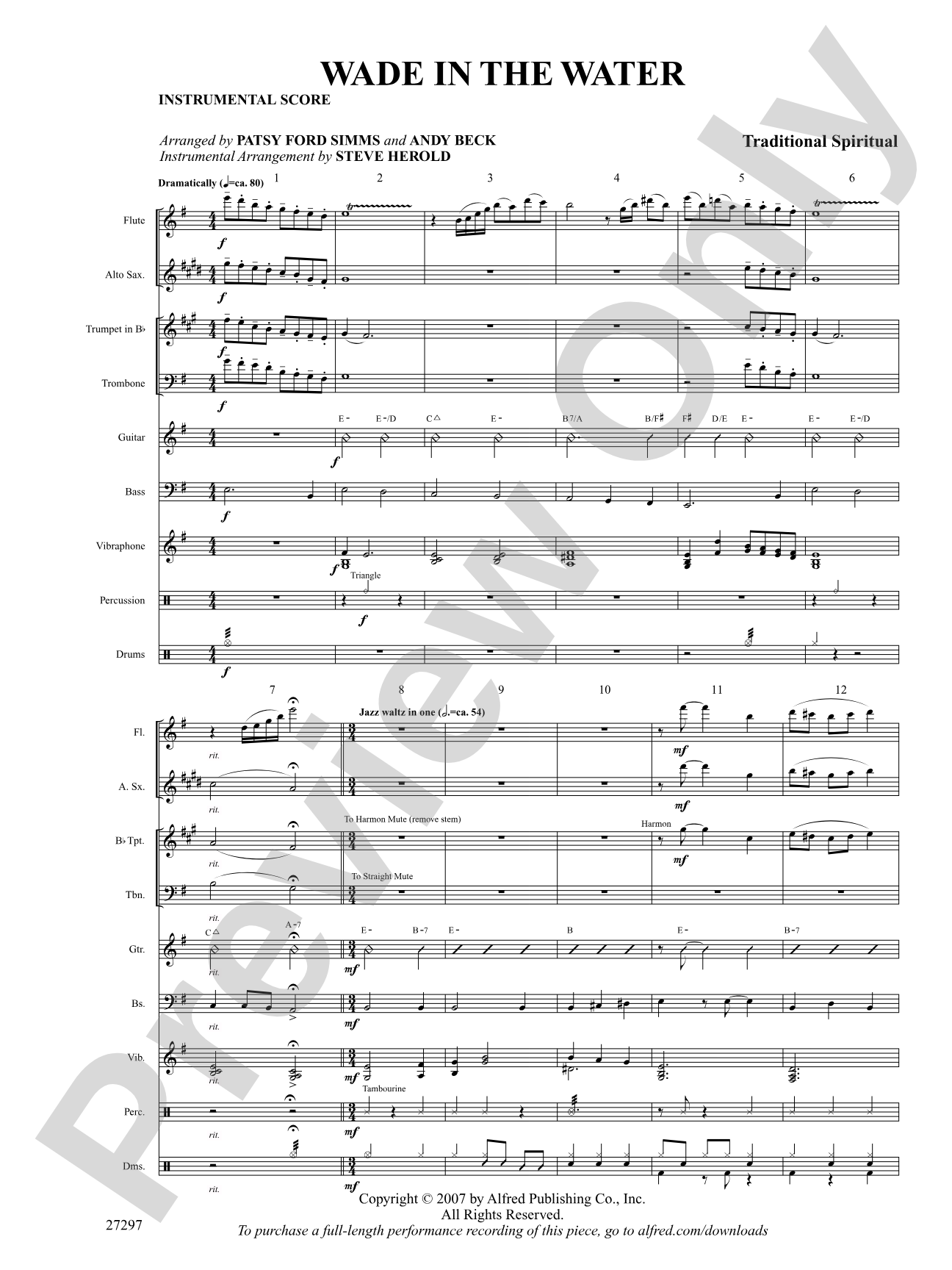
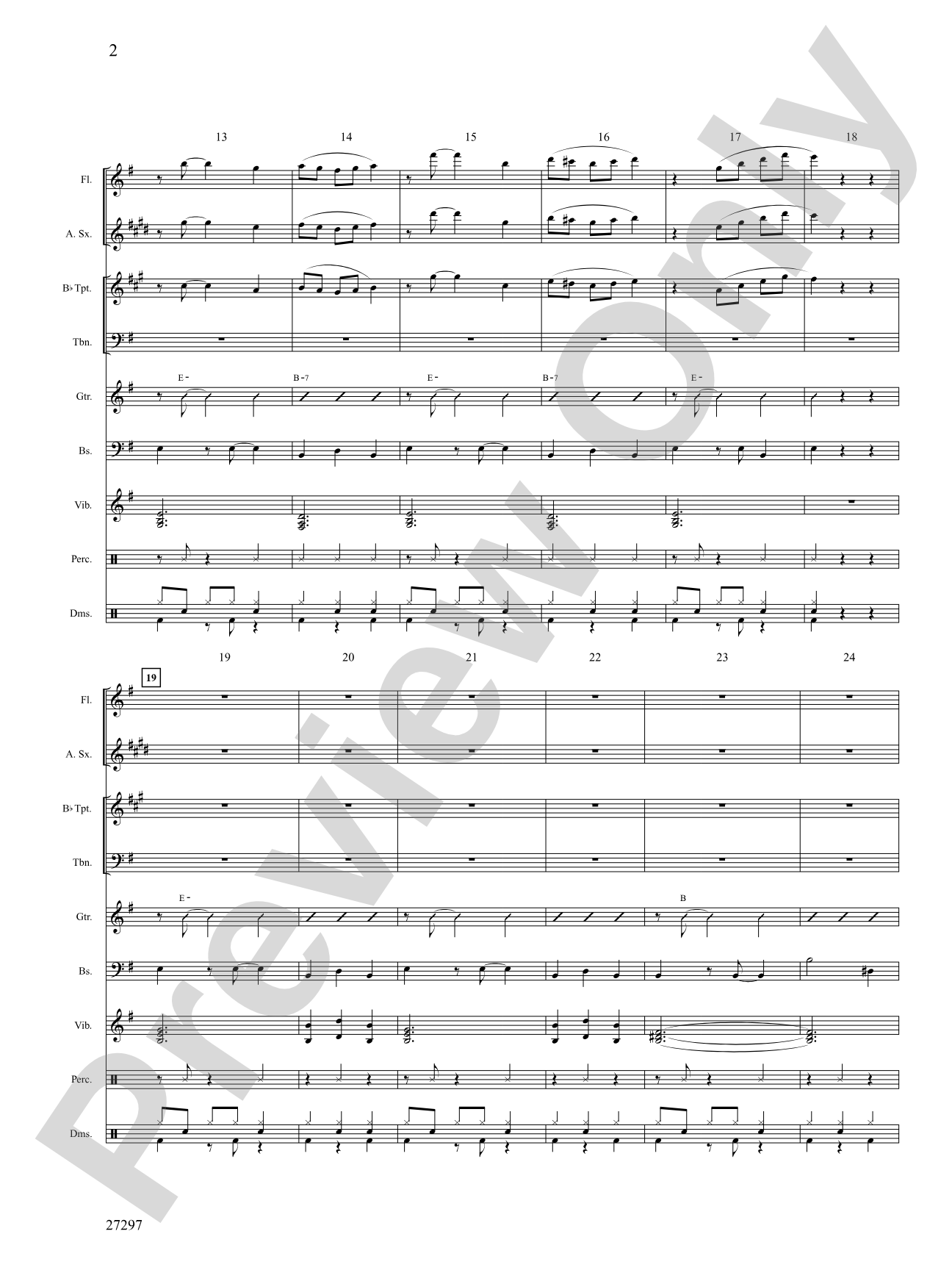
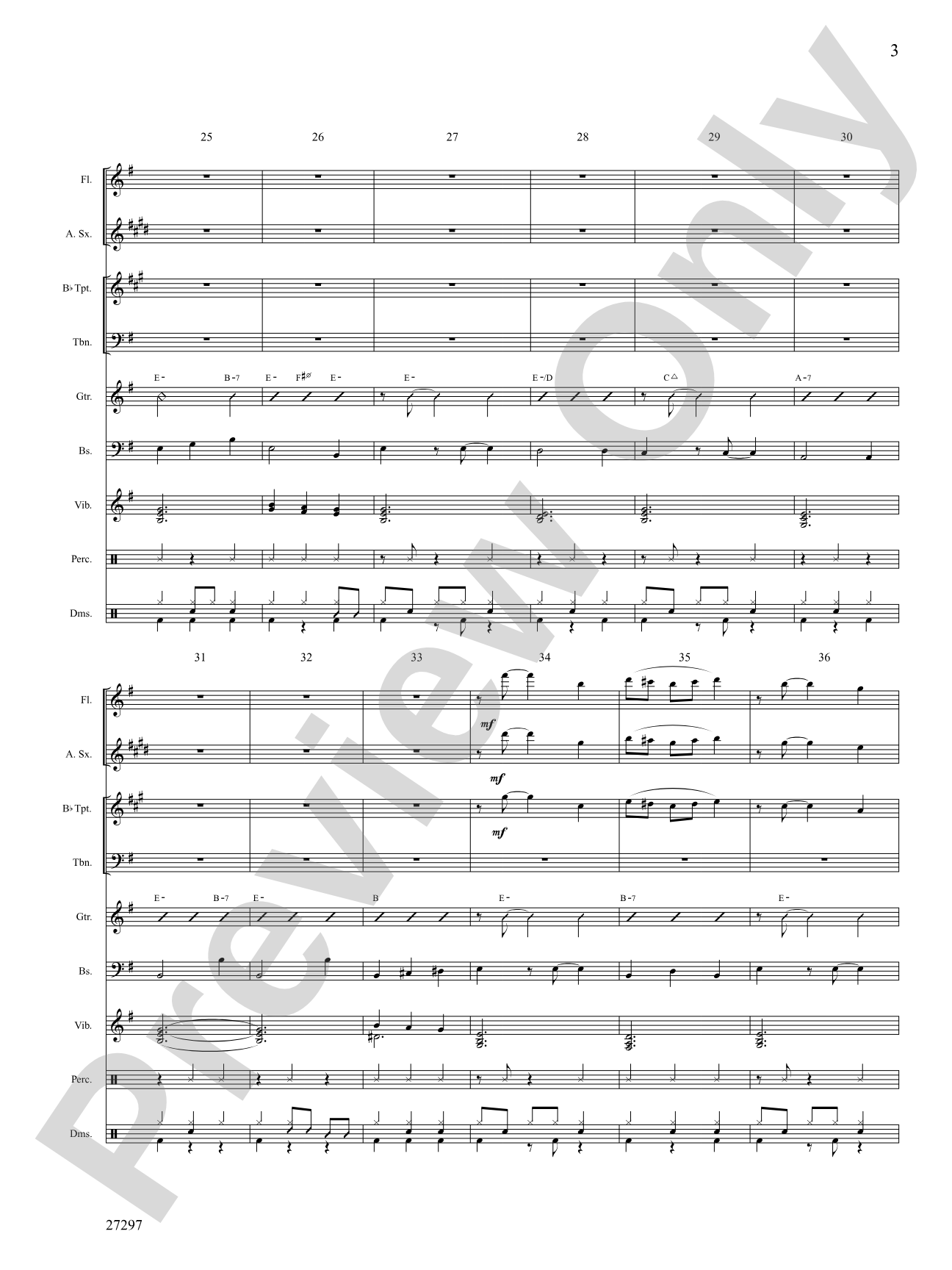
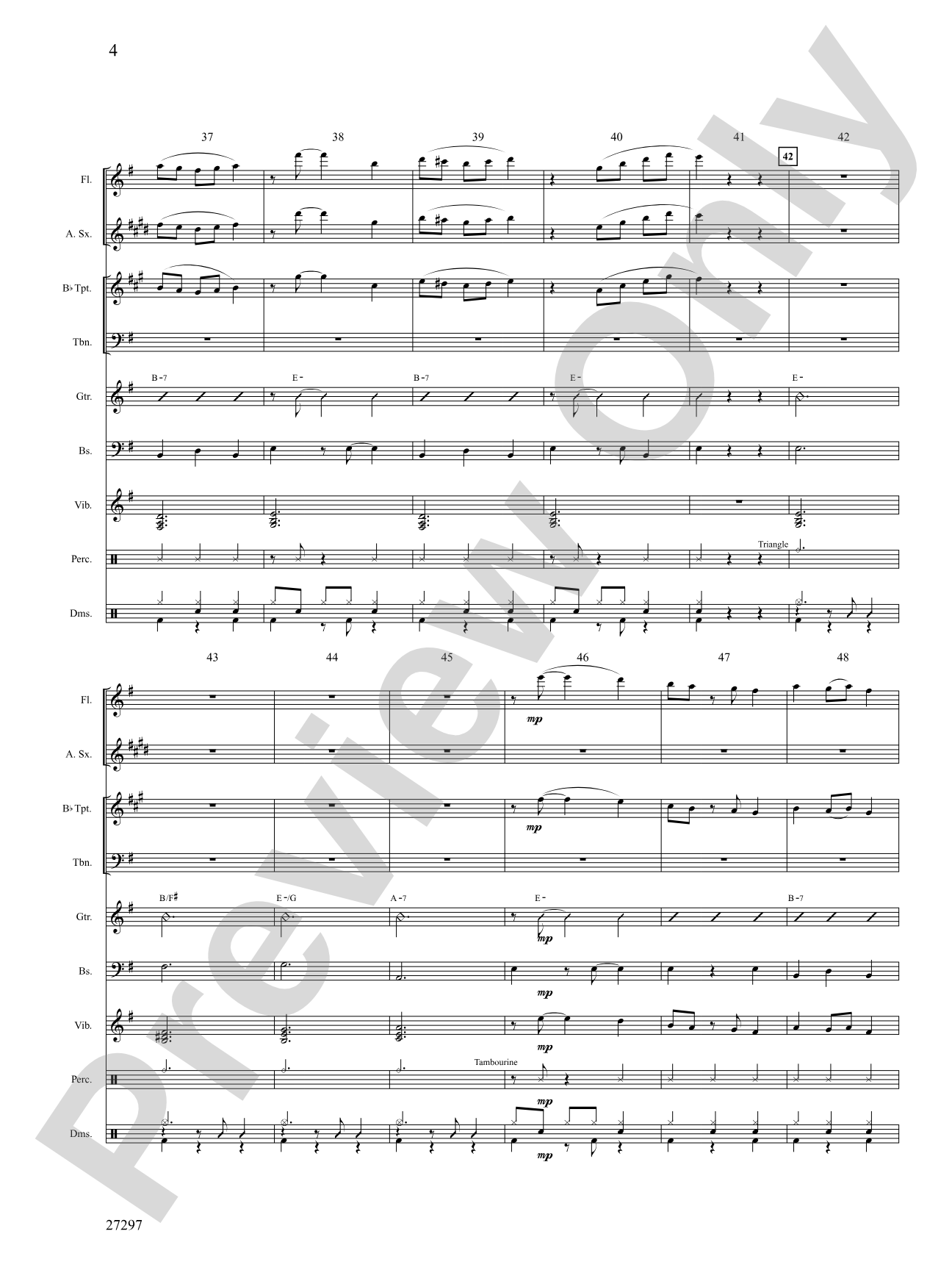
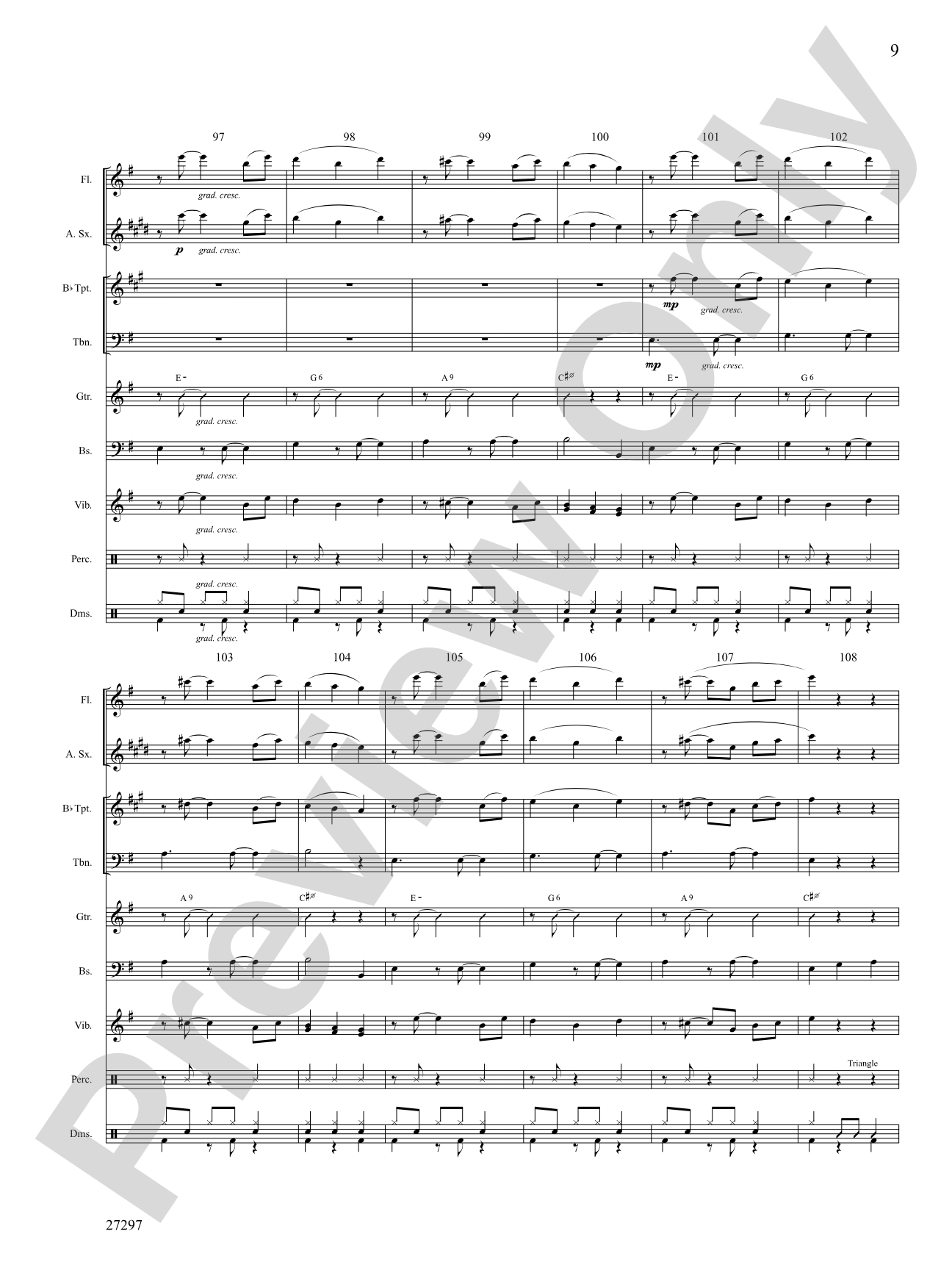
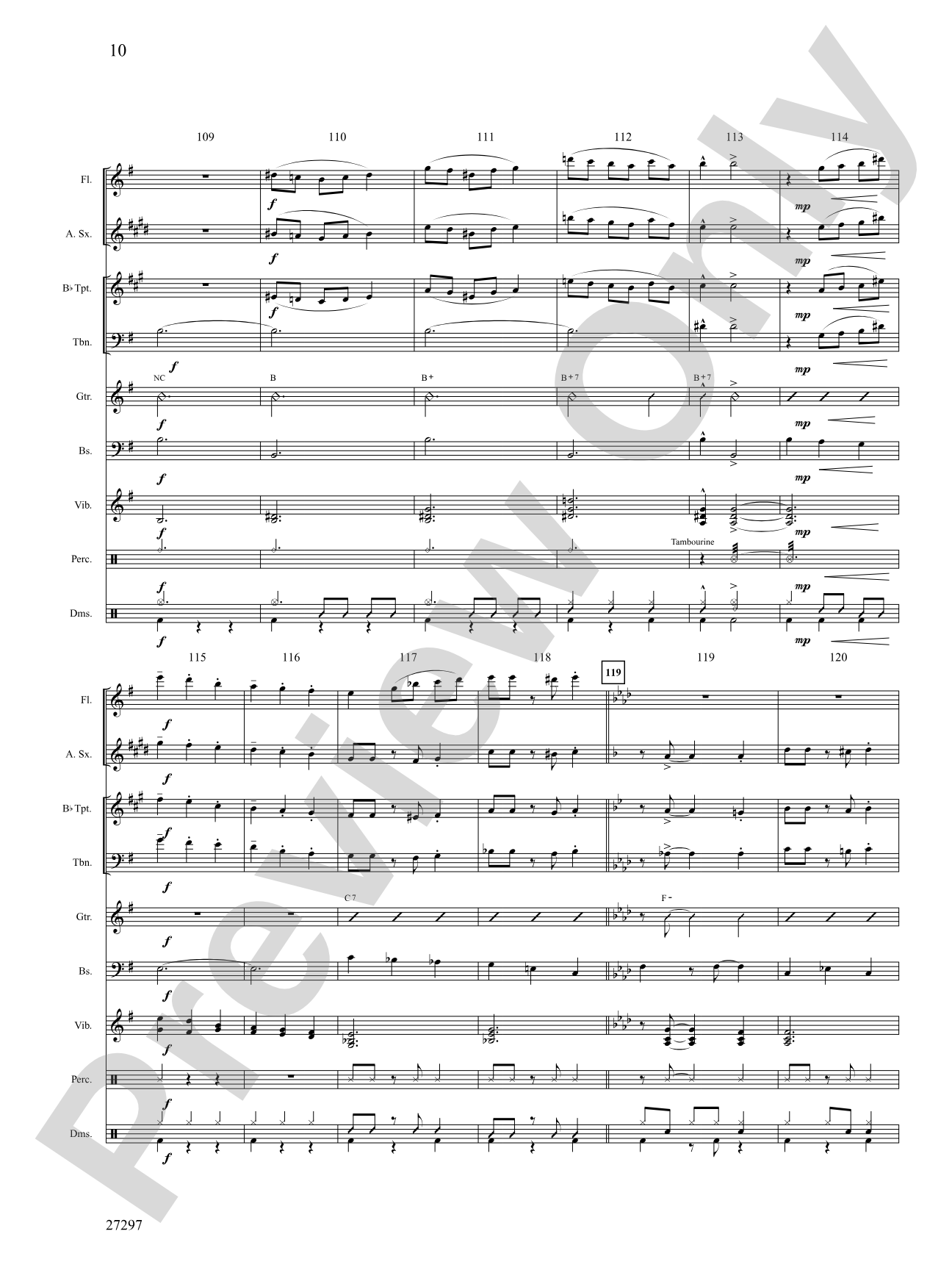
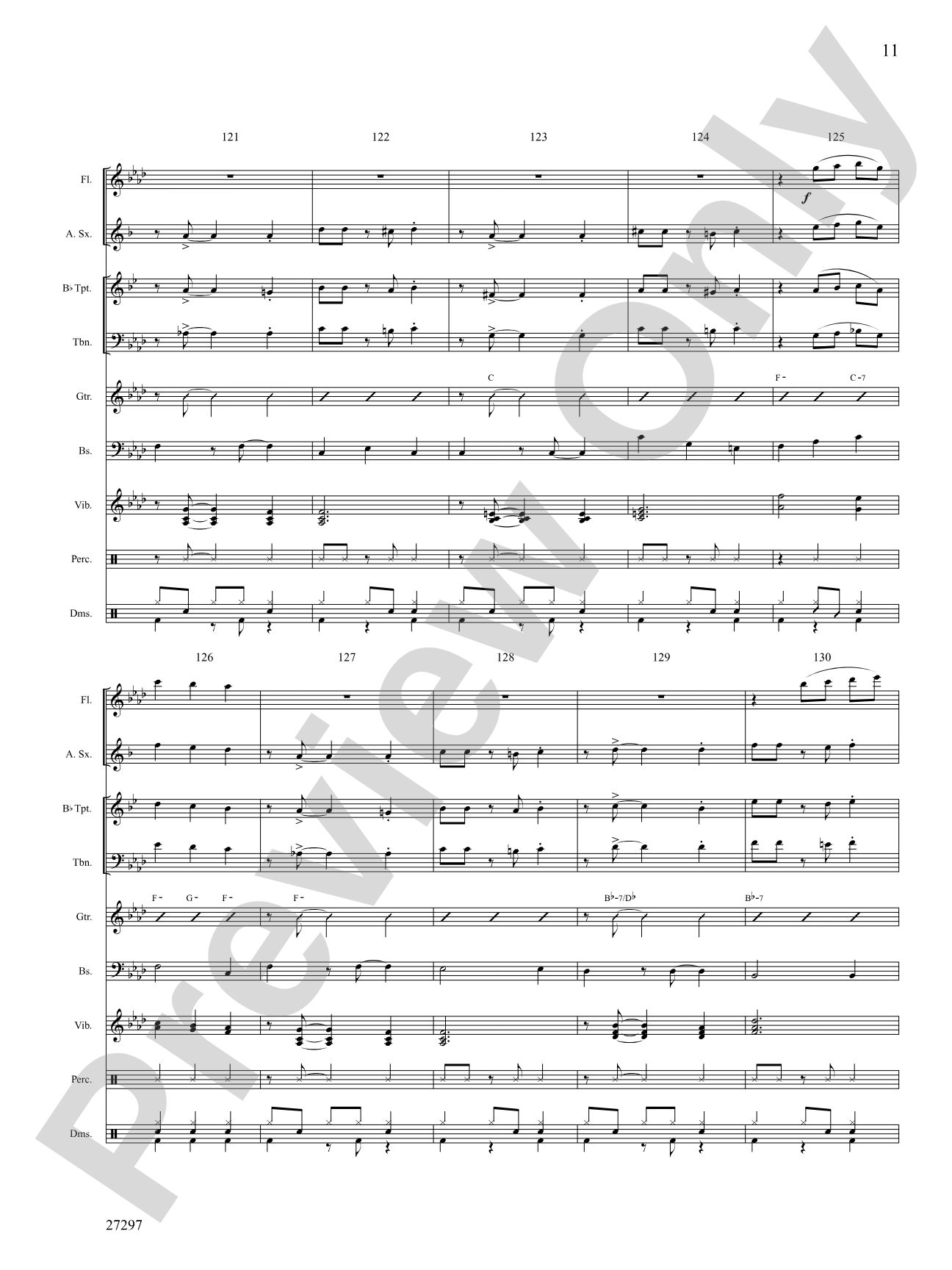
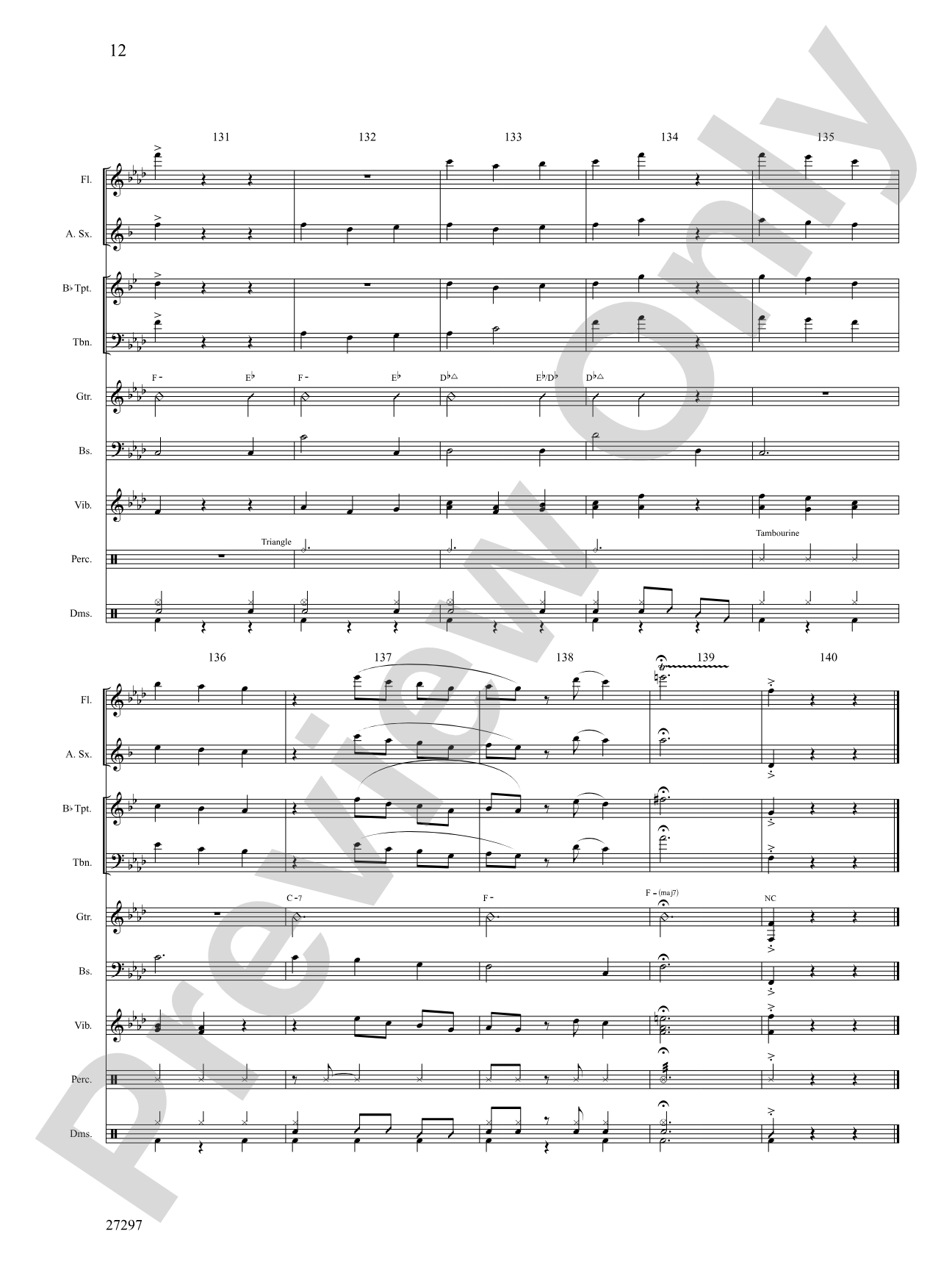

Wade in the Water: Choral SoundPax
Traditional Spiritual / arr. Patsy Ford Simms and Andy Beck
Item: 00-PK-0001311

$35.00
Pickup currently not available
Buy Extra Parts (Digital PDF Download)
Parts Added to Cart!
Related Items
Wade in the Water: SoundTrax Digital Audio Download |
$22.95
|
View | |
Wade in the Water: SATB Choral Octavo |
$1.75
|
View | |
Wade in the Water: 3-Part Mixed Choral Octavo |
$1.85
|
View | |
Wade in the Water: 2-Part Choral Octavo |
$1.75
|
View | |
Wade in the Water: SATB Choral Octavo |
$1.75
|
View | |
Wade in the Water: 3-Part Mixed Choral Octavo |
$1.85
|
View | |
Wade in the Water: 2-Part Choral Octavo |
$1.75
|
View | |
Wade in the Water: Choral Octavo SoundTrax CD |
$22.95
|
View | |
Wade in the Water: Choral SoundPax |
$35.00
|
View |
Description
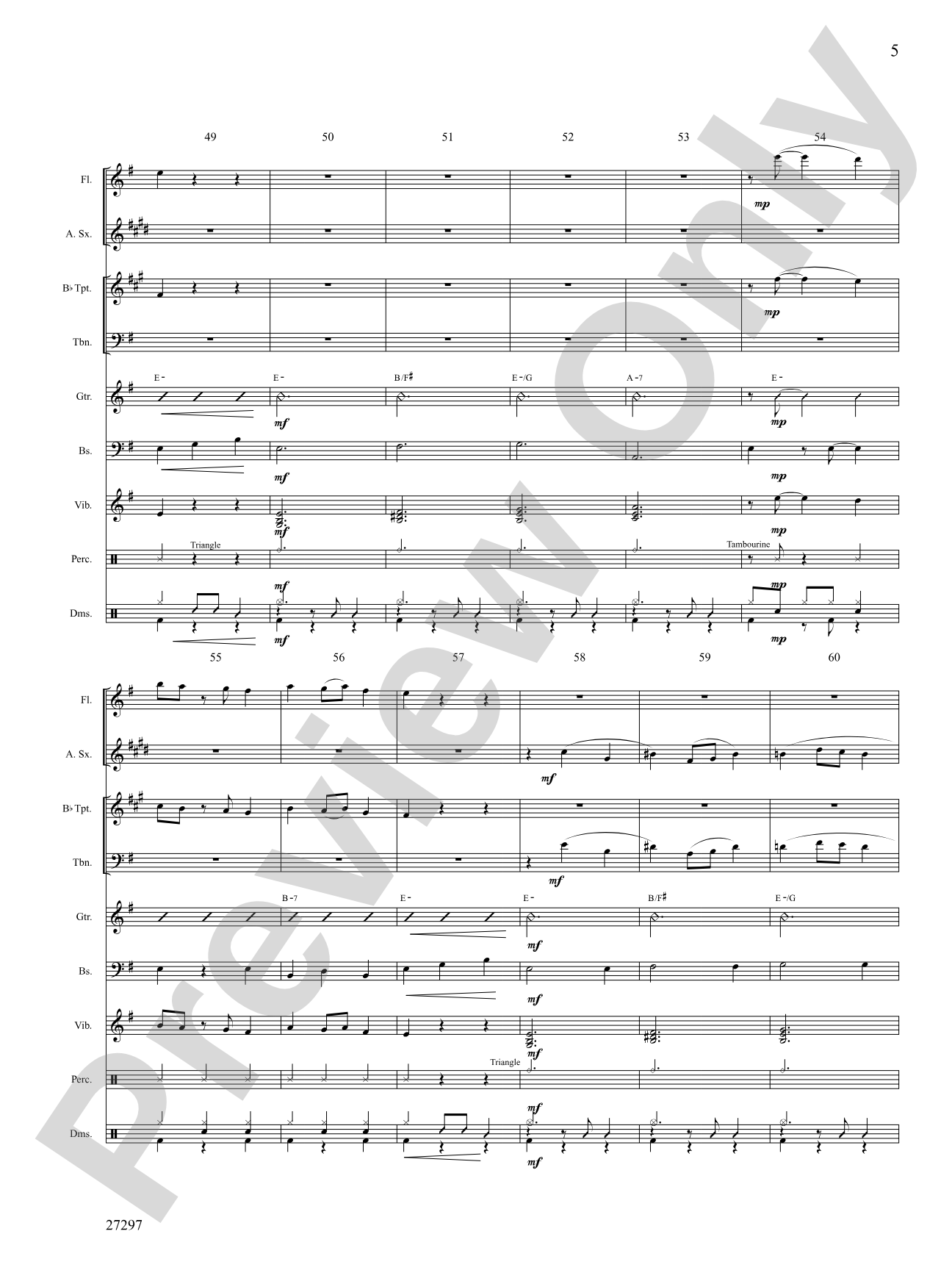
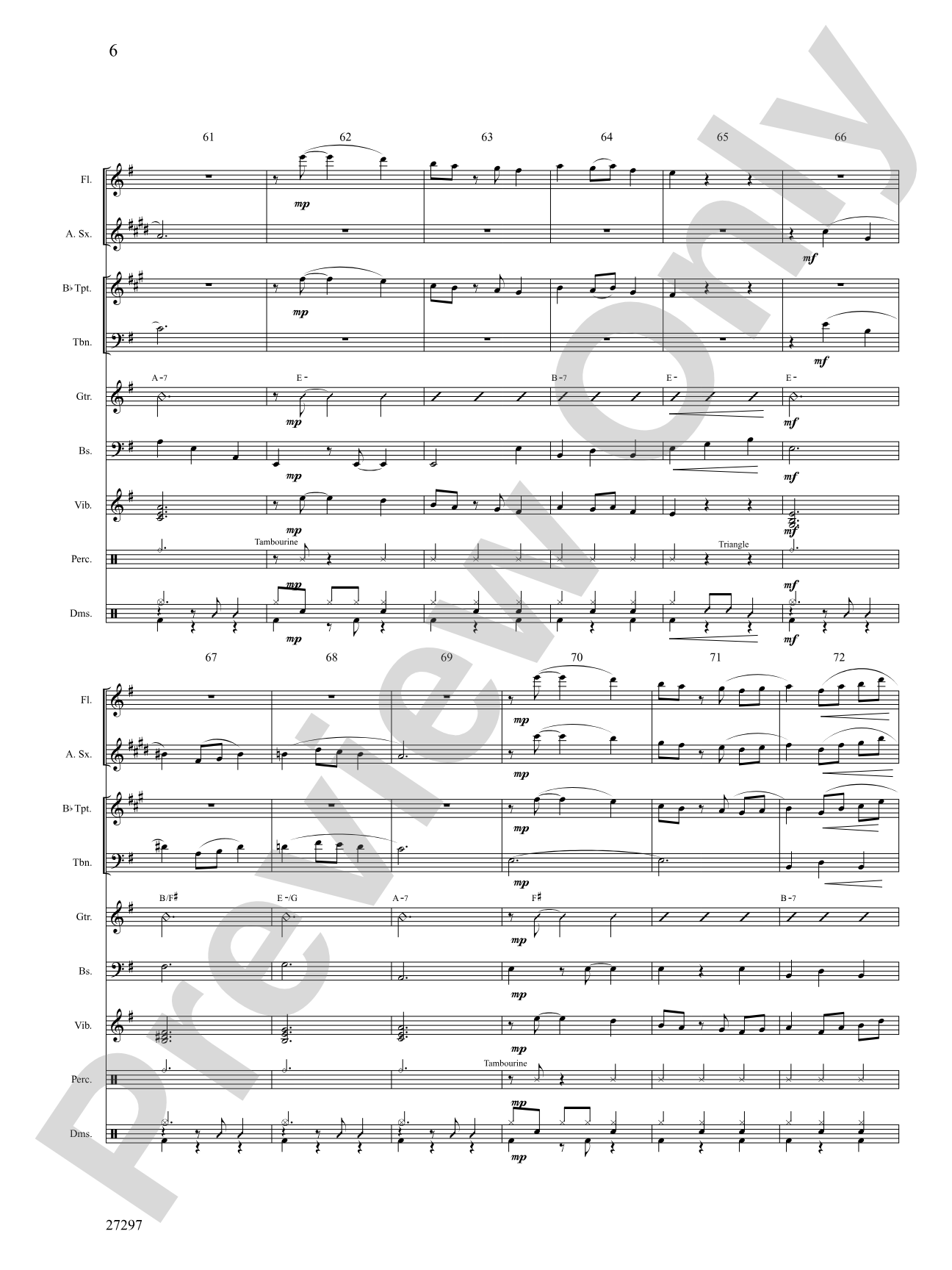
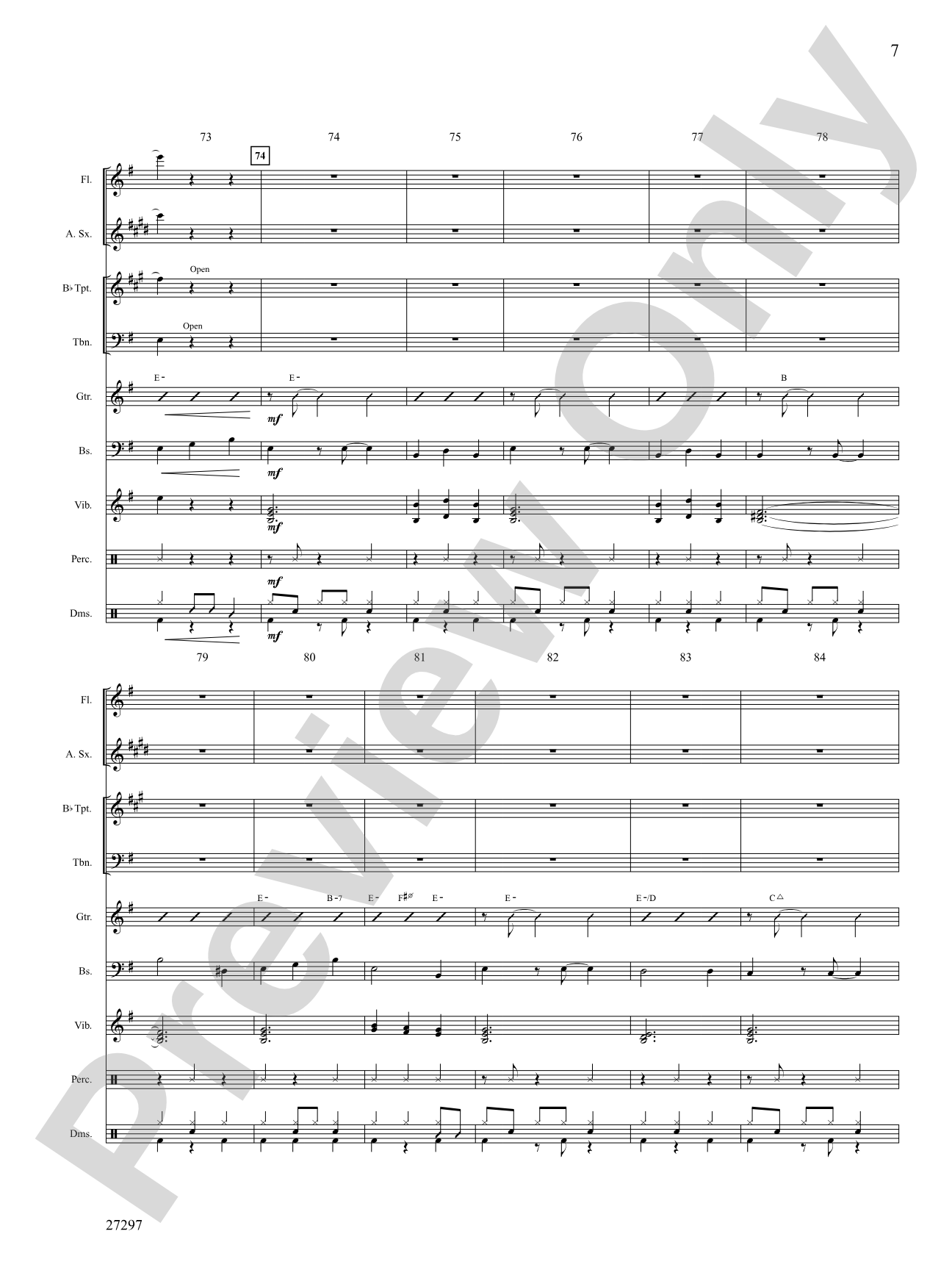
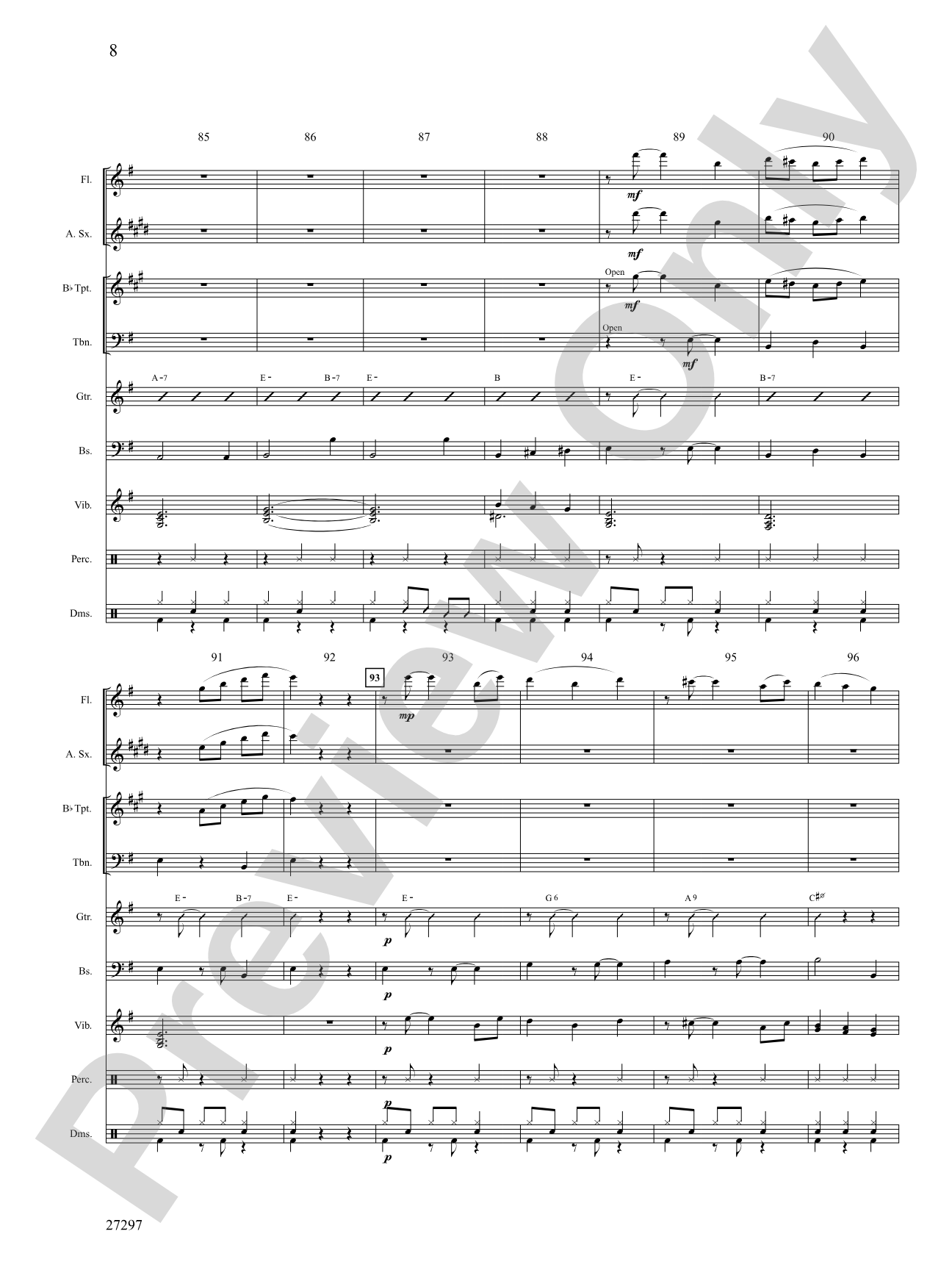
You've never heard it like this before! A dramatic solo provides the powerful introduction before this hip spiritual arrangement kicks into a groovy jazz waltz. A call and response verse highlights individual sections of the choir (or soloists), and an ultra-cool transition builds and modulates into the final choral refrain. Great to perform with a jazz combo.


Don't just read it, hear it, play along with it, and watch your students grow with it. In MakeMusic Cloud, Wade in the Water: Choral SoundPax comes alive with professional accompaniment, adjustable tempo, and built-in practice tools that turn solo practice into real progress.
Open in the Player
Jump straight in and assign it today.
Start Your Free Trial
Open this title and explore the full library in minutes.
Sample Audio
1
Audio File
--:--
0:00
0:00
Sample Video
No sample videos found.
Additional Details
Series:
Alfred Choral Designs
Publisher:
Alfred Music
Page Count:
17
SKU:
00-PK-0001311
Instrumentation:
SoundPax
More about this title
About the Arranger: Patsy Ford Simms
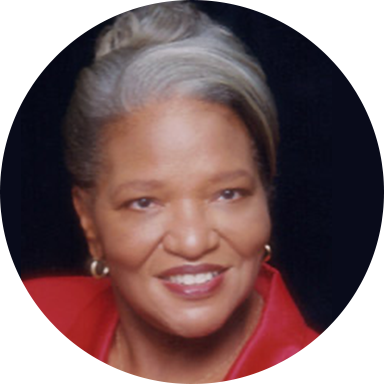
Patsy Ford Simms began her publishing career in 1981 and has since created over 300 compositions and arrangements for educational and church settings across multiple major publishers, including Shawnee Press. Her work emerged from a practical mission: filling the gap in quality choral literature for junior high and middle school singers during her early years in the classroom. She holds a Bachelor of Science in Music Education from Knoxville College, a Master of Education from the University of Louisville, and a doctorate in Music Education from Columbia Pacific University.
After 30 years of full-time teaching in grades K-12 and at the Youth Performing Arts School, Simms has established an international reputation as an arranger, composer, and clinician, leading workshops in Italy and Africa. She has received multiple commissions for concert works and musicals centered on African American history. Her compositions have been selected twice for MENC World's Largest Concerts, and she is a regular recipient of ASCAP Special Music Awards.
Why we love this
Simms and Beck have taken a spiritual that could feel predictable and transformed it into something genuinely fresh: a jazz waltz with individual section spotlights and a modulation that actually earns its moment. The call and response structure gives every section of your choir something to own, and the dramatic solo opening immediately signals to your audience that this isn't a traditional treatment.
What to expect
Groovy and soulful with a modern edge. The piece opens with dramatic intensity, settles into a sophisticated waltz rhythm that feels both familiar and unexpected, then builds toward a climactic moment that makes the spiritual feel entirely alive in the present moment.
Who it's for
Junior high through high school choirs looking for contemporary sacred repertoire that actually excites singers. Directors who want a spiritual with attitude and genuine jazz idiom—not a watered-down version—and enough flexibility to perform it with or without a jazz combo.
How to get the most out of it
- Lock the ensemble sound during the final refrain by rehearsing the modulated section separately from the rest of the piece; the new key can feel unstable if the choir isn't unified on the shift.
- Bring out the character of each section during the call and response verse by asking those singers to lean slightly forward and make direct eye contact with the audience, turning their part into a genuine conversation rather than just answering the soloist.
- If performing with a jazz combo (as recommended), have the band establish the groove of the jazz waltz during early joint rehearsals before layering in vocal lines; this prevents the choir from rushing or dragging against the swing feel.
- The ultra-cool transition builds momentum, so resist the urge to push the tempo here; let the harmonic movement and added instrumental layers carry the energy instead.
How to use it
Program this as a set-closer or the centerpiece of a concert that mixes sacred and secular repertoire; its contemporary sound and rhythmic sophistication read as a strong statement about your choir's range. It also works beautifully as a concert opening if you want to establish energy and engagement from the first measures.
Skills your students will build
- Jazz waltz meter and feel (3/4 with swing rhythm)
- Call and response singing with clear sectional independence
- Modulation awareness and pitch security through key changes
- Balance between solo and ensemble textures
- Rhythmic precision and groove coordination with instrumental accompaniment