Wade in the Water Cover Image

Wade in the Water: 3-Part Mixed Choral Octavo

$1.85 USD
Sale price  $1.85 USD Regular price 
Skip to product information
Wade in the Water Cover Image

Wade in the Water: 3-Part Mixed Choral Octavo

Traditional Spiritual / arr. Patsy Ford Simms and Andy Beck

Item: 00-27294

makemusic Cloud badge

Need it now?

Buy Digital Version
$1.85
Shipped

One moment…

Description
You've never heard it like this before! A dramatic solo provides the powerful introduction before this hip spiritual arrangement kicks into a groovy jazz waltz. A call and response verse highlights individual sections of the choir (or soloists), and an ultra-cool transition builds and modulates into the final choral refrain. Great to perform with a jazz combo.

Don't just read it, hear it, play along with it, and watch your students grow with it. In MakeMusic Cloud, Wade in the Water: 3-Part Mixed Choral Octavo comes alive with professional accompaniment, adjustable tempo, and built-in practice tools that turn solo practice into real progress.

Sample Pages

Sample Audio
0:00
0:00
Sample Video
Additional Details
Series: Alfred Choral Designs
Publisher: Alfred Music
Page Count: 12
UPC: 038081295541
SKU: 00-27294

More about this title

About the Arranger: Patsy Ford Simms
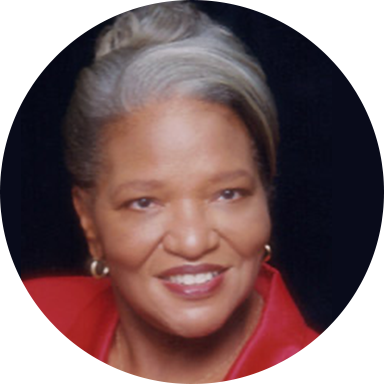
Patsy Ford Simms

Patsy Ford Simms has been a prolific voice in choral music education since her first publication in 1981, creating more than 300 pieces for schools and churches across major publishing houses. Her work in this field emerged from a personal teaching challenge: during her three decades in K-12 classrooms and at the Youth Performing Arts School, she found few quality octavos written for the junior high voice, so she began composing and arranging to fill that need. Her training spans music education at Knoxville College (B.S.), the University of Louisville (M.E.), and Columbia Pacific University (doctorate), grounding her work in both pedagogy and craft.

Recognized internationally as an arranger, composer, and clinician, Simms has presented her work across Italy and Africa and received multiple commissions for concert pieces and musicals exploring African American history. Two of her compositions were selected for MENC's World's Largest Concerts, and she has earned numerous ASCAP Special Music Awards. Her arrangements consistently honor traditional material while making it accessible and engaging for young singers.

Why we love this

This arrangement captures what made the spiritual powerful in the first place while spinning it into something entirely fresh. The dramatic solo opening and groovy jazz waltz groove make it an immediate draw for students, and the call-and-response structure built into the verse gives every voice section a moment to shine or feature soloists without complicated unison passages.

What to expect

A spiritual that's been reimagined for the modern rehearsal room: it opens with intimacy and power, shifts into something rhythmically alive and infectious, and builds toward a refrain that feels both earned and celebratory. The piece walks a confident line between reverence for its source material and genuine fun.

Who it's for

Junior high and high school choirs looking for repertoire that respects the spiritual tradition while engaging young singers with contemporary groove and personality. The three-part mixed voicing works well for schools with mixed or changing voices, and the flexible solo features mean you can adapt the piece to match what singers you have on any given day.

How to get the most out of it

  • Let the opening solo breathe with space and dynamic contrast; it's the hook that sets up everything that follows, so casting and rehearsal time here pays dividends.
  • Lock the rhythm section early if you're using a jazz combo. Even without live instruments, the recorded accompaniment benefits from singers who understand the groove rather than fighting it.
  • Balance the call and response verses so the responses feel conversational rather than mechanical. Individual singers (or small groups per section) trading lines with the choir creates energy.
  • Use the modulation into the final refrain as a reset moment. Singers often lose focus during transitions, so mark that key change clearly and rehearse the harmonic shift in isolation.

How to use it

Program this as a standalone feature or pair it with other spirituals to create thematic depth in a concert. It works especially well in spring pops or jazz-themed concerts where a jazz combo can accompany the performance, but the recorded accompaniment option makes it flexible enough for any concert format.

Skills your students will build

  • Singing in a jazz waltz meter and groove
  • Call and response singing with rhythmic independence
  • Balancing solo work with ensemble texture
  • Ensemble singing over a modulation
  • Stylistic interpretation of spiritual material

You May Also Like
