
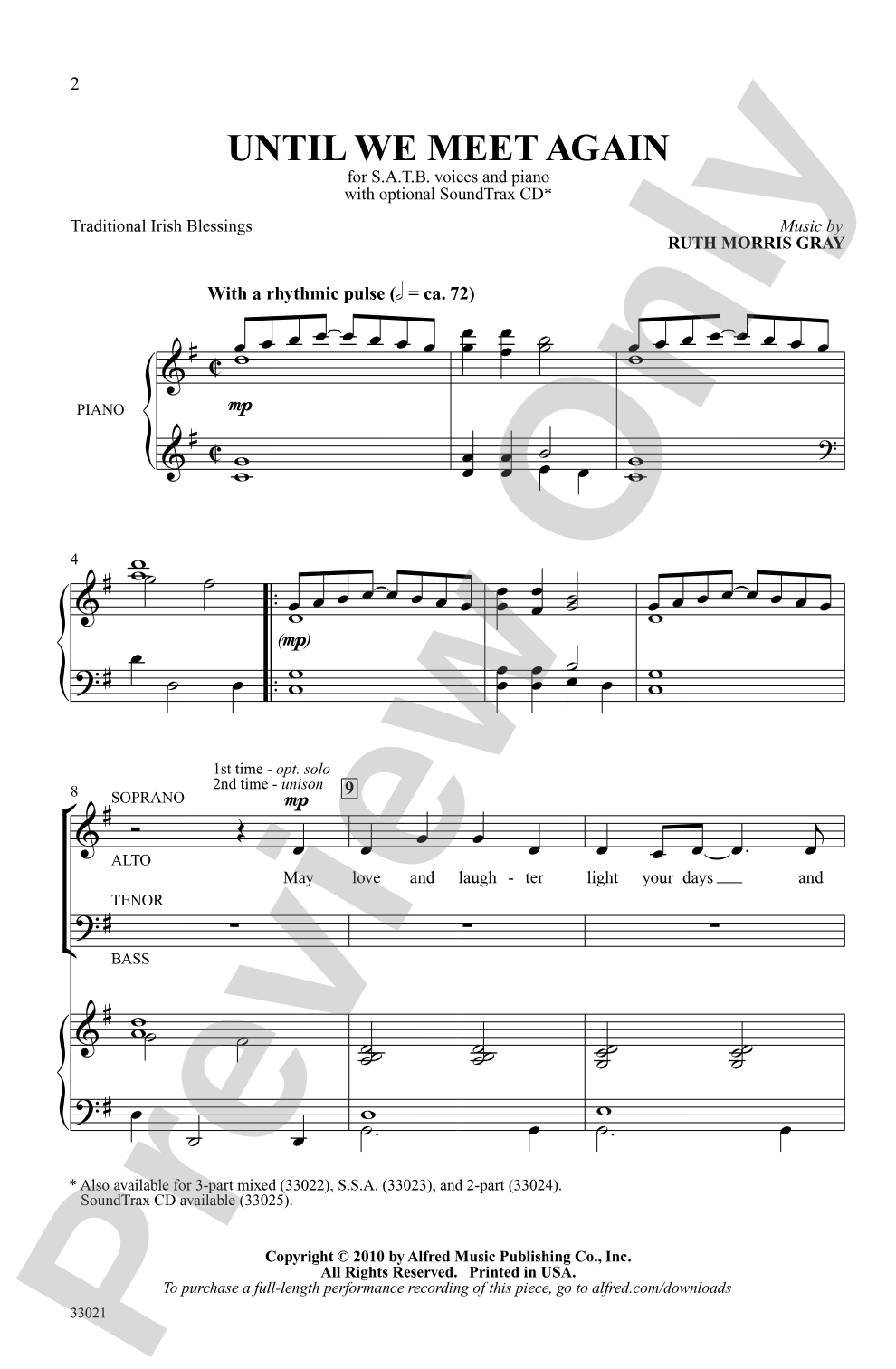
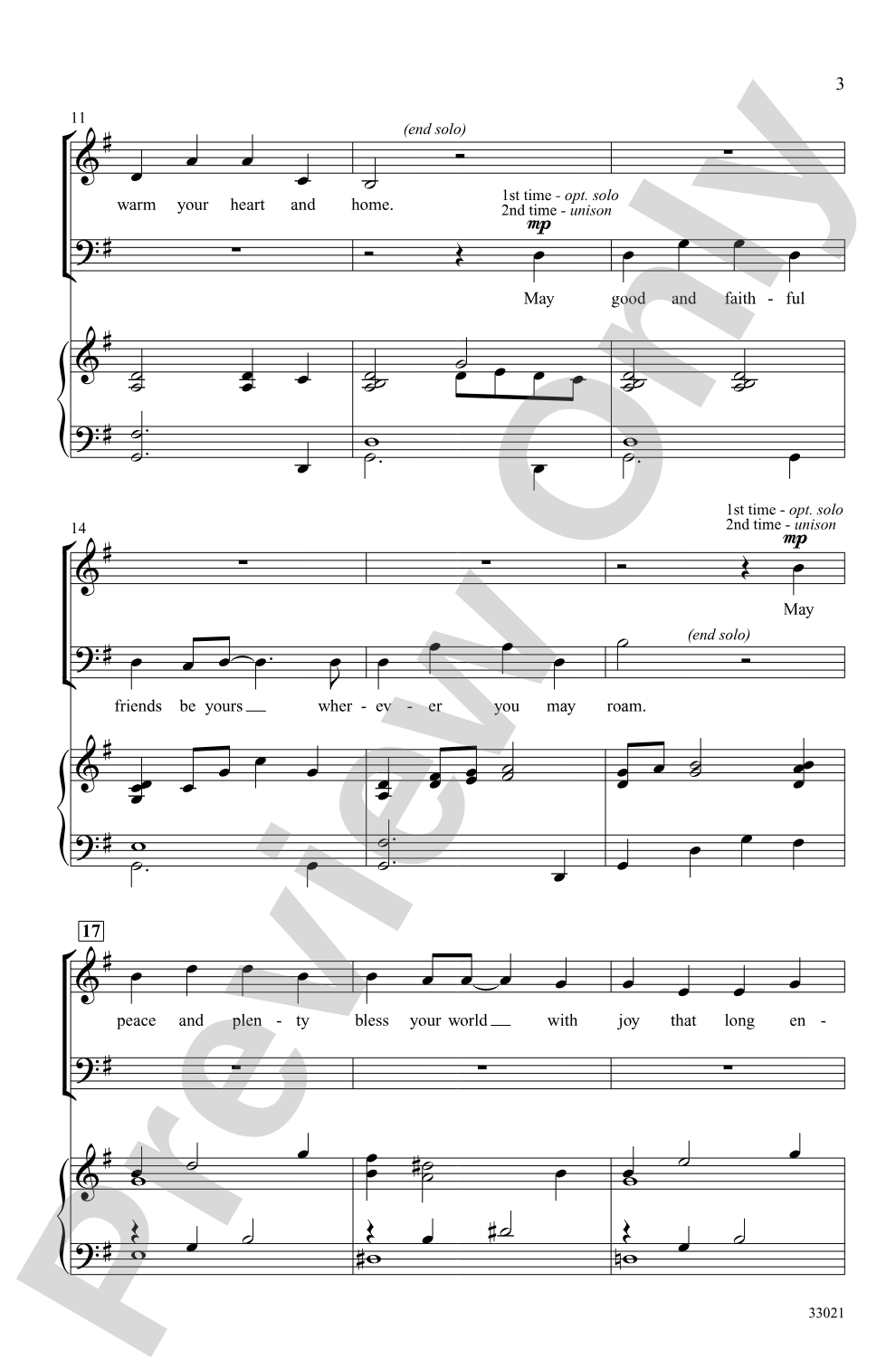

Until We Meet Again: SATB Choral Octavo
Traditional Irish Blessings, music by Ruth Morris Gray
Item: 00-PO-0008014
$1.75
Minimum order quantity: 20 copies
Pickup currently not available
Related Items
Until We Meet Again: SoundTrax Digital Audio Download |
$27.99
|
View | |
Until We Meet Again: 3-Part Mixed Choral Octavo |
$1.75
|
View | |
Until We Meet Again: 2-Part Choral Octavo |
$2.05
|
View | |
Until We Meet Again: SATB Choral Octavo |
$1.75
|
View | |
Until We Meet Again: 3-Part Mixed Choral Octavo |
$1.75
|
View | |
Until We Meet Again: SSA Choral Octavo |
$1.75
|
View | |
Until We Meet Again: 2-Part Choral Octavo |
$2.05
|
View | |
Until We Meet Again: Choral Octavo SoundTrax CD |
$27.99
|
View |
Description
A perfect way to say goodbye, this gentle piece includes words from more than one Irish blessing and boasts a slight Celtic groove. Appropriate for and appealing to choirs of all ages.


Until We Meet Again: SATB Choral Octavo isn't in MakeMusic Cloud just yet...but it could be. Let us know you'd like to see it, and you'll help shape what comes next. In the meantime, start a free trial and dive into thousands of interactive titles your students can play along with today.
Request This Title
Tell us you want it.
Start Your Free Trial
Explore everything that's ready to play right now.
Sample Audio
1
Audio File
--:--
0:00
0:00
Sample Video
No sample videos found.
Additional Details
Series:
Alfred Choral Designs
Publisher:
Alfred Music
Page Count:
12
SKU:
00-PO-0008014
More about this title
About the Arranger: Ruth Morris Gray
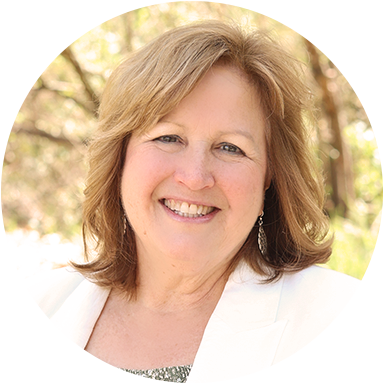
Ruth Morris Gray serves as Director of Choirs at Rosemead High School in California, where she has shaped the choral program since 2004. Her compositional output exceeds 100 published works, reflecting a deep commitment to writing music that speaks to choirs at every level. Gray holds a Bachelor of Music in Piano Performance and Composition from Biola University and earned her Master of Arts in Music Composition from UC Santa Barbara. She completed her California Single Subject Music Credential at California State University, Northridge.
Beyond the music building, Gray pursues an active life that includes travel, swimming, reading, and exploring the California landscape on e-bikes alongside her husband, Douglas. Her experience as both a composer and a classroom director informs every piece she writes, grounding her work in what singers actually need and want to perform.
Why we love this
Gray draws from genuine Irish blessings to create a farewell piece that feels authentic rather than saccharine. The Celtic groove gives the arrangement rhythmic character without overwhelming singers who are already managing farewell emotions, and her skilled handling of the SATB texture keeps all four voices engaged and audible throughout.
What to expect
The piece radiates warmth and hope without veering into melancholy. The Celtic rhythmic element adds shimmer and lift, while the blessing text grounds everything in sincerity and genuine well-wishes for the road ahead.
Who it's for
Any choir performing a graduation ceremony or farewell concert will find this piece immediately meaningful. The arrangement sits comfortably for intermediate to advanced ensembles, though the emotional directness and accessible range make it rewarding even for developing choirs.
How to get the most out of it
- Honor the gentle character by resisting the urge to overdrive the tempo. The Celtic rhythm works best when it breathes naturally rather than pushes forward.
- Balance the blend across all four parts during the blessing texts. Gray's voicing distributes the melodic interest, so ensure soprano and alto lines receive equal attention with tenor and bass.
- Let the recorded accompaniment establish the groove early in rehearsal so singers can internalize the Celtic feel before focusing on intonation and diction.
How to use it
Close a graduation concert with this piece when you want the final moment to feel both celebratory and reflective. It also works beautifully as part of a memorial or legacy concert, and many directors have found it effective during senior night performances in school settings where mixed-age choirs gather.
Skills your students will build
- Singing with clear diction in text drawn from traditional Irish sources
- Maintaining rhythmic precision within a gentle groove-based accompaniment
- Balancing four-part harmony while keeping text intelligibility
- Performing with emotional maturity and restraint in a secular blessing context