
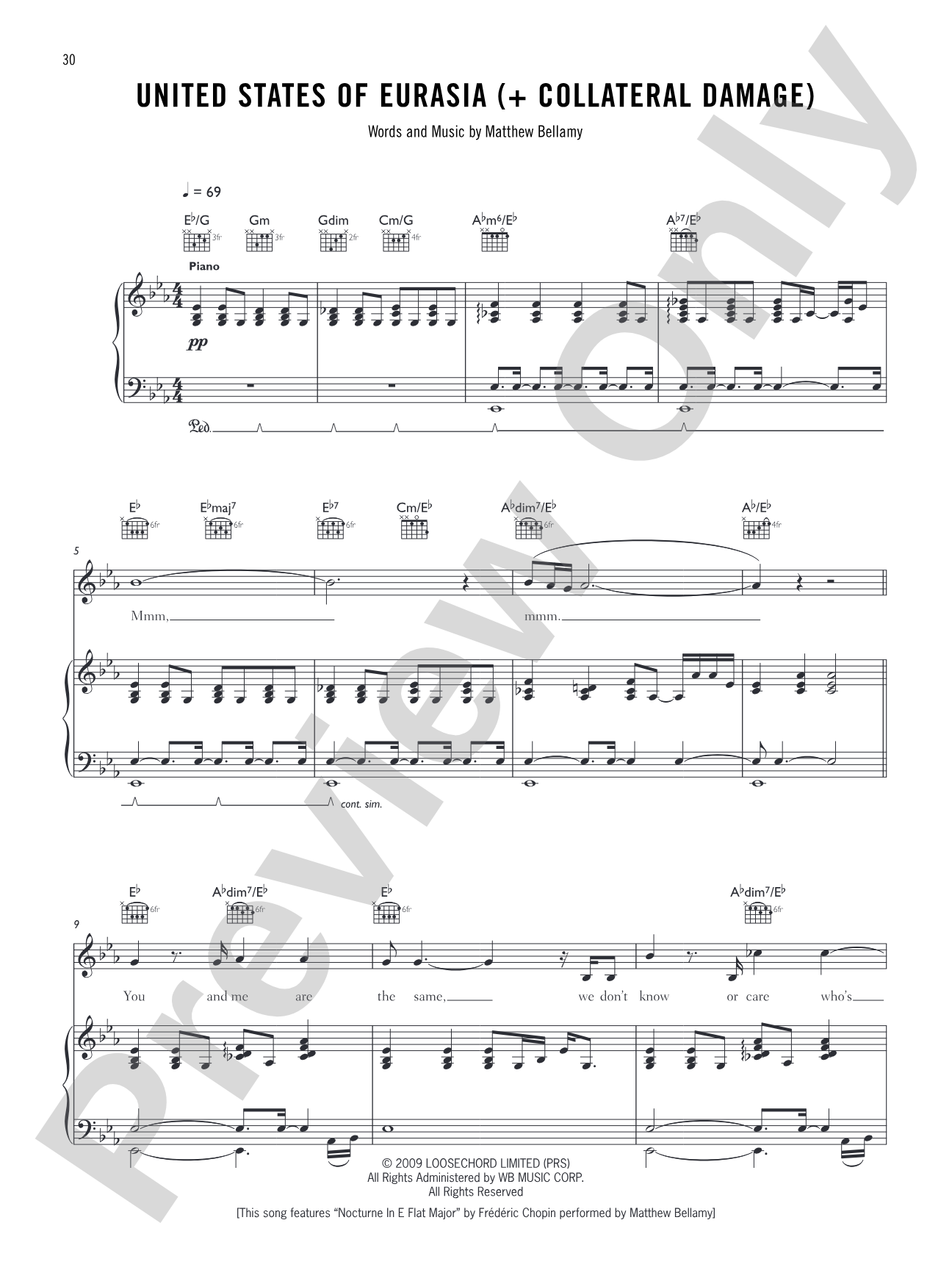
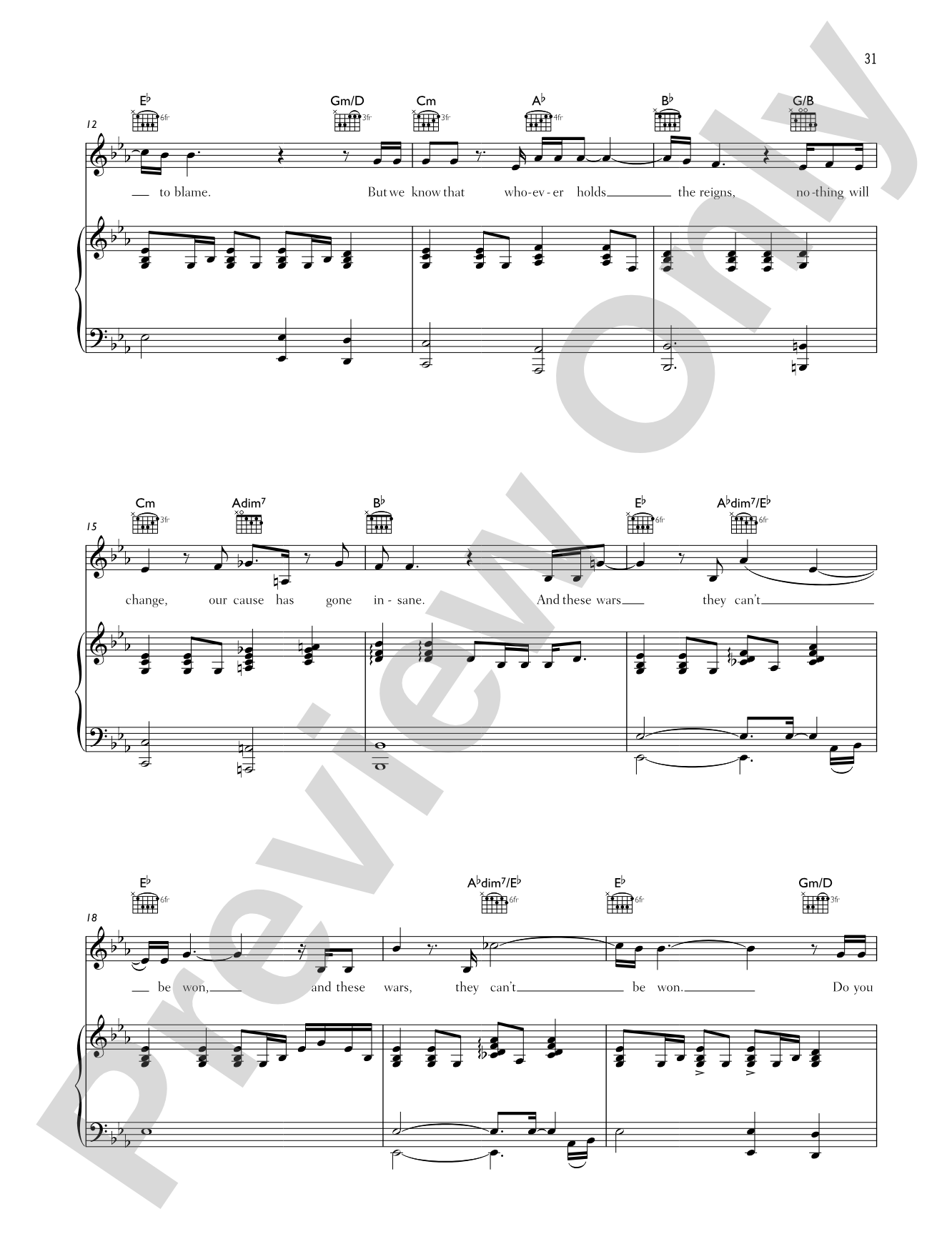
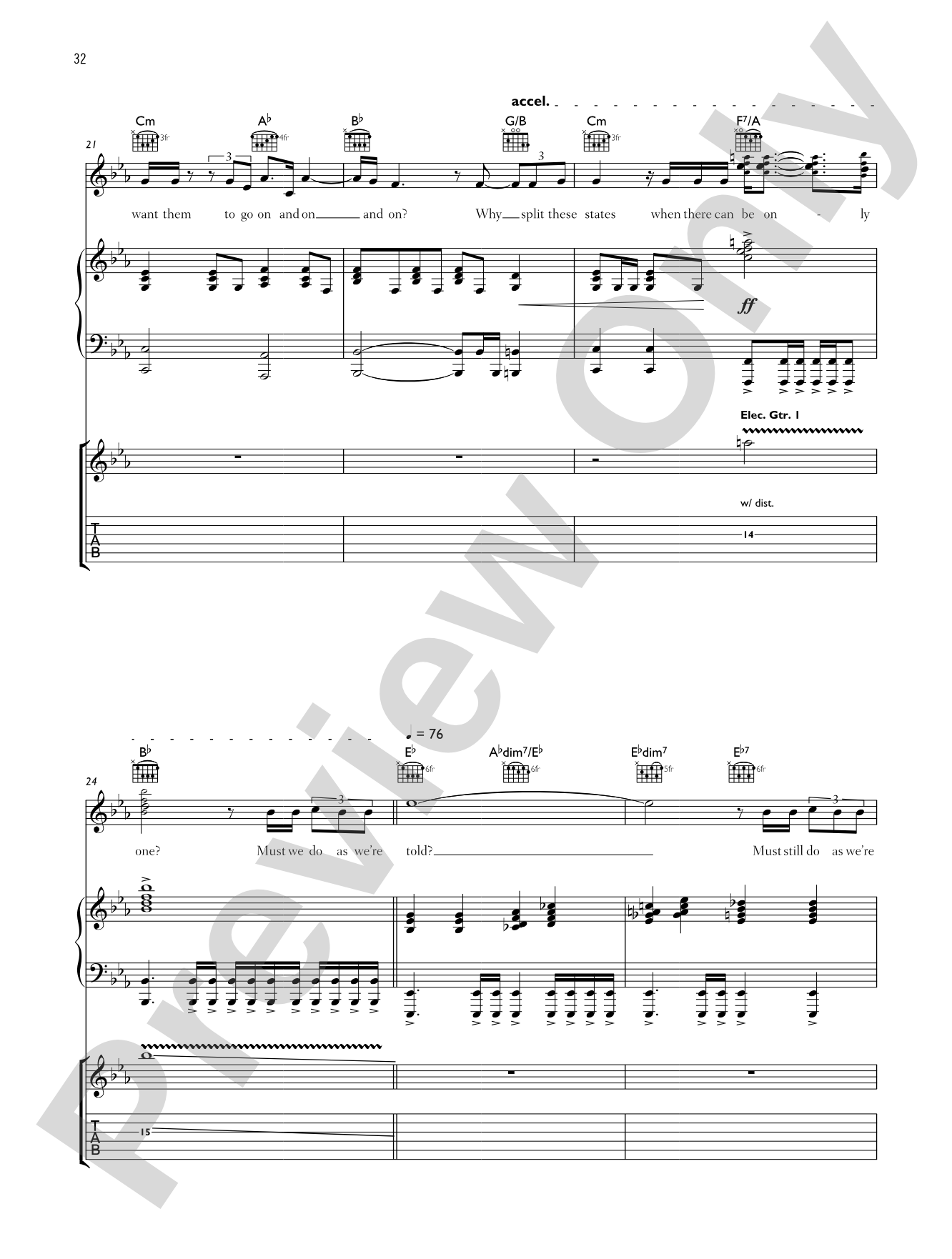

United States of Eurasia (+ Collateral Damage): Authentic Guitar TAB
Muse
Item: 00-PS-0012705
$9.99
One moment…
Related Items
Uprising: Piano/Vocal/Chords |
$5.99
|
View | |
Uprising: Authentic Guitar TAB |
$5.99
|
View | |
Resistance: Piano/Vocal/Chords |
$5.99
|
View | |
Resistance: Authentic Guitar TAB |
$9.99
|
View | |
Undisclosed Desires: Authentic Guitar TAB |
$4.99
|
View | |
Undisclosed Desires: Piano/Vocal/Chords |
$4.99
|
View | |
United States of Eurasia (+ Collateral Damage): Piano/Vocal/Chords |
$5.99
|
View | |
Guiding Light: Authentic Guitar TAB |
$5.99
|
View | |
Guiding Light: Piano/Vocal/Chords |
$5.99
|
View | |
Unatural Selection: Piano/Vocal/Chords |
$5.99
|
View | |
Unatural Selection: Authentic Guitar TAB |
$9.99
|
View | |
MK Ultra: Authentic Guitar TAB |
$9.99
|
View | |
MK Ultra: Piano/Vocal/Chords |
$5.99
|
View | |
I Belong to You (from "Twilight: New Moon"): Piano/Vocal/Chords |
$9.99
|
View | |
I Belong to You (from "Twilight: New Moon"): Authentic Guitar TAB |
$9.99
|
View | |
Exogenesis: Symphony Part I (Overture): Authentic Guitar TAB |
$5.99
|
View | |
Exogenesis: Symphony Part I (Overture): Piano/Vocal/Chords |
$5.99
|
View | |
Exogenesis: Symphony Part II (Cross Pollination): Piano/Vocal/Chords |
$5.99
|
View | |
Exogenesis: Symphony Part II (Cross Pollination): Authentic Guitar TAB |
$5.99
|
View | |
Exogenesis: Symphony Part III (Redemption): Authentic Guitar TAB |
$4.99
|
View | |
Exogenesis: Symphony Part III (Redemption): Piano/Vocal/Chords |
$4.99
|
View |
Description
Guitar TAB transcriptions for every song on Muse's 2009 hit album! Titles: Uprising * Resistance * Undisclosed Desires * United States of Eurasia (+ Collateral Damage) * Guiding Light * Unnatural Selection * MK Ultra * I Belong to You/Mon Coeur S'Ouvre a Ta Voix * Exogenesis: Symphony, Part 1: Overture * Exogenesis: Symphony, Part 2: Cross-Pollination * Exogenesis: Symphony, Part 3: Redemption.


United States of Eurasia (+ Collateral Damage): Authentic Guitar TAB isn't in MakeMusic Cloud just yet...but it could be. Let us know you'd like to see it, and you'll help shape what comes next. In the meantime, start a free trial and dive into thousands of interactive titles your students can play along with today.
Request This Title
Tell us you want it.
Start Your Free Trial
Explore everything that's ready to play right now.
Sample Audio
No sample audio found.
Sample Video
No sample videos found.
Additional Details
Publisher:
Alfred Music
Page Count:
116
SKU:
00-PS-0012705
More about this title
About the Composer: Matthew Bellamy
Matthew Bellamy is the lead vocalist, guitarist, and primary songwriter of Muse, one of the most innovative rock bands of the 21st century. His compositional voice blends progressive rock complexity with electronic textures, operatic vocal arrangements, and politically charged lyrics. Bellamy's guitar work spans from intricate fingerpicking and classical techniques to heavy riffing and experimental effects, making his music a rich resource for guitarists seeking to expand their technical and creative range.
Why we love this
These transcriptions capture some of Muse's most ambitious and technically demanding guitar writing from the Resistance era. The album showcases a remarkable range of styles within a single collection, from orchestral arrangements and classical flourishes to hard rock riffing and intricate finger work, giving guitarists genuine variety to sink their teeth into without leaving contemporary rock territory.
What to expect
Expansive and theatrical. These pieces move fluidly between moments of intimate fingerpicking and bombastic wall-of-sound riffing, often within the same song. The guitar language ranges from classical and orchestral textures to anthemic rock power, creating a sense of artistic ambition and emotional intensity throughout.
Who it's for
Guitarists with intermediate to advanced technique who want to expand into contemporary rock repertoire with real harmonic and structural complexity. This collection works equally well for solo study, reference material for band arrangements, or performance practice for those seeking challenges beyond standard rock songbooks.
How to get the most out of it
- Study the original recordings carefully before diving into the tab; Bellamy's use of effects, dynamics, and layered textures is essential to understanding how each part sits in the arrangement.
- Break longer passages into manageable sections and focus on the rhythmic precision before worrying about speed; many of these pieces prioritize groove and timing over raw tempo.
- Pay close attention to any alternate tunings or capo positions; Muse frequently uses open and drop tunings that change the feel and timbre of the guitar significantly.
- Isolate the rhythm guitar parts from lead lines if you're learning a full arrangement; understanding the harmonic foundation will make the more ornamental passages easier to place in context.
How to use it
Feature this collection in a contemporary music showcase or rock guitar recital to demonstrate the breadth of modern rock composition. You might also draw from individual songs for ensemble arrangements, pairing guitar transcriptions with other instrumentalists or vocalists to explore how Muse layers multiple instrumental voices to create their signature dense, cinematic sound.
Skills your students will build
- Executing complex rhythmic patterns in syncopated and polyrhythmic contexts
- Reading and playing music in alternate tunings and with capo positions
- Layering multiple guitar parts (rhythm, lead, texture) to understand arrangement depth
- Integrating effects and tone shaping as compositional tools rather than embellishments
- Navigating tempo changes and dynamic shifts while maintaining groove integrity