
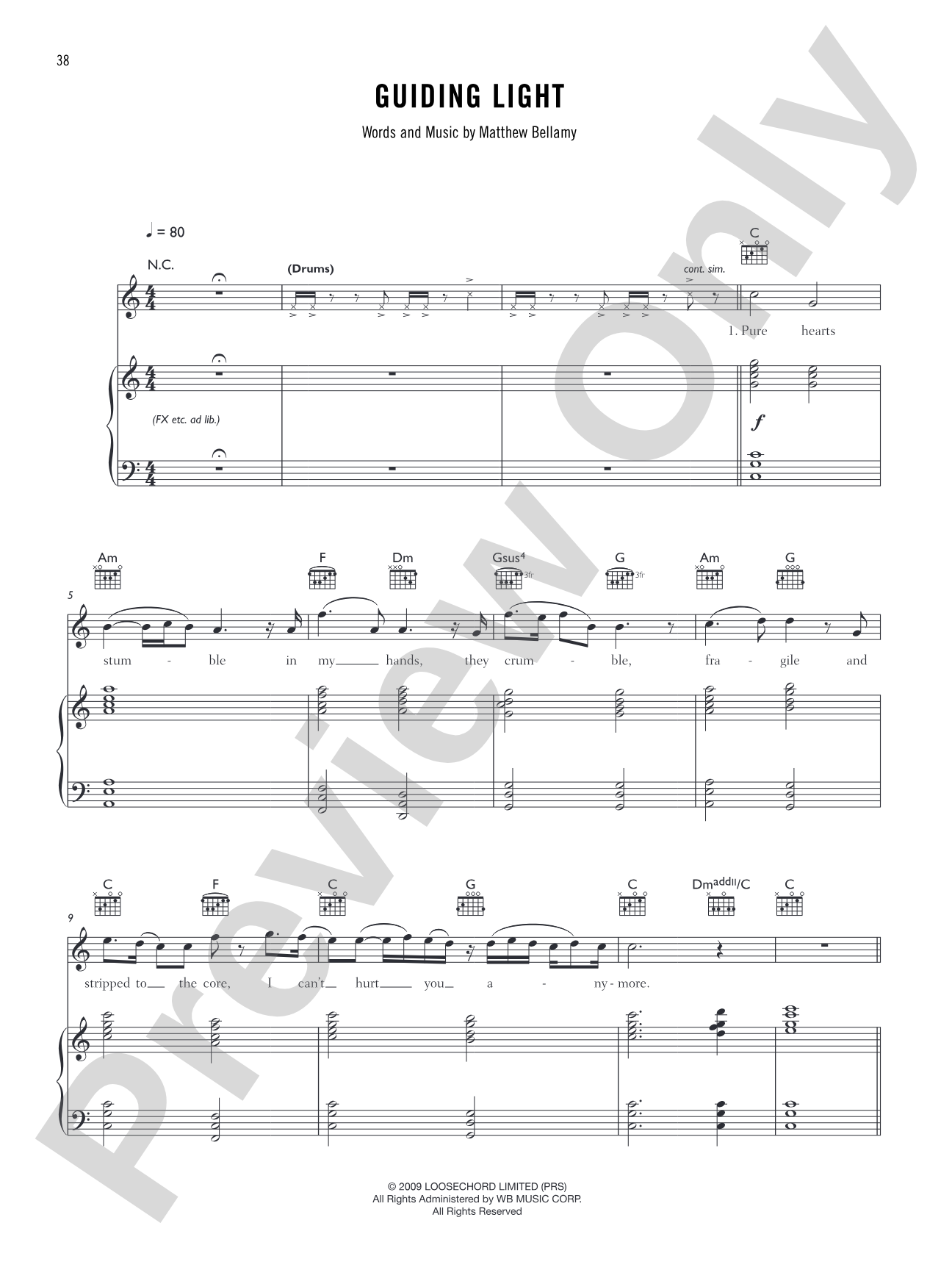
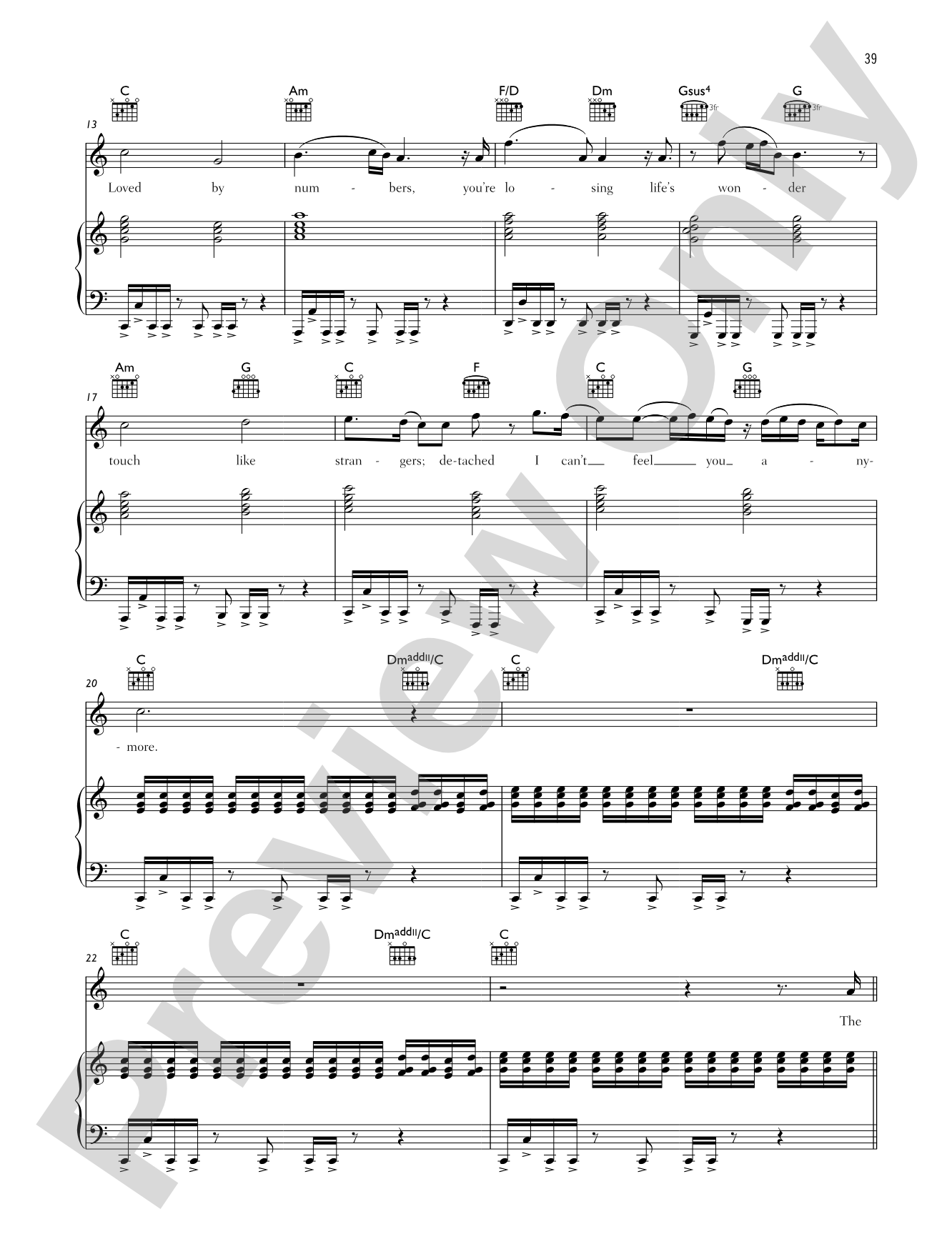

Guiding Light: Piano/Vocal/Chords
Muse
Item: 00-PS-0012707
$5.99
One moment…
Related Items
Uprising: Piano/Vocal/Chords |
$5.99
|
View | |
Uprising: Authentic Guitar TAB |
$5.99
|
View | |
Resistance: Piano/Vocal/Chords |
$5.99
|
View | |
Resistance: Authentic Guitar TAB |
$9.99
|
View | |
Undisclosed Desires: Authentic Guitar TAB |
$4.99
|
View | |
Undisclosed Desires: Piano/Vocal/Chords |
$4.99
|
View | |
United States of Eurasia (+ Collateral Damage): Piano/Vocal/Chords |
$5.99
|
View | |
United States of Eurasia (+ Collateral Damage): Authentic Guitar TAB |
$9.99
|
View | |
Guiding Light: Authentic Guitar TAB |
$5.99
|
View | |
Unatural Selection: Piano/Vocal/Chords |
$5.99
|
View | |
Unatural Selection: Authentic Guitar TAB |
$9.99
|
View | |
MK Ultra: Authentic Guitar TAB |
$9.99
|
View | |
MK Ultra: Piano/Vocal/Chords |
$5.99
|
View | |
I Belong to You (from "Twilight: New Moon"): Piano/Vocal/Chords |
$9.99
|
View | |
I Belong to You (from "Twilight: New Moon"): Authentic Guitar TAB |
$9.99
|
View | |
Exogenesis: Symphony Part I (Overture): Authentic Guitar TAB |
$5.99
|
View | |
Exogenesis: Symphony Part I (Overture): Piano/Vocal/Chords |
$5.99
|
View | |
Exogenesis: Symphony Part II (Cross Pollination): Piano/Vocal/Chords |
$5.99
|
View | |
Exogenesis: Symphony Part II (Cross Pollination): Authentic Guitar TAB |
$5.99
|
View | |
Exogenesis: Symphony Part III (Redemption): Authentic Guitar TAB |
$4.99
|
View | |
Exogenesis: Symphony Part III (Redemption): Piano/Vocal/Chords |
$4.99
|
View |
Description
Piano/vocal/guitar sheet music transcriptions for every song on Muse's 2009 hit album! (Guitar TAB edition also available) Titles: Uprising * Resistance * Undisclosed Desires * United States of Eurasia (+ Collateral Damage) * Guiding Light * Unnatural Selection * MK Ultra * I Belong to You/Mon Coeur s'Ouvre a Ta Voix * Exogenesis: Symphony, Part 1: Overture * Exogenesis: Symphony, Part 2: Cross-Pollination * Exogenesis: Symphony, Part 3: Redemption.


Guiding Light: Piano/Vocal/Chords isn't in MakeMusic Cloud just yet...but it could be. Let us know you'd like to see it, and you'll help shape what comes next. In the meantime, start a free trial and dive into thousands of interactive titles your students can play along with today.
Request This Title
Tell us you want it.
Start Your Free Trial
Explore everything that's ready to play right now.
Sample Audio
No sample audio found.
Sample Video
No sample videos found.
Additional Details
Publisher:
Alfred Music
Page Count:
92
SKU:
00-PS-0012707
More about this title
About the Composer: Matthew Bellamy
Matthew Bellamy is the lead vocalist, guitarist, and primary songwriter for Muse, the British rock band that emerged in the 1990s. His compositional work spans rock, electronic, classical, and orchestral styles, often featuring complex harmonic progressions, layered production, and conceptual depth. Bellamy's approach to songwriting combines accessible melodic hooks with ambitious instrumental arrangements, making his music both commercially successful and musically substantial.
Why we love this
These transcriptions capture an album that spans stadium-rock anthems, intricate vocal lines, and symphonic scope, all within a single cohesive vision. For singers and instrumentalists alike, the material demands genuine musicianship: singers navigate wide ranges and rhythmic precision; pianists contend with orchestral textures and dynamic control; guitarists engage with both strummed accompaniment and intricate riffing. This is music that respects its performers while remaining deeply engaging for serious musicians.
What to expect
Ambitious and relentless. The early tracks pulse with electronic-tinged urgency and defiant energy, while the three-part 'Exogenesis' symphony at the album's close shifts into lush, almost cinematic soundscapes. The music demands intensity and sophistication in equal measure; it never settles for simple answers, whether in its lyrics, vocal melodies, or harmonic choices.
Who it's for
Musicians who want to learn and perform music from a significant 21st-century rock album, whether for recitals, ensemble arrangements, or personal study. This collection serves singers seeking contemporary material with real vocal and harmonic demands, pianists exploring modern composition beyond classical idioms, and guitarists interested in both rhythmic precision and harmonic complexity.
How to get the most out of it
- Study the vocal melody's intervallic leaps and rhythmic precision before adding accompaniment; these lines often sit outside typical pop phrasing and require intentional shaping.
- Layer the keyboard parts dynamically rather than playing all elements at full volume; these arrangements are orchestral in concept, and mixing your own parts will reveal the music's architecture.
- Pay attention to the rhythmic relationship between guitar and keyboard parts, particularly in songs like 'Uprising' where syncopation drives the groove.
- Balance the rock energy of uptempo tracks with the dramatic space required by the symphonic 'Exogenesis' movements; programming allows these pieces to share a setlist without losing their individual character.
How to use it
Consider programming individual tracks within a concert celebrating contemporary rock composition, or create an entire recital around this material if your singers and players are invested in modern songwriting. The 'Exogenesis' trilogy works particularly well as a closing set, offering dramatic arc and orchestral scope that elevates a program beyond traditional boundaries.
Skills your students will build
- Reading complex rhythmic notation in contemporary rock contexts
- Singing intervals and melodic shapes outside traditional popular-music ranges
- Playing syncopated piano parts while maintaining groove alongside guitar and bass
- Balancing keyboard voicings to suggest orchestral textures with limited instrumental resources
- Interpreting dynamic and emotional variation across a large multi-movement work