
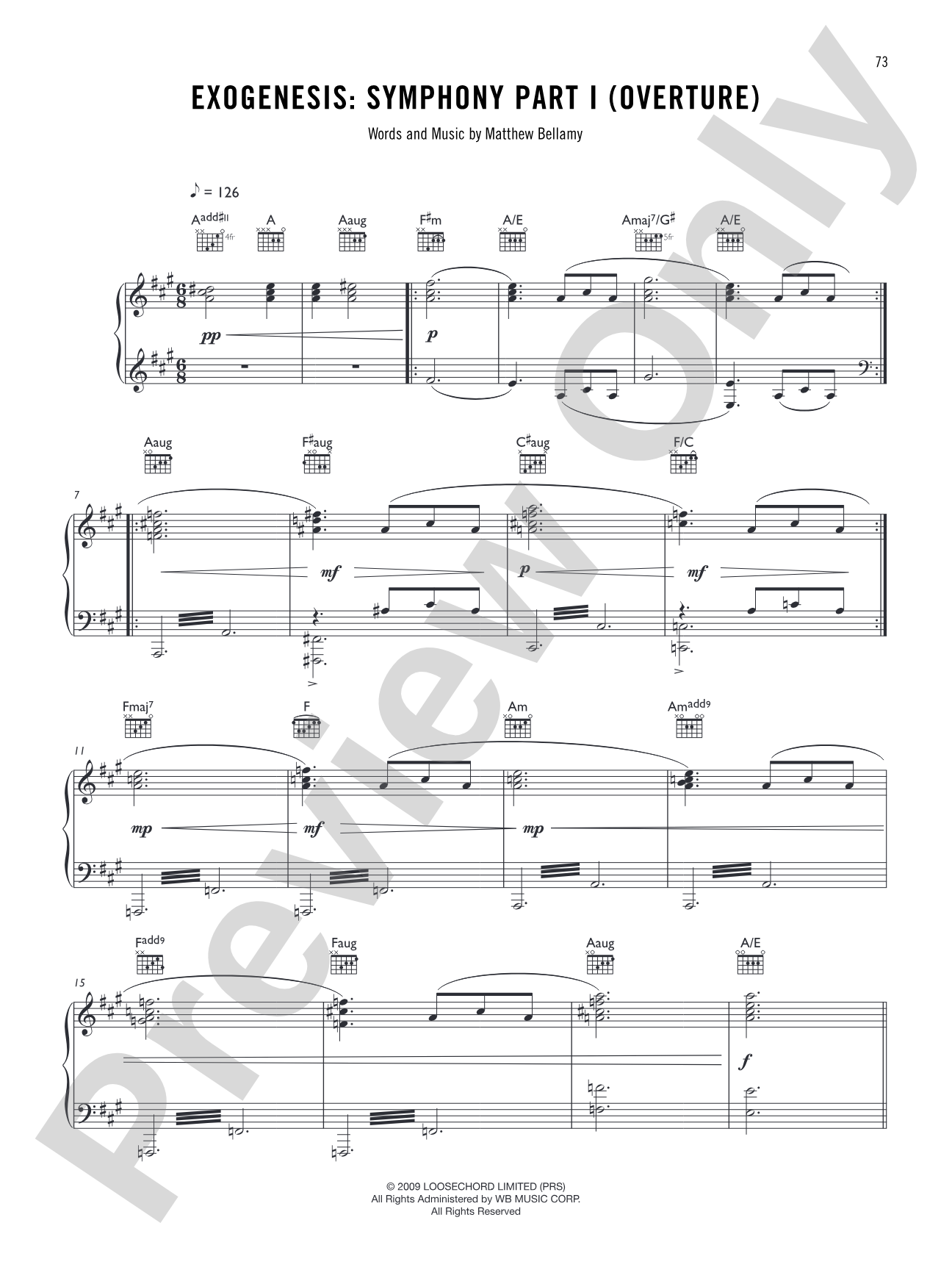
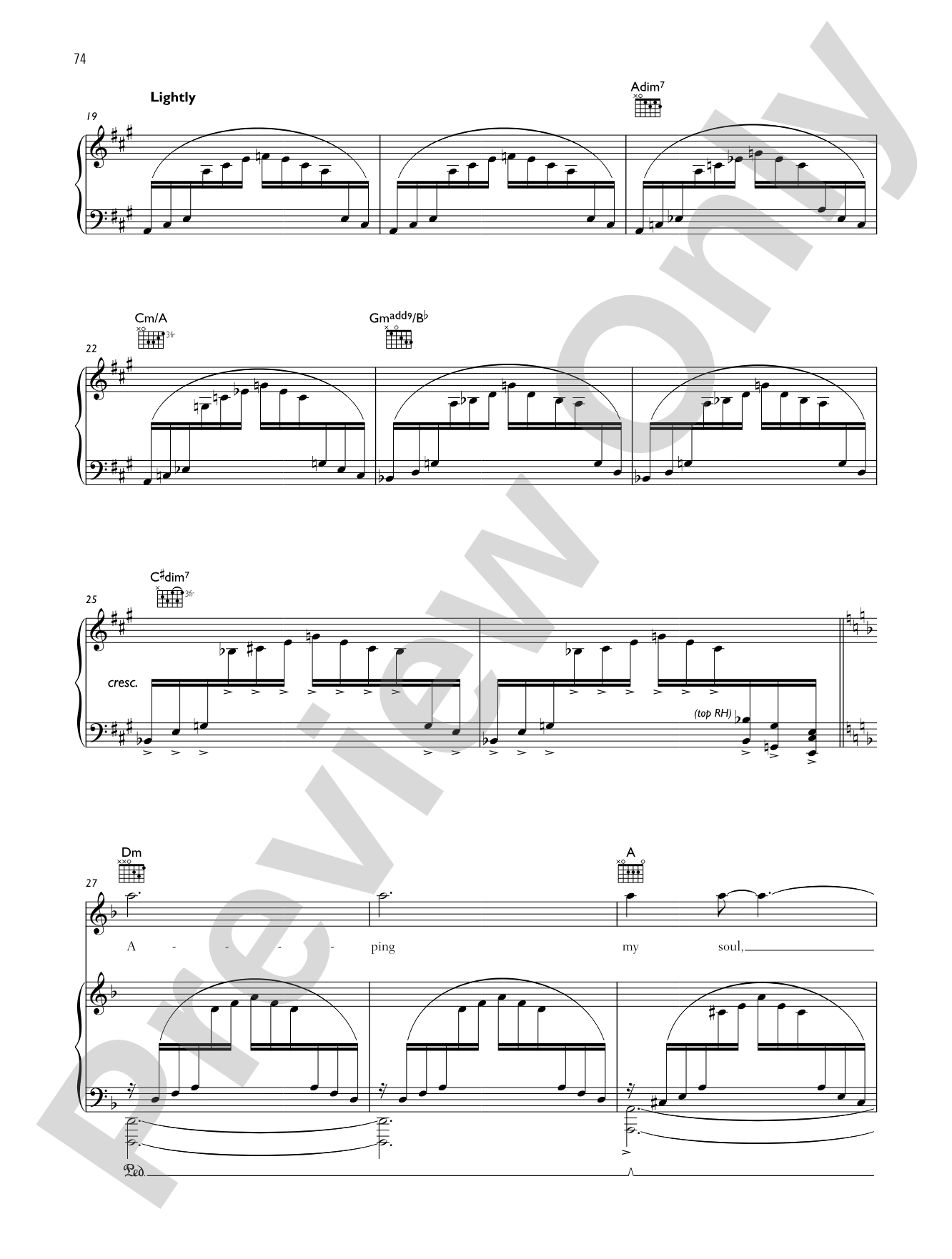

Exogenesis: Symphony Part I (Overture): Piano/Vocal/Chords
Muse
Item: 00-PS-0012715
$5.99
One moment…
Related Items
Uprising: Piano/Vocal/Chords |
$5.99
|
View | |
Uprising: Authentic Guitar TAB |
$5.99
|
View | |
Resistance: Piano/Vocal/Chords |
$5.99
|
View | |
Resistance: Authentic Guitar TAB |
$9.99
|
View | |
Undisclosed Desires: Authentic Guitar TAB |
$4.99
|
View | |
Undisclosed Desires: Piano/Vocal/Chords |
$4.99
|
View | |
United States of Eurasia (+ Collateral Damage): Piano/Vocal/Chords |
$5.99
|
View | |
United States of Eurasia (+ Collateral Damage): Authentic Guitar TAB |
$9.99
|
View | |
Guiding Light: Authentic Guitar TAB |
$5.99
|
View | |
Guiding Light: Piano/Vocal/Chords |
$5.99
|
View | |
Unatural Selection: Piano/Vocal/Chords |
$5.99
|
View | |
Unatural Selection: Authentic Guitar TAB |
$9.99
|
View | |
MK Ultra: Authentic Guitar TAB |
$9.99
|
View | |
MK Ultra: Piano/Vocal/Chords |
$5.99
|
View | |
I Belong to You (from "Twilight: New Moon"): Piano/Vocal/Chords |
$9.99
|
View | |
I Belong to You (from "Twilight: New Moon"): Authentic Guitar TAB |
$9.99
|
View | |
Exogenesis: Symphony Part I (Overture): Authentic Guitar TAB |
$5.99
|
View | |
Exogenesis: Symphony Part II (Cross Pollination): Piano/Vocal/Chords |
$5.99
|
View | |
Exogenesis: Symphony Part II (Cross Pollination): Authentic Guitar TAB |
$5.99
|
View | |
Exogenesis: Symphony Part III (Redemption): Authentic Guitar TAB |
$4.99
|
View | |
Exogenesis: Symphony Part III (Redemption): Piano/Vocal/Chords |
$4.99
|
View |
Description
Piano/vocal/guitar sheet music transcriptions for every song on Muse's 2009 hit album! (Guitar TAB edition also available) Titles: Uprising * Resistance * Undisclosed Desires * United States of Eurasia (+ Collateral Damage) * Guiding Light * Unnatural Selection * MK Ultra * I Belong to You/Mon Coeur s'Ouvre a Ta Voix * Exogenesis: Symphony, Part 1: Overture * Exogenesis: Symphony, Part 2: Cross-Pollination * Exogenesis: Symphony, Part 3: Redemption.


Exogenesis: Symphony Part I (Overture): Piano/Vocal/Chords isn't in MakeMusic Cloud just yet...but it could be. Let us know you'd like to see it, and you'll help shape what comes next. In the meantime, start a free trial and dive into thousands of interactive titles your students can play along with today.
Request This Title
Tell us you want it.
Start Your Free Trial
Explore everything that's ready to play right now.
Sample Audio
No sample audio found.
Sample Video
No sample videos found.
Additional Details
Publisher:
Alfred Music
Page Count:
92
SKU:
00-PS-0012715
More about this title
About the Composer: Matthew Bellamy
Matthew Bellamy is the lead vocalist, guitarist, and primary songwriter for Muse, the British rock band that emerged in the 1990s and became one of the defining acts of 21st-century alternative rock. His compositions span from intricate progressive structures to explosive stadium anthems, blending classical influences with electronic and guitar-driven rock. Bellamy's work demonstrates sophisticated harmonic thinking, ambitious conceptual frameworks, and a gift for memorable melodic hooks that have made him one of contemporary rock's most distinctive voices.
Bellamy's songwriting ranges from intimate ballads to sprawling symphonic movements, as evidenced throughout The Resistance album. His arrangements showcase influences from film scores, classical music, and electronic production, making his transcriptions valuable not just for rock musicians but for anyone studying how modern composers layer complexity with accessibility.
Why we love this
This collection captures an entire album cycle in one comprehensive resource, giving students access to tracks spanning from radio-friendly single arrangements to the stunning three-part orchestral finale. The material works beautifully for students who need real-world transcription practice; comparing these scores to the original recording reveals how harmony, texture, and arrangement decisions shape a song's identity. Rock programs and interdisciplinary ensembles can mine this book for contemporary material with genuine artistic substance.
What to expect
The Resistance album cycles between intimate vulnerability and grandiose theatrical moments. Some arrangements pulse with electronic urgency and rhythmic precision, while others luxuriate in romantic harmonies or build toward overwhelming crescendos. The symphonic movements at the album's conclusion feel genuinely orchestral, evoking film scores and progressive rock traditions even within a rock context.
Who it's for
Rock ensemble directors seeking substantial contemporary repertoire that appeals to student musicians already familiar with Muse's catalog, as well as vocalists and instrumentalists who want to develop skills reading modern popular arrangements alongside classical technique. Piano students and guitarists benefit from exposure to how rock songwriting uses harmonic sophistication, key modulation, and orchestration to create compelling arrangements.
How to get the most out of it
- Study the recorded version first to internalize the synth layers and production textures, then decide which elements translate effectively to acoustic piano versus keyboard arrangement
- Pay close attention to the dynamic range in quieter passages like "Guiding Light"; Muse's arrangements often rely on subtle volume shifts to build emotional tension
- In the symphonic sections, particularly the "Exogenesis" trilogy, treat phrasing and tempo flexibility as you would classical music rather than adopting a strictly metronomic approach
- Singers should identify which arrangements sit most comfortably in their range; Bellamy's melodies span considerable intervals, so transposition may be necessary for some songs
How to use it
Feature standalone songs for pops concerts or contemporary music showcases; the shorter, more accessible tracks serve pop and jazz ensembles well. The complete symphonic trilogy works as a capstone project for advanced players tackling a substantial work with cinematic scope, or integrate individual songs as modern repertoire selections throughout the school year.
Skills your students will build
- Reading and performing contemporary pop/rock arrangements with full harmonic notation
- Adapting synthesizer parts to acoustic instruments while preserving harmonic intent
- Managing wide vocal ranges and sustaining melodic lines across dramatic intervals
- Interpreting dynamic and tempo markings that blend rock and classical conventions
- Analyzing harmonic progressions and modulations in modern songwriting contexts