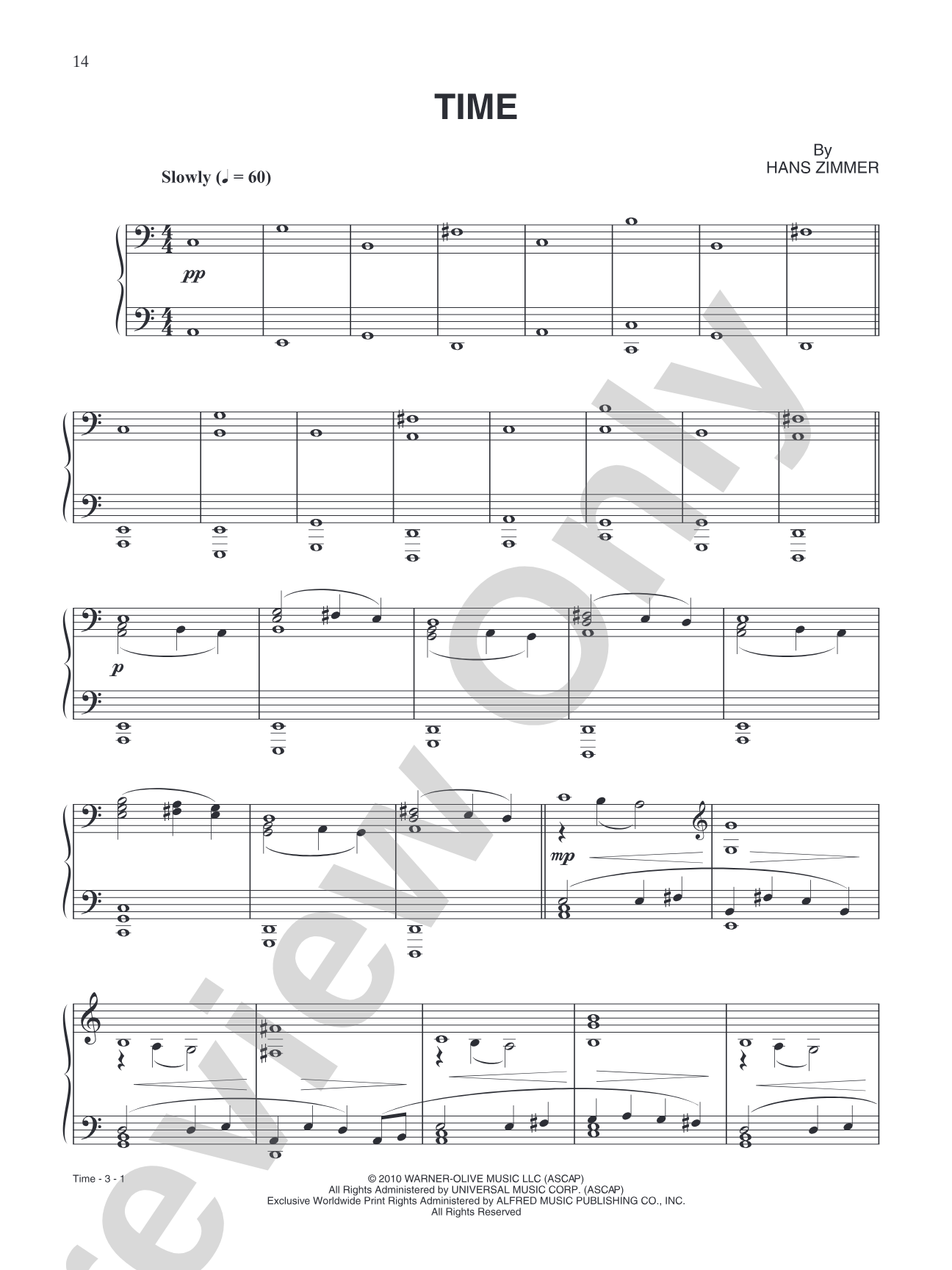
Hans Zimmer has shaped modern film scoring by treating orchestral composition with the precision of a conductor and the innovation of an electronic music pioneer. His work across more than 150 films spans intimate character studies and sweeping action sequences, consistently demonstrating how thematic development and harmonic sophistication can serve narrative without sacrificing accessibility.
Why we love this
Zimmer's film scores translate beautifully to solo piano, and this collection captures the architecture beneath the orchestration. Each piece reveals itself differently at the keyboard: Time builds with hypnotic inevitability, Dream Within a Dream plays with layered textures, and Mombasa demands rhythmic precision and dynamic control. Students encounter serious compositional craft disguised as modern music they already know.
What to expect
These pieces oscillate between meditative introspection and propulsive forward motion. Repetitive figures anchor the music while melodies unfold above them, creating a sense of momentum tempered by restraint. The harmonic language feels contemporary without abandoning structure, and the textures range from sparse and atmospheric to richly layered.
Who it's for
Intermediate to late intermediate pianists ready to work with modern film scoring at the keyboard. This collection suits students who thrive on repertoire they recognize and want to understand how orchestral concepts reshape themselves for a single instrument.
How to get the most out of it
Establish the foundational pulse in Time before adding the upper melodic layers; the piece lives in the tension between repetitive bass figures and the theme that emerges above them.
Balance transparency in the left hand with clear voice leading in the right across Dream Within a Dream; these pieces often feature multiple melodic strands competing for attention.
Lock into the rhythmic drive of Mombasa without rushing; the propulsive energy comes from evenness and confidence, not tempo inflation.
Pay attention to pedal changes at structural breaks; Zimmer's arrangements often use silence and timbral shifts to mark architectural moments.
How to use it
Include individual pieces in recitals aimed at audiences familiar with film music or as a bridge between classical and contemporary repertoire. The collection also works well in film scoring units within piano curricula, where students can analyze how orchestral techniques translate to keyboard writing.
Skills your students will build
Maintaining consistent pulse and rhythmic precision through repeated patterns
Layering and balancing multiple melodic lines within a single instrument
Pedal technique for timbral control and harmonic blending
Interpreting modern film scoring conventions on the piano
Sustaining long harmonic periods without traditional development
You May Also Like
Scan to Complete Your Purchase
Use your phone's camera to scan the code below
You'll log in on your phone and the order will be added to your account