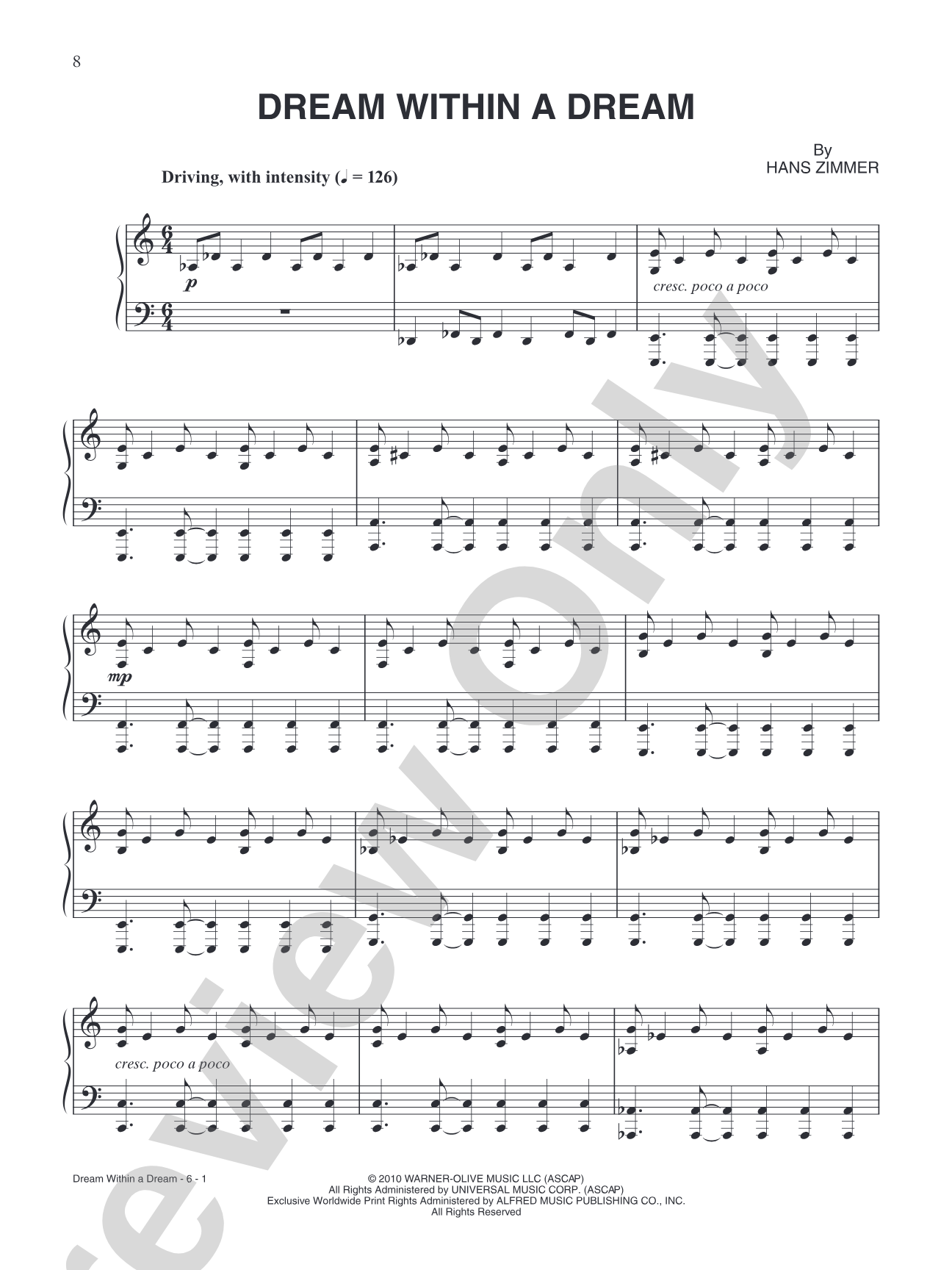
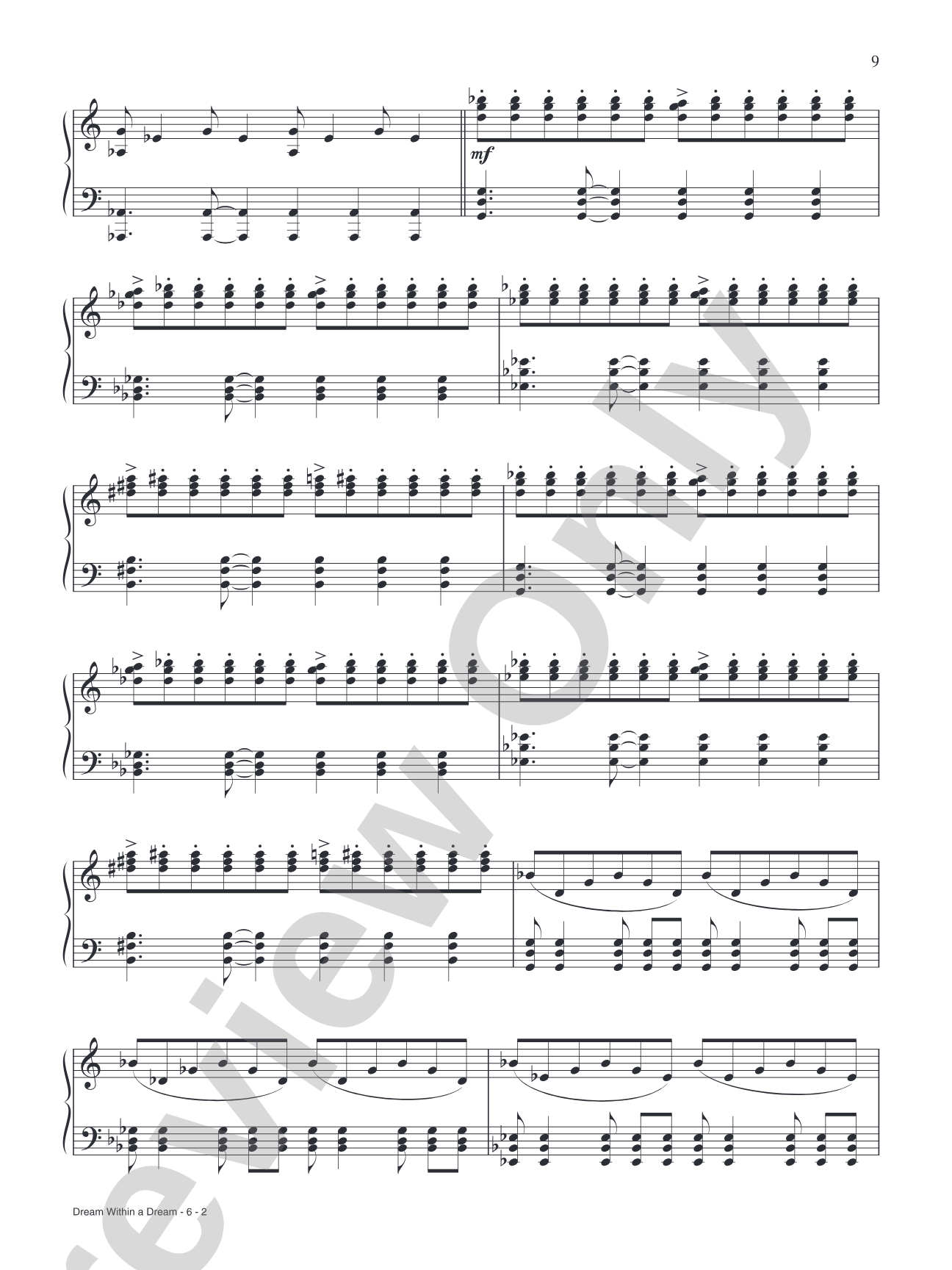
Hans Zimmer has shaped modern film music through innovative orchestration and electronic integration. His work across genres—from intimate character studies to large-scale action sequences—demonstrates compositional fluency that translates effectively to solo piano arrangements.
Why we love this
These arrangements capture the cinematic tension and emotional depth of Zimmer's original orchestrations without requiring an ensemble. The four-movement structure gives pianists substantive material that rewards both technical control and interpretive maturity, making it ideal for recitals or competitions at the intermediate level.
What to expect
Time and urgency collapse into each other. These pieces balance introspective, floating passages with driving, clock-like rhythms that propel forward even as they seem to spiral inward. The overall arc moves from fractured dreams to something like resolution, though never quite certainty.
Who it's for
Intermediate to late intermediate pianists seeking contemporary material with cinematic scope and emotional substance. Musicians preparing for recitals, competitions, or portfolio recordings will find the collection offers both technical challenge and strong narrative arc.
How to get the most out of it
Maintain clarity in the left hand during the rapid accompaniment figures, particularly in the faster sections, to preserve the propulsive energy without muddying the texture.
Pay attention to dynamic shaping across longer phrases; these pieces build cumulative tension, so resist the urge to settle into a single volume level.
Use the recorded accompaniment as a reference for tempo relationships between movements, as the soundtrack's timing influences how effective the transitions feel.
Experiment with pedal placement in the ambient, sustained passages to enhance resonance while keeping harmonic changes distinct.
How to use it
These four movements work as a self-contained suite or can be programmed individually to anchor a recital themed around contemporary film music or emotional storytelling. Their moderate length and substantial musicality make them suitable for undergraduate student recitals or as a bridge between classical and modern repertoire.
Skills your students will build
Managing layered textures with independent hand parts
Sustaining focus through rhythmic patterns that repeat and mutate
Controlling tempo flexibility and rubato within electronic-inspired accompaniment figures
Building cumulative tension across extended passages
Translating orchestral color and orchestration concepts to the solo piano
You May Also Like
Scan to Complete Your Purchase
Use your phone's camera to scan the code below
You'll log in on your phone and the order will be added to your account