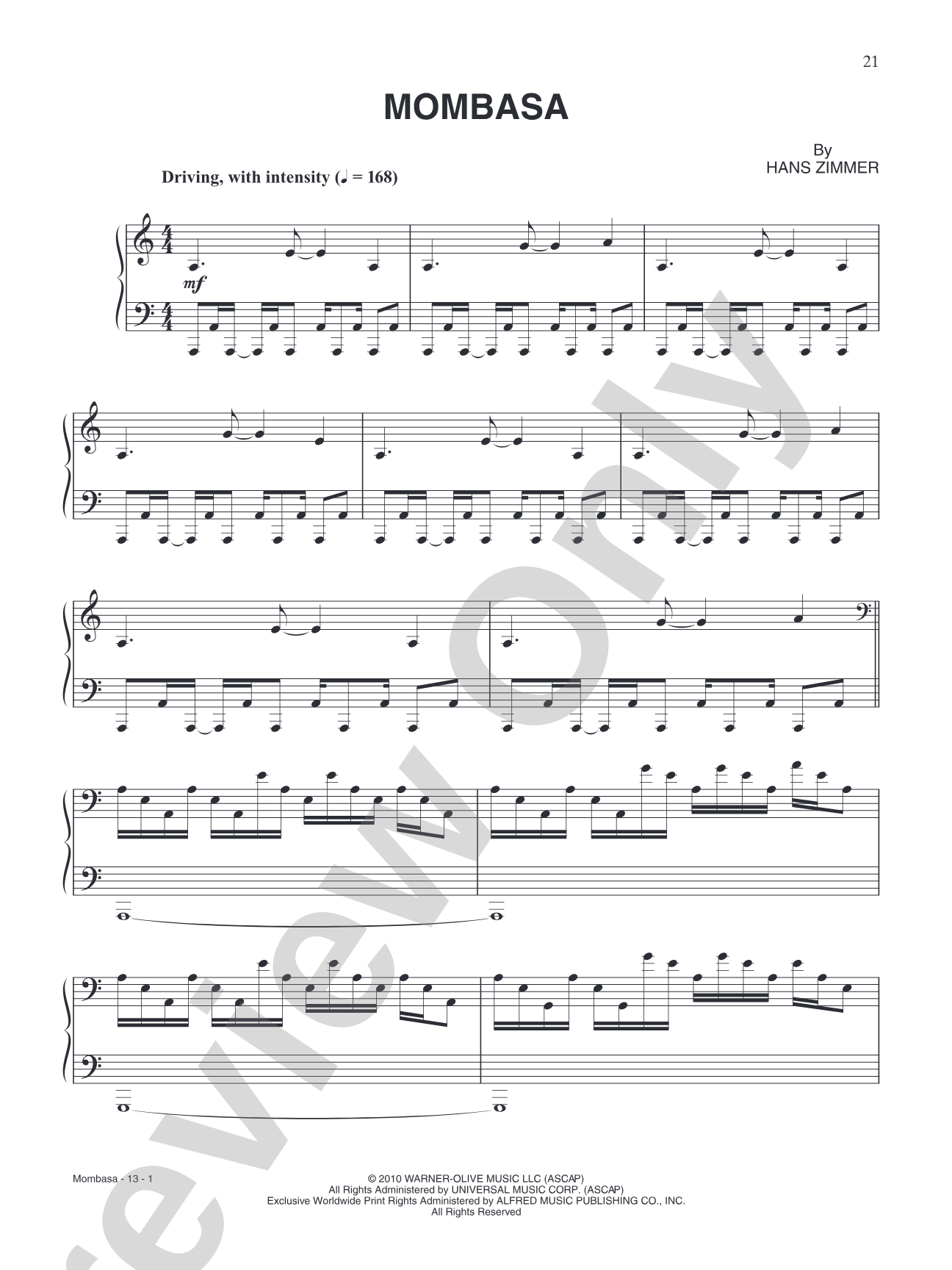
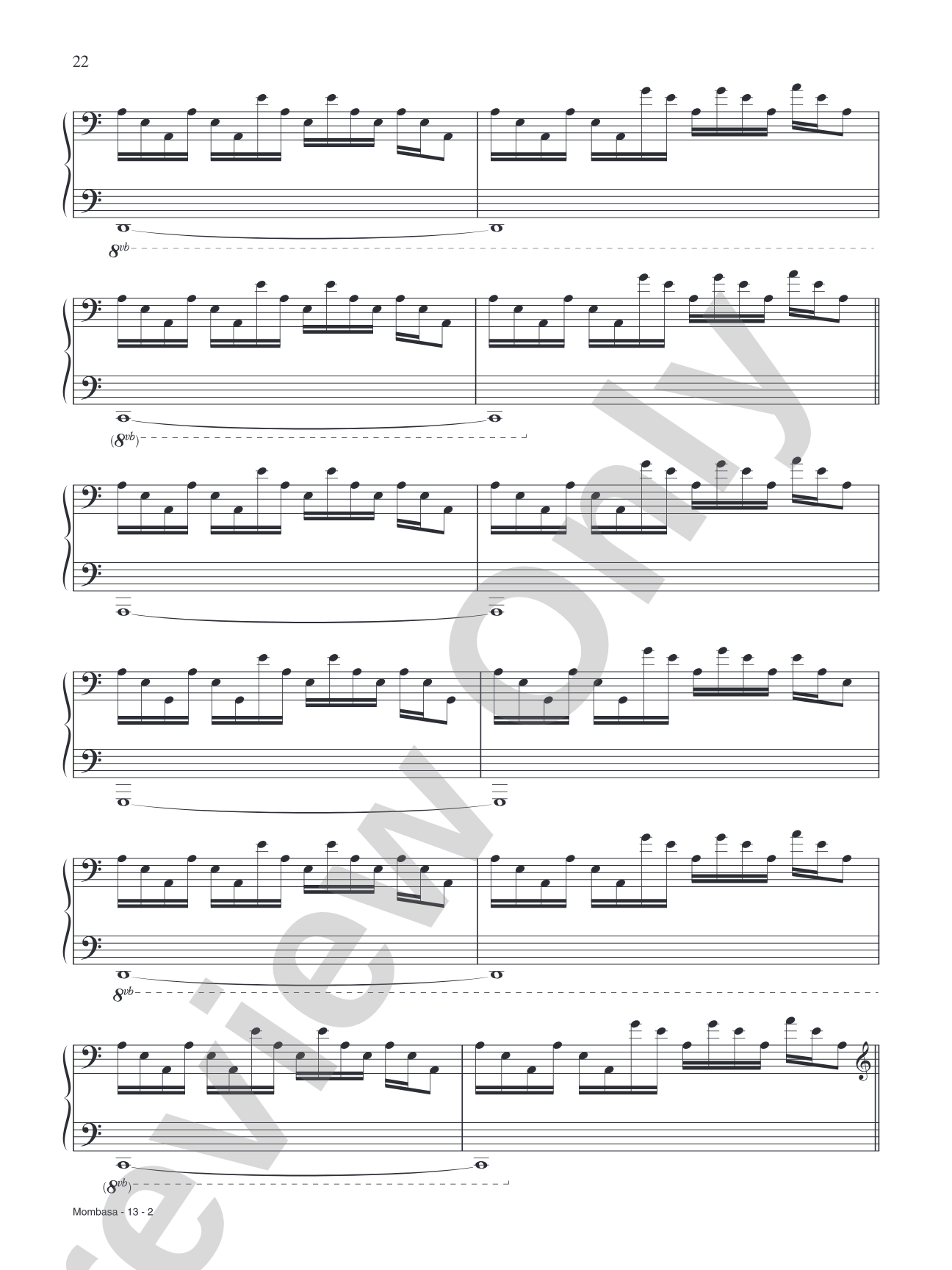
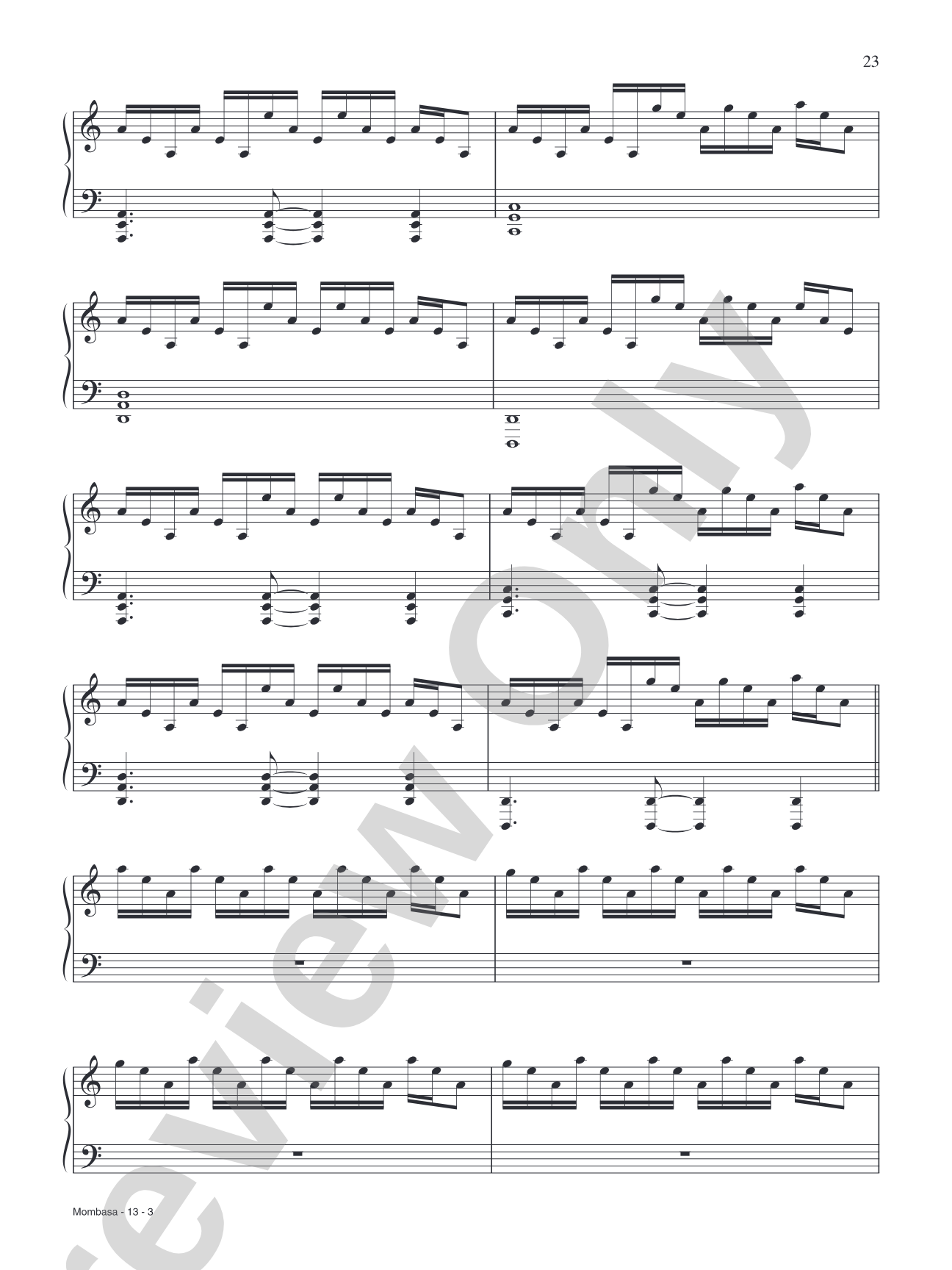
Hans Zimmer stands among the most prolific film composers of the past four decades, having shaped the soundscapes of everything from action blockbusters to intimate character studies. His approach to orchestration and harmonic language draws from both classical training and experimental sound design, making his scores singularly recognizable while remaining deeply musical.
Why we love this
This collection captures some of Zimmer's most architecturally interesting writing for piano, where repetitive figures build tension and harmonic shifts create emotional weight without relying on dense orchestration. Pianists encounter sophisticated rhythmic patterns and layered accompaniment textures that reward careful listening and control, making these pieces substantially rewarding to perform despite their accessibility.
What to expect
Tense, propulsive, and atmospheric all at once. The music trades in repetition and subtle harmonic shifts to create mounting unease and introspection, evoking spaces where time feels distorted and reality is questioned. These are pieces that live inside the listener's mind rather than demanding attention through sheer volume.
Who it's for
Intermediate and late intermediate pianists looking for contemporary film music that challenges technique without requiring virtuosic display. These pieces offer excellent repertoire for students working on rhythmic control, pedal management, and translating cinematic drama into instrumental terms.
How to get the most out of it
Maintain absolute clarity in the repeated figures that anchor each piece; even slight unevenness will undermine the hypnotic effect Zimmer builds from minimalist patterns.
Balance left and right hand independence carefully, especially where accompanimental figures in one hand need to stay steady while the other carries melodic material or rhythmic punctuation.
Resist the urge to rush during building passages; the power comes from sustained tension, not acceleration.
How to use it
Program these pieces for recitals exploring contemporary film scoring or thematic concerts on architecture and design in music. They also work beautifully as substantial encore pieces or as bridging material between classical and modern repertoire in a mixed program.
Skills your students will build
Maintaining rhythmic precision in repetitive figures across both hands
Controlling dynamic contrast and tension without excessive pedal reliance
Balancing independence between hands in minimalist textures
Interpreting harmonic color shifts in modern tonal writing
You May Also Like
Scan to Complete Your Purchase
Use your phone's camera to scan the code below
You'll log in on your phone and the order will be added to your account