

Tiger! Tiger!: SSA Choral Octavo
Words by William Blake, music by Katie O'Connor-Ballantyne
Item: 00-PO-0006636
$2.05
Minimum order quantity: 20 copies
Pickup currently not available
Description
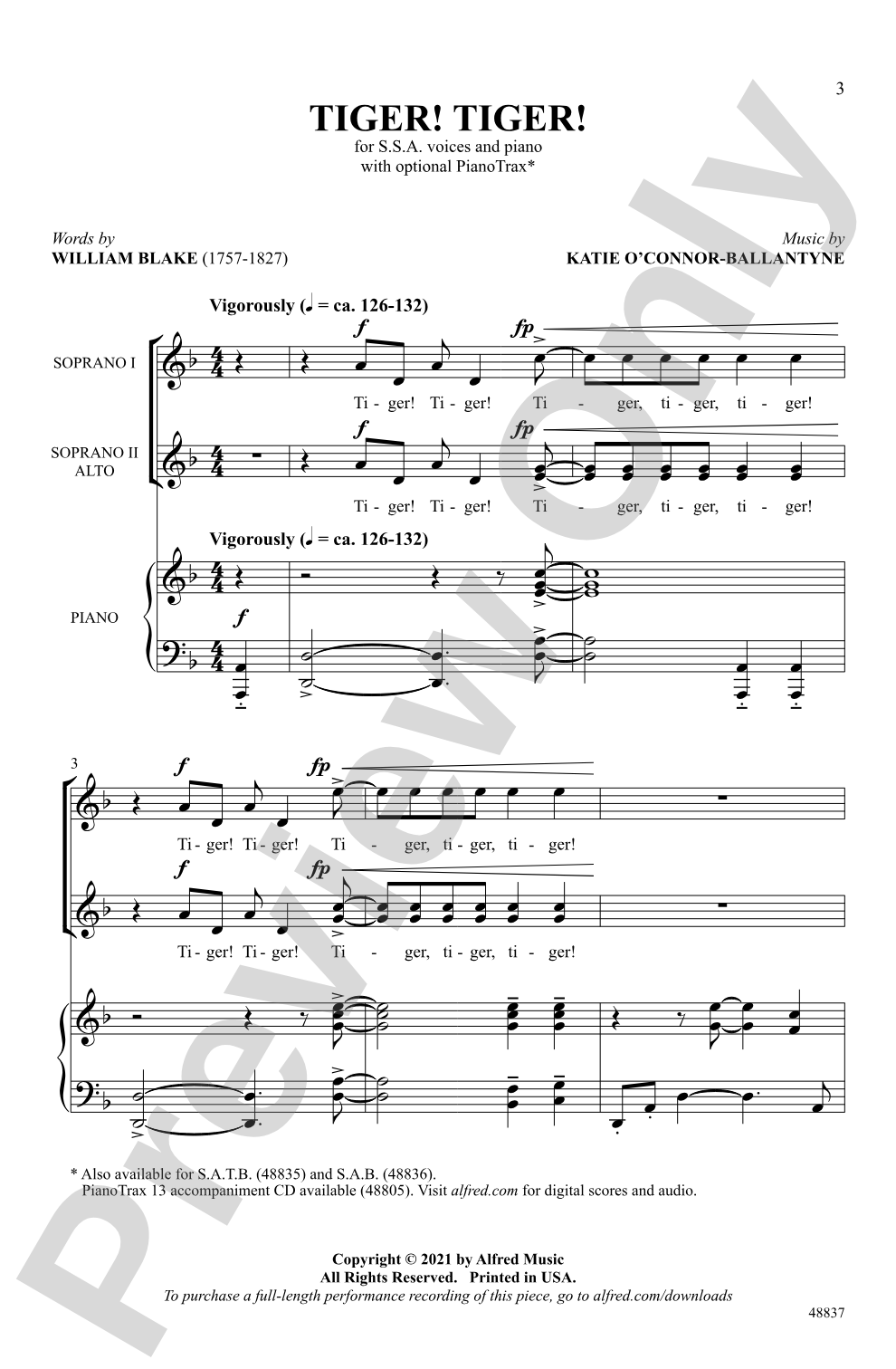
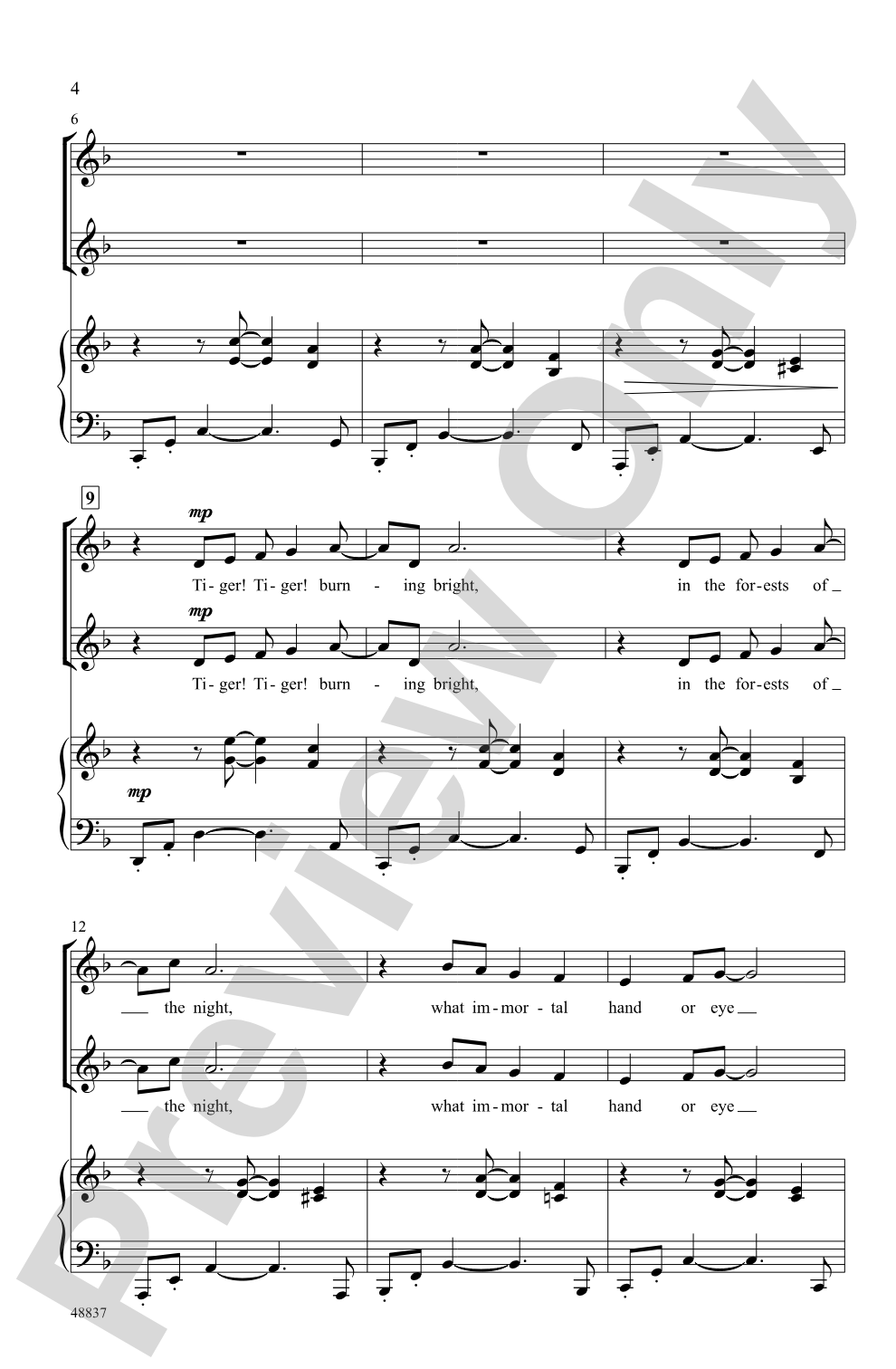
Captivating. Adventurous. With just a hint of danger. This feisty minor key setting of William Blake's gripping poem immediately garners attention with a ferocious fanfare. Then a jaunty, detached piano motive (which later becomes a choral counterline), leads to contemporary choral writing firmly rooted in traditional techniques. Angular intervals and syncopated agitation provide energy, vim, and vigor. Guaranteed to be a highlight of rehearsals, concerts, contests, and festivals. Visit to download a free choral rehearsal guide: www.alfred.com/tigerrehearsalguide This title is available in MakeMusic Cloud.


Tiger! Tiger!: SSA Choral Octavo isn't in MakeMusic Cloud just yet...but it could be. Let us know you'd like to see it, and you'll help shape what comes next. In the meantime, start a free trial and dive into thousands of interactive titles your students can play along with today.
Request This Title
Tell us you want it.
Start Your Free Trial
Explore everything that's ready to play right now.
Sample Audio
1
Audio File
--:--
0:00
0:00
Sample Video
Additional Details
Series:
Alfred Choral Designs
Publisher:
Alfred Music
Page Count:
12
SKU:
00-PO-0006636
More about this title
About the Composer: Katie O'Connor-Ballantyne

Katie O'Connor-Ballantyne brings decades of teaching experience across every age and musical level to her work as a composer and educator. She has shaped musicians from elementary general music classrooms through graduate aural skills seminars, and her pedagogical insights inform every piece she writes. Her published works appear through Alfred Music and Heritage Music Press, while her books Harmony Handbook and Finding Your Teacher Voice reflect her commitment to music teacher development.
Beyond the page, O'Connor-Ballantyne serves as a guest conductor, festival adjudicator, and clinician at music education conferences nationwide. She holds degrees from Ithaca College (BM in Music Education and Vocal Performance) and the University of Limerick (MA in Chant and Ritual Song), and previously held faculty positions at Ithaca College's School of Music and the directorship of the Ithaca Children and Youth Chorus.
Why we love this
O'Connor-Ballantyne's setting of Blake's poem cuts through the typical Blake arrangements with genuine bite. The opening fanfare immediately signals that this is not a meditative treatment; instead, she harnesses syncopation, angular melodic writing, and a minor key framework to capture the predatory intensity of the text itself. Singers will fight for the chance to perform it, and audiences will remember it long after the final chord.
What to expect
Ferocious and lithe all at once. The piece prowls rather than charges, with a muscular minor key framework that feels dangerous without becoming heavy. Blake's fierce imagery translates into music that is clever and angular, full of syncopation that snaps and pops, yet always rooted in genuine compositional craft.
Who it's for
This piece belongs in the hands of treble choirs with solid rhythmic foundations and comfort with contemporary harmonic language. It works equally well for high school or college ensembles, and younger singers with strong pitch control and ensemble awareness will thrive on the angular intervallic writing and syncopated energy.
How to get the most out of it
- Attack the opening fanfare with unified precision and full voice; this gesture sets the entire character of the piece and demands ensemble commitment from measure one.
- Shape the jaunty piano motive with clarity and lightness in the early sections, then reclaim that same rhythmic profile when it transfers to the choral counterline so the transition feels inevitable rather than jarring.
- Lean into the syncopated passages with rhythmic confidence; these moments should feel agitated and propulsive, not tentative or rushed.
- Use the recorded accompaniment to lock in the syncopation and dynamic contours, but rehearse sections a cappella so singers develop independence from the piano's rhythmic grid.
How to use it
Open a concert with this piece to command immediate attention, or place it in the second half as a dramatic shift in energy and tone. Its festival-ready brilliance makes it an excellent contest choice; the combination of literary substance, distinctive musical voice, and performance appeal virtually guarantees strong adjudication feedback.
Skills your students will build
- Reading syncopated rhythms in a minor key context
- Singing angular melodic lines with stylistic precision
- Balancing independence as individual voice parts while maintaining ensemble blend
- Understanding how text imagery shapes compositional choice and performance interpretation
- Sustaining rhythmic integrity when the accompaniment shifts between its own material and choral counterlines