

Tiger! Tiger!: SAB Choral Octavo
Words by William Blake, music by Katie O'Connor-Ballantyne
Item: 00-PO-0006635
$2.05
Minimum order quantity: 20 copies
Pickup currently not available
Description
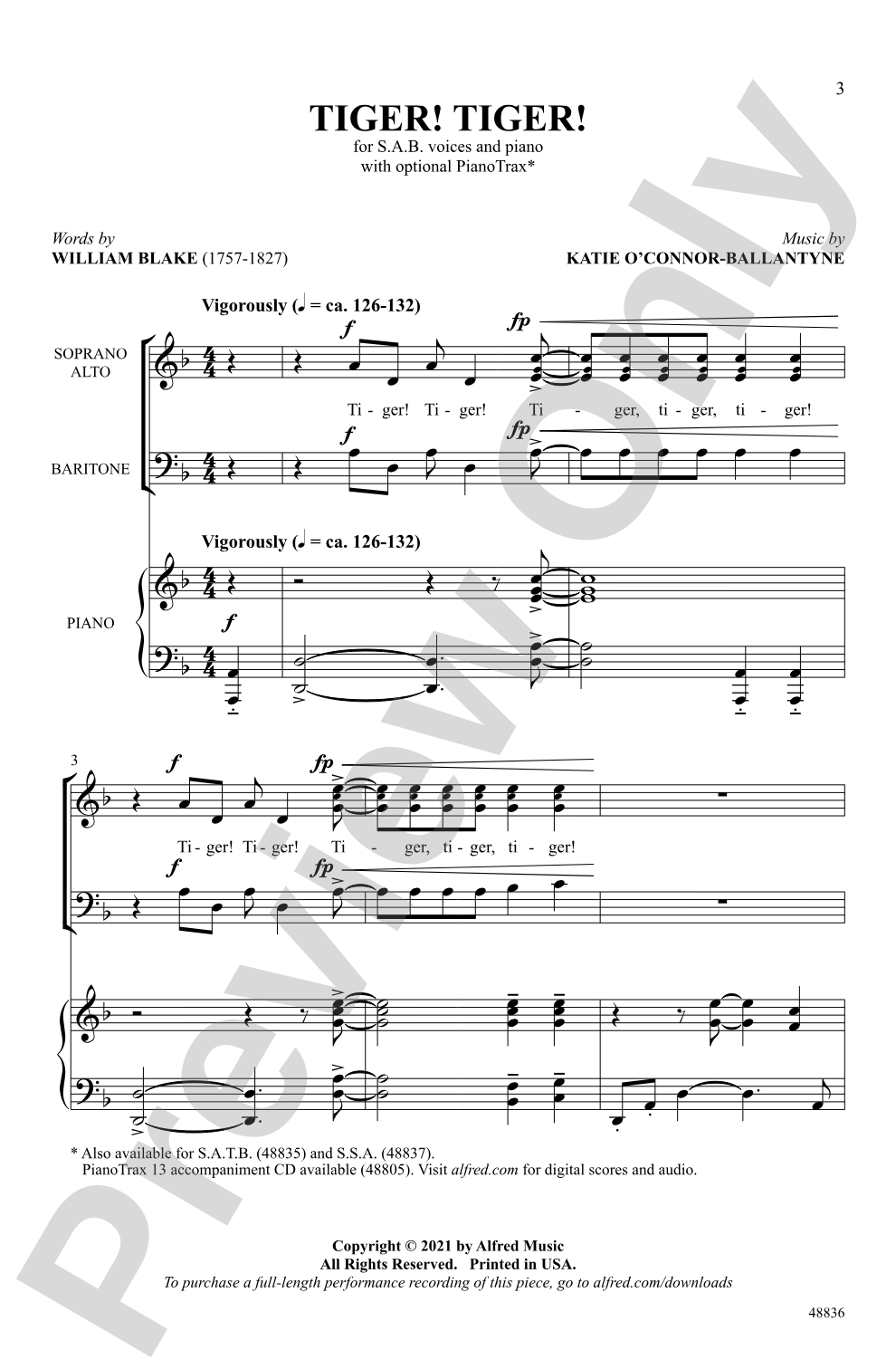
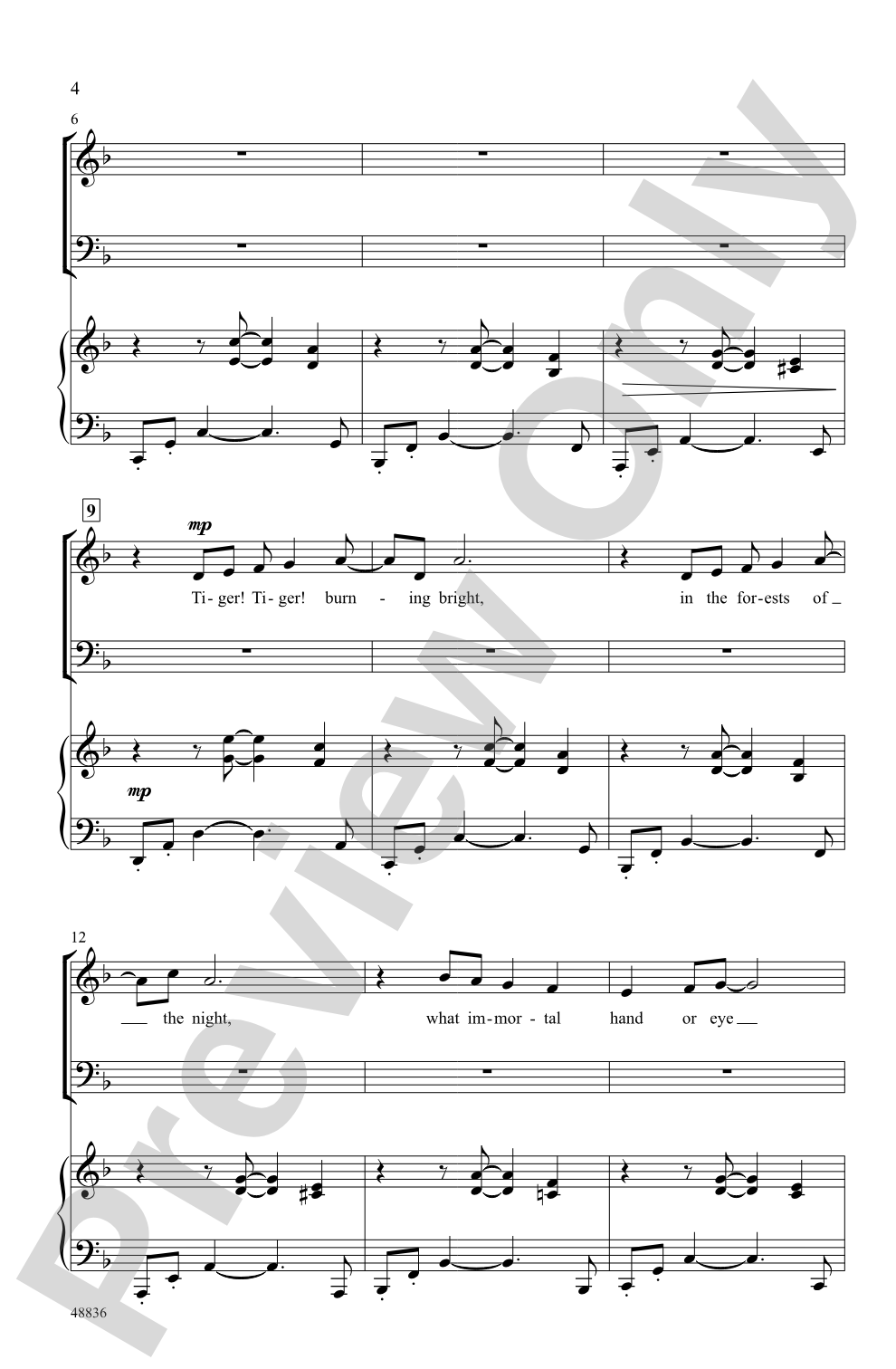
Captivating. Adventurous. With just a hint of danger. This feisty minor key setting of William Blake's gripping poem immediately garners attention with a ferocious fanfare. Then a jaunty, detached piano motive (which later becomes a choral counterline), leads to contemporary choral writing firmly rooted in traditional techniques. Angular intervals and syncopated agitation provide energy, vim, and vigor. Guaranteed to be a highlight of rehearsals, concerts, contests, and festivals. Visit to download a free choral rehearsal guide: www.alfred.com/tigerrehearsalguide This title is available in MakeMusic Cloud.


Tiger! Tiger!: SAB Choral Octavo isn't in MakeMusic Cloud just yet...but it could be. Let us know you'd like to see it, and you'll help shape what comes next. In the meantime, start a free trial and dive into thousands of interactive titles your students can play along with today.
Request This Title
Tell us you want it.
Start Your Free Trial
Explore everything that's ready to play right now.
Sample Audio
1
Audio File
--:--
0:00
0:00
Sample Video
Additional Details
Series:
Alfred Choral Designs
Publisher:
Alfred Music
Page Count:
12
SKU:
00-PO-0006635
More about this title
About the Composer: Katie O'Connor-Ballantyne

Katie O'Connor-Ballantyne brings deep pedagogical insight to her choral compositions, shaped by teaching across age groups and skill levels. She has held positions as an adjunct professor at Ithaca College's School of Music and Artistic Director of the Ithaca Children and Youth Chorus, and continues to work as a guest conductor, adjudicator, and clinician at festivals and conferences nationwide. Her published works appear through Alfred Music and Heritage Music Press.
Beyond composing, O'Connor-Ballantyne is author of Harmony Handbook and Finding Your Teacher Voice, resources that reflect her commitment to music education and conductor development. She earned her BM in Music Education and Vocal Performance from Ithaca College and an MA in Chant and Ritual Song from the Irish World Academy of Music & Dance at the University of Limerick.
Why we love this
The opening fanfare arrests attention immediately, signaling to your singers that this poem demands their full energy and commitment. O'Connor-Ballantyne balances visceral modern writing (angular intervals, syncopated rhythms, a detached piano motive that becomes choral counterline) with traditional harmonic and structural grounding, giving students access points without sacrificing artistic sophistication. It's the kind of piece that sticks with singers long after the concert ends.
What to expect
Fierce and restless, with a dark undercurrent running through Blake's hypnotic questions. The minor key, syncopation, and angular melodic leaps create constant agitation, while the piano's jaunty detachment suggests wit and control beneath the surface danger. It's a piece that moves singers from their seats and leaves audiences unsettled in the best possible way.
Who it's for
This octavo works for choirs of all ages that can navigate contemporary harmonies and syncopated rhythms with musicality. SAB voicing makes it accessible to mixed ensembles at the middle school level and up, and the literary content appeals to singers who engage with poetry and its musical interpretation.
How to get the most out of it
- Lean into the minor key and syncopated rhythms to establish the poem's predatory tension early. Rehearsal time spent on rhythmic precision pays dividends in the ferocious opening and maintains momentum through the agitated passages.
- Shape the jaunty piano motive with precise articulation and clarity so singers can hear it as a distinct textural element before they encounter it as a choral counterline. This listening work strengthens ensemble awareness.
- Balance the angular intervals with careful attention to intonation in the ensemble. The contemporary writing demands intentional tuning; younger singers benefit from sectional rehearsals that isolate these passages.
- Download the free choral rehearsal guide from Alfred Music to access structured preparation tips and context for William Blake's poem before beginning score study with your singers.
How to use it
Program this as a concert opener or as part of a thematic set exploring nature, poetry, or contemporary perspectives on classical texts. Its energy and theatrical character make it a standout contest or festival selection, and the dramatic trajectory from fanfare to climax provides excellent pacing when sandwiched between gentler repertoire.
Skills your students will build
- Reading angular intervals and contemporary melodic writing
- Executing syncopated rhythms with precision and musicality
- Blending choral counterlines with piano accompaniment
- Interpreting literary text through musical characterization
- Sustaining intensity and focus through minor-key harmonic language