
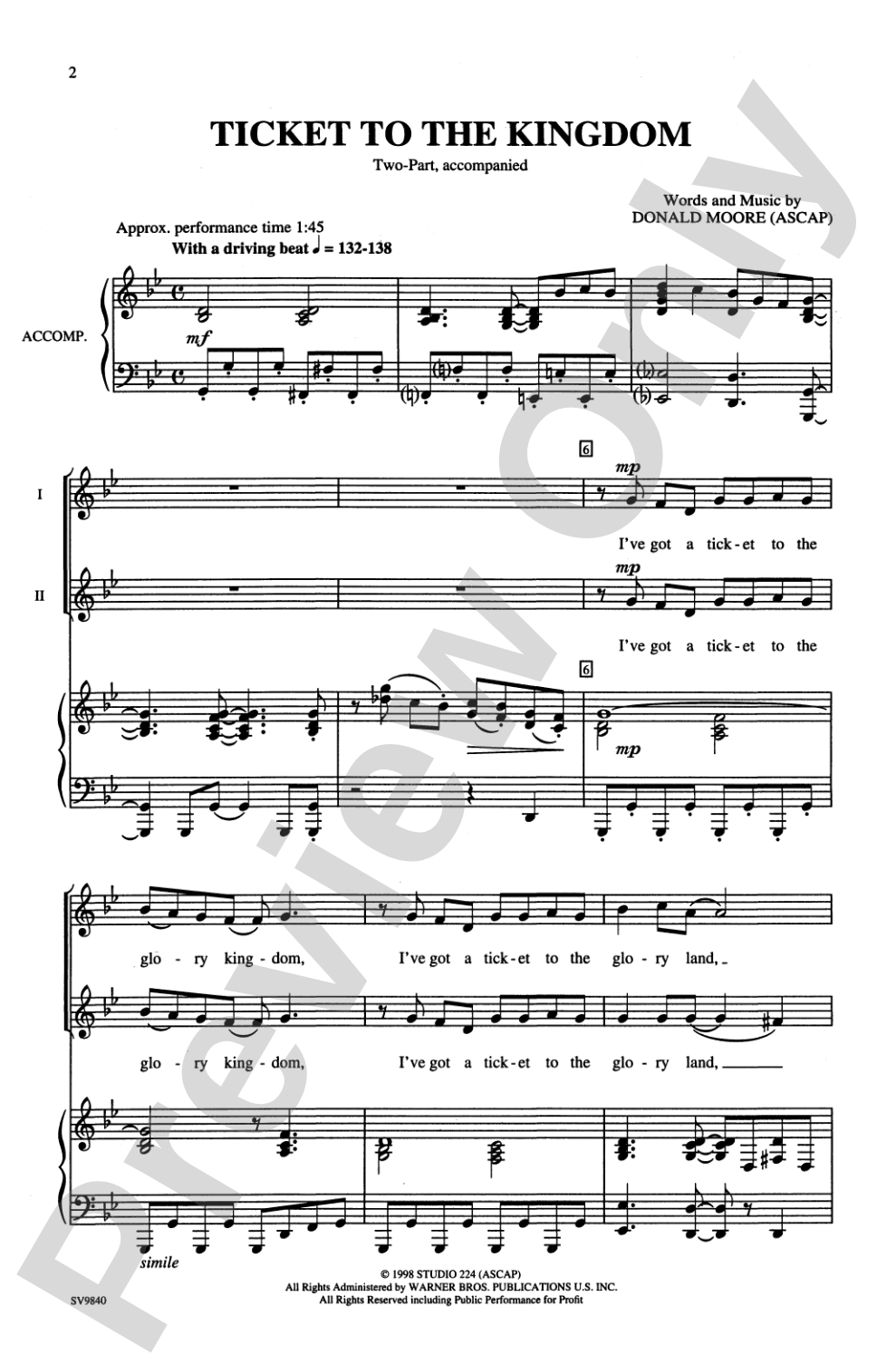
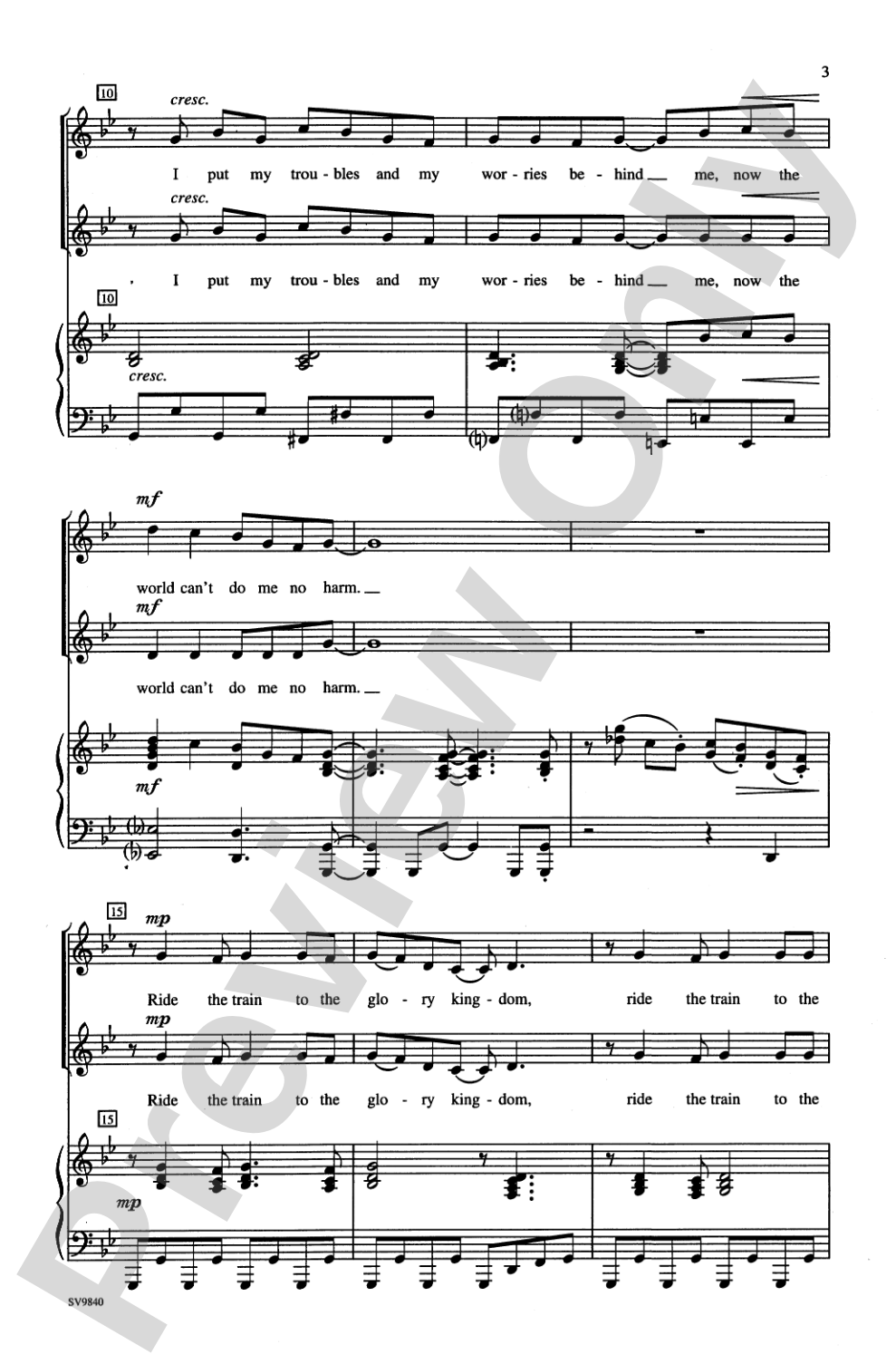

Ticket to the Kingdom: 2-Part Choral Octavo
Words and music by Donald Moore
Item: 00-PO-0005287
$2.25
Minimum order quantity: 20 copies
Pickup currently not available
Related Items
Ticket to the Kingdom: SATB Choral Octavo |
$2.25
|
View | |
Ticket to the Kingdom: SAB Choral Octavo |
$2.25
|
View | |
Ticket to the Kingdom: SSA Choral Octavo |
$2.25
|
View | |
Ticket to the Kingdom: TTB Choral Octavo |
$2.25
|
View | |
Ticket to the Kingdom: 3-Part Mixed Choral Octavo |
$2.25
|
View | |
Ticket to the Kingdom: SATB Choral Octavo |
$2.25
|
View | |
Ticket to the Kingdom: SAB Choral Octavo |
$2.25
|
View | |
Ticket to the Kingdom: SSA Choral Octavo |
$2.25
|
View | |
Ticket to the Kingdom: TTB Choral Octavo |
$2.25
|
View | |
Ticket to the Kingdom: 3-Part Mixed Choral Octavo |
$2.25
|
View | |
Ticket to the Kingdom: 2-Part Choral Octavo |
$2.25
|
View |
Description
Three new voicings (Three-Part Mixed, Two-Part, and TTB) of this classic Don Moore piece now bring this popular spiritual within reach of choirs of all ages and levels. 'Put your troubles behind you' - add this one to your library today!


Ticket to the Kingdom: 2-Part Choral Octavo isn't in MakeMusic Cloud just yet...but it could be. Let us know you'd like to see it, and you'll help shape what comes next. In the meantime, start a free trial and dive into thousands of interactive titles your students can play along with today.
Request This Title
Tell us you want it.
Start Your Free Trial
Explore everything that's ready to play right now.
Sample Audio
No sample audio found.
Sample Video
No sample videos found.
Additional Details
Series:
Alfred Archive Edition: Studio PR Catalog
Publisher:
Alfred Music
Page Count:
8
SKU:
00-PO-0005287
More about this title
About the Composer: Donald Moore

Donald Moore earned a Bachelor of Music in organ performance and a Master of Arts in Teaching from Kent State University. He serves as Organist-Choirmaster at Pilgrim United Church of Christ in Cuyahoga Falls, Ohio, and has established himself as a prolific voice in American choral music with over 500 compositions published across sacred, secular, educational, and pop genres.
Moore's works appear regularly at state and national music festivals and competitions. He is a seventeen-time recipient of the ASCAP Composers Standard Award and was recognized by the American Choral Directors Association as one of 400 historically significant American choral composers. His catalog spans choral octavos, organ and piano works, and eight educational books across major publishers including Alfred Music, Hal Leonard, and Heritage Music Press.
Why we love this
This two-part arrangement opens the spiritual to younger singers and developing choirs without sacrificing the song's soulful character. Moore's accessible voicing preserves the emotional lift that makes this piece beloved in the repertoire while offering genuine musical substance that adult singers will also value.
What to expect
The arrangement captures the spiritual's message of release and resilience through a melody that feels both intimate and communal. Two-part writing creates clarity and directness, allowing singers to focus on the honest emotional content that makes this piece resonate.
Who it's for
Young choirs, treble-focused ensembles, and mixed groups working at earlier developmental levels will find this voicing accessible without feeling simplified. It works equally well for community and school choirs seeking approachable spiritual literature with authentic musical roots.
How to get the most out of it
- Shape the melody with warmth and conviction from the opening; the two-part writing relies on strong vocal line confidence to carry the spiritual's message.
- Balance the parts so that the lower voices anchor the harmony without overshadowing the top line.
- Let the text guide your phrasing and dynamics rather than imposing artificial shapes; spirituals breathe through language and imagery.
- Support the choir's tone with thoughtful pedal point or bass line work if you have instrumental accompaniment available.
How to use it
Program this alongside other Moore spirituals or sacred works to create a cohesive set exploring African American musical tradition. It pairs naturally with concert programs addressing themes of hope, resilience, or faith across cultural traditions.
Skills your students will build
- Singing in two-part harmony with clear voice independence
- Interpreting spiritual style and phrasing conventions
- Building sustained tone and legit vocal production through longer melodic lines
- Understanding text-driven interpretation in sacred music