
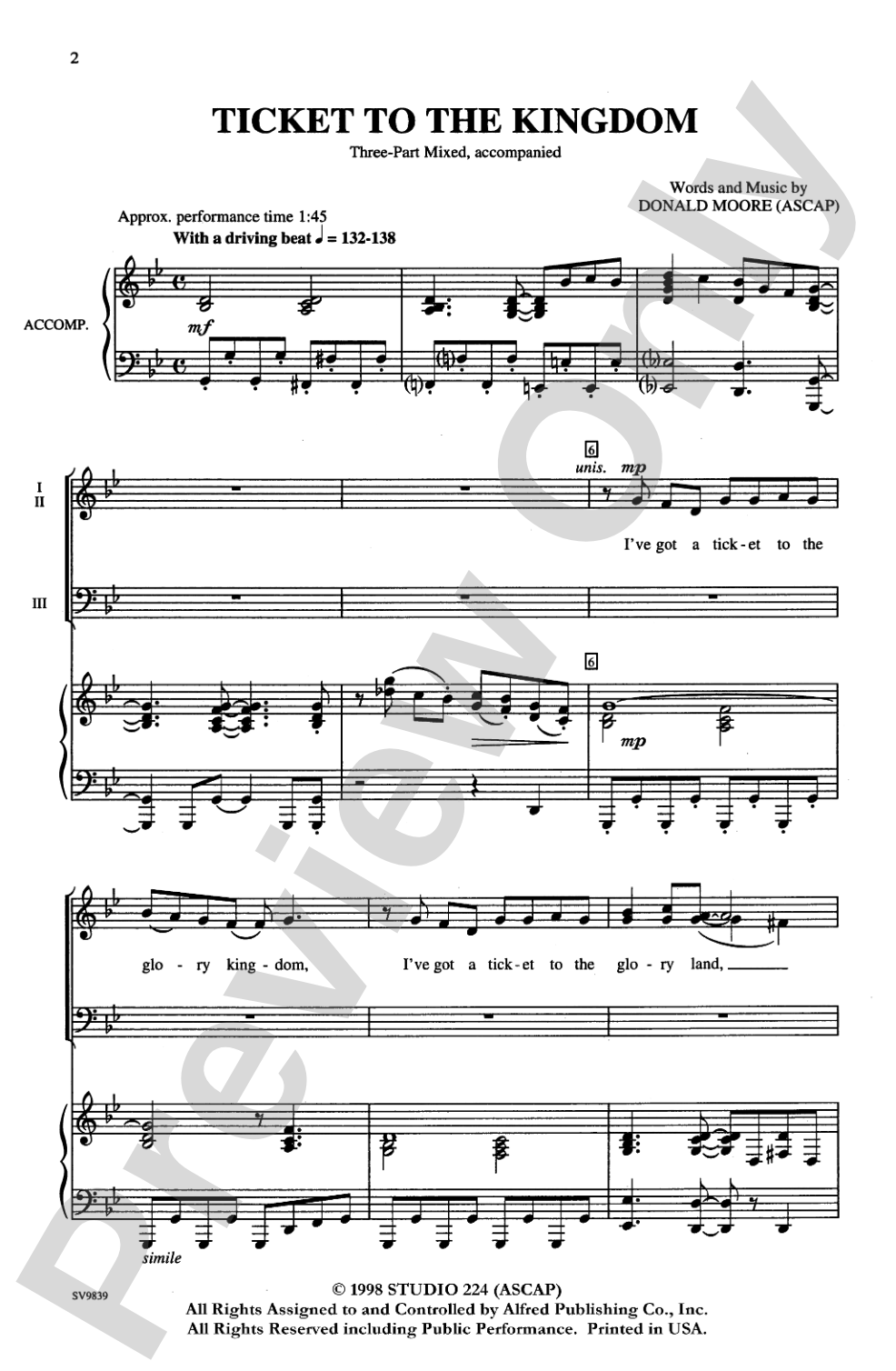
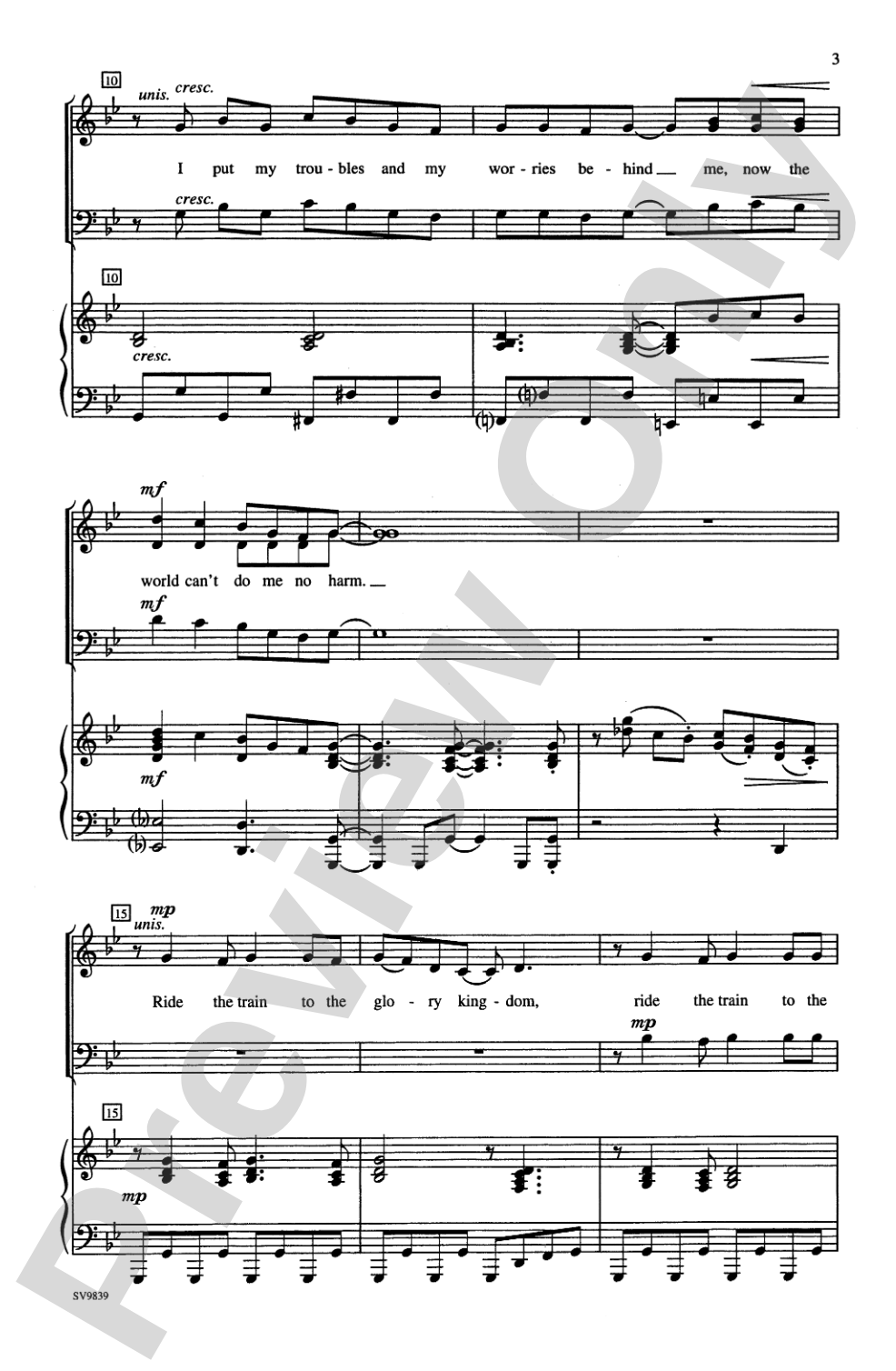

Ticket to the Kingdom: 3-Part Mixed Choral Octavo
Words and music by Donald Moore
Item: 00-PO-0002768
$2.25
Minimum order quantity: 20 copies
Pickup currently not available
Related Items
Ticket to the Kingdom: SATB Choral Octavo |
$2.25
|
View | |
Ticket to the Kingdom: SAB Choral Octavo |
$2.25
|
View | |
Ticket to the Kingdom: SSA Choral Octavo |
$2.25
|
View | |
Ticket to the Kingdom: TTB Choral Octavo |
$2.25
|
View | |
Ticket to the Kingdom: 2-Part Choral Octavo |
$2.25
|
View | |
Ticket to the Kingdom: SATB Choral Octavo |
$2.25
|
View | |
Ticket to the Kingdom: SAB Choral Octavo |
$2.25
|
View | |
Ticket to the Kingdom: SSA Choral Octavo |
$2.25
|
View | |
Ticket to the Kingdom: TTB Choral Octavo |
$2.25
|
View | |
Ticket to the Kingdom: 3-Part Mixed Choral Octavo |
$2.25
|
View | |
Ticket to the Kingdom: 2-Part Choral Octavo |
$2.25
|
View |
Description
Three new voicings (Three-Part Mixed, Two-Part, and TTB) of this classic Don Moore piece now bring this popular spiritual within reach of choirs of all ages and levels. 'Put your troubles behind you' - add this one to your library today!


Ticket to the Kingdom: 3-Part Mixed Choral Octavo isn't in MakeMusic Cloud just yet...but it could be. Let us know you'd like to see it, and you'll help shape what comes next. In the meantime, start a free trial and dive into thousands of interactive titles your students can play along with today.
Request This Title
Tell us you want it.
Start Your Free Trial
Explore everything that's ready to play right now.
Sample Audio
No sample audio found.
Sample Video
No sample videos found.
Additional Details
Series:
Alfred Archive Edition: Studio PR Catalog
Publisher:
Alfred Music
Page Count:
8
SKU:
00-PO-0002768
More about this title
About the Composer: Donald Moore
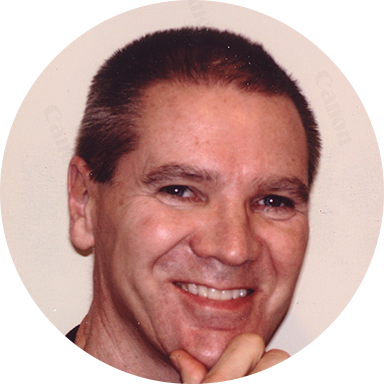
Donald Moore earned his Bachelor of Music in organ performance and Master of Arts in Teaching from Kent State University. He has served as Organist-Choirmaster at Pilgrim United Church of Christ in Cuyahoga Falls, Ohio, and built a prolific career as a composer, arranger, and author with more than 500 works published across sacred, secular, and educational choral repertoire as well as organ and piano compositions.
Moore's music appears regularly on state contest and festival programs and has been performed at state, regional, national, and international conventions. He is a seventeen-time recipient of the ASCAP Composers Standard Award and was recognized by the American Choral Directors Association as one of 400 composers of significance in American choral music history.
Why we love this
Moore's gift for writing spirituals that resonate across age and ability levels shines here. The three voicings (SAB, two-part, and TTB) mean you can program this piece with middle school, high school, or mixed-voice ensembles without rewrites or compromises. It's the kind of trusted spiritual that audiences recognize and singers enjoy bringing to life.
What to expect
There's quiet strength in this spiritual, a song born from resilience and the reassurance that burdens can be set aside. The three-part voicing creates warmth without complexity, allowing the message to carry clearly while the harmonic foundation keeps singers grounded.
Who it's for
Three-part mixed choirs at middle school, high school, and community levels will find this accessible and rewarding. Directors seeking a spiritual that works across multiple voicings for festival or contest programming will appreciate the flexibility these arrangements provide.
How to get the most out of it
- Balance the vocal lines carefully in the three-part texture; the middle voice often carries important harmonic color that shouldn't disappear beneath the outer voices.
- Let the spiritual's inherent rhythmic confidence guide your tempo work; avoid over-conducting and allow the natural swing of the phrase to emerge.
- Shape the message 'put your troubles behind you' through dynamic contrast rather than tempo changes; build intensity through layered voice entrances and release into moments of simplicity.
How to use it
This work fits naturally into a choral concert that explores the spiritual tradition, whether programmed alongside other sacred music or as a standalone moment of reflection. Its contest-ready craftsmanship and familiar emotional terrain make it ideal for festival repertoire, and the multiple voicings mean you can return to it year after year with different choirs.
Skills your students will build
- Reading three-part mixed voicing with independent line movement
- Interpreting spiritual traditions with rhythmic integrity and cultural awareness
- Balancing harmonic layers to support vocal clarity
- Sustaining lyrical phrasing across longer melodic lines