

Think: 2-Part Choral Octavo
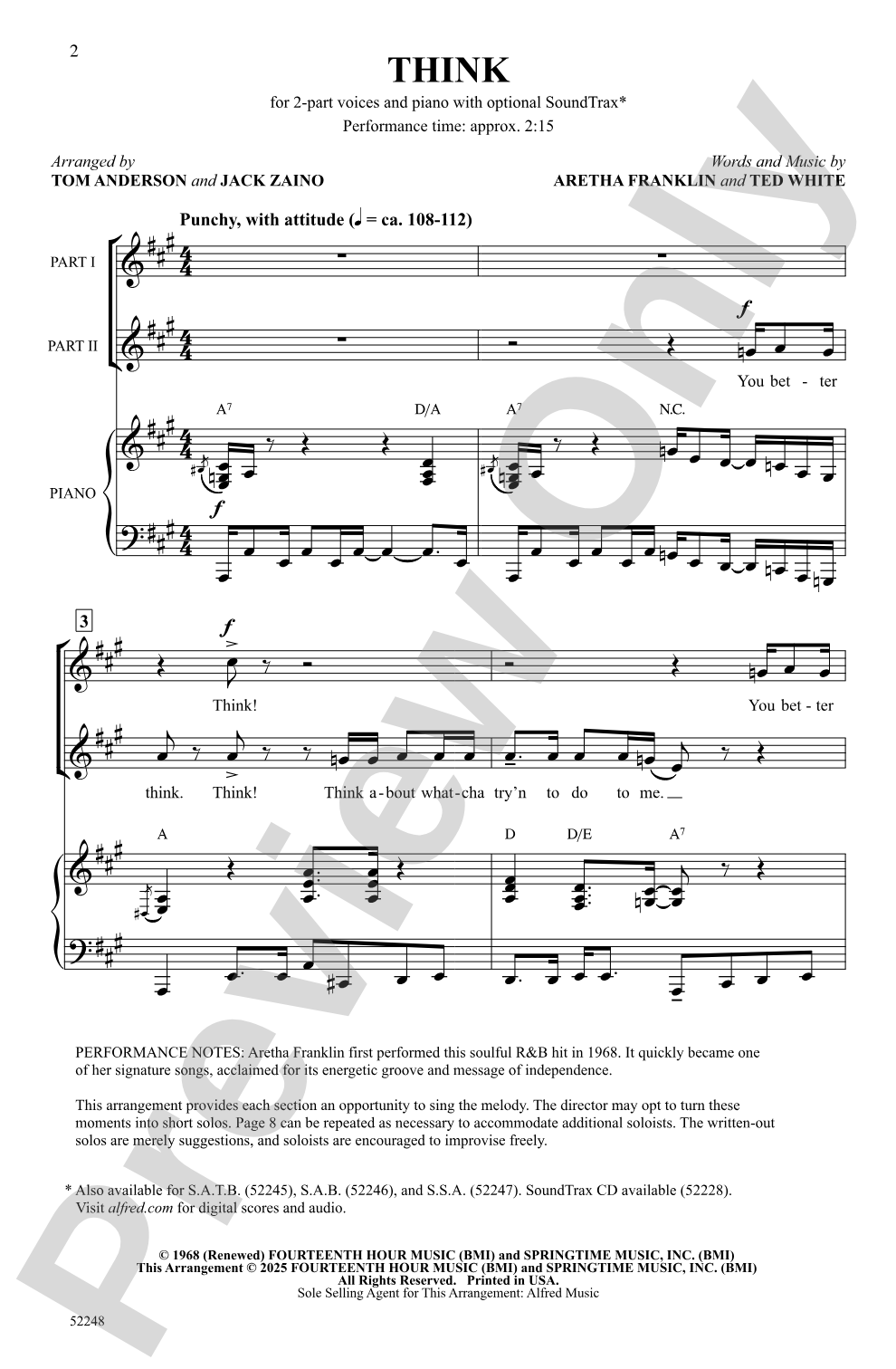
Words and music by Aretha Franklin and Ted White / arr. Tom Anderson and Jack Zaino
Item: 00-PO-0007605
$2.35
Minimum order quantity: 20 copies
One moment…
Related Items
Think: SATB Choral Octavo |
$2.35
|
View | |
Think: SAB Choral Octavo |
$2.35
|
View | |
Think: SSA Choral Octavo |
$2.35
|
View | |
Think: SoundTrax Digital Download |
$29.99
|
View | |
Think: SATB Choral Octavo |
$2.35
|
View | |
Think: SAB Choral Octavo |
$2.35
|
View | |
Think: SSA Choral Octavo |
$2.35
|
View | |
Think: 2-Part Choral Octavo |
$2.35
|
View | |
Think: Choral SoundTrax CD |
$29.99
|
View |
Description
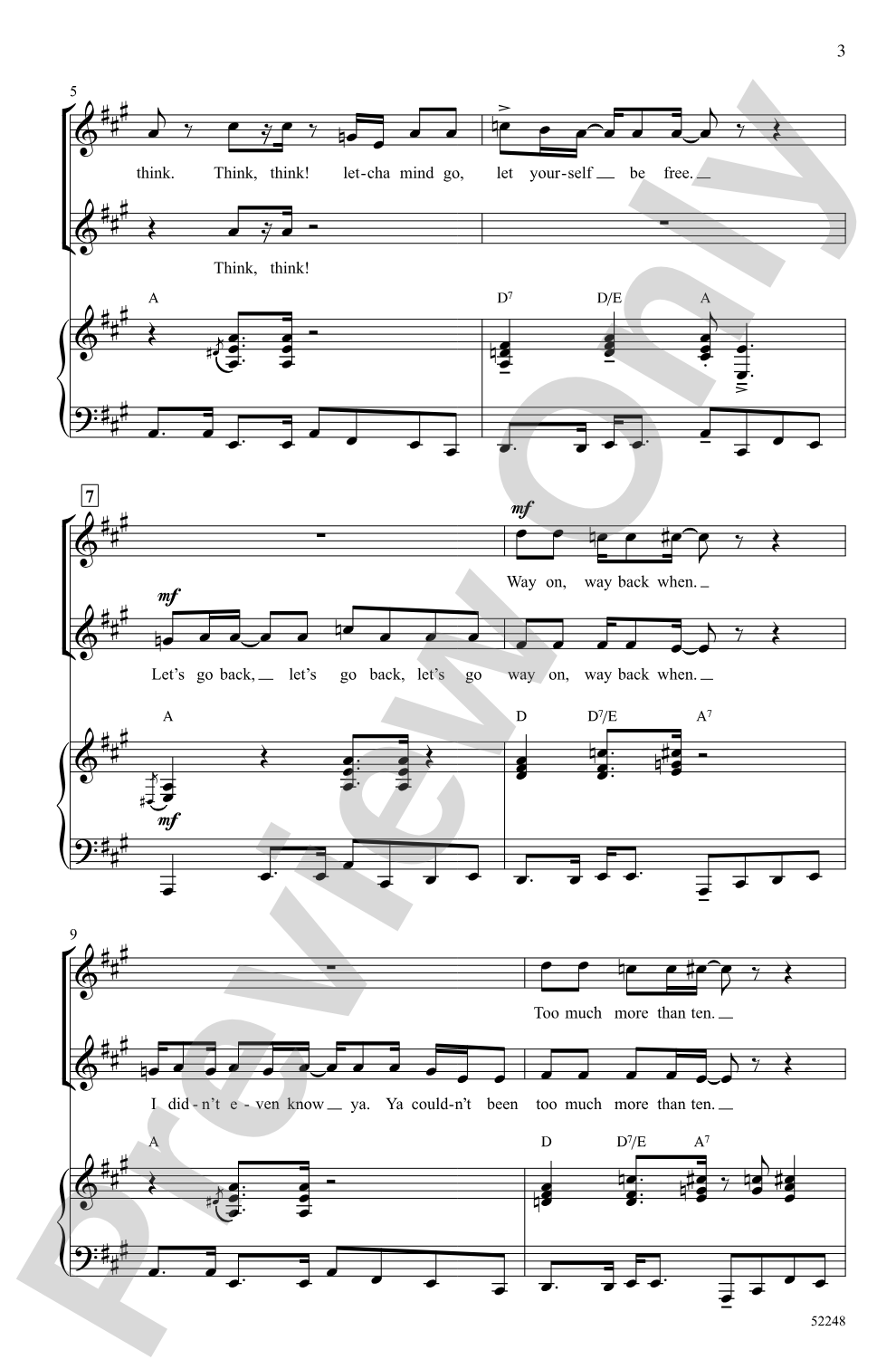
"You better think!" Don't miss this roof-raising arrangement of Aretha Franklin's unstoppable R and B hit. The instantly recognizable melody is passed from section to section while others sing hip and harmonic backups. A handful of short, riff-like solos drive the arrangement to a powerful finish. It's a sassy stand out, with a soulful 60s SoundTrax that really kicks!


Discover MakeMusic Cloud: thousands of interactive titles your students can play along with today.
Sample Audio
1
Audio File
--:--
0:00
0:00
Sample Video
Additional Details
Series:
Alfred Pop Choral Series
Publisher:
Alfred Music
Page Count:
8
SKU:
00-PO-0007605
More about this title
About the Composer: Aretha Franklin
Aretha Franklin (1942-2018) was a gospel-rooted singer and pianist whose command of soul, R&B, and pop music reshaped American popular song. Her interpretive gifts and vocal authority made her one of the most influential recording artists of the 20th century. Franklin's "Think" exemplifies her ability to deliver a message with conviction and style, making her compositions natural choices for choral arrangements that demand authenticity and energy.
Beyond her recording career, Franklin's work has become essential repertoire in music education. Her songs teach singers about phrasing, lyrical clarity, and the rhythmic sophistication of soul and R&B idioms. Arranging her material for student choirs opens doors to genres and performance practices that deepen musical literacy and cultural awareness.
Why we love this
This arrangement captures what makes "Think" irresistible: the independence of the two voice parts, the trade-off of melody between sections, and the riff-driven energy that builds to a genuine climax. Tom Anderson and Jack Zaino have preserved the song's sass and backbone while keeping the scoring accessible for developing singers. The included SoundTrax recording lets students hear the 60s soul context they're stepping into, grounding their performance in authentic style.
What to expect
Walking into this piece, you feel the confidence and swagger of Aretha's original. The 60s R&B groove pulses underneath; the melody bounces between sections with attitude and snap. Harmonically, the arrangement stays grounded and soulful rather than complicated, letting the rhythmic energy and the interplay between voices carry the weight. By the final section, with those riffs building and the ensemble locked in, the effect is genuinely powerful.
Who it's for
This octavo works for middle and high school choirs that are ready to engage with contemporary popular music and soul idioms. It suits directors looking to program something with immediate student appeal and cultural relevance, and it belongs in any season that aims to broaden what "concert repertoire" means. Strong sight-readers aren't required; the accessibility of the voicing makes it achievable for mixed-ability ensembles.
How to get the most out of it
- Lock in the rhythmic pocket early. The groove sits behind the beat in places; have your singers feel the weight of the backbeat rather than rushing ahead.
- Bring out the riff-like solos that drive the final section. These moments are meant to shine; give soloists (or small groups) permission to own their lines without blending them into the background.
- Shape the melody line with conversational phrasing. The lyrics demand attitude; work for clarity and directness rather than lyrical legit singing.
- Use the recorded accompaniment to anchor harmonic balance, especially where one part echoes or answers the other. Students often need to hear how the parts sit together in this style.
How to use it
Program this in a concert that celebrates American popular song traditions or pairs it with other soul and R&B standards to create a thematic set. It also works beautifully as a crowd-pleasing opener or closer; the piece has enough intrinsic energy that it benefits from a featured spot rather than a supporting role. Consider pairing it with repertoire from the same era or genre to deepen students' understanding of the style.
Skills your students will build
- Rhythmic independence between voice parts in a groove-based setting
- Phrasing and diction in R&B and soul idioms
- Call-and-response patterning and sectional interplay
- Ensemble blend in contemporary popular music styles
- Soloist confidence in riff-driven arrangements