
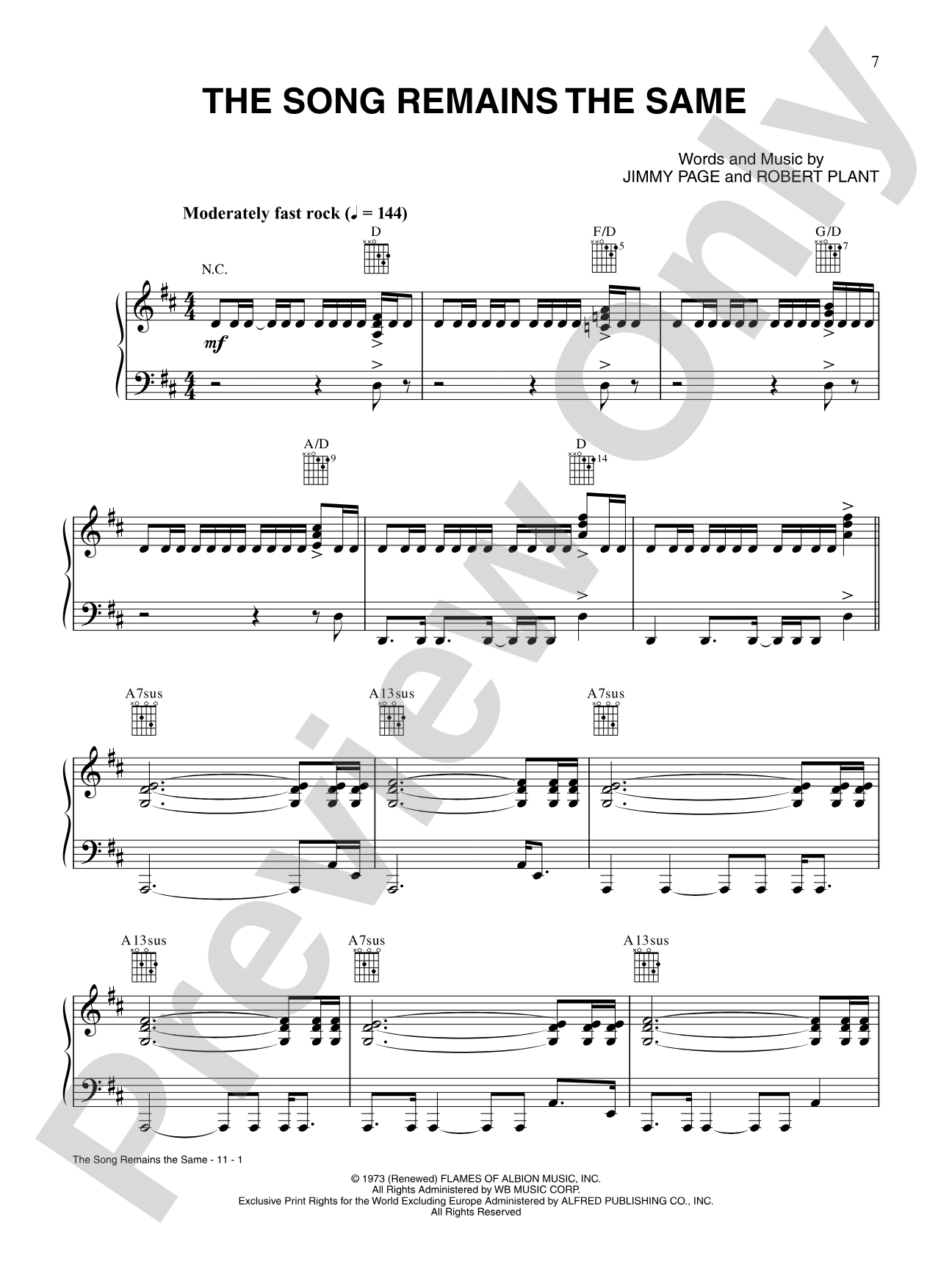
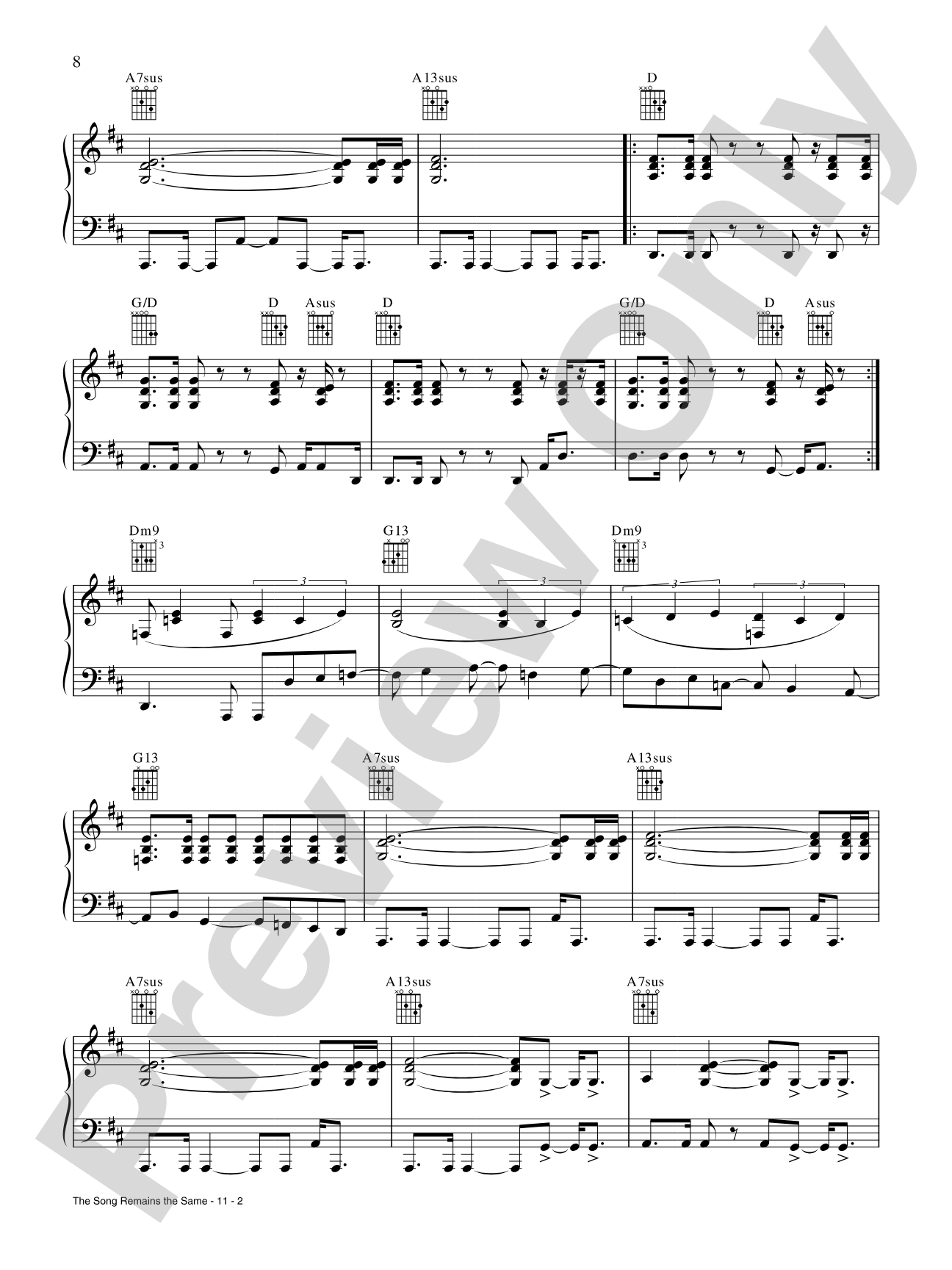
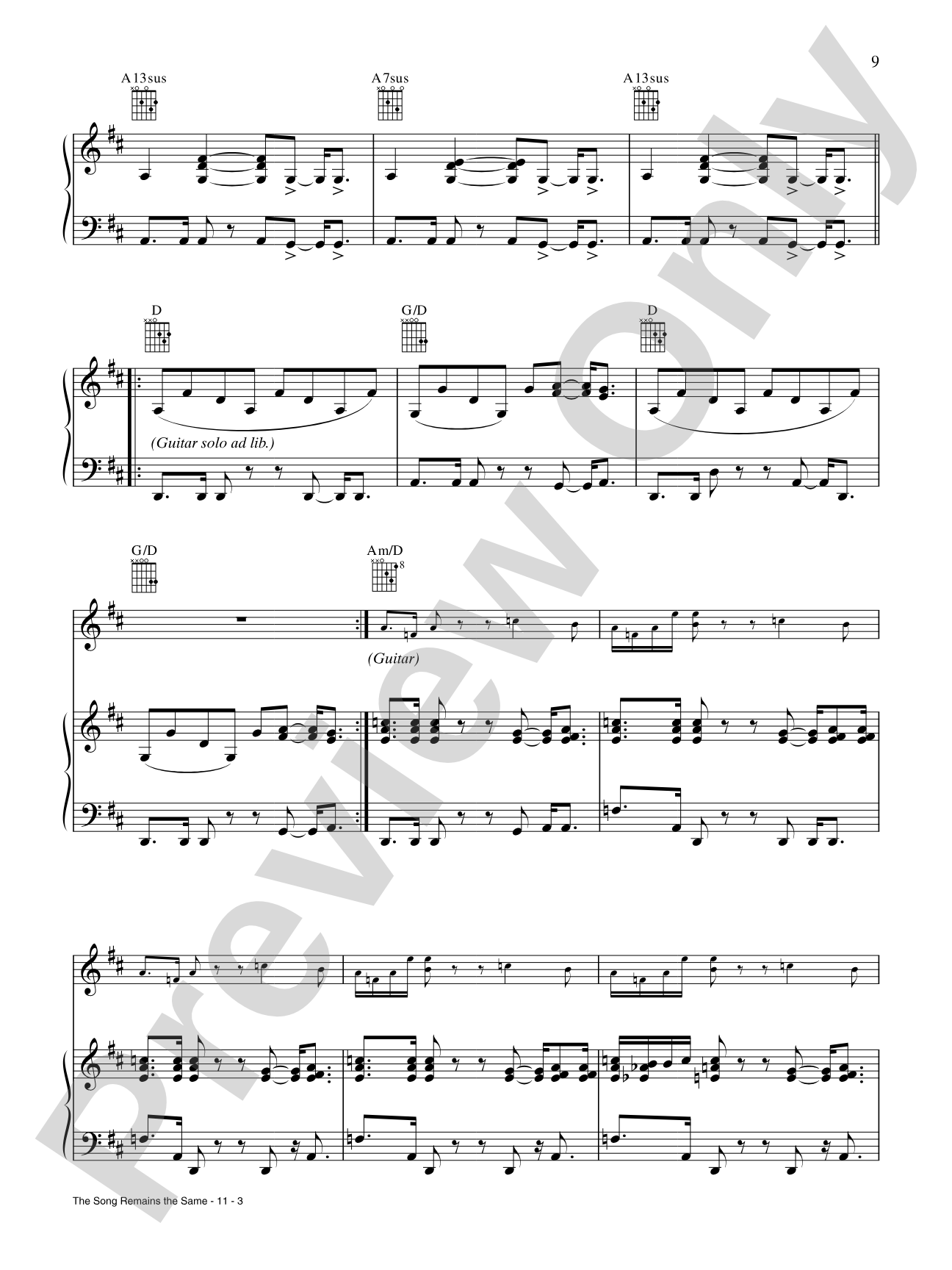

The Song Remains the Same: Piano/Vocal/Chords
Led Zeppelin
Item: 00-XS-0000092
$9.99
Pickup currently not available
Related Items
The Crunge: Authentic Guitar TAB |
$5.99
|
View | |
Dancing Days: Authentic Guitar TAB |
$9.99
|
View | |
No Quarter: Authentic Guitar TAB |
$5.99
|
View | |
The Ocean: Authentic Guitar TAB |
$9.99
|
View | |
The Rain Song: Authentic Guitar TAB |
$9.99
|
View | |
The Song Remains The Same: Authentic Guitar TAB |
$9.99
|
View | |
D'yer Mak'er: Authentic Guitar TAB |
$5.99
|
View | |
Over The Hills And Far Away: Authentic Guitar TAB |
$9.99
|
View | |
The Crunge: Piano/Vocal/Chords |
$5.99
|
View | |
Dancing Days: Piano/Vocal/Chords |
$4.99
|
View | |
Dyer Maker: Piano/Vocal/Chords |
$5.99
|
View | |
Led Zeppelin: Houses of the Holy Platinum Album Edition: Piano/Vocal/Chords Book |
$19.95
|
View | |
Led Zeppelin: Houses of the Holy Platinum Album Edition: Authentic Guitar TAB Book |
$24.99
|
View | |
Led Zeppelin: Houses of the Holy Platinum Album Edition: Drum Transcriptions Book |
$19.95
|
View | |
Led Zeppelin: Houses of the Holy Platinum Album Edition: Authentic Bass TAB Book |
$16.99
|
View |
Description
Emboldened by the success of Led Zeppelin IV and the classic "Stairway to Heaven," Led Zeppelin's fifth album marked a broad stylistic expansion by Britain's pre-eminent band of the '70s. Drawing from more than 30 years of documentation, interviews, and recorded footage, this book delivers unprecedented accuracy and, for the first time, lyrics officially certified by Robert Plant. Titles: The Crunge * D'Yer Mak'er * Dancing Days * No Quarter * The Ocean * Over the Hills and Far Away * Rain Song * The Song Remains the Same.


The Song Remains the Same: Piano/Vocal/Chords isn't in MakeMusic Cloud just yet...but it could be. Let us know you'd like to see it, and you'll help shape what comes next. In the meantime, start a free trial and dive into thousands of interactive titles your students can play along with today.
Request This Title
Tell us you want it.
Start Your Free Trial
Explore everything that's ready to play right now.
Sample Audio
No sample audio found.
Sample Video
No sample videos found.
Additional Details
Series:
Alfred's Platinum Album Editions
Publisher:
Alfred Music
Page Count:
72
SKU:
00-XS-0000092
More about this title
About the Composer: Jimmy Page
Jimmy Page fundamentally shaped rock guitar and production in the 1960s and 1970s. As the guitarist, producer, and primary architect of Led Zeppelin, he moved beyond conventional rock songwriting to synthesize blues, folk, mysticism, and world music into a revolutionary sound that influenced generations of musicians across genres.
Page's approach to arrangement and studio technique revolutionized how rock music could be recorded and performed. His work on Led Zeppelin IV and Houses of the Holy demonstrated sophisticated compositional thinking, combining acoustic and electric textures with dynamic range that rewarded close listening and invited both radio play and deep album exploration.
Why we love this
These arrangements capture the harmonic sophistication and dynamic architecture that made Houses of the Holy endure. Students encounter complex chord progressions, key modulations, and the interplay between vocal melody and instrumental texture that defined Led Zeppelin's songwriting—all rendered clearly for keyboard and voice, making the studio arrangements accessible to performers without sacrificing their musical depth.
What to expect
Mystical and propulsive by turns. "Rain Song" unfolds with patient melancholy and layered harmony; "The Ocean" crashes in with infectious energy and blues-rock swagger. The album itself moves between introspection and celebration, offering moods that range from folk-influenced tenderness to hard-driving groove.
Who it's for
Pianists and keyboardists exploring rock repertoire beyond standard jazz standards, and singers preparing arrangements for performance or study. This collection works well for advanced high school students, college music majors, and adult learners interested in rock songwriting and arrangement.
How to get the most out of it
- Study the dynamic curve of each song before learning notes. "No Quarter" and "Rain Song" reward gradual builds; "The Ocean" demands punch from the first beat. Map these arcs early.
- Use the chord symbols to understand harmonic movement, not just to comp. These songs often pivot between distantly related chords; knowing the relationships helps you anticipate transitions and play with intention.
- Balance the vocal line against keyboard texture thoughtfully. In slower pieces, sparse accompaniment often serves better than filling every beat. Listen to how much space the original recordings leave.
How to use it
Feature individual songs in jazz ensemble or piano recital contexts where rock repertoire fits your school's offerings. "Over the Hills and Far Away" and "Dancing Days" work particularly well as standalone concert pieces. Consider pairing several selections as a thematic unit exploring 1970s rock composition for a recital or pedagogy seminar.
Skills your students will build
- Reading chord symbols and interpreting voicing choices in rock arrangements
- Managing dynamic range across 8+ measures of building intensity
- Coordinating melody, harmony, and rhythmic accompaniment in rock-influenced keyboard playing
- Understanding harmonic relationships in non-diatonic progressions
- Balancing vocal line with keyboard texture in ensemble settings