
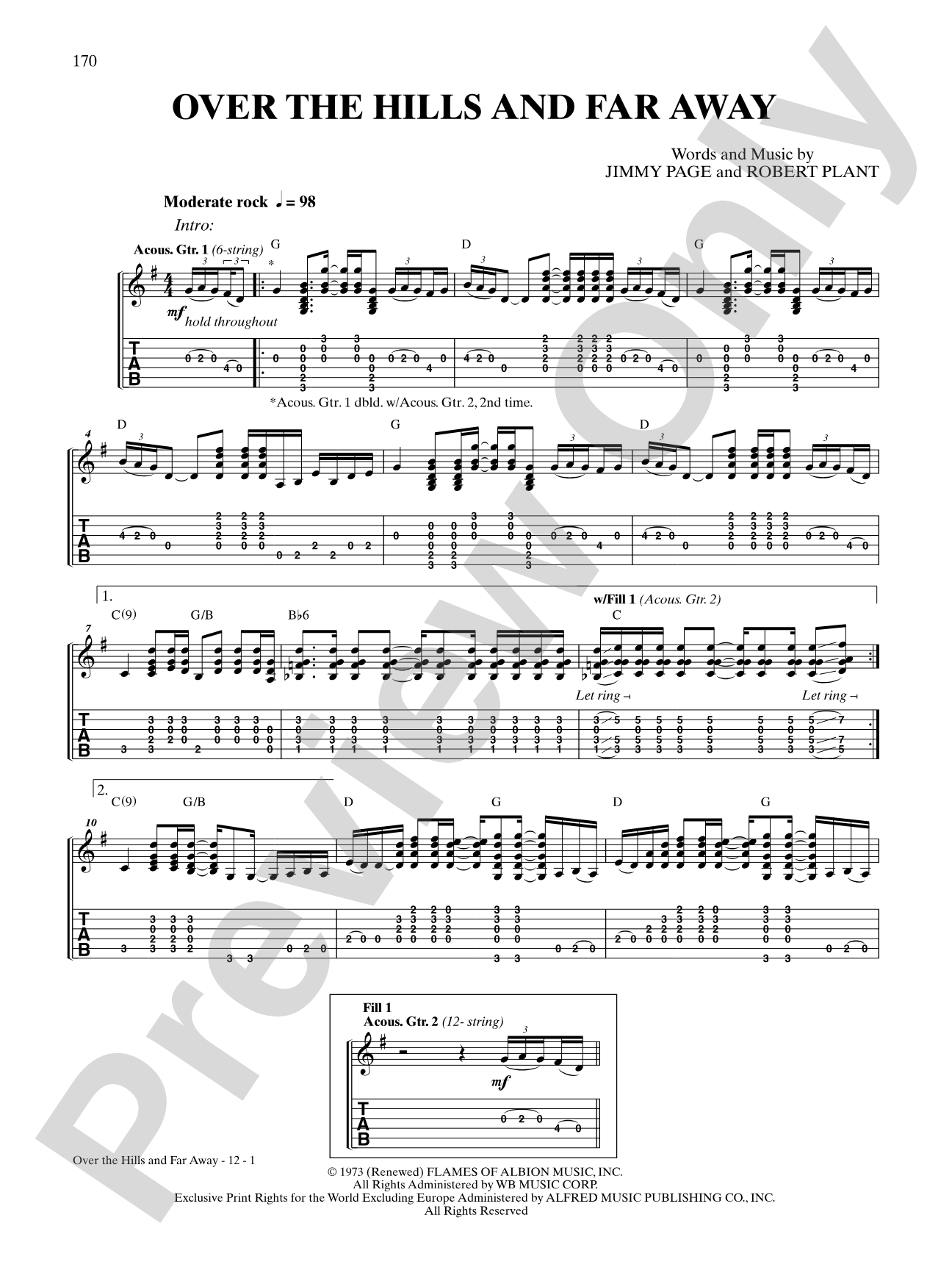
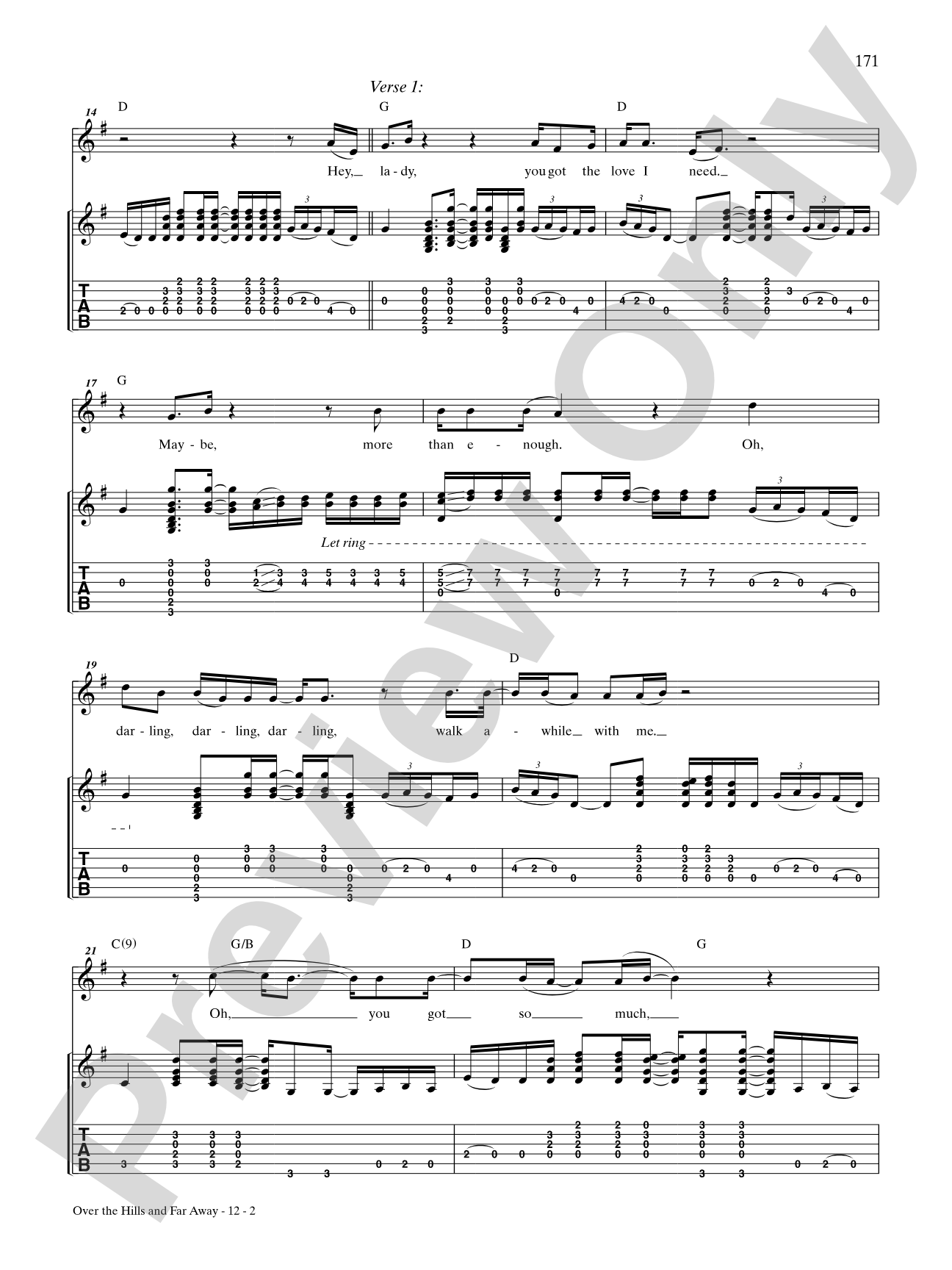
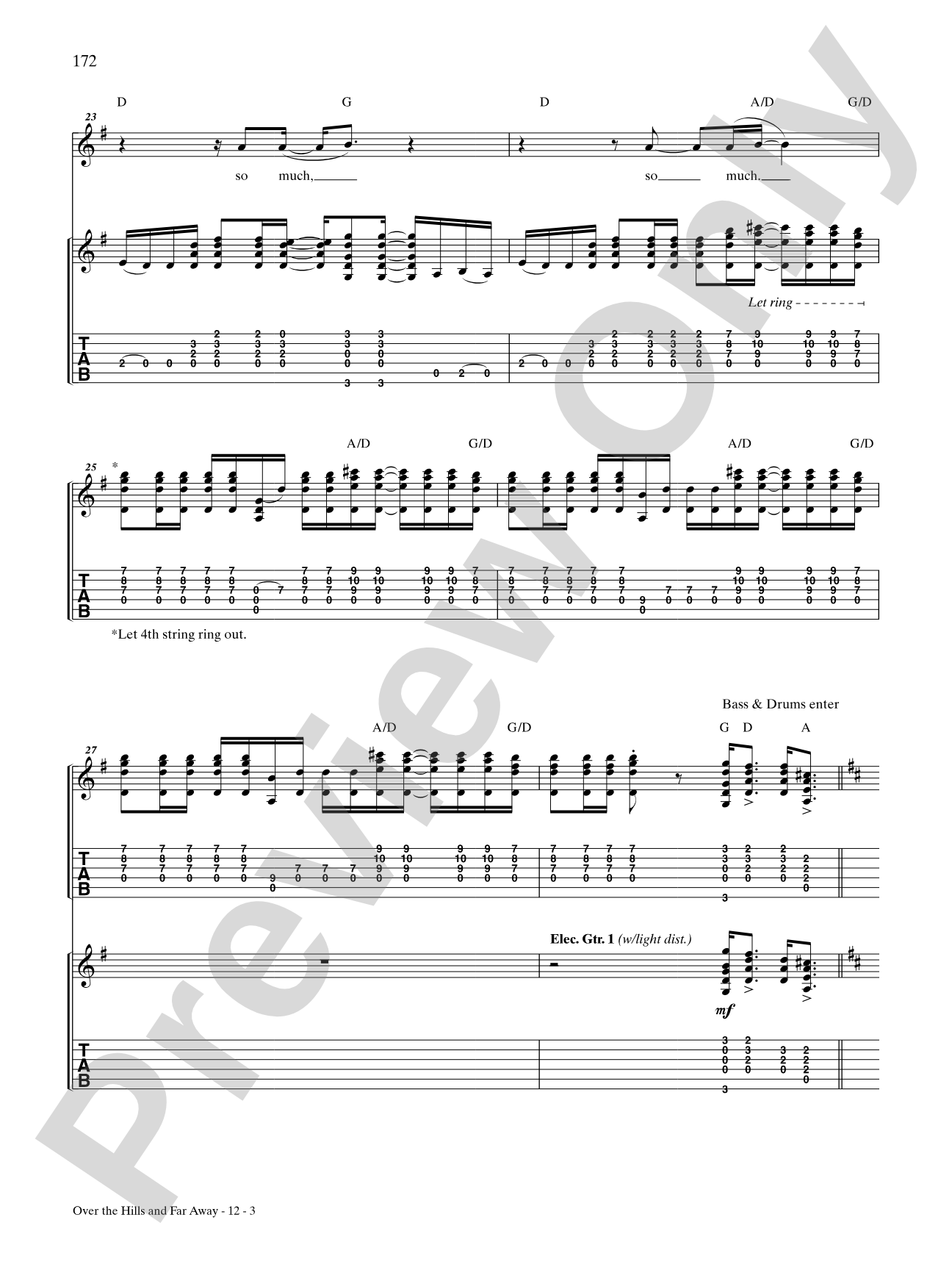

Over The Hills And Far Away: Authentic Guitar TAB
Led Zeppelin
Item: 00-PSG-000134
$9.99
Pickup currently not available
Related Items
The Crunge: Authentic Guitar TAB |
$5.99
|
View | |
Dancing Days: Authentic Guitar TAB |
$9.99
|
View | |
No Quarter: Authentic Guitar TAB |
$5.99
|
View | |
The Ocean: Authentic Guitar TAB |
$9.99
|
View | |
The Rain Song: Authentic Guitar TAB |
$9.99
|
View | |
The Song Remains The Same: Authentic Guitar TAB |
$9.99
|
View | |
D'yer Mak'er: Authentic Guitar TAB |
$5.99
|
View | |
The Crunge: Piano/Vocal/Chords |
$5.99
|
View | |
Dancing Days: Piano/Vocal/Chords |
$4.99
|
View | |
Dyer Maker: Piano/Vocal/Chords |
$5.99
|
View | |
The Song Remains the Same: Piano/Vocal/Chords |
$9.99
|
View | |
Led Zeppelin: Houses of the Holy Platinum Album Edition: Piano/Vocal/Chords Book |
$19.95
|
View | |
Led Zeppelin: Houses of the Holy Platinum Album Edition: Authentic Guitar TAB Book |
$24.99
|
View | |
Led Zeppelin: Houses of the Holy Platinum Album Edition: Drum Transcriptions Book |
$19.95
|
View | |
Led Zeppelin: Houses of the Holy Platinum Album Edition: Authentic Bass TAB Book |
$16.99
|
View |
Description
Alfred Music, in association with Led Zeppelin, is proud to present new Platinum Album Edition songbooks for each of the band's classic studio recordings. Drawn from more than 30 years of documentation, interviews, and recorded footage, these all-new transcriptions deliver unprecedented accuracy and insight into the guitar style of Jimmy Page. With vintage Zeppelin photographs and a historical foreword by Guitar World magazine's editor-in-chief, Brad Tolinski, each volume is a true collectible every fan must own. Titles: The Song Remains the Same * The Rain Song * Over the Hills and Far Away * The Crunge * Dancing Days * D'Yer Mak'er * No Quarter * The Ocean.


Over The Hills And Far Away: Authentic Guitar TAB isn't in MakeMusic Cloud just yet...but it could be. Let us know you'd like to see it, and you'll help shape what comes next. In the meantime, start a free trial and dive into thousands of interactive titles your students can play along with today.
Request This Title
Tell us you want it.
Start Your Free Trial
Explore everything that's ready to play right now.
Sample Audio
No sample audio found.
Sample Video
No sample videos found.
Additional Details
Series:
Alfred's Platinum Album Editions
Publisher:
Alfred Music
Page Count:
92
SKU:
00-PSG-000134
More about this title
About the Composer: Jimmy Page
Jimmy Page stands as one of rock's most innovative and technically advanced guitarists, reshaping what the electric guitar could do within popular music. His compositional voice blended blues vocabulary with classical influences, Eastern modal exploration, and studio experimentation to create some of the most enduring rock compositions of the 1970s.
Why we love this
These transcriptions capture Page's distinctive approach to rhythm and lead guitar with unprecedented detail, drawn from archival documentation and recorded sources rather than guesswork. For guitarists serious about understanding the grammar of classic rock composition and performance, having authentic tabs of these eight essential tracks is invaluable. The historical context and vintage photography transform this from a songbook into a genuine educational artifact.
What to expect
These eight songs span a remarkable range, from the mystical modal journeys of "No Quarter" and "The Rain Song" to the swagger and groove of "Dancing Days" and "D'Yer Mak'er." Playing from these accurate transcriptions, you'll feel the craft behind compositions that balance raw blues power with sophisticated harmonic thinking.
Who it's for
This book serves guitarists at intermediate to advanced levels who want to understand the actual mechanics of Page's compositions and performances. It appeals equally to music educators teaching classic rock history and technique, and to serious students building their repertoire of foundational rock material.
How to get the most out of it
- Study the rhythm guitar parts as carefully as the leads. Page's textural layering and voicing choices are where much of the arrangement's power lives.
- Pay attention to timing and feel in the tabbed passages. These transcriptions reflect how Page actually played these songs on record, including subtle tempo variations and rhythmic inflections.
- Use the photographs and historical notes to visualize Page's hand position and approach. Context from his actual recording setup and technique decisions informs how to interpret the notation.
- Work through the more complex fingering passages slowly and deliberately. The open tunings and unconventional positions Page uses demand patient technical development.
How to use it
Assign individual tracks as showcase solos for advanced guitarists in ensemble settings or recitals, or use them as touchstones in a unit on rock composition and arrangement. These pieces work particularly well when studied alongside the recorded versions, allowing students to bridge the gap between notation and the actual recorded performances that defined an era.
Skills your students will build
- Reading and executing complex open tunings and alternate tunings
- Articulating rhythmic nuance and tempo variation in tablature
- Translating studio layering techniques into live performance contexts
- Analyzing harmonic movement in blues-based and modal frameworks
- Executing fingerpicking patterns and hybrid picking approaches