
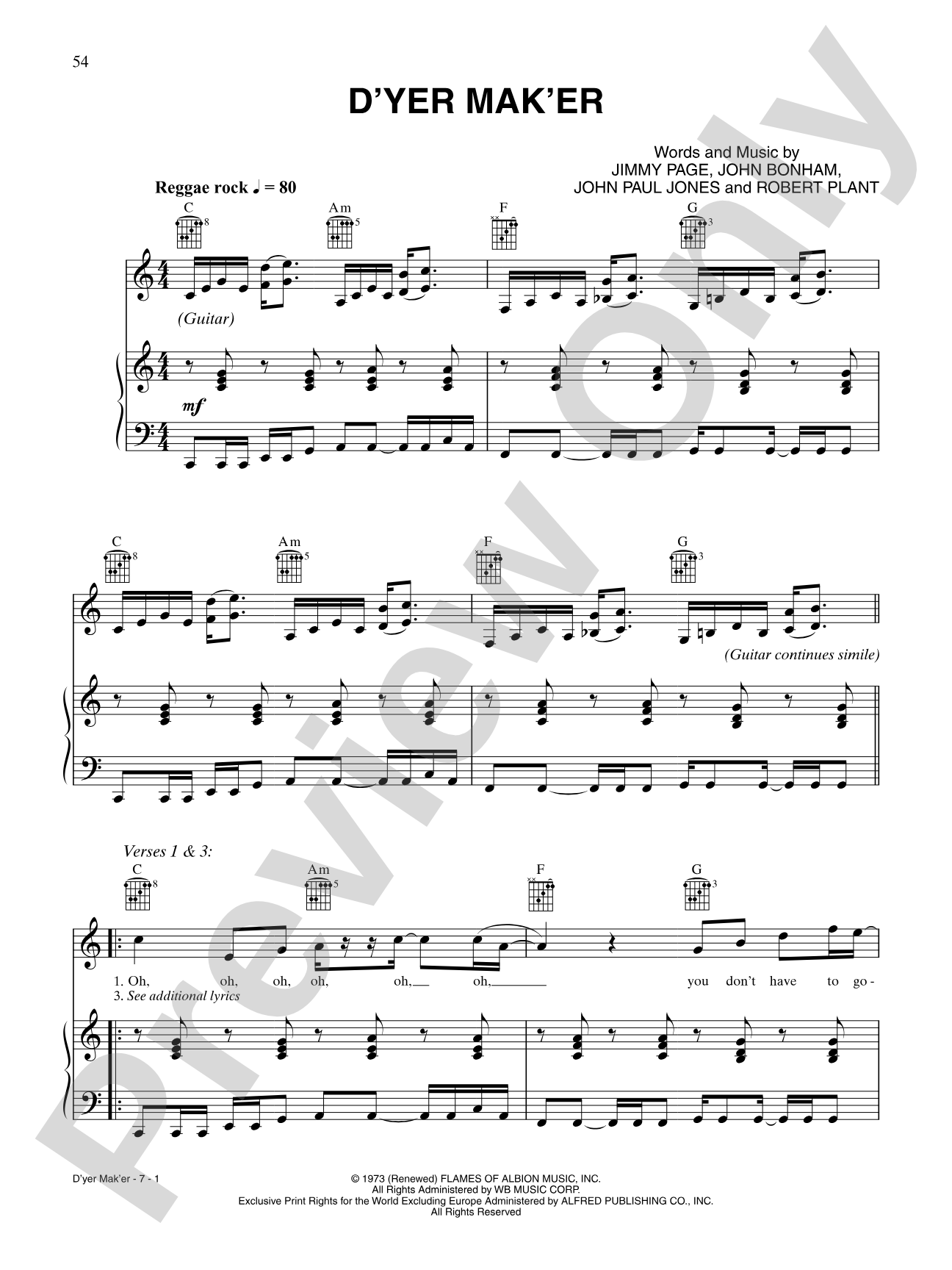
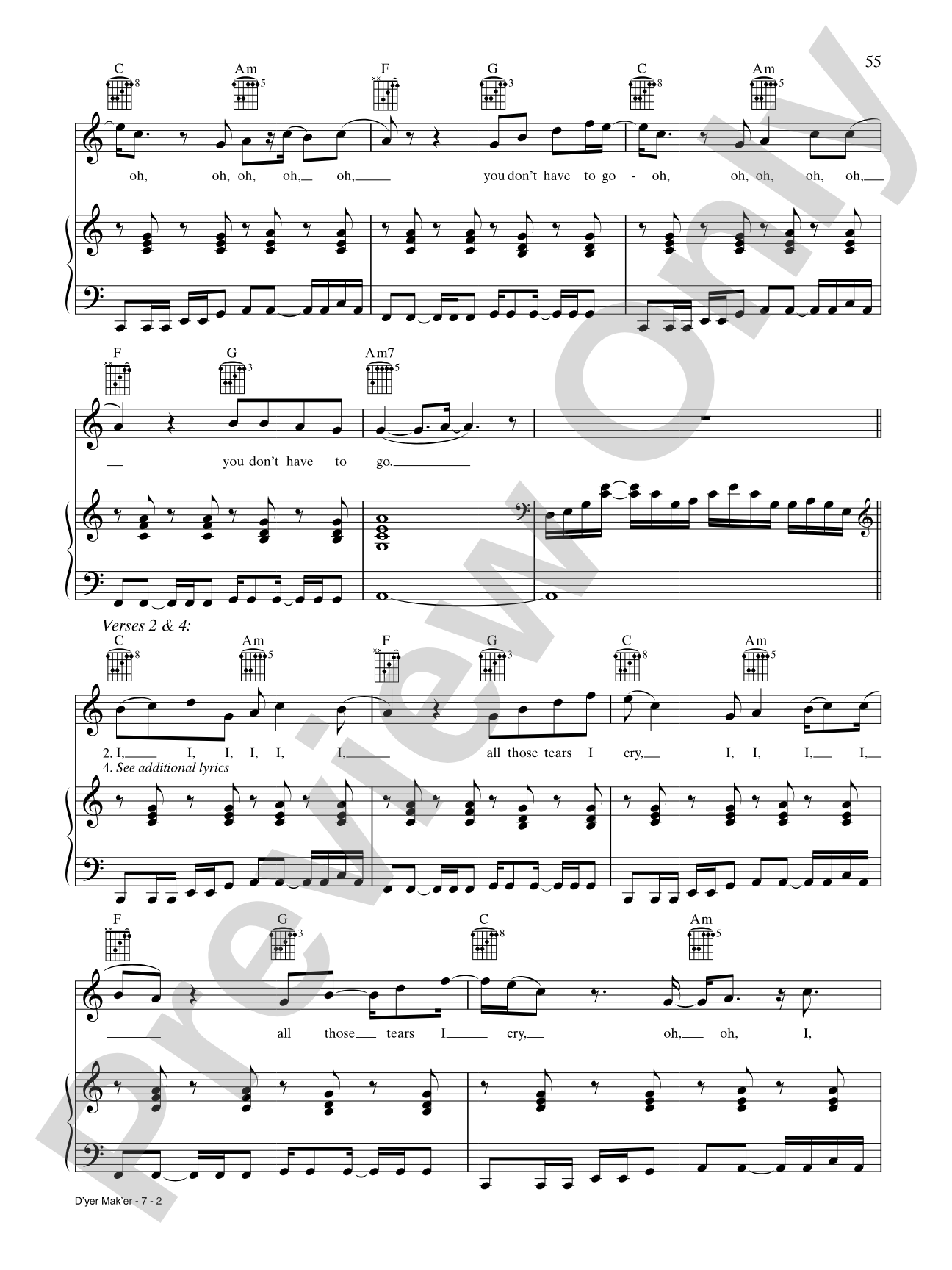

Dyer Maker: Piano/Vocal/Chords
Led Zeppelin
Item: 00-XS-0000068
$5.99
Pickup currently not available
Related Items
The Crunge: Authentic Guitar TAB |
$5.99
|
View | |
Dancing Days: Authentic Guitar TAB |
$9.99
|
View | |
No Quarter: Authentic Guitar TAB |
$5.99
|
View | |
The Ocean: Authentic Guitar TAB |
$9.99
|
View | |
The Rain Song: Authentic Guitar TAB |
$9.99
|
View | |
The Song Remains The Same: Authentic Guitar TAB |
$9.99
|
View | |
D'yer Mak'er: Authentic Guitar TAB |
$5.99
|
View | |
Over The Hills And Far Away: Authentic Guitar TAB |
$9.99
|
View | |
The Crunge: Piano/Vocal/Chords |
$5.99
|
View | |
Dancing Days: Piano/Vocal/Chords |
$4.99
|
View | |
The Song Remains the Same: Piano/Vocal/Chords |
$9.99
|
View | |
Led Zeppelin: Houses of the Holy Platinum Album Edition: Piano/Vocal/Chords Book |
$19.95
|
View | |
Led Zeppelin: Houses of the Holy Platinum Album Edition: Authentic Guitar TAB Book |
$24.99
|
View | |
Led Zeppelin: Houses of the Holy Platinum Album Edition: Drum Transcriptions Book |
$19.95
|
View | |
Led Zeppelin: Houses of the Holy Platinum Album Edition: Authentic Bass TAB Book |
$16.99
|
View |
Description
Emboldened by the success of Led Zeppelin IV and the classic "Stairway to Heaven," Led Zeppelin's fifth album marked a broad stylistic expansion by Britain's pre-eminent band of the '70s. Drawing from more than 30 years of documentation, interviews, and recorded footage, this book delivers unprecedented accuracy and, for the first time, lyrics officially certified by Robert Plant. Titles: The Crunge * D'Yer Mak'er * Dancing Days * No Quarter * The Ocean * Over the Hills and Far Away * Rain Song * The Song Remains the Same.


Dyer Maker: Piano/Vocal/Chords isn't in MakeMusic Cloud just yet...but it could be. Let us know you'd like to see it, and you'll help shape what comes next. In the meantime, start a free trial and dive into thousands of interactive titles your students can play along with today.
Request This Title
Tell us you want it.
Start Your Free Trial
Explore everything that's ready to play right now.
Sample Audio
No sample audio found.
Sample Video
No sample videos found.
Additional Details
Series:
Alfred's Platinum Album Editions
Publisher:
Alfred Music
Page Count:
72
SKU:
00-XS-0000068
More about this title
About the Composer: Jimmy Page
Jimmy Page stands as one of rock music's most influential guitarists and producers. His work with Led Zeppelin from 1968 onward redefined what rock music could be, blending blues foundations with folk traditions, Eastern instruments, and studio innovation. Page's compositional approach emphasized texture and dynamics alongside memorable melodies, shaping the sound of progressive rock for decades.
Why we love this
Led Zeppelin IV remains a watershed moment in rock history, and this edition captures eight tracks from that album and surrounding era with officially certified lyrics and singable arrangements. Pianists and vocalists can finally explore these iconic songs in a format that honors both the vocal lines and the harmonic sophistication that made them timeless. The stylistic range across these eight pieces demonstrates why Led Zeppelin's influence extends far beyond their own era.
What to expect
Mystical and powerful in equal measure. These arrangements preserve the drama and emotional sweep of the originals—the minor-key introspection of "Rain Song," the grinding intensity of "No Quarter," the infectious joy of "Dancing Days." Playing through this collection feels like stepping into one of the most consequential rock albums ever made.
Who it's for
Pianists and singer-pianists who want to perform Led Zeppelin's most enduring material in an accessible format, as well as music educators looking to bridge classic rock repertoire into voice or piano lessons. This book serves musicians who understand harmony and can navigate the chord progressions of 1970s rock but benefit from the guidance of official lyrics and structured arrangements.
How to get the most out of it
- Balance the vocal line with the harmonic richness in the accompaniment; these arrangements reward allowing both elements to breathe rather than overshadowing one with the other.
- Study the original recordings alongside the sheet music to understand the dynamic arcs and production details that shaped these songs, then find ways to reflect that intensity within the piano/vocal format.
- Pay attention to the chord voicings provided; they often hint at the layered instrumentation of the original arrangements and will deepen your interpretation.
- Approach key changes and modal shifts deliberately, as Led Zeppelin frequently used these to create dramatic tension and lift within a song.
How to use it
Feature individual pieces in recitals focused on singer-pianists or contemporary repertoire; "Over the Hills and Far Away" and "Dancing Days" work particularly well as standalone performance pieces. Alternatively, use this book as a resource for students exploring how classic rock compositions translate across genres, or as a springboard for discussions about blues-based harmony and modal songwriting in popular music.
Skills your students will build
- Reading and performing complex chord progressions in rock and blues contexts
- Balancing vocal phrasing with instrumental accompaniment patterns
- Understanding modal interchange and key relationships across 1970s rock songwriting
- Translating iconic guitar-driven arrangements into idiomatic piano voicings
- Interpretation of rock material with attention to dynamics and emotional arc