
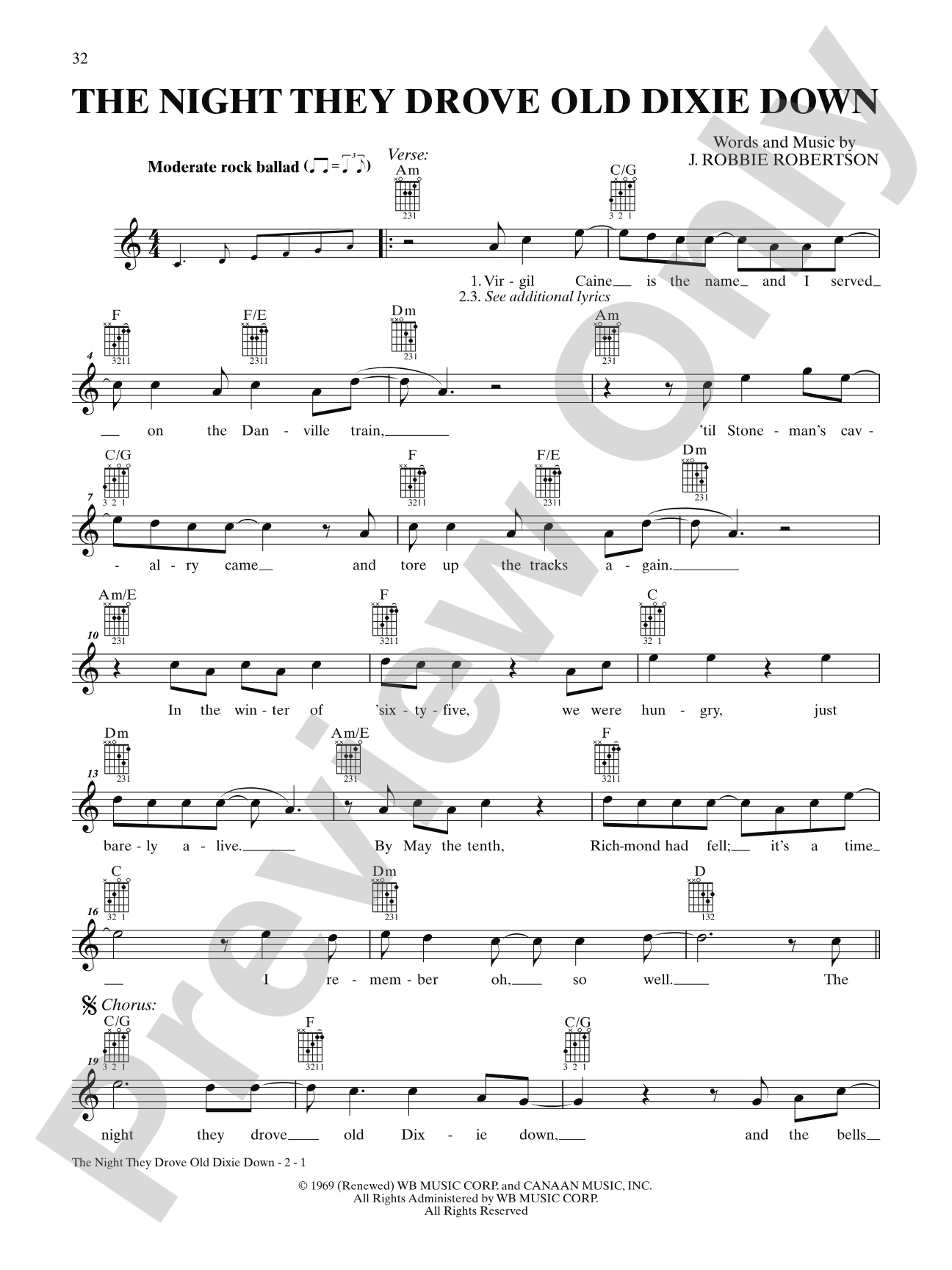

The Night They Drove Old Dixie Down: Interm./Easy Guitar TAB
12 Great Songs of the '60s, '70s & '80s
Item: 00-PS-0011877
$4.99
One moment…
Related Items
Paint It, Black: Interm./Easy Guitar TAB |
$4.99
|
View | |
It's All Over Now: Interm./Easy Guitar TAB |
$4.99
|
View | |
Long Train Runnin': Interm./Easy Guitar TAB |
$4.99
|
View | |
Stairway to Heaven: Interm./Easy Guitar TAB |
$5.99
|
View | |
After Midnight: Interm./Easy Guitar TAB |
$4.99
|
View | |
Maggie May: Interm./Easy Guitar TAB |
$4.99
|
View | |
Sunshine of Your Love: Interm./Easy Guitar TAB |
$4.99
|
View | |
Just for Fun: Classic Rock Guitar: Easy Guitar TAB Book |
$14.99
|
View |
Description
Classic Rock Guitar is designed for your total enjoyment. Each song's arrangement includes the guitar parts played on the original recording, simplified just enough to keep it fun and musically satisfying. Titles: After Midnight (Eric Clapton) * Go Your Own Way (Fleetwood Mac) * Hotel California (Eagles) * It's All Over Now (The Rolling Stones) * Jump (Van Halen) * Long Train Runnin' (The Doobie Brothers) * Maggie May (Rod Stewart) * The Night They Drove Old Dixie Down (The Band) * Paint It, Black (The Rolling Stones) * Stairway to Heaven (Led Zeppelin) * Sunshine of Your Love (Cream) * Truckin' (Grateful Dead).


The Night They Drove Old Dixie Down: Interm./Easy Guitar TAB isn't in MakeMusic Cloud just yet...but it could be. Let us know you'd like to see it, and you'll help shape what comes next. In the meantime, start a free trial and dive into thousands of interactive titles your students can play along with today.
Request This Title
Tell us you want it.
Start Your Free Trial
Explore everything that's ready to play right now.
Sample Audio
No sample audio found.
Sample Video
No sample videos found.
Additional Details
Series:
Just for Fun
Publisher:
Alfred Music
Page Count:
68
SKU:
00-PS-0011877
More about this title
About the Composer: Robbie Robertson
Robbie Robertson is a Canadian musician and composer best known as the lead guitarist and primary songwriter for The Band, the influential rock group that shaped roots rock and Americana through the 1960s and 1970s. His songwriting draws from deep wells of American folk, blues, and country traditions, creating narratives that resonate across generations of musicians and listeners.
Why we love this
This collection captures some of rock's most iconic guitar moments and makes them accessible without sacrificing the essential character that made the originals memorable. Students get to inhabit the actual arrangements that defined these songs on the radio, learning from the source material rather than generic approximations. The diversity across these tracks means every guitarist in your studio finds something genuinely worth learning.
What to expect
You're stepping into the studio where these songs were cut, learning the actual parts that made them classics. There's a directness and energy here that comes from rock and roll's fundamental appeal: strong melodies, memorable riffs, and the satisfaction of playing something that sounds complete and professional from your first run-through.
Who it's for
Intermediate to easy-level guitarists who want to play songs they actually love rather than contrived exercises. This collection works for studio students preparing recital material, ensemble guitarists adding depth to their repertoire, and self-taught players seeking quality arrangements of landmark recordings.
How to get the most out of it
- Study the original recordings alongside the tab. Hearing how dynamics and tone color shape each song will guide your phrasing far more than notation alone.
- Lock into the pocket of each tune by focusing on the rhythm guitar foundation first. Once that's solid, embellishments and solos sit naturally on top.
- Pay attention to the equipment and effects suggested in the arrangement notes. Many of these songs rely on specific tones (overdrive, reverb, wah) to deliver their impact.
- Break longer passages into manageable chunks and build tempo gradually. These arrangements preserve the musical DNA of the originals, which means technical demands are real.
How to use it
Include these in student recitals to showcase progress in a context that feels relevant and exciting. Mix selections throughout a year to balance technical growth with morale: lighter pieces early on, more demanding arrangements as skills build. A single song from this collection can anchor a program built around a theme (rock eras, songwriting approaches, or guitarist styles across decades).
Skills your students will build
- Reading and executing guitar tablature with rhythmic accuracy
- Developing idiomatic rock guitar technique (muting, bending, vibrato)
- Translating recorded guitar tones into performance choices
- Building endurance for longer pieces with consistent energy
- Recognizing song structure and arrangement conventions in rock music
- Executing simple to moderate riffs and chord comping patterns