
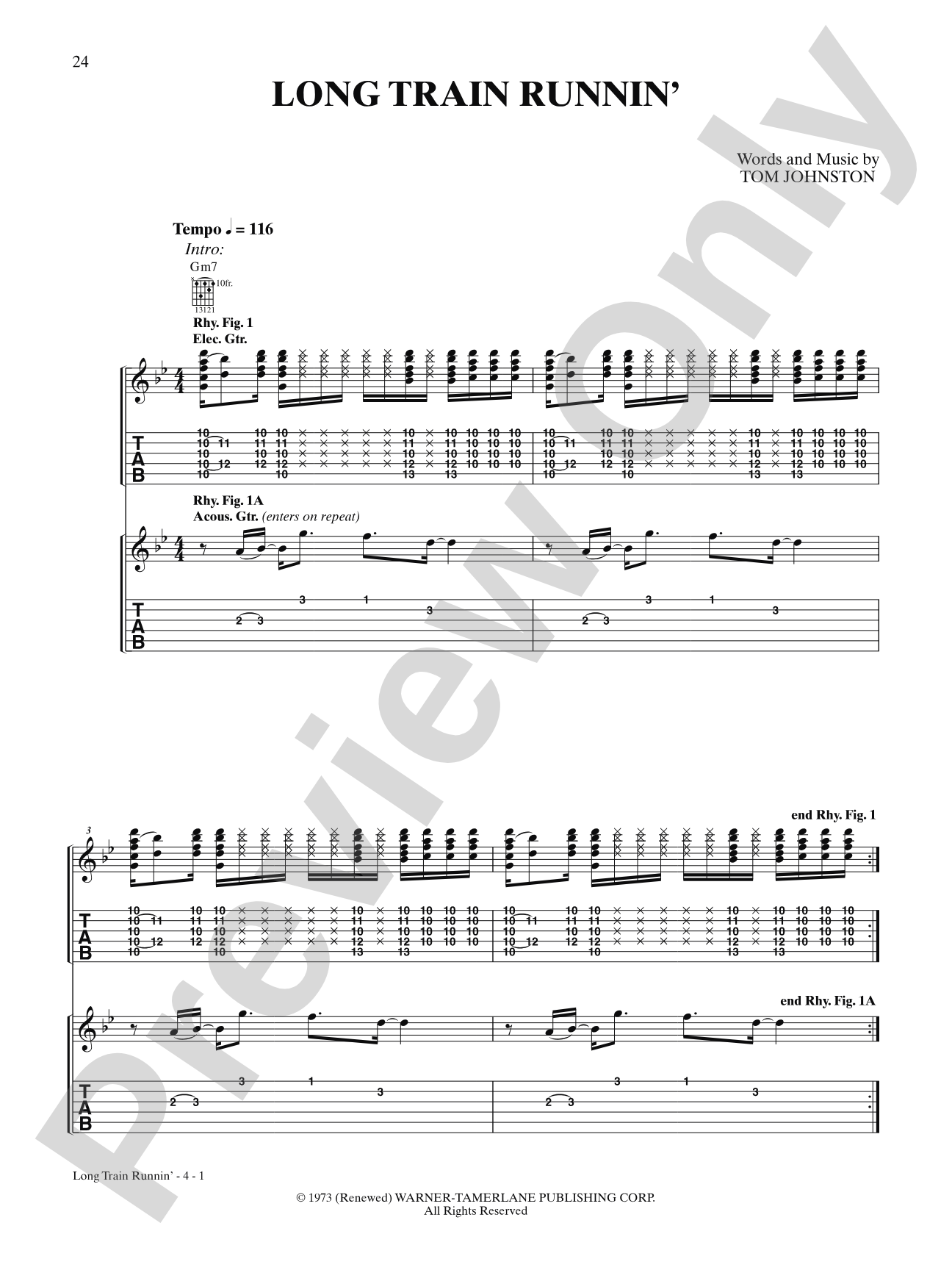

Long Train Runnin': Interm./Easy Guitar TAB
12 Great Songs of the '60s, '70s & '80s
Item: 00-PS-0011866
$4.99
One moment…
Related Items
Paint It, Black: Interm./Easy Guitar TAB |
$4.99
|
View | |
It's All Over Now: Interm./Easy Guitar TAB |
$4.99
|
View | |
The Night They Drove Old Dixie Down: Interm./Easy Guitar TAB |
$4.99
|
View | |
Stairway to Heaven: Interm./Easy Guitar TAB |
$5.99
|
View | |
After Midnight: Interm./Easy Guitar TAB |
$4.99
|
View | |
Maggie May: Interm./Easy Guitar TAB |
$4.99
|
View | |
Sunshine of Your Love: Interm./Easy Guitar TAB |
$4.99
|
View | |
Just for Fun: Classic Rock Guitar: Easy Guitar TAB Book |
$14.99
|
View |
Description
Classic Rock Guitar is designed for your total enjoyment. Each song's arrangement includes the guitar parts played on the original recording, simplified just enough to keep it fun and musically satisfying. Titles: After Midnight (Eric Clapton) * Go Your Own Way (Fleetwood Mac) * Hotel California (Eagles) * It's All Over Now (The Rolling Stones) * Jump (Van Halen) * Long Train Runnin' (The Doobie Brothers) * Maggie May (Rod Stewart) * The Night They Drove Old Dixie Down (The Band) * Paint It, Black (The Rolling Stones) * Stairway to Heaven (Led Zeppelin) * Sunshine of Your Love (Cream) * Truckin' (Grateful Dead).


Long Train Runnin': Interm./Easy Guitar TAB isn't in MakeMusic Cloud just yet...but it could be. Let us know you'd like to see it, and you'll help shape what comes next. In the meantime, start a free trial and dive into thousands of interactive titles your students can play along with today.
Request This Title
Tell us you want it.
Start Your Free Trial
Explore everything that's ready to play right now.
Sample Audio
No sample audio found.
Sample Video
No sample videos found.
Additional Details
Series:
Just for Fun
Publisher:
Alfred Music
Page Count:
68
SKU:
00-PS-0011866
More about this title
About the Composer: Tom Johnston
Tom Johnston is best known as the founding member and guitarist of The Doobie Brothers, a band that defined the California rock sound of the 1970s. Beyond his work as a performer, Johnston has been instrumental in arranging and adapting rock classics for guitar players at all levels, making the music that shaped his career accessible to the next generation of musicians.
Why we love this
This collection bridges the gap between inspiration and playability. Students get to learn the actual guitar lines from the original recordings without the frustration of overly difficult voicings or techniques, which means they stay engaged and motivated to keep improving. The mix of iconic songs ensures your students are learning rock history while building real musicianship.
What to expect
Raw energy restrained just enough to fit your fingers. These are the iconic riffs and progressions that made classic rock timeless, stripped down to their essence but never losing the attitude that makes them worth learning. Expect the satisfaction of sounding genuinely good while you're still building technique.
Who it's for
Guitarists with intermediate to early-advanced reading skills who want to tackle recognizable rock songs without months of preparation. This is ideal for students who learn faster when they're playing music they love, or for ensembles building a rock-themed concert.
How to get the most out of it
- Study the original recordings before you start. Hearing how each part sits in the mix helps you understand the tone and articulation Johnston intended, especially on lead lines like the opening to 'Stairway to Heaven.'
- Work slowly through any syncopated rhythms or irregular phrasing first. Classic rock guitar often locks into unusual beat placements; locking in the timing before tempo prevents sloppy execution later.
- Pay attention to muting and palm-damping notes where indicated. These techniques shape the percussive character of songs like 'Jump' and distinguish a polished arrangement from a rushed one.
- When multiple guitar parts are shown, decide whether you'll play them separately with a friend or layer them in your own recording. The arrangement supports both approaches.
How to use it
Thread these songs throughout the year as rewards or milestone pieces after students complete technique units. A program built entirely around this collection makes for a natural concert arc, or cherry-pick standout tracks to balance classical or jazz repertoire on a mixed recital. The range of tempos and styles means you can find something appropriate for almost any performance context.
Skills your students will build
- Reading and executing variations in rhythmic notation across classic rock idioms
- Playing major and minor pentatonic shapes in different positions on the fretboard
- Using muting and articulation techniques to create authentic guitar tone
- Recognizing and playing standard rock progressions and song forms
- Coordinating fingerpicking and strumming patterns in context