
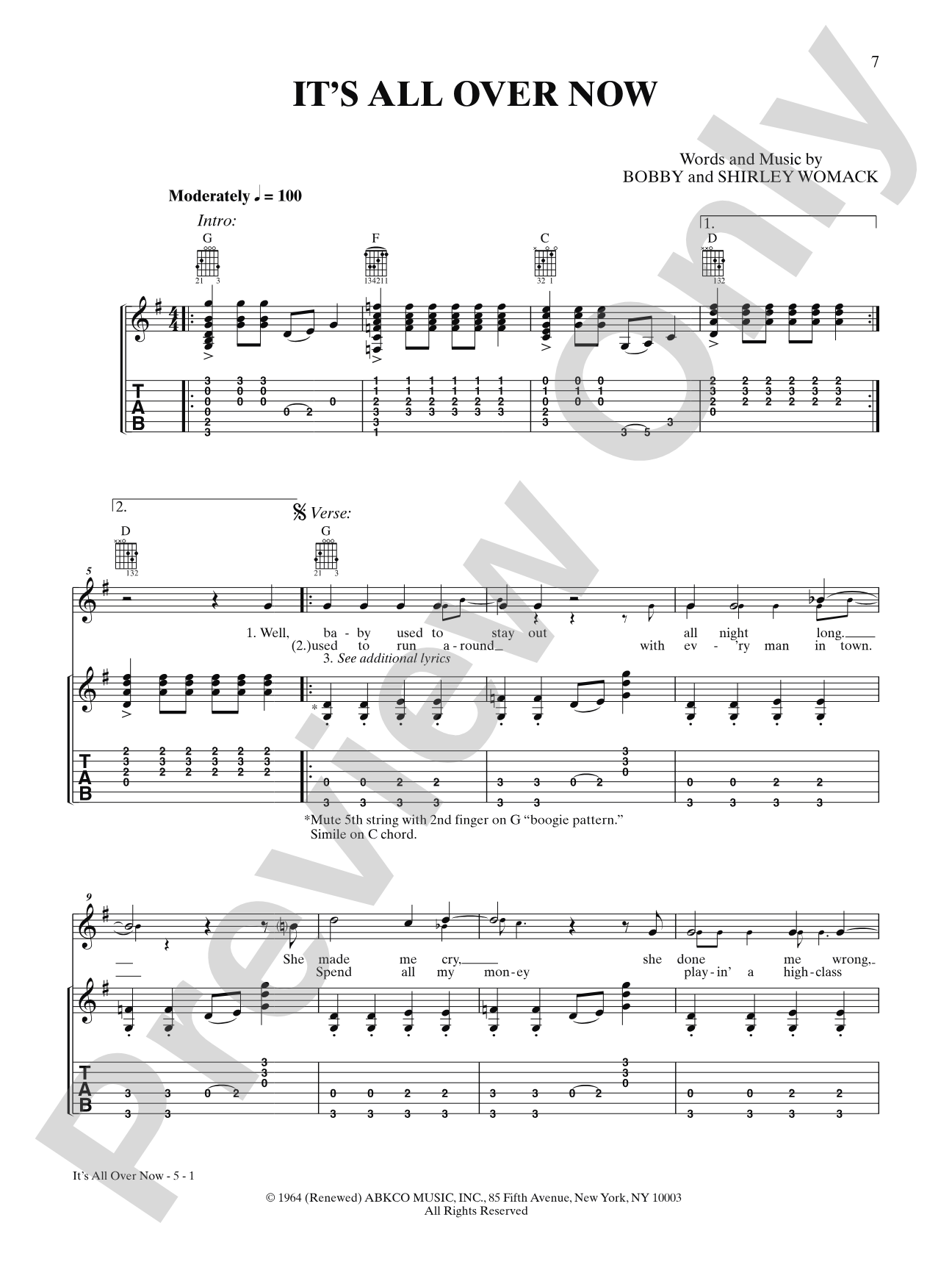

It's All Over Now: Interm./Easy Guitar TAB
12 Great Songs of the '60s, '70s & '80s
Item: 00-PS-0011818
$4.99
Pickup currently not available
Related Items
Paint It, Black: Interm./Easy Guitar TAB |
$4.99
|
View | |
Long Train Runnin': Interm./Easy Guitar TAB |
$4.99
|
View | |
The Night They Drove Old Dixie Down: Interm./Easy Guitar TAB |
$4.99
|
View | |
Stairway to Heaven: Interm./Easy Guitar TAB |
$5.99
|
View | |
After Midnight: Interm./Easy Guitar TAB |
$4.99
|
View | |
Maggie May: Interm./Easy Guitar TAB |
$4.99
|
View | |
Sunshine of Your Love: Interm./Easy Guitar TAB |
$4.99
|
View | |
Just for Fun: Classic Rock Guitar: Easy Guitar TAB Book |
$14.99
|
View |
Description
Classic Rock Guitar is designed for your total enjoyment. Each song's arrangement includes the guitar parts played on the original recording, simplified just enough to keep it fun and musically satisfying. Titles: After Midnight (Eric Clapton) * Go Your Own Way (Fleetwood Mac) * Hotel California (Eagles) * It's All Over Now (The Rolling Stones) * Jump (Van Halen) * Long Train Runnin' (The Doobie Brothers) * Maggie May (Rod Stewart) * The Night They Drove Old Dixie Down (The Band) * Paint It, Black (The Rolling Stones) * Stairway to Heaven (Led Zeppelin) * Sunshine of Your Love (Cream) * Truckin' (Grateful Dead).


It's All Over Now: Interm./Easy Guitar TAB isn't in MakeMusic Cloud just yet...but it could be. Let us know you'd like to see it, and you'll help shape what comes next. In the meantime, start a free trial and dive into thousands of interactive titles your students can play along with today.
Request This Title
Tell us you want it.
Start Your Free Trial
Explore everything that's ready to play right now.
Sample Audio
No sample audio found.
Sample Video
No sample videos found.
Additional Details
Series:
Just for Fun
Publisher:
Alfred Music
Page Count:
68
SKU:
00-PS-0011818
More about this title
About the Composer: Bobby Womack
Bobby Womack (1944-2014) was a soul and R&B singer, guitarist, and songwriter whose work bridged multiple genres and generations. His composition "It's All Over Now" became a landmark recording when The Rolling Stones covered it in 1965, introducing Womack's songwriting to a global rock audience and cementing his influence on British rock music.
Womack's ability to write songs that transcended genre boundaries made him a valued collaborator and influence across soul, rock, and country music. His guitar playing and songwriting legacy continue to appear in educational guitar repertoire, offering students access to authentic rock and soul grooves.
Why we love this
This collection captures the real guitar parts from iconic recordings students actually want to learn, arranged to be playable without sacrificing the original character of each track. The mix of classic rock staples alongside deeper cuts (like The Band's "The Night They Drove Old Dixie Down") gives guitarists meaningful variety in a single book.
What to expect
Opening this book feels like gaining access to the actual guitar parts from your favorite records. The arrangements preserve the essential character and memorable riffs of each song while staying within an accessible difficulty range, so you can focus on nailing the groove and feel rather than wrestling with unnecessary technical barriers.
Who it's for
Intermediate and easy-level guitarists who want to play recognizable rock classics without needing advanced technique. This collection works well for students building repertoire for performance, practice sessions, or personal enjoyment during their ongoing guitar studies.
How to get the most out of it
- Work through the rhythmic patterns section by section before attempting full tempo; many of these songs rely on consistent groove more than speed, so locking in the feel matters more than rushing.
- Use the original recordings as your reference for tone and dynamics; these arrangements preserve key riffs and voicings from the studio versions, so listening carefully will guide your interpretation choices.
- Pay attention to any notation for alternate tunings or capo positions at the beginning of each song; several classic rock tracks use non-standard tuning that's essential to the sound.
How to use it
Use individual songs from this collection as capstone pieces once students have developed intermediate skills; the variety allows you to match repertoire to different student strengths and interests. Songs work equally well as solo recital material, group ensemble arrangements, or motivation during regular technique and theory practice.
Skills your students will build
- Reading guitar TAB notation fluently
- Executing rock rhythm patterns and chord changes in standard tunings and non-standard tunings
- Translating recorded guitar tones into fingering and technique choices
- Building groove-based timing separate from note accuracy
- Recognizing and playing signature riffs that define each song