

The Never Ending Story: 2-Part Choral Octavo
Words and music by Giorgio Moroder and Keith Forsey / arr. Alan Billingsley
Item: 00-PO-0006281

$2.10
Minimum order quantity: 20 copies
One moment…
Related Items
The Never Ending Story: SoundTrax Digital Audio Download |
$29.99
|
View | |
The Never Ending Story: SATB Choral Octavo |
$2.10
|
View | |
The Never Ending Story: 3-Part Mixed Choral Octavo |
$2.65
|
View | |
The Never Ending Story: SATB Choral Octavo |
$2.10
|
View | |
The Never Ending Story: 3-Part Mixed Choral Octavo |
$2.65
|
View | |
The Never Ending Story: 2-Part Choral Octavo |
$2.65
|
View | |
The Never Ending Story: Choral Octavo SoundTrax CD |
$29.99
|
View |
Description
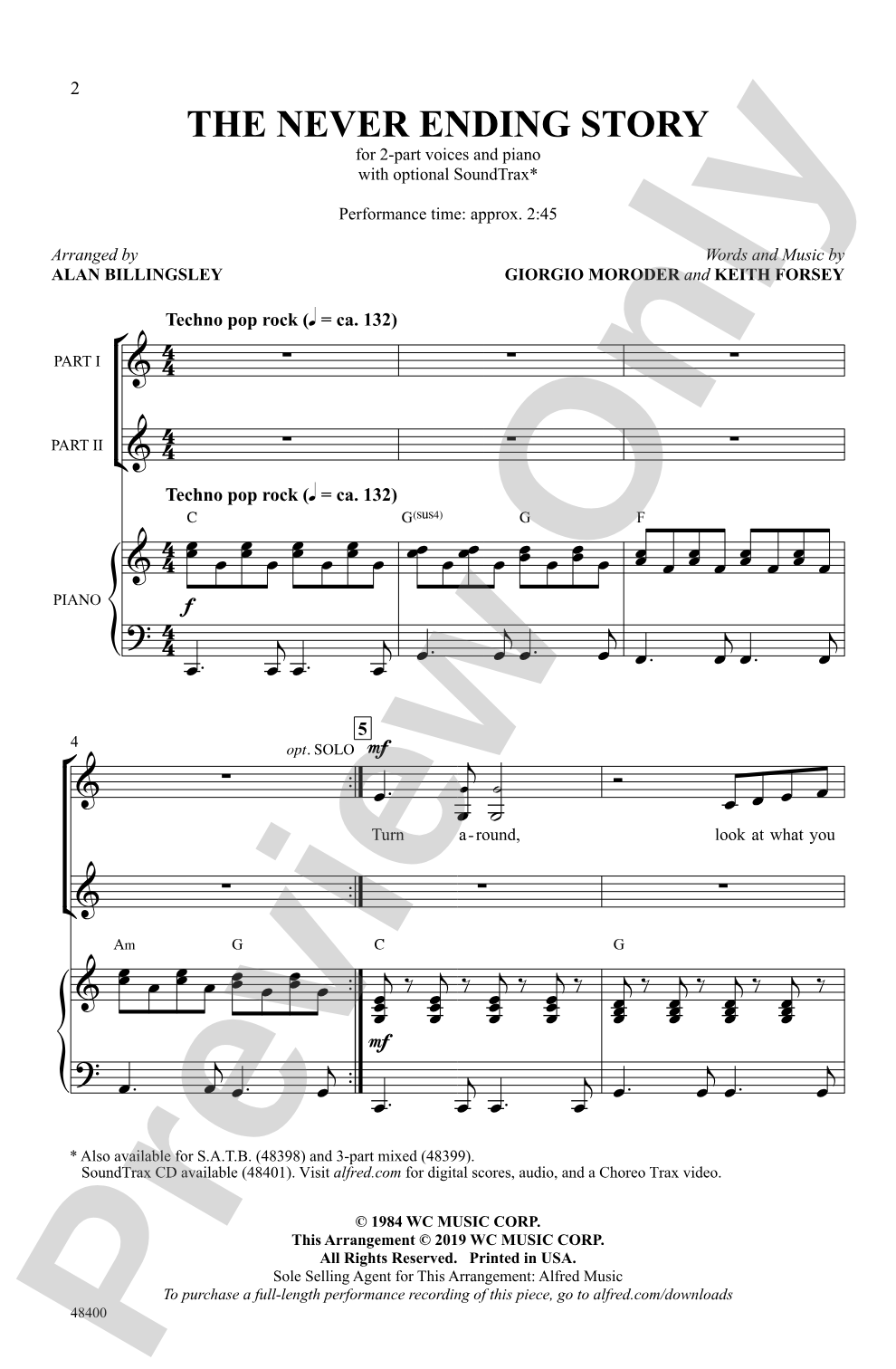
This retro blast from the past made its debut in the 1984 fantasy movie of the same title and went on to hit the top of the pop charts in the U.S. and throughout Europe. Featured prominently in the season 3 finale of Stranger Things---as the kids from Hawkins, Indiana attempt to save the world . . . again. Alan's awesome arrangement promises to be an easy-to-teach singer favorite! This title is available in MakeMusic Cloud.


Don't just read it, hear it, play along with it, and watch your students grow with it. In MakeMusic Cloud, The Never Ending Story: 2-Part Choral Octavo comes alive with professional accompaniment, adjustable tempo, and built-in practice tools that turn solo practice into real progress.
Open in the Player
Jump straight in and assign it today.
Start Your Free Trial
Open this title and explore the full library in minutes.
Sample Audio
1
Audio File
--:--
0:00
0:00
Sample Video
No sample videos found.
Additional Details
Series:
Alfred Pop Choral Series
Publisher:
Alfred Music
Page Count:
12
SKU:
00-PO-0006281
More about this title
About the Composer: Giorgio Moroder
Giorgio Moroder is an Italian composer and music producer who shaped the sound of 1980s pop and dance music through his pioneering work with synthesizers and electronic production. His collaboration with Keith Forsey on "The Never Ending Story" became a defining moment in film scoring, blending orchestral sensibility with the electronic textures that made his name in disco and synth-pop.
For music educators, Moroder's work demonstrates how popular composition can achieve genuine emotional depth. His melodies are memorable without being simplistic, and his arrangements reveal the craft underneath the accessibility. Teaching his music gives students a window into how songwriting reaches massive audiences while maintaining musical integrity.
Why we love this
Alan Billingsley's arrangement captures what made this song stick in millions of heads without overcomplicating the vocal lines. Your singers will recognize it immediately, the parts sit comfortably, and you get authentic movie moment credibility that lands with audiences. The recorded accompaniment lets you focus on blend and interpretation rather than piano playing.
What to expect
Opening with a sense of wonder and gentle melancholy, then building into infectious forward motion. The song never loses its dreamy quality even when the energy lifts, wrapping singers in a warm nostalgic embrace that audiences immediately understand.
Who it's for
Any choir working with singers who connect to 1980s pop culture, especially after incorporating Stranger Things into a concert concept. It works equally well for middle school and high school ensembles that need a confidence builder with instant recognition factor.
How to get the most out of it
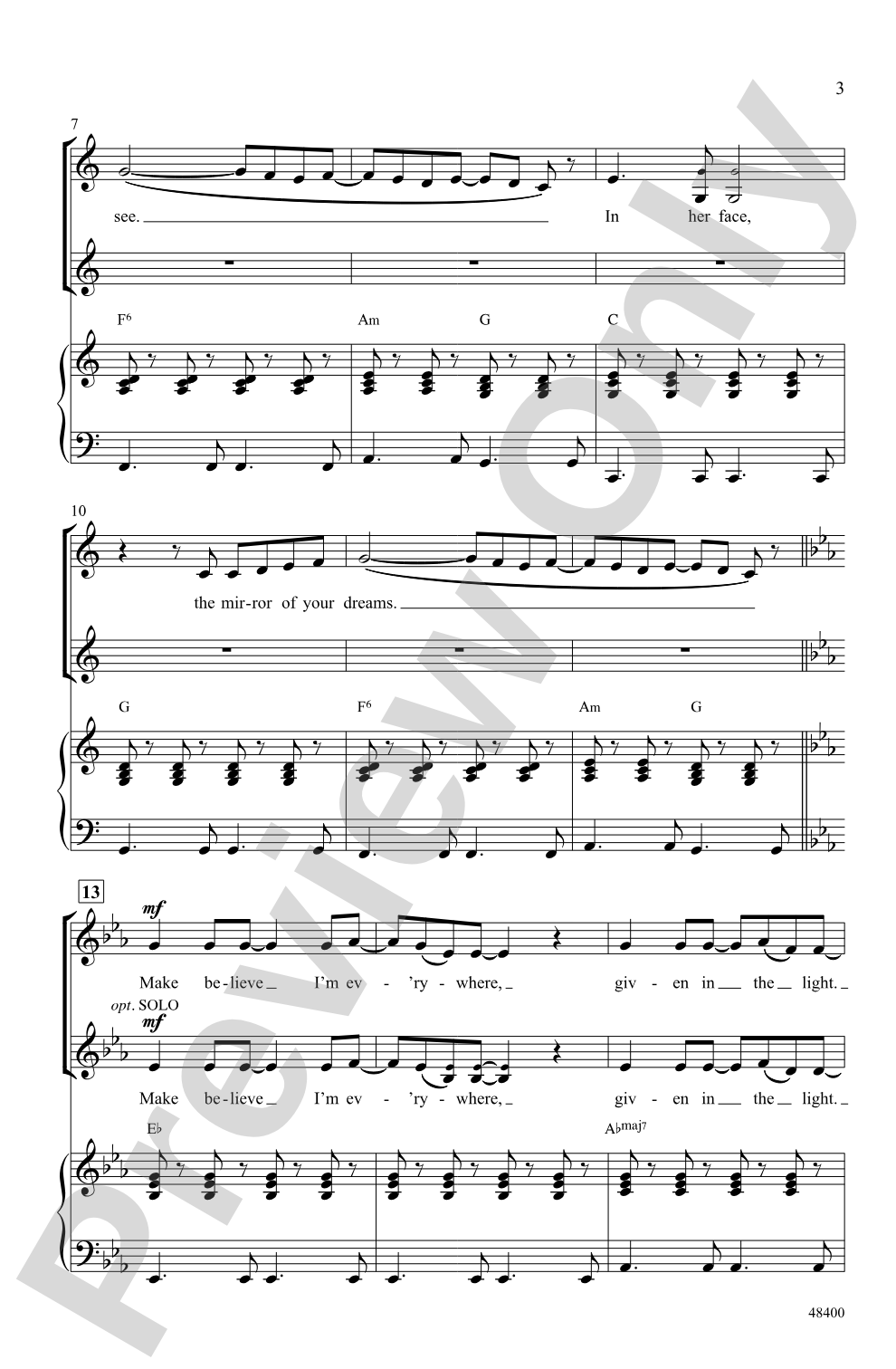
- Lean into the yearning quality of the melody in phrases like "Turn around, look at what you see." Encourage singers to shape each phrase with genuine emotion rather than treating it as pop-music lightweight.
- Balance the two parts clearly in the chorus so listeners hear both lines lock together, especially when they move in parallel motion. Record a section rehearsal to show your singers how it sounds when blend is tight.
- Honor the tempo marking consistently throughout; rushing the middle section undercuts the song's reflective character and breaks the spell you're building.
How to use it
Frame it as a concert closer or as part of a retro-pop set that might include other hits from film and television. It's particularly effective in spring concerts where you want to balance more serious repertoire with something that shows your singers' versatility and contemporary relevance.
Skills your students will build
- Phrasing in pop vocal lines with attention to lyrical storytelling rather than mechanical rhythm
- Balancing two independent melodic lines without letting either dominate
- Matching vowel shapes and consonant clarity across a blend that prizes transparency over heaviness
- Sustaining emotional connection in a short, radio-friendly song structure