
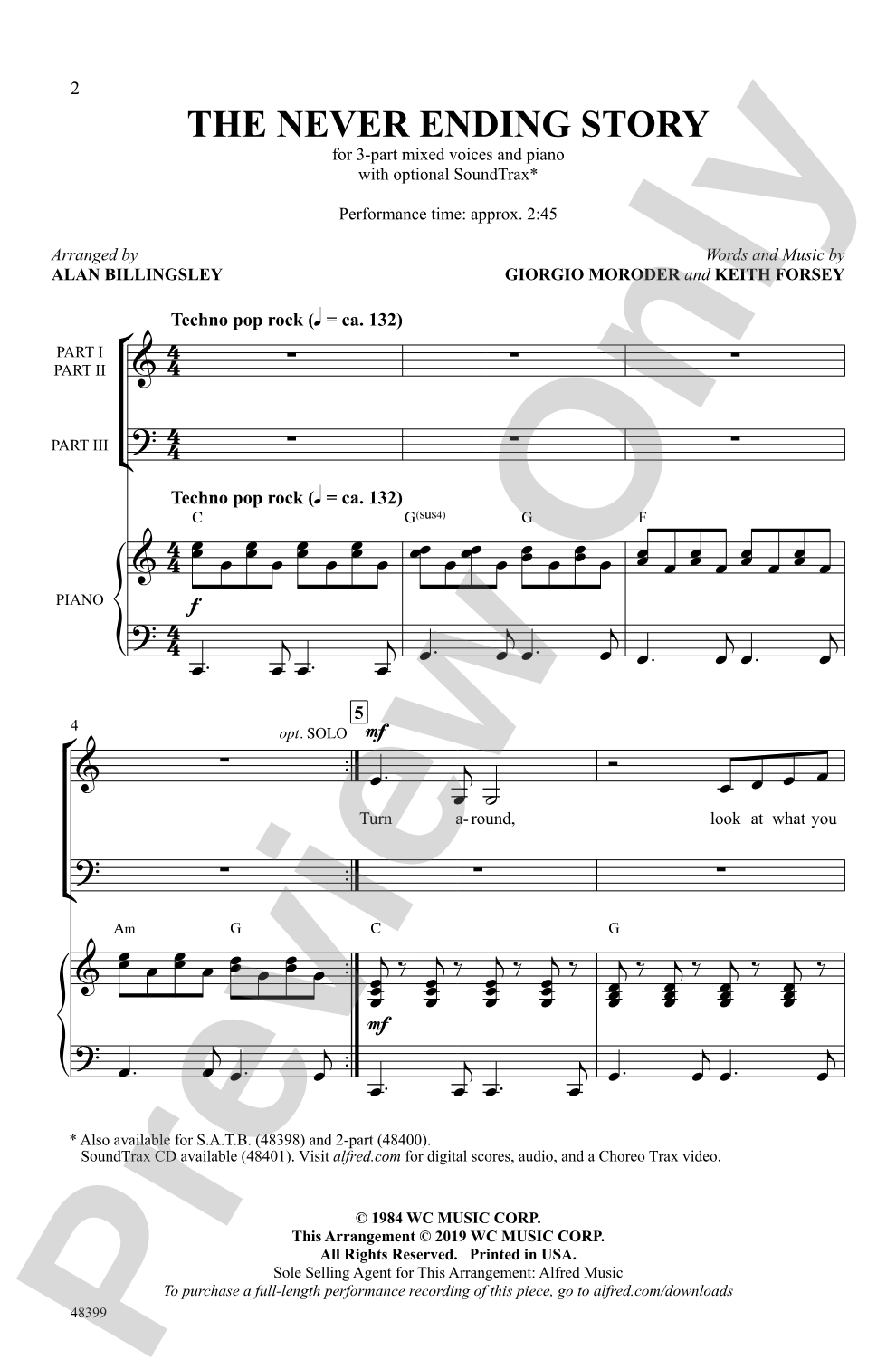
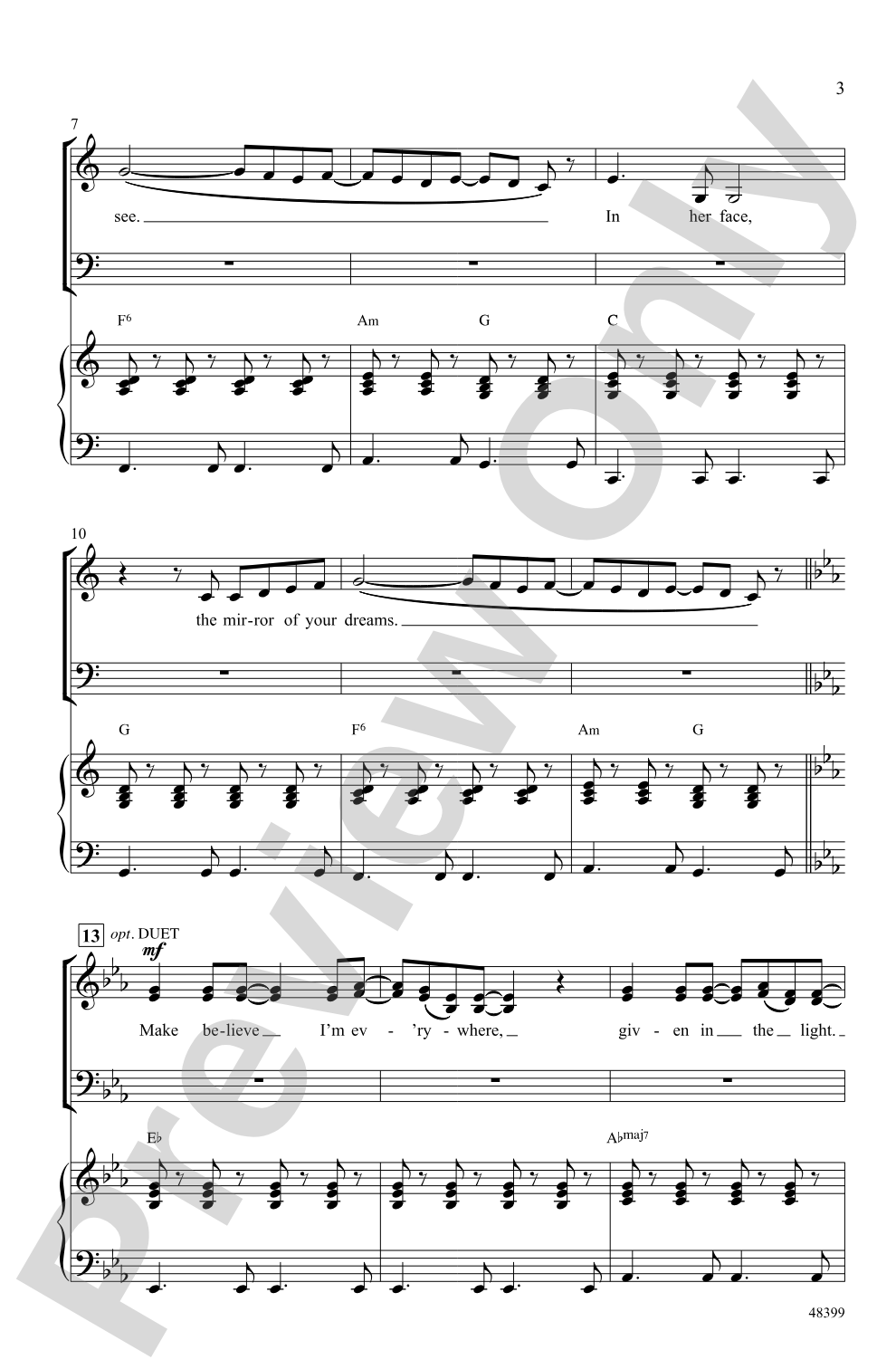

The Never Ending Story: 3-Part Mixed Choral Octavo
Words and music by Giorgio Moroder and Keith Forsey / arr. Alan Billingsley
Item: 00-PO-0006280
$2.65
Minimum order quantity: 20 copies
One moment…
Related Items
The Never Ending Story: SoundTrax Digital Audio Download |
$29.99
|
View | |
The Never Ending Story: SATB Choral Octavo |
$2.10
|
View | |
The Never Ending Story: 2-Part Choral Octavo |
$2.10
|
View | |
The Never Ending Story: SATB Choral Octavo |
$2.10
|
View | |
The Never Ending Story: 3-Part Mixed Choral Octavo |
$2.65
|
View | |
The Never Ending Story: 2-Part Choral Octavo |
$2.65
|
View | |
The Never Ending Story: Choral Octavo SoundTrax CD |
$29.99
|
View |
Description
This retro blast from the past made its debut in the 1984 fantasy movie of the same title and went on to hit the top of the pop charts in the U.S. and throughout Europe. Featured prominently in the season 3 finale of Stranger Things---as the kids from Hawkins, Indiana attempt to save the world . . . again. Alan's awesome arrangement promises to be an easy-to-teach singer favorite! This title is available in MakeMusic Cloud.


The Never Ending Story: 3-Part Mixed Choral Octavo isn't in MakeMusic Cloud just yet...but it could be. Let us know you'd like to see it, and you'll help shape what comes next. In the meantime, start a free trial and dive into thousands of interactive titles your students can play along with today.
Request This Title
Tell us you want it.
Start Your Free Trial
Explore everything that's ready to play right now.
Sample Audio
1
Audio File
--:--
0:00
0:00
Sample Video
Additional Details
Series:
Alfred Pop Choral Series
Publisher:
Alfred Music
Page Count:
12
SKU:
00-PO-0006280
More about this title
About the Composer: Giorgio Moroder
Giorgio Moroder revolutionized pop music production in the 1970s and 1980s by pioneering the synthesizer-driven disco and electronic sound that defined the era. His work on "The Never Ending Story" exemplifies his gift for crafting melodies that lodge themselves in the listener's memory while maintaining sophisticated production values. Moroder's influence on film scoring and pop composition continues to shape how educators approach contemporary music in choral settings.
Beyond "The Never Ending Story," Moroder collaborated with Daft Punk, earned multiple Academy Award nominations, and shaped the sound of dance and electronic music for generations. His compositions demonstrate how accessible melodies and strong harmonic progressions can coexist with innovative production techniques, making his work particularly valuable for choirs exploring the intersection of classical music-making and contemporary popular music.
Why we love this
Alan Billingsley's arrangement captures the soaring, cinematic quality of the original while keeping the vocal writing genuinely singable for mixed choirs at all skill levels. The piece taps into genuine cultural resonance across generations, from the film's original 1984 release through its resurgence in Stranger Things, giving your singers real investment in the material. Programming this alongside standards and art songs signals that your ensemble values quality songwriting regardless of its source.
What to expect
The piece carries an almost dreamlike quality, with the kind of unironic optimism and emotional directness that defines 1980s pop at its best. There's a swelling, cinematic grandeur to the harmony that makes singers feel like they're part of something larger than themselves, even in an intimate rehearsal room.
Who it's for
This arrangement works beautifully for middle school through adult choirs who want contemporary material that doesn't condescend to their intelligence or musicality. It's equally at home in a pop or show choir context and in a traditional choral program seeking a tasteful bridge between classical and commercial music.
How to get the most out of it
- Honor the synthetic, shimmering quality of the original by finding clarity in the upper voices, especially in the SAB texture. Avoid weighing down the treble line with vibrato; let the melody float.
- Work the recorded accompaniment into rehearsals early so singers can hear how their parts fit into the broader harmonic landscape. The synthesizer colors of the original should inform your sense of balance and timbre.
- Shape the melodic contour with intention rather than relying on dynamic markings alone. This song lives by its soaring, yearning quality, so guide singers to breathe generously and phrase through the longer lines.
- Pay attention to the text delivery in the refrain. Clear diction here keeps the nostalgia from becoming schmaltzy and maintains the earnestness that made this song a chart success.
How to use it
Consider opening a spring or end-of-year concert with this as a statement piece that immediately connects with your audience's lived experience. It also pairs naturally with other pop or film-adjacent repertoire, creating a programming block that explores how great melodies transcend genre and era.
Skills your students will build
- Singing sustained legato lines across multiple phrases
- Balancing melody and harmony in three-part texture
- Interpreting contemporary popular music with musical integrity
- Responding to electronic and synthesizer-based accompaniments
- Collaborative blend in SAB voicing without sacrificing individual line clarity