
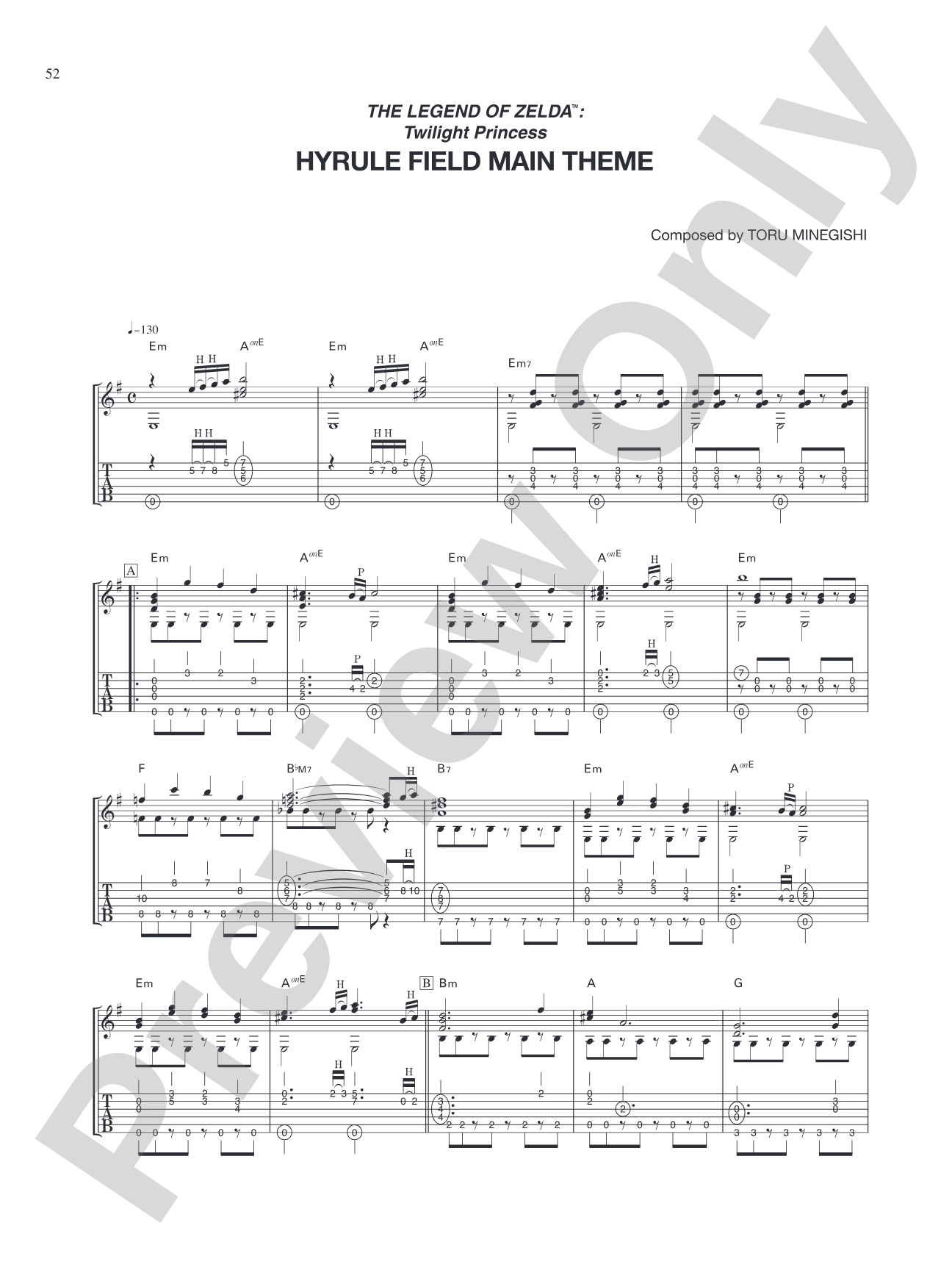

The Legend of Zelda™: Twilight Princess Hyrule Field Main Theme: Guitar Tab
By Koji Kondo, Kozue Ishikawa, Toru Minegishi, Kenta Nagata, Akito Nakatsuka, Asuka Ohta, Manaka Tominaga, and Hajime Wakai
Item: 00-PS-0015243
$4.99
One moment…
Related Items
The Legend of Zelda™ Title Theme: Guitar Tab |
$4.99
|
View | |
The Legend of Zelda™ Main Theme: Guitar Tab |
$4.99
|
View | |
Zelda II™: The Adventure of Link™ Title Theme: Guitar Tab |
$4.99
|
View | |
Zelda II™: The Adventure of Link™ Palace Music: Guitar Tab |
$4.99
|
View | |
The Legend of Zelda™: A Link to the Past™ Title Screen: Guitar Tab |
$4.99
|
View | |
The Legend of Zelda™: A Link to the Past™ Hyrule Castle Music: Guitar Tab |
$4.99
|
View | |
The Legend of Zelda™: A Link to the Past™ Main Theme: Guitar Tab |
$4.99
|
View | |
The Legend of Zelda™: A Link to the Past™ The Dark World: Guitar Tab |
$4.99
|
View | |
The Legend of Zelda™: Link's Awakening™ Main Theme: Guitar Tab |
$4.99
|
View | |
The Legend of Zelda™: Ocarina of Time™ Title Theme: Guitar Tab |
$4.99
|
View | |
The Legend of Zelda™: Ocarina of Time™ Princess Zeldas Theme: Guitar Tab |
$4.99
|
View | |
The Legend of Zelda™: Ocarina of Time™ Hyrule Field: Guitar Tab |
$4.99
|
View | |
The Legend of Zelda™: Ocarina of Time™ Lost Woods: Guitar Tab |
$4.99
|
View | |
The Legend of Zelda™: Ocarina of Time™ Song of Storms: Guitar Tab |
$4.99
|
View | |
The Legend of Zelda™: Ocarina of Time™ Gerudo Valley: Guitar Tab |
$4.99
|
View | |
The Legend of Zelda™: Majora's Mask™ Prelude of Majoras Mask: Guitar Tab |
$4.99
|
View | |
The Legend of Zelda™: Majora's Mask™ Termina Field: Guitar Tab |
$4.99
|
View | |
The Legend of Zelda™: The Wind Waker™ Main Theme: Guitar Tab |
$4.99
|
View | |
The Legend of Zelda™: The Wind Waker™ Dragon Roost Island: Guitar Tab |
$4.99
|
View | |
The Legend of Zelda™: The Wind Waker™ Molgera: Guitar Tab |
$4.99
|
View | |
The Legend of Zelda™: The Wind Waker™ Ocean Theme: Guitar Tab |
$4.99
|
View | |
The Legend of Zelda™: Four Swords Adventures Village of the Blue Maiden Restored: Guitar Tab |
$4.99
|
View | |
The Legend of Zelda™: Four Swords Adventures Field Theme: Guitar Tab |
$4.99
|
View | |
The Legend of Zelda™: Twilight Princess Hidden Village: Guitar Tab |
$4.99
|
View | |
The Legend of Zelda™: Twilight Princess Midnas Lament: Guitar Tab |
$4.99
|
View | |
The Legend of Zelda™: Phantom Hourglass Cielas Parting Words: Guitar Tab |
$4.99
|
View | |
The Legend of Zelda™: Spirit Tracks Title Theme: Guitar Tab |
$4.99
|
View | |
The Legend of Zelda™: Spirit Tracks Field Theme: Guitar Tab |
$4.99
|
View | |
The Legend of Zelda™: Spirit Tracks Train Travel: Guitar Tab |
$4.99
|
View | |
The Legend of Zelda™ Tri Force Fanfare: Guitar Tab |
$4.99
|
View | |
The Legend of Zelda™ Correct Solution: Guitar Tab |
$4.99
|
View | |
The Legend of Zelda™ Whistle of Warp: Guitar Tab |
$4.99
|
View | |
The Legend of Zelda™ Series for Guitar: Guitar TAB Book |
$16.99
|
View |
Description
Video game soundtracks both old and new feature work by some of the greatest composers of our time. Orchestras all over the world play entire concerts of video game music. This collection of themes from The Legend of Zelda™ series is arranged for solo guitar performance with full notation and TAB. Each song is arranged in easy guitar keys at an easy--intermediate level, and all pieces are suitable for recitals, concerts, and solo performances. There are 33 songs drawn from The Legend of Zelda™, Zelda II™ - The Adventure of Link™, The Legend of Zelda™: A Link to the Past™, The Legend of Zelda™: Link's Awakening™, The Legend of Zelda™: Ocarina of Time™, The Legend of Zelda™: Majora's Mask™, The Legend of Zelda™: The Wind Waker™, The Legend of Zelda™: Four Swords Adventures, The Legend of Zelda™: Twilight Princess, The Legend of Zelda™: Phantom Hourglass, and The Legend of Zelda™, Spirit Tracks.
"Best in Show" Award at Winter NAMM 2012 presented by Music Inc. magazine.


"Best in Show" Award at Winter NAMM 2012 presented by Music Inc. magazine.
The Legend of Zelda™: Twilight Princess Hyrule Field Main Theme: Guitar Tab isn't in MakeMusic Cloud just yet...but it could be. Let us know you'd like to see it, and you'll help shape what comes next. In the meantime, start a free trial and dive into thousands of interactive titles your students can play along with today.
Request This Title
Tell us you want it.
Start Your Free Trial
Explore everything that's ready to play right now.
Sample Audio
No sample audio found.
Sample Video
Additional Details
Publisher:
Alfred Music
Page Count:
64
SKU:
00-PS-0015243
More about this title
About the Composer: Toru Minegishi
Toru Minegishi has shaped the sound of The Legend of Zelda series as a composer and sound designer at Nintendo. His work across multiple Zelda titles demonstrates a gift for creating instantly recognizable themes that anchor players emotionally in vast, imaginative worlds. His compositions balance accessibility with harmonic sophistication, making them ideal subjects for instrumental arrangements that challenge intermediate players without overwhelming them.
Why we love this
This collection brings legitimacy to video game music as concert repertoire while honoring the original compositions' integrity. The Twilight Princess theme itself carries tremendous presence, and the arrangement respects both the melodic strength and the emotional weight Minegishi built into the original. Students recognize these pieces immediately, which transforms a recital from novelty into genuine musical engagement.
What to expect
The Twilight Princess theme unfolds with a sense of vast, haunting landscape. The melody carries both heroism and melancholy, grounded by steady harmonic movement that feels timeless and slightly mysterious. Playing it creates a moment of reflection in any recital, pulling listeners into a world of adventure and quiet determination.
Who it's for
Intermediate guitar students preparing recital material, repertoire performers building solo programs beyond classical tradition, and ensemble directors seeking engaging pieces that appeal to contemporary student musicians. This arrangement works equally well for players in classical, fingerstyle, and electric guitar contexts.
How to get the most out of it
- Build tone awareness in the main melody line. The theme's emotional power depends on a warm, singing quality rather than speed; prioritize sustain and phrase shape.
- Practice the accompaniment patterns separately to lock them rhythmically before layering the melody. This theme benefits from rock-solid rhythmic foundation underneath the soaring line.
- Shape dynamics by section. The theme has natural peaks and valleys; resist playing evenly throughout and instead let the structure breathe.
- Use the provided TAB as a learning tool, but check the standard notation alongside it to catch articulation marks and dynamic indications that shape the performance.
How to use it
Program this as the centerpiece of a recital set exploring contemporary game soundtracks, or use it to bridge classical and popular music repertoire in a student showcase. The arrangement's accessible difficulty makes it suitable for end-of-year recitals, and its recognition factor draws audiences into the performance immediately.
Skills your students will build
- Reading melodic lines in various positions on the neck
- Executing steady rhythmic accompaniment patterns while managing a separate melodic line
- Shaping dynamic phrasing over longer harmonic progressions
- Translating between standard notation and tablature
- Performing arrangement-appropriate articulation and sustain