
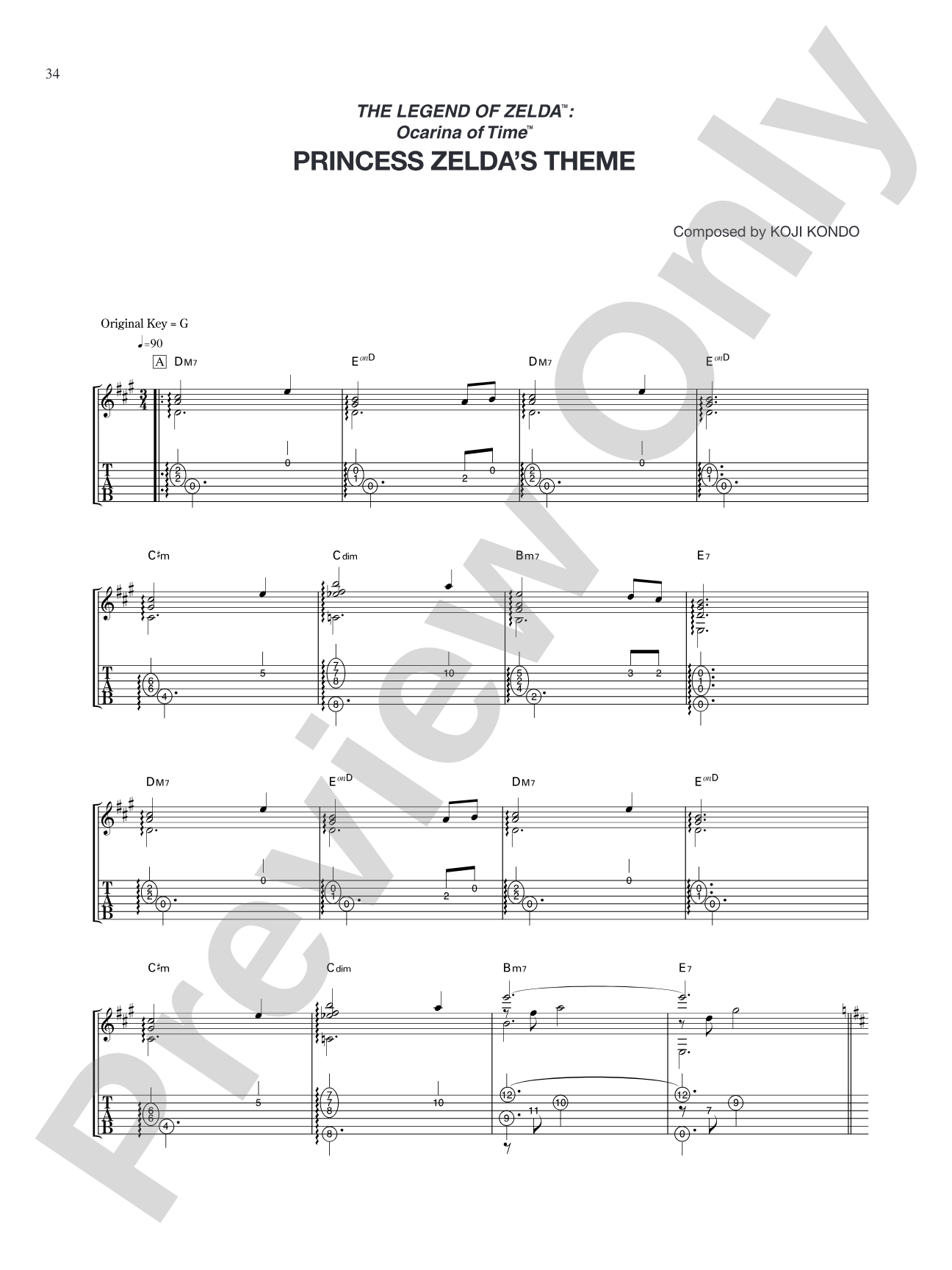

The Legend of Zelda™: Ocarina of Time™ Princess Zeldas Theme: Guitar Tab
By Koji Kondo, Kozue Ishikawa, Toru Minegishi, Kenta Nagata, Akito Nakatsuka, Asuka Ohta, Manaka Tominaga, and Hajime Wakai
Item: 00-PS-0015230
$4.99
One moment…
Related Items
The Legend of Zelda™ Title Theme: Guitar Tab |
$4.99
|
View | |
The Legend of Zelda™ Main Theme: Guitar Tab |
$4.99
|
View | |
Zelda II™: The Adventure of Link™ Title Theme: Guitar Tab |
$4.99
|
View | |
Zelda II™: The Adventure of Link™ Palace Music: Guitar Tab |
$4.99
|
View | |
The Legend of Zelda™: A Link to the Past™ Title Screen: Guitar Tab |
$4.99
|
View | |
The Legend of Zelda™: A Link to the Past™ Hyrule Castle Music: Guitar Tab |
$4.99
|
View | |
The Legend of Zelda™: A Link to the Past™ Main Theme: Guitar Tab |
$4.99
|
View | |
The Legend of Zelda™: A Link to the Past™ The Dark World: Guitar Tab |
$4.99
|
View | |
The Legend of Zelda™: Link's Awakening™ Main Theme: Guitar Tab |
$4.99
|
View | |
The Legend of Zelda™: Ocarina of Time™ Title Theme: Guitar Tab |
$4.99
|
View | |
The Legend of Zelda™: Ocarina of Time™ Hyrule Field: Guitar Tab |
$4.99
|
View | |
The Legend of Zelda™: Ocarina of Time™ Lost Woods: Guitar Tab |
$4.99
|
View | |
The Legend of Zelda™: Ocarina of Time™ Song of Storms: Guitar Tab |
$4.99
|
View | |
The Legend of Zelda™: Ocarina of Time™ Gerudo Valley: Guitar Tab |
$4.99
|
View | |
The Legend of Zelda™: Majora's Mask™ Prelude of Majoras Mask: Guitar Tab |
$4.99
|
View | |
The Legend of Zelda™: Majora's Mask™ Termina Field: Guitar Tab |
$4.99
|
View | |
The Legend of Zelda™: The Wind Waker™ Main Theme: Guitar Tab |
$4.99
|
View | |
The Legend of Zelda™: The Wind Waker™ Dragon Roost Island: Guitar Tab |
$4.99
|
View | |
The Legend of Zelda™: The Wind Waker™ Molgera: Guitar Tab |
$4.99
|
View | |
The Legend of Zelda™: The Wind Waker™ Ocean Theme: Guitar Tab |
$4.99
|
View | |
The Legend of Zelda™: Four Swords Adventures Village of the Blue Maiden Restored: Guitar Tab |
$4.99
|
View | |
The Legend of Zelda™: Four Swords Adventures Field Theme: Guitar Tab |
$4.99
|
View | |
The Legend of Zelda™: Twilight Princess Hyrule Field Main Theme: Guitar Tab |
$4.99
|
View | |
The Legend of Zelda™: Twilight Princess Hidden Village: Guitar Tab |
$4.99
|
View | |
The Legend of Zelda™: Twilight Princess Midnas Lament: Guitar Tab |
$4.99
|
View | |
The Legend of Zelda™: Phantom Hourglass Cielas Parting Words: Guitar Tab |
$4.99
|
View | |
The Legend of Zelda™: Spirit Tracks Title Theme: Guitar Tab |
$4.99
|
View | |
The Legend of Zelda™: Spirit Tracks Field Theme: Guitar Tab |
$4.99
|
View | |
The Legend of Zelda™: Spirit Tracks Train Travel: Guitar Tab |
$4.99
|
View | |
The Legend of Zelda™ Tri Force Fanfare: Guitar Tab |
$4.99
|
View | |
The Legend of Zelda™ Correct Solution: Guitar Tab |
$4.99
|
View | |
The Legend of Zelda™ Whistle of Warp: Guitar Tab |
$4.99
|
View | |
The Legend of Zelda™ Series for Guitar: Guitar TAB Book |
$16.99
|
View |
Description
Video game soundtracks both old and new feature work by some of the greatest composers of our time. Orchestras all over the world play entire concerts of video game music. This collection of themes from The Legend of Zelda™ series is arranged for solo guitar performance with full notation and TAB. Each song is arranged in easy guitar keys at an easy--intermediate level, and all pieces are suitable for recitals, concerts, and solo performances. There are 33 songs drawn from The Legend of Zelda™, Zelda II™ - The Adventure of Link™, The Legend of Zelda™: A Link to the Past™, The Legend of Zelda™: Link's Awakening™, The Legend of Zelda™: Ocarina of Time™, The Legend of Zelda™: Majora's Mask™, The Legend of Zelda™: The Wind Waker™, The Legend of Zelda™: Four Swords Adventures, The Legend of Zelda™: Twilight Princess, The Legend of Zelda™: Phantom Hourglass, and The Legend of Zelda™, Spirit Tracks.
"Best in Show" Award at Winter NAMM 2012 presented by Music Inc. magazine.


"Best in Show" Award at Winter NAMM 2012 presented by Music Inc. magazine.
The Legend of Zelda™: Ocarina of Time™ Princess Zeldas Theme: Guitar Tab isn't in MakeMusic Cloud just yet...but it could be. Let us know you'd like to see it, and you'll help shape what comes next. In the meantime, start a free trial and dive into thousands of interactive titles your students can play along with today.
Request This Title
Tell us you want it.
Start Your Free Trial
Explore everything that's ready to play right now.
Sample Audio
No sample audio found.
Sample Video
Additional Details
Publisher:
Alfred Music
Page Count:
64
SKU:
00-PS-0015230
More about this title
About the Composer: Koji Kondo
Koji Kondo shaped video game music as an art form. His work for Nintendo beginning in the 1980s established the template for how memorable melodies, harmonic sophistication, and emotional storytelling could exist within the technical constraints of early gaming hardware. The Legend of Zelda series in particular showcases his gift for writing themes that convey character and world through music alone.
Kondo's compositions have influenced multiple generations of game composers and earned recognition far beyond gaming circles. His music has been performed by orchestras worldwide and studied in academic contexts as a legitimate part of contemporary composition. For guitar arrangers and arrangers working with popular music, his work demonstrates how strong melodic writing and structural clarity create pieces that remain engaging across multiple instrumental adaptations and performance contexts.
Why we love this
These arrangements capture why Zelda's themes have endured for decades while sitting comfortably in a recital or concert context. The guitar keys and difficulty level feel genuinely considered rather than arbitrary; you get playable versions that honor the original melodies without sacrificing musicality. A student working through Princess Zelda's Theme gets to perform a piece that audiences actually recognize and enjoy, which makes the practice and performance cycle feel rewarding in real time.
What to expect
Princess Zelda's Theme carries nobility and mystery in equal measure. The melody moves with grace and purpose, suggesting both heroic adventure and tender moments of reflection. Performed on guitar, it becomes an intimate conversation with the listener while maintaining the grandeur the original theme commands.
Who it's for
Solo guitarists preparing recital material that connects to contemporary culture and appeals to diverse audiences. This is equally suited to students building confidence with familiar, melodically rewarding pieces and to advanced players seeking concert-quality arrangements of recognizable themes.
How to get the most out of it
- Pay close attention to articulation markings and dynamics, which shape how memorable these melodies land with listeners. The original compositions rely on orchestral color, so your guitar choices about attack, sustain, and tone become the primary vehicle for expression.
- Record yourself early and listen back to check your phrasing against the original game music. Video game composers often write with specific rhythmic feels and tempo relationships that aren't always obvious from notation alone.
- Consider the harmonic context when approaching fingering choices. These arrangements likely voice the chords in ways that serve the melodic line; choosing positions that let those harmonies ring through adds depth that a purely mechanical performance won't achieve.
How to use it
Feature this piece on a recital that celebrates music across genres, positioning it alongside classical guitar literature to show the full range of what guitarists perform today. It works particularly well in community concerts or student showcases where mixed audiences gather, since recognition of the theme itself becomes part of the performance's appeal.
Skills your students will build
- Reading and executing standard notation and TAB simultaneously
- Phrasing lyrical melodic lines with clear intention and shape
- Negotiating moderate technical passages at a sustainable tempo
- Translating orchestral textures into idiomatic guitar voicings and articulation choices