

The Lake Isle of Innisfree: SSA Choral Octavo
Words by William Butler Yeats, music by Penny Rodriguez
Item: 00-PO-0006869
$2.05
Minimum order quantity: 20 copies
Pickup currently not available
Related Items
The Lake Isle of Innisfree: PianoTrax Digital Audio Download |
$9.99
|
View | |
The Lake Isle of Innisfree: SAB Choral Octavo |
$2.05
|
View | |
The Lake Isle of Innisfree: TTB Choral Octavo |
$2.05
|
View | |
The Lake Isle of Innisfree: SAB Choral Octavo |
$2.05
|
View | |
The Lake Isle of Innisfree: SSA Choral Octavo |
$2.05
|
View | |
The Lake Isle of Innisfree: TTB Choral Octavo |
$2.05
|
View |
Description
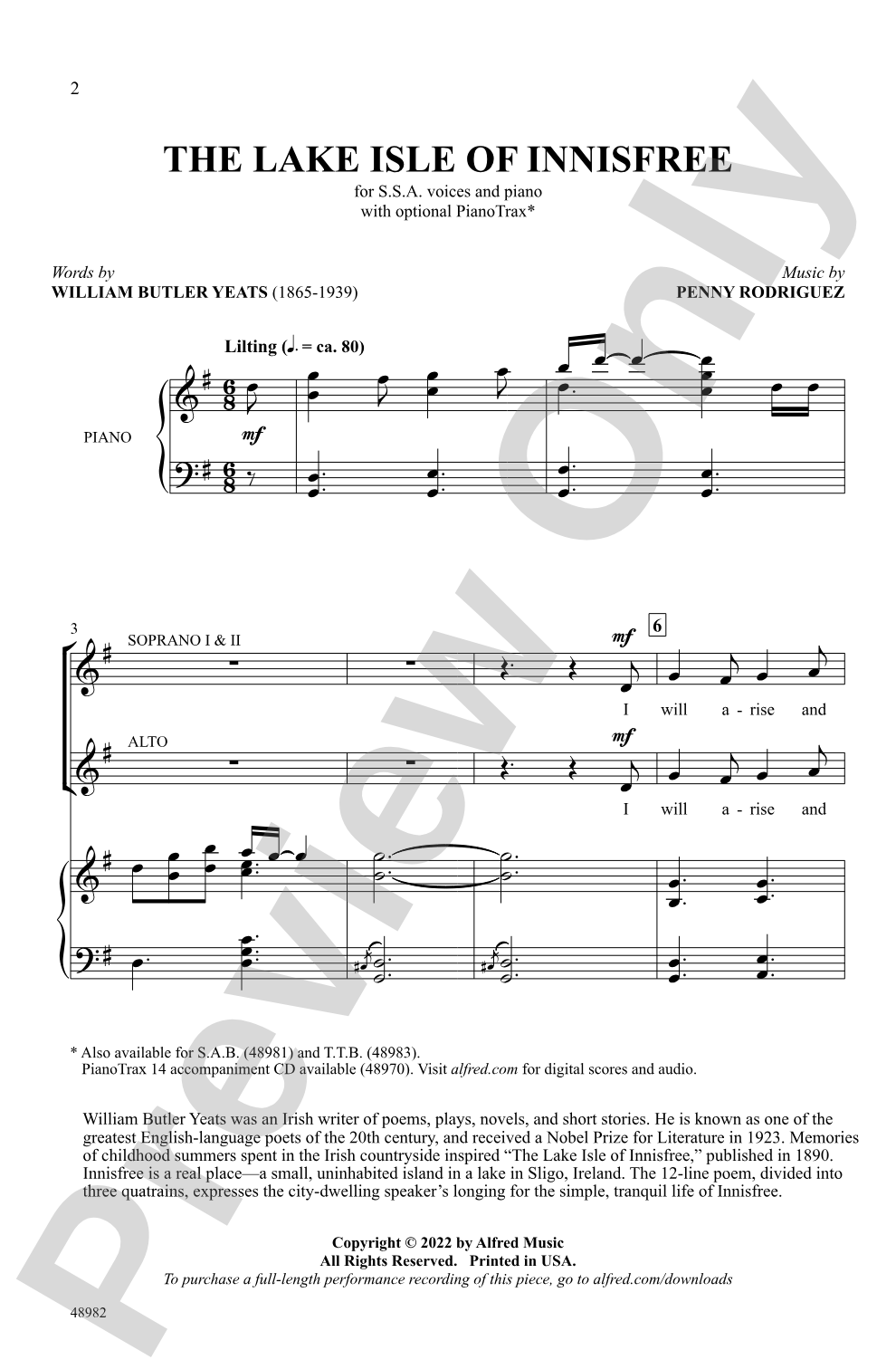
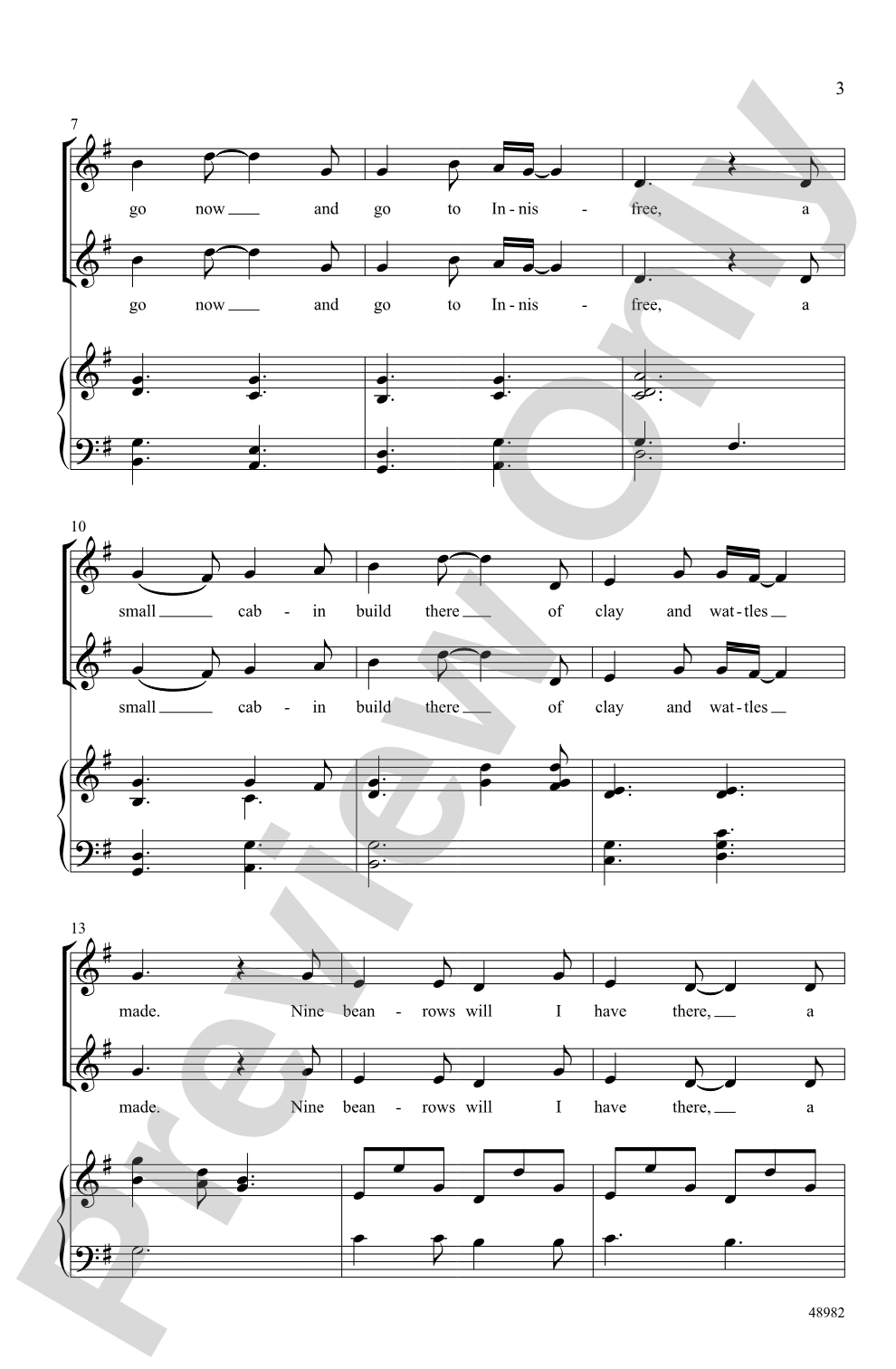
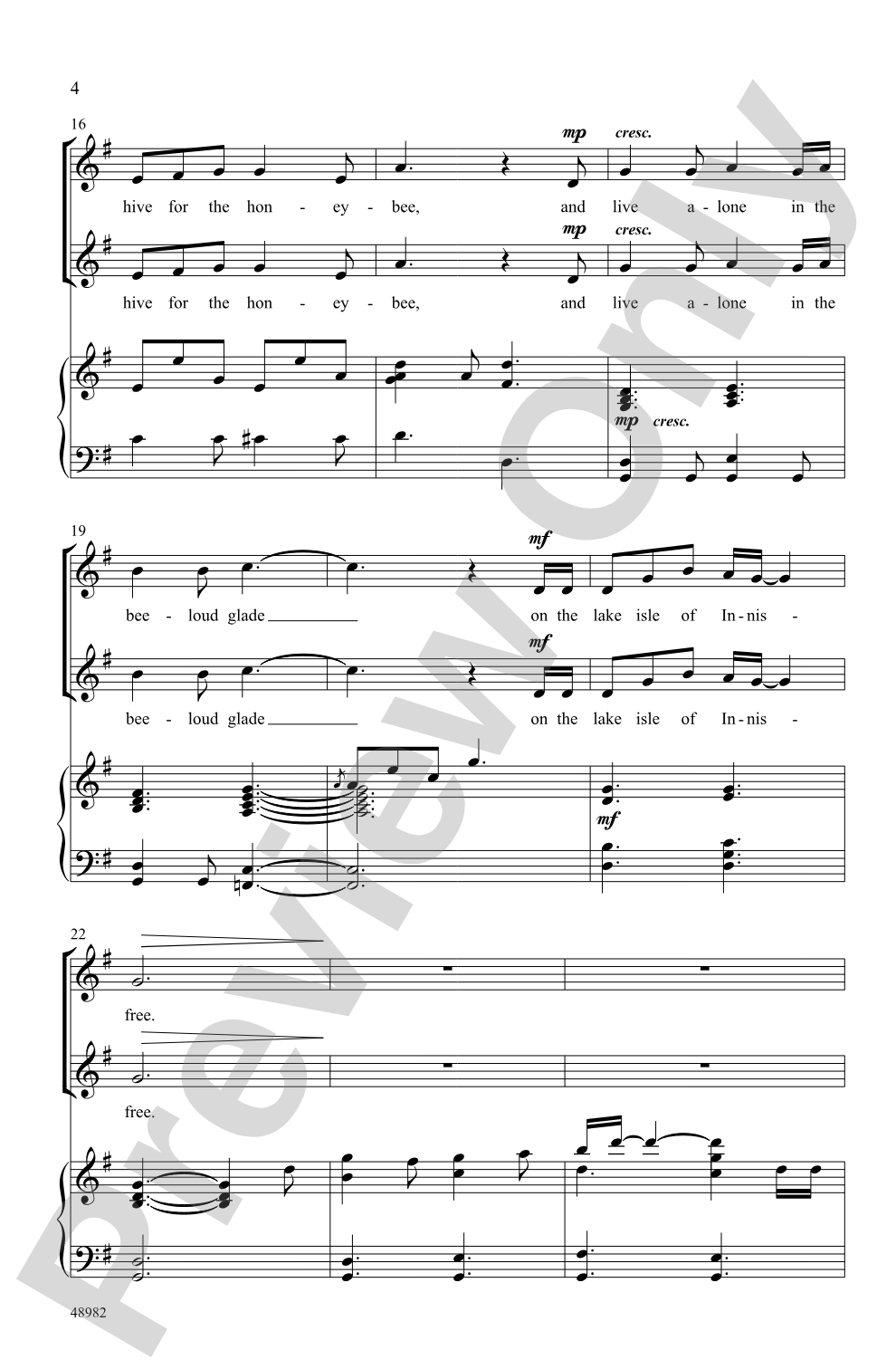
Lilting music resembles a folk song from the British Isles in this happy setting of Yeats' text, inspired by memories of childhood summers spent in the Irish countryside. The 12-line poem expresses a city-dweller's longing for the simple, tranquil life of Innisfree. Includes proven part-singing strategies---the tune first appears in unison, then becomes a canon; a peaceful bridge passes the melody through lower voice parts, while others sing sweet counterlines; and a modulation leads to full triadic harmony.


The Lake Isle of Innisfree: SSA Choral Octavo isn't in MakeMusic Cloud just yet...but it could be. Let us know you'd like to see it, and you'll help shape what comes next. In the meantime, start a free trial and dive into thousands of interactive titles your students can play along with today.
Request This Title
Tell us you want it.
Start Your Free Trial
Explore everything that's ready to play right now.
Sample Audio
1
Audio File
--:--
0:00
0:00
Sample Video
Additional Details
Series:
Alfred Choral Designs
Publisher:
Alfred Music
Page Count:
12
SKU:
00-PO-0006869
More about this title
About the Composer: Penny Rodriguez

Penny Rodriguez began her musical life at age 6, learning piano in Peru where her parents worked as missionaries. She studied piano performance at Moody/American Conservatory of Music and has built a prolific career as a pianist, composer, and recording artist, with 11 albums to her name.
Her compositional output spans piano works and choral pieces, though in recent years she has increasingly focused on art songs that pair solo voice with piano, often setting carefully chosen poetry as text. She lives in the Indianapolis area with her husband, Dave.
Why we love this
Rodriguez builds genuine pedagogical scaffolding into this setting. By introducing the tune in unison, then moving into canon, then layering counterlines above a melodic bridge, she gives singers concrete steps toward independent part-singing without ever feeling like drill. The folk-song sensibility keeps the music warmly accessible while the harmonic progression (culminating in full triadic harmony) offers real harmonic depth for an SSA ensemble.
What to expect
Yeats' longing for Innisfree meets a melody that feels like it could have drifted across Irish hills for generations. The piece unfolds with a gentle, almost nostalgic warmth, gradually revealing layers of harmony that deepen the emotional landscape while maintaining the simplicity of a folk remembrance.
Who it's for
SSA choirs seeking repertoire that teaches part-singing progressively without demanding advanced technique. The literary foundation makes it especially strong for programs pairing music with poetry, and the concert and festival designation signals its readiness for any ensemble ready to move beyond unison singing.
How to get the most out of it
- Prepare the unison opening with care; it establishes the tune so clearly that later canonic entrances land with confidence.
- Balance the counterlines in the bridge passage so the melody remains audible in the lower voices. This moment often surprises singers with how beautiful the weaving of lines can be.
- Shape the modulation into the final section with a slight broadening of tempo to let listeners hear the harmonic shift as a moment of arrival.
- Emphasize the Irish lilt in the rhythmic phrasing throughout; the folk-song character lives in how the melody breathes, not just in the notes themselves.
How to use it
This works beautifully as a centerpiece in a poetry-themed concert or as a gentle bridge between more energetic repertoire. Its modest technical demands and strong literary text make it equally at home in festival competition or a school assembly celebrating Irish culture or the close of a spring concert.
Skills your students will build
- Reading and entering canonic passages independently
- Balancing melody and countermelody in the same vocal line
- Hearing and sustaining harmonic color through triadic movement
- Responding to textual imagery through musical phrasing